7 Ways to Handle Feature Requests [+The Ideal Process]
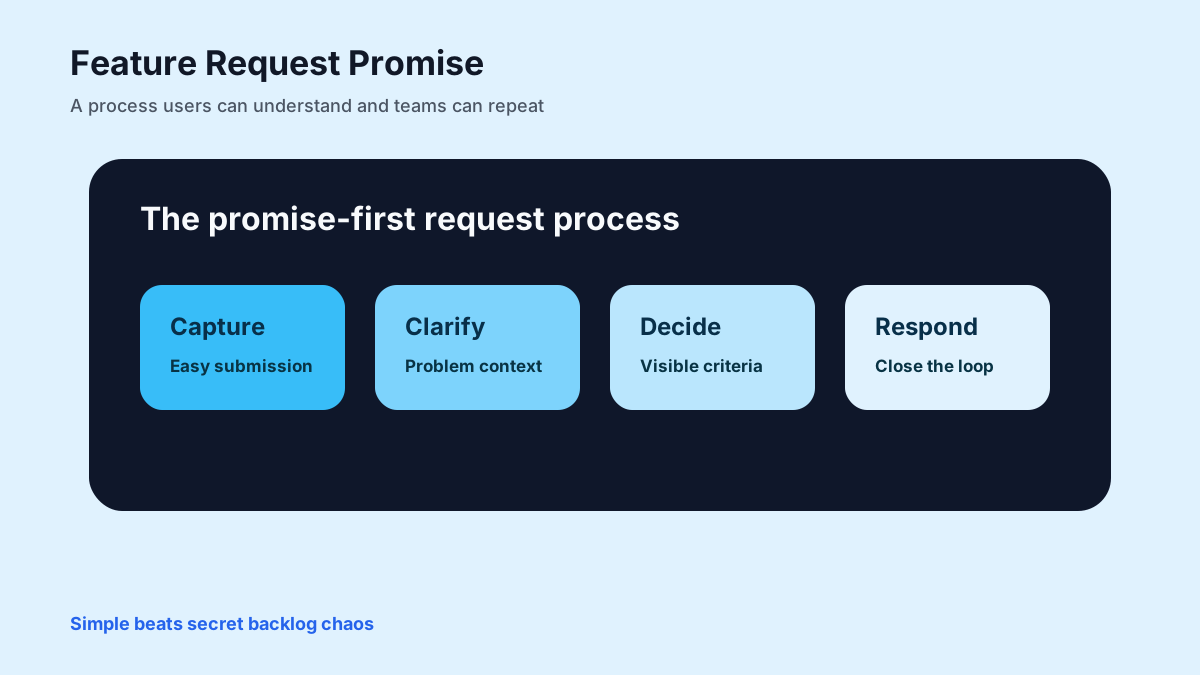
A feature request process should help users feel heard and help your team make better roadmap choices. This guide shows how to collect, sort, prioritize, and respond to requests without building a slow committee process or buying enterprise software before you need it.
Quick answer: the ideal feature request process
A feature request process is the repeatable path an idea follows from customer suggestion to product decision. The ideal process has seven steps: capture the request, clarify the problem, merge duplicates, gather evidence, prioritize, communicate status, and announce the result. It should be easy for customers to use and light enough for your team to review every week.
The process fails when ideas scatter across email, chat, support tickets, sales notes, and private spreadsheets. It also fails when every request becomes an implied promise. A healthy system welcomes ideas generously while making it clear that the product team still chooses what fits the strategy.
Your process should connect to feature requests, the right customer feedback tools, and visible roadmap communication practices. Together, those assets help users see that feedback has a destination.
If you want a lighter way to turn scattered ideas into a useful feedback loop, try FeaturAsk for 1 month free — no credit card required. After the trial, it is only $29.95/year, which makes it practical for small SaaS teams, indie products, content sites, and creators who need a simple feedback widget without enterprise pricing.
Design the promise before the pipeline
The first design choice is not the form field or the board layout. It is the promise you make to users. Decide what a submitted request means: “we read every legitimate idea,” “we update statuses when decisions change,” and “planned does not mean a guaranteed date.” Once that promise is clear, the intake channel, moderation rules, and communication templates become much easier to choose.
The seven stages of a strong request workflow
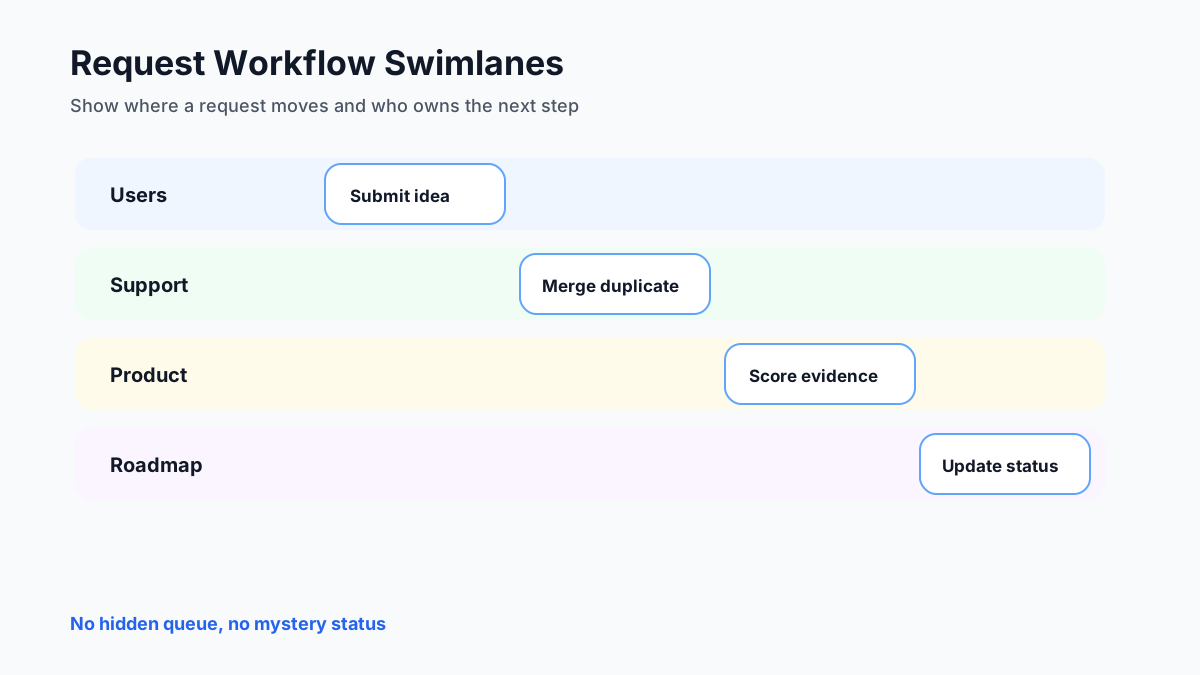
First, give users one obvious place to submit ideas. Second, ask for the problem, not only the proposed solution. Third, merge duplicates so demand accumulates instead of fragmenting. Fourth, preserve evidence such as comments, account type, screenshots, and urgency. Fifth, prioritize against strategy, impact, effort, and confidence. Sixth, update the visible status. Seventh, announce shipped work and thank the users who influenced it.
This sequence is deliberately simple. A founder-led SaaS company does not need a heavyweight governance committee to listen well. It needs a durable intake channel, clear moderation habits, and a short review rhythm.
The best feature request process also protects engineering focus. Engineers should receive clarified problems and prioritized work, not a raw pile of half-described wishes. Product, support, and founders can do the filtering before ideas enter development planning.
7 common ways to handle feature requests
-
A public or semi-public feedback board is often the strongest long-term method. Users can search existing ideas, vote, comment, and follow progress. The board also reduces duplicate support tickets because people see that a request already exists.
-
An in-app widget captures ideas at the moment of friction. A user who is blocked while using your product can send context immediately instead of leaving to find a form.
-
Support tickets provide rich detail. They include pain, screenshots, workarounds, and affected users. The weakness is that requests disappear when the ticket closes unless the team transfers them into a shared system.
-
Sales and customer success notes reveal revenue opportunities and objections. Use them, but balance them against active-user evidence so one prospect does not hijack the roadmap.
-
Surveys are useful for validating themes. They are less effective as the only request channel because they happen in bursts and usually limit open discussion.
-
Interviews uncover the “why” behind a request. They are especially valuable for high-impact work, confusing requests, and churn-related themes.
-
Communities such as Discord, Slack, forums, and social channels surface informal ideas. Summarize useful requests in the central board instead of expecting the team to remember every thread.
FeaturAsk is built for teams that want feedback collection to stay simple: add a widget, let users submit ideas, collect votes and comments, and review requests from one dashboard. You can start with 1 month free on FeaturAsk, no credit card needed, then keep it for $29.95/year if it fits your workflow.
Best practices for managing incoming requests
Keep the submission form short. Ask what the user is trying to accomplish, what blocks them today, and how often the problem appears. Optional fields can help, but a long form discourages casual users who may still have valuable insight.
Moderate titles and descriptions. “Add integration” is vague; “Send new form responses to Slack” is useful. Editing for clarity helps other users recognize the idea and add better comments.
Create a weekly review ritual. Look at new requests, duplicates, high-vote items, important comments, and stale planned work. A fifteen-minute habit beats a quarterly cleanup that no one wants to own.
How to prioritize without becoming a wish list
A request board is not a democracy. Votes are evidence, not orders. A team should also consider user segment, retention risk, revenue impact, product strategy, implementation effort, and confidence.
Separate evidence from commitment. “Open” means the team is listening. “Researching” means the problem deserves discovery. “Planned” means the team intends to build. This vocabulary prevents users from interpreting every accepted idea as a promise.
When a popular request does not fit, explain why. A concise note such as “not aligned with our current focus on solo creator workflows” is better than silence. Customers may disagree, but they can respect a clear product boundary.
Closing the loop with users
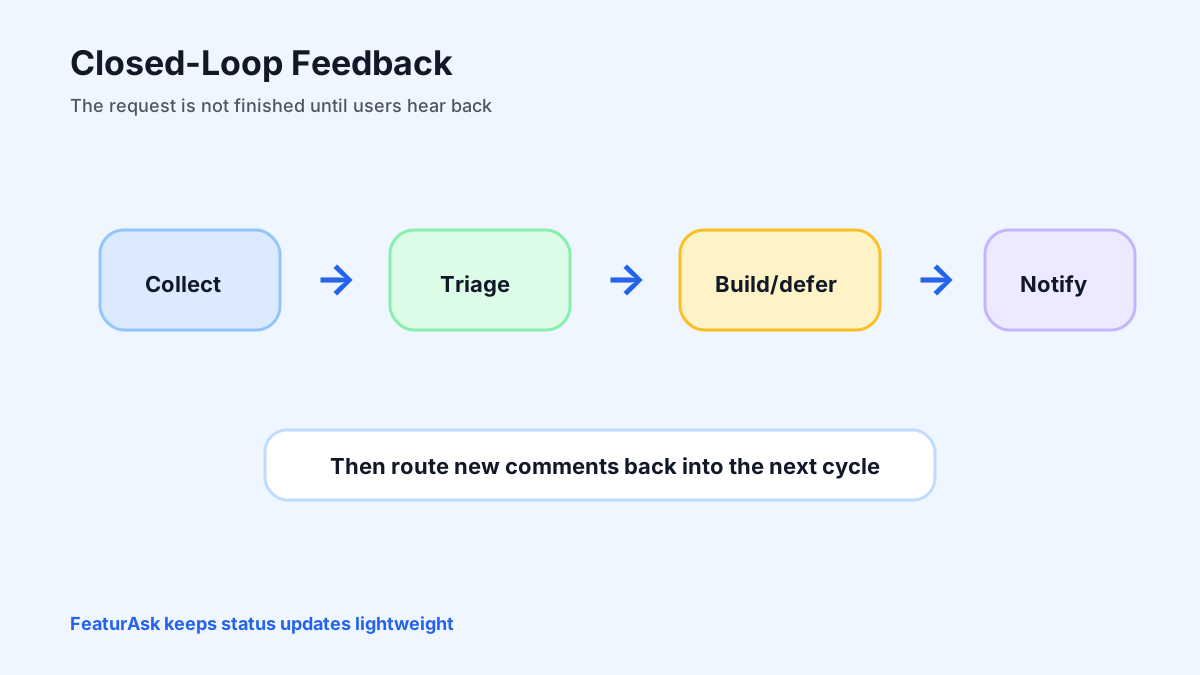
Closing the loop means telling contributors what happened. If a feature ships, update the request, mention the release in your changelog, and invite users to try it. If the team decides not to build, share the reason respectfully.
This habit compounds trust. Users are more likely to submit thoughtful feedback when they see past suggestions turn into visible decisions. It also reduces repetitive questions because the answer is attached to the original request.
Useful outside resources include <a href="https://www.qualtrics.com/experience-management/customer/customer-feedback/" rel="nofollow">Qualtrics on collecting customer feedback</a>, <a href="https://www.hotjar.com/customer-feedback/" rel="nofollow">Contentsquare/Hotjar's customer feedback guide</a>, and <a href="https://www.nngroup.com/articles/user-need-statements/" rel="nofollow">Nielsen Norman Group on user need statements</a>. These pages were rechecked on May 22, 2026. The practical takeaway for 2026 is that intake is no longer the hard part; the hard part is preserving context, owner, and status after the first enthusiastic comment.
Feature request process FAQ
Should every request get a response? Not every idea needs a long reply, but every legitimate request should have a visible status. That status can be enough when the board is clear.
How often should you review requests? Weekly is ideal for small teams. Monthly can work at low volume, but long gaps make moderation harder.
Should feedback be anonymous? Anonymous feedback lowers friction, but identified feedback makes follow-up and segmentation easier. Many small teams allow simple submissions while asking users to leave an email if they want updates.
A lightweight operating cadence
Run a short triage twice a week if request volume is high, or weekly if volume is low. Triage is not the same as roadmap planning. It is the habit of cleaning titles, merging duplicates, removing spam, asking clarifying questions, and making sure important requests are not buried.
Hold a deeper prioritization review monthly or before each planning cycle. Bring the highest-evidence requests, not every open idea. Review demand, user segment, effort, and strategic fit. Decide which requests move to researching, planned, not now, or remain open for more evidence.
After each release, search for related requests and update them. This is where many teams lose trust. Shipping a feature is valuable, but telling the people who asked for it is what turns a release into a relationship-building moment.
Templates for clearer request communication
For a new idea, use: “Thanks for suggesting this. We have opened it for votes and comments so we can learn how many users share the need.” For a request that needs depth, use: “Can you share the workflow where this blocks you and what you do today instead?”
For planned work, use: “This is now planned because we saw repeated demand from active users and it supports our current roadmap focus.” For not-now decisions, use: “We understand the use case, but it does not fit our current direction. We are leaving this visible so others can see the decision.”
Short templates keep the process human without making support write a custom essay for every idea. The language should be honest, specific, and careful not to promise dates unless the team is truly committed.
30-day rollout plan for the feature request process
In week one, pick the single place where new requests should land. Add a link from your app, website, help center, or community so users do not have to guess where to send ideas. Seed the board with a few common requests so the space feels active from day one.
In week two, define moderation rules. Decide who merges duplicates, how quickly spam is removed, what statuses mean, and when sensitive details should be edited. This prevents the board from becoming messy before users learn to trust it.
In week three, invite a small group of engaged customers to vote and comment. In week four, hold the first prioritization review and publish status changes. The first visible updates matter because they teach users that the process is alive.
How to scale the process without adding bureaucracy
The feature request process should become more disciplined as your audience grows, but it should not become harder for users to participate. Add structure behind the scenes first: clearer tags, better duplicate rules, ownership for moderation, and a simple prioritization review. Avoid adding long forms, required fields, or multi-step submission flows unless they solve a real problem.
One useful scaling tactic is to separate intake from commitment. Users should be able to submit ideas freely, but only a smaller set of requests should move into research or planning. This keeps the door open while protecting the roadmap. A visible status system makes the distinction clear: open ideas are being collected, researching ideas need more evidence, planned ideas are committed, and shipped ideas are complete.
Another tactic is to create internal summaries for high-volume themes. If dozens of users request related reporting improvements, do not force the team to debate every individual ticket. Summarize the theme, link representative requests, and identify the core workflow. This gives product and engineering a clearer problem while preserving the user evidence behind it.
As the process matures, review whether customers still understand it. A request board with too many labels, hidden decisions, or old planned items can feel just as confusing as no process at all. Keep statuses plain, communicate changes, and prune stale ideas. The best process feels calm: users know where to suggest improvements, and the team knows how to respond.
Before you call the process finished, run one real request through the whole path. Can a user submit it without help? Can another user find and upvote the existing idea instead of creating a duplicate? Can the team see who owns the next decision? Can the original contributor tell whether the answer is open, researching, planned, shipped, or not now?
The strongest ending for a request process is not a bigger backlog. It is a visible response. Each week, pick a small number of requests and make them clearer: merge one duplicate, ask one clarifying question, move one stale item to not now with a reason, and announce one shipped improvement. That rhythm teaches customers that feedback is read, while teaching the team to protect roadmap focus.
When you are ready to collect clearer customer signals, launch a FeaturAsk board and test it for a full month free with no credit card. It gives small teams an affordable path to idea capture, voting, moderation, and status updates for $29.95/year after the trial.
Previous: How to Create a Feature Prioritization Matrix [+6 Unique Types]
Next: Guide to Customer Satisfaction: NPS in SaaS