How to Create a Feature Prioritization Matrix [+6 Unique Types]
Feature prioritization works best when it turns scattered customer requests into a visible decision. This guide shows small SaaS teams, website owners, and creators how to score ideas with enough structure to be fair, but not so much process that planning becomes another expensive product-management project.
Quick answer: what a feature prioritization matrix does
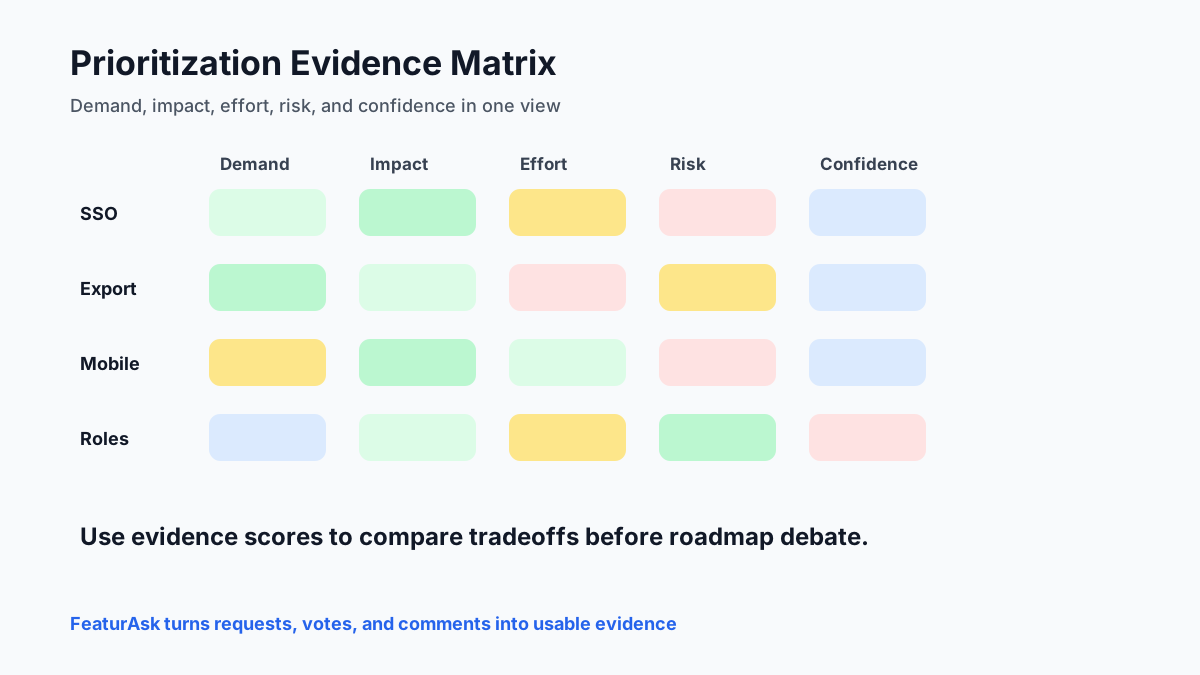
A feature prioritization matrix is a structured way to compare possible product work before a team commits roadmap time. Each request, problem, or improvement sits on one row. Each criterion, such as customer demand, expected impact, effort, urgency, confidence, or strategic fit, gets its own column. The result is not a magic answer; it is a shared view of tradeoffs.
For small SaaS teams, the matrix is most useful when it starts with real customer evidence. Votes, comments, support tickets, churn notes, and sales objections tell you whether an idea is a repeated pain or just a passing suggestion. A simple matrix prevents the latest loud request from crowding out older but more valuable needs.
Use the matrix when your backlog contains more plausible ideas than you can build this month. Do not use it for critical bugs, security issues, or tiny fixes that obviously need action. A good rule is simple: if reasonable people disagree about priority, put the item into the matrix and compare it against the same criteria as everything else.
If you want a lighter way to turn scattered ideas into a useful feedback loop, try FeaturAsk for 1 month free — no credit card required. After the trial, it is only $29.95/year, which makes it practical for small SaaS teams, indie products, content sites, and creators who need a simple feedback widget without enterprise pricing.
What is a feature prioritization matrix?
A feature prioritization matrix turns product judgment into a visible decision model. Instead of saying “we feel this is important,” the team names the reasons a feature might deserve attention. That creates a fairer conversation between founders, product managers, support, engineering, sales, and customers.
The matrix can live in a spreadsheet, product planning tool, or lightweight feedback system. The format matters less than the discipline. Each feature should be written as a customer outcome, not only as a solution. “Let agency users invite clients with view-only access” is stronger than “add roles,” because the first version reveals who needs it and why.
This approach connects naturally with feature voting, feature request software, and a clear product management process. When these systems work together, your prioritization discussions use live evidence instead of stale opinions.
Start with a decision snapshot, not a blank framework
Before choosing a matrix type, write a one-paragraph decision snapshot: the product goal for this cycle, the customer segment that matters most, the capacity available, and the risks the team refuses to take. This changes the article's workflow from “pick a framework” to “define the decision and then pick the framework that fits it.” A prioritization matrix works better when everyone knows what kind of tradeoff the matrix is supposed to clarify.
Benefits of using a prioritization matrix
A matrix reduces recency bias. Without a shared view, the request from this morning can feel more urgent than the request that has accumulated comments for three months. The matrix keeps older demand visible and gives quiet customers a chance to influence the roadmap through evidence.
It also improves communication. When a customer asks why a request is planned, delayed, or declined, you can explain the factors: many active accounts need it, it supports the current strategy, the effort is moderate, or the risk is too high right now. Even a “not now” answer feels more respectful when it is grounded in a visible method.
Finally, it helps teams avoid building popularity contests. Votes are useful, but votes alone can mislead. A low-vote request from high-retention customers may matter more than a high-vote request from casual visitors. The matrix lets you combine popularity with business impact, technical effort, and confidence.
FeaturAsk is built for teams that want feedback collection to stay simple: add a widget, let users submit ideas, collect votes and comments, and review requests from one dashboard. You can start with 1 month free on FeaturAsk, no credit card needed, then keep it for $29.95/year if it fits your workflow.
How to create a feature prioritization matrix
Start by collecting candidate requests from your feedback board, support inbox, analytics reviews, calls, and internal product notes. Merge duplicates before scoring so one common idea does not appear as ten weak rows. Preserve the original comments because they often explain the real use case better than the request title.
Choose three to five criteria. A practical small-team set is customer demand, customer value, business impact, effort, strategic fit, and confidence. Use a one-to-five scale and define what high and low scores mean. For example, high demand might require repeated comments from active users, not just one enthusiastic message.
Add one column for status. Open, researching, planned, shipped, and not now are usually enough. Prioritization should lead to communication. If users can see that a request moved from open to researching, they know the team is listening even before the feature ships.
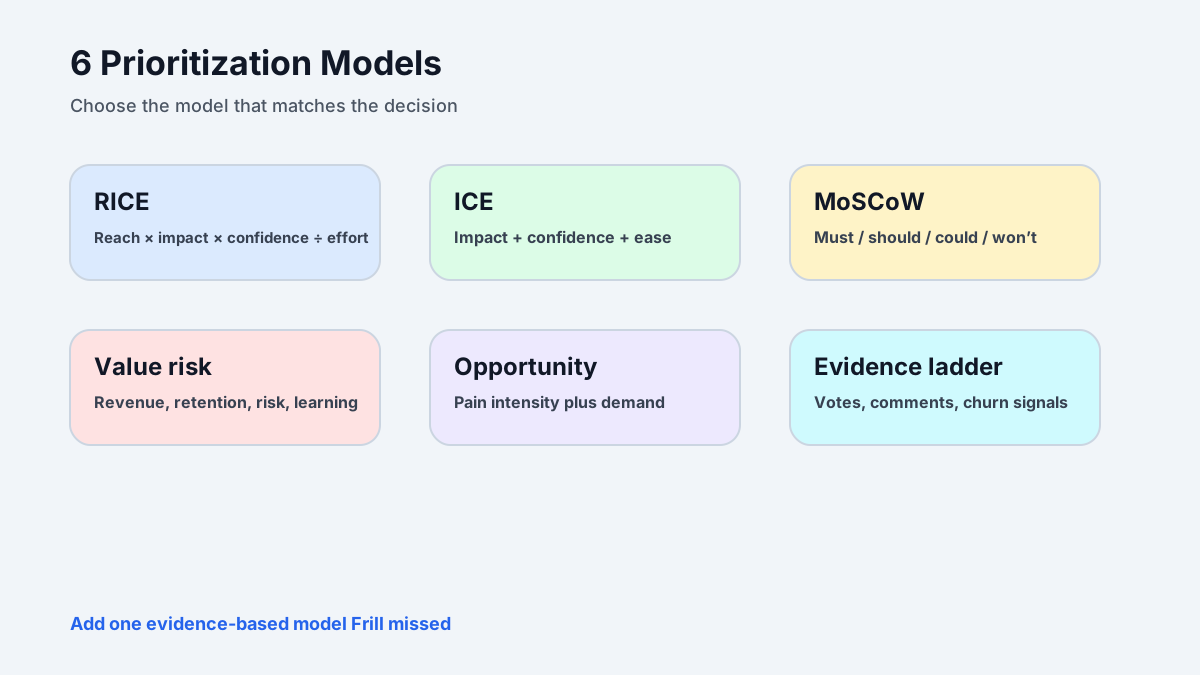
Six unique matrix types worth trying
-
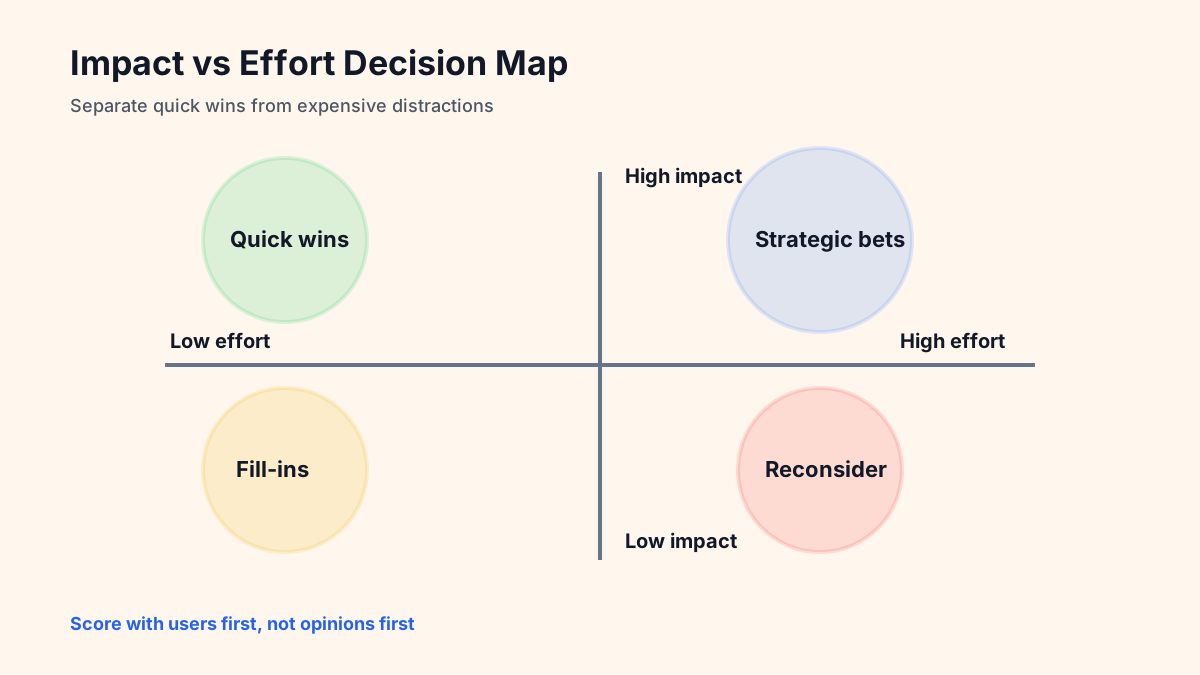
Value versus effort is the fastest matrix. Plot each request by customer value and implementation effort. Quick wins appear high-value and low-effort; strategic bets appear high-value and high-effort; distractions appear low-value and high-effort.
-
RICE scores reach, impact, confidence, and effort. It is useful when you need a numeric ranking and can estimate how many users a change affects. Intercom popularized RICE as a prioritization model, and the idea is still helpful when estimates are honest.
-
Weighted scoring lets the team decide that some criteria matter more than others. For example, retention risk might count twice as much as ease of implementation during a churn-reduction quarter. Weighted scoring is powerful, but keep weights simple enough to explain.
-
MoSCoW separates must-have, should-have, could-have, and will-not-do work. It is best for release planning where scope needs boundaries. The method is less precise for long backlogs, but excellent for deciding what belongs in a near-term milestone.
-
Kano compares basic expectations, performance features, and delight features. It reminds teams that some work prevents dissatisfaction while other work creates enthusiasm. A login reliability improvement may not delight users, but failing it damages trust.
-
Evidence ladder is a useful FeaturAsk-style matrix for small teams: score each request by evidence quality. One vote is weak evidence; repeated comments, screenshots, churn reasons, and paying-user demand are stronger. This keeps the team from overreacting to shallow signals.
Common prioritization mistakes
The first mistake is scoring vague items. “Improve reporting” is too broad. Break it into outcomes such as scheduled email reports, CSV exports, client-facing dashboards, or saved filters. Specific rows produce better scores.
The second mistake is letting the matrix replace product strategy. If your strategy says the product is for creators, a request built only for large enterprises may score high on revenue but still be wrong. Use the matrix to clarify tradeoffs, not to abandon positioning.
The third mistake is never updating statuses. Prioritization is a loop. Review the top ideas weekly or biweekly, ask follow-up questions where confidence is low, and close ideas that no longer fit. A stale board teaches customers that feedback disappears.
Turning prioritized requests into a roadmap
After scoring, cluster related requests into themes. Five separate requests about exports, scheduled reports, and shareable links may point to one roadmap theme: better reporting workflows. Themes help you plan coherent releases instead of shipping disconnected tasks.
Then choose what deserves discovery, design, development, or a clear “not now.” Put only committed work on a roadmap. A request can be valuable and still remain in research while the team validates edge cases, technical constraints, or pricing implications.
Use outside frameworks as inputs, not templates to copy. <a href="https://www.aha.io/roadmapping/guide/idea-management/prioritize-features" rel="nofollow">Aha!'s idea-management prioritization guidance</a>, <a href="https://www.intercom.com/blog/rice-simple-prioritization-for-product-managers/" rel="nofollow">Intercom's RICE model</a>, and <a href="https://www.productplan.com/glossary/moscow-prioritization/" rel="nofollow">ProductPlan's MoSCoW summary</a> were rechecked for this repair on May 22, 2026. They remain useful because they define durable methods, but your matrix should still include live customer evidence from the current quarter so the scores do not become recycled product theory.
A small-team checklist for using the matrix every week
Before the meeting, export or review new ideas, merge obvious duplicates, and rewrite unclear titles as outcomes. During the meeting, score only the requests that have enough evidence to discuss. After the meeting, update the status and leave a short explanation on anything that changed. This creates an audit trail that future teammates and customers can understand.
Keep the review group small. A founder, product owner, support lead, and engineering representative are usually enough. More people can join discovery later, but the weekly scoring habit should not become a large ceremony. The purpose is to maintain momentum and keep customer evidence fresh.
Archive or decline items intentionally. Old ideas with no evidence make the board feel abandoned. If an idea no longer fits the product, mark it not now and explain the reason. If an idea is still interesting but not ready, keep it open and ask a question that invites better comments.
Metrics that show whether prioritization is working
Track time from request submission to first review, number of duplicate requests merged, percentage of planned features with customer evidence, and number of shipped features announced back to contributors. These metrics reveal whether the process is creating clarity or just storing opinions.
Also watch qualitative signs. Support should spend less time answering repeated “are you building this?” questions. Product discussions should reference customer evidence more often. Users should leave better comments because they can see that the team reads and responds.
If the top of the matrix changes every week, your criteria may be too reactive. If it never changes, you may be ignoring new evidence. Healthy prioritization has both stability and movement: strategy stays steady while confidence improves as users add context.
30-day rollout plan for a feature prioritization matrix
In week one, focus only on intake quality. Add the most common requests, merge duplicates, and rewrite vague ideas as outcomes. Do not score everything yet. A clean starting set makes the later matrix more trustworthy and easier for teammates to adopt.
In week two, agree on criteria and score a small batch together. Discuss disagreements instead of averaging them away. If support scores demand as high and engineering scores confidence as low, that tension is useful. It tells the team what evidence is missing before a roadmap commitment.
In week three, connect statuses to the matrix. Move obvious winners to researching or planned, leave uncertain ideas open with questions, and mark misaligned items not now. In week four, review whether the matrix changed one real decision. If it did not, simplify the criteria until it becomes usable.
How to keep the matrix honest as your product grows
A feature prioritization matrix is only as good as the evidence behind it. Revisit your scoring rules whenever the product changes audience, pricing, or strategy. A criterion that made sense for a brand-new product may not fit a mature tool with paying customers and reliability expectations. For example, early teams may weight activation heavily, while later teams may weight retention, permissions, reporting, or administration.
Keep a short decision log beside the matrix. Record why top requests were accepted, researched, delayed, or declined. This protects the team from repeating the same argument every month and helps new teammates understand the product’s direction. It also gives customer-facing teams a source of truth when users ask about a request.
Do not let the matrix punish bold work. Some important product bets begin with limited votes because users cannot easily imagine the solution. In those cases, score the problem rather than the proposed feature, gather discovery evidence, and mark confidence honestly. A low-confidence strategic bet may still deserve research before a highly requested cosmetic improvement.
Finally, make the matrix visible enough to build trust but not so rigid that it exposes private strategy or sensitive customer data. Share statuses, themes, and reasoning publicly when helpful. Keep revenue details, security concerns, and account-specific notes internal. The balance lets users see that their feedback matters without turning your full planning process into a public spreadsheet.
When you are ready to collect clearer customer signals, launch a FeaturAsk board and test it for a full month free with no credit card. It gives small teams an affordable path to idea capture, voting, moderation, and status updates for $29.95/year after the trial.
Previous: Blog
Next: 7 Ways to Handle Feature Requests [+The Ideal Process]