Time and Management in Software Development
Updated 2026-01-29. Software teams do not run out of ideas. They run out of focused time. Bugs arrive, feature requests multiply, technical debt asks for attention, and leadership still expects visible progress on the roadmap. Time management in software development is therefore not just a personal productivity issue. It is a product operating system: how the team chooses, protects, and explains its work.
The FeaturAsk approach starts by making demand visible. When feature requests and votes are collected in one place, the team can stop treating every interruption as equal. It can compare customer value, urgency, effort, and strategic fit before time disappears into whichever issue was newest.
Development time disappears when teams fail to separate planned work, interruptions, and debt. This guide uses Atlassian’s technical-debt overview for the maintainability side of the trade-off https://www.atlassian.com/agile/software-development/technical-debt and Martin Fowler’s original debt metaphor for deciding when speed now creates cost later https://martinfowler.com/bliki/TechnicalDebt.html.
If interruptions are coming from every channel, start FeaturAsk with one month free and no credit card required so feature requests land in one reviewable place. The lightweight plan costs $29.95/year.
Quick answer
Time management in software development is not solved by asking engineers to type faster. It improves when the team classifies demand, protects maker time, reserves capacity for surprises, and explains why some requests wait while others interrupt the plan.
For connected topics, read FeaturAsk’s guides to feature request tracking, announcing product updates, and SaaS growth benchmarks.
Why time disappears
-
Untriaged requests look equally urgent.
-
Bugs and feature ideas are discussed in separate tools, so trade-offs stay hidden.
-
Technical debt is delayed until it becomes a crisis.
-
Meetings create decisions that are not connected to visible customer evidence.
Put the reason beside the work item so interruptions can be judged against the plan already agreed.
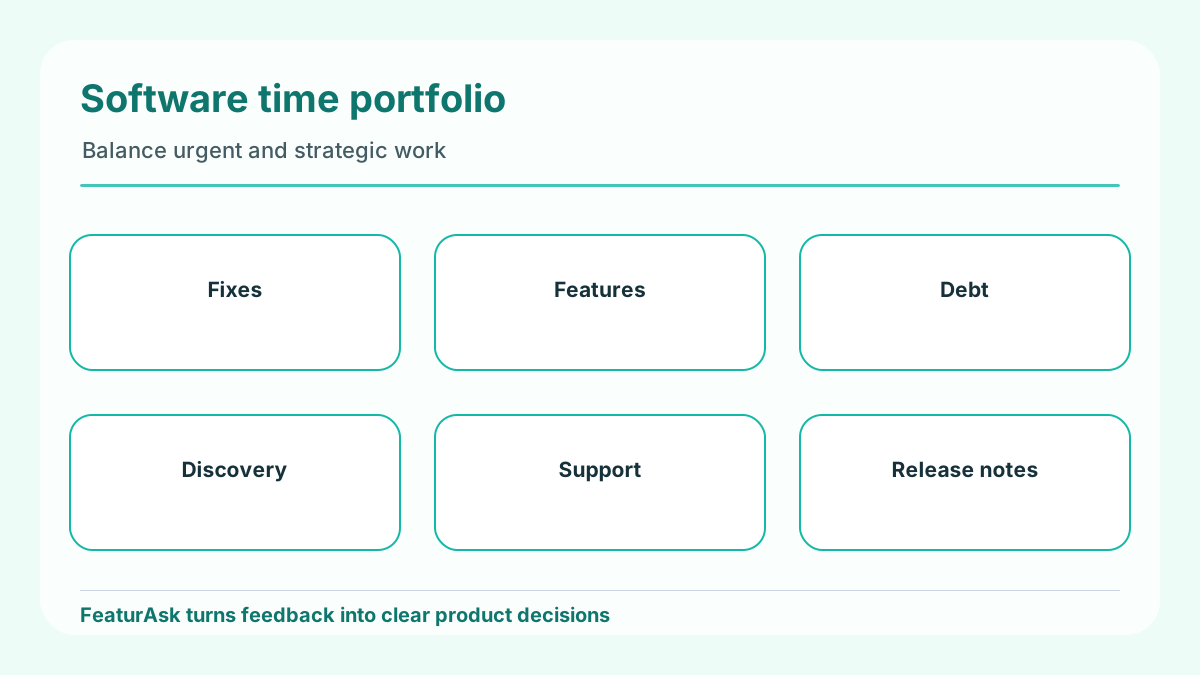
Balance four kinds of work
-
Run-the-business fixes: defects, security, reliability, and support blockers.
-
Grow-the-business features: work that improves activation, retention, revenue, or expansion.
-
Protect-the-business technical debt: refactors and platform work that reduce future drag.
-
Learn-the-business discovery: research, prototypes, and feedback analysis that prevent expensive guesses.
Save the example that triggered a planning change so the team remembers the cost of delay.
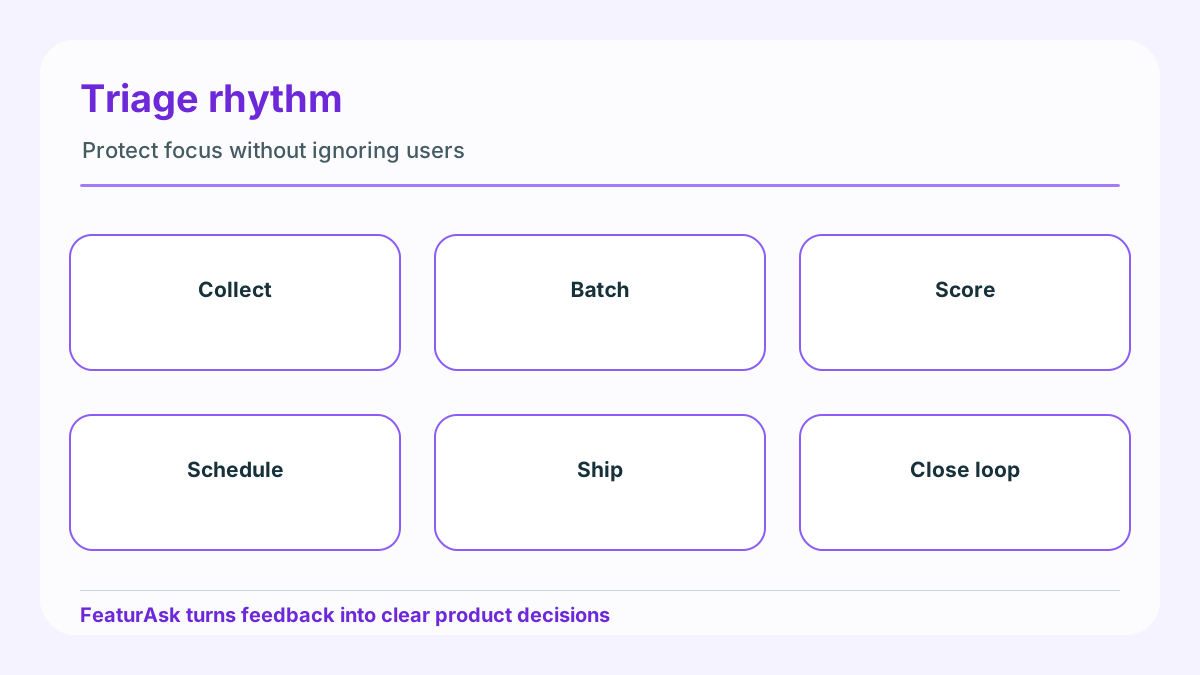
A three-step prioritization rhythm
-
Collect the signal in one place and attach context before scheduling work.
-
Score work by customer impact, urgency, effort, risk, and strategy instead of gut feel alone.
-
Reserve capacity for unplanned defects so the roadmap does not collapse every week.
State the interruption rule near the queue so urgent work is separated from merely noisy work.
For teams protecting developer focus, FeaturAsk routes feature requests into a reviewable voting workflow. It is priced at $29.95/year, starts with a free month, and lets teams try it without entering a credit card.
How to protect maker time
-
Batch triage windows instead of interrupting engineers for every new comment.
-
Keep roadmap statuses clear so stakeholders do not ask for the same update repeatedly.
-
Use small release notes to close loops and reduce support explanations.
-
Review old requests and bugs monthly so stale work does not create mental clutter.
Put a revisit date on deferred work so hidden obligations do not return as emergencies.
When trade-offs affect revenue, connect the queue to B2B SaaS sales signals; when the team needs broader product habits, revisit SaaS product management books.
Communicate trade-offs openly
-
Customers do not need every internal detail, but they do appreciate visible progress and honest status.
-
A public feedback board lets the team show what is being considered without promising every idea.
-
A clear changelog turns completed work into trust, which buys patience for the next hard trade-off.
Share status when work interrupts the plan, returns to the queue, or reaches production.
Capacity planning without false precision
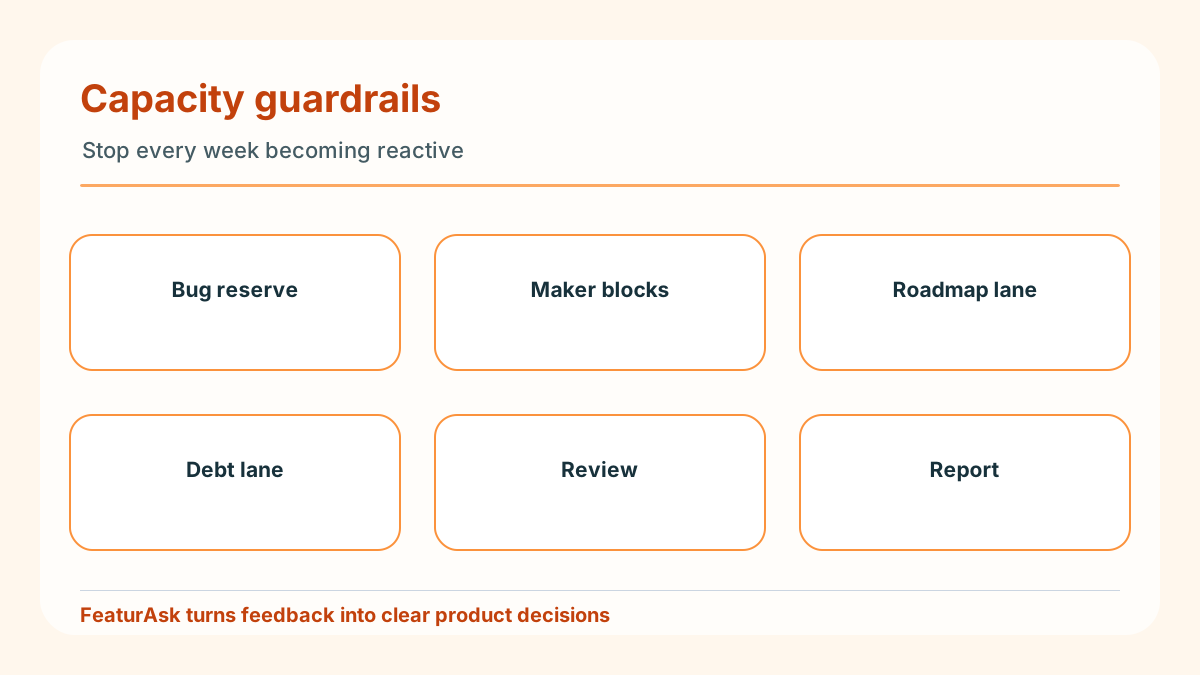
A small software team does not need a complicated utilization model. It needs honest capacity bands. Reserve a visible slice for defects and support, a visible slice for roadmap work, and a visible slice for debt or discovery. When one band overflows, make the trade-off explicit instead of silently borrowing time from every other commitment.
A weekly request triage rhythm
-
Route feature ideas into one queue so developer interruptions are reviewed before they reach sprint work.
-
Group repeated interruptions by underlying problem before deciding whether engineering should switch context.
-
Mark requests by severity, customer impact, and timing before placing them near active development.
-
Weigh urgency, focus cost, customer impact, and engineering risk before interrupting planned work.
-
Communicate when interruptions are accepted, deferred, resolved, or converted into planned work.
Run the weekly rhythm like an operating review, not a status ceremony. The team should leave with protected focus blocks, a clear interruption rule, and a record of which customer signals actually changed the schedule.
Time-management rules for mixed bug and feature work
The hardest software-time decisions happen when urgent bugs, customer requests, and technical debt all look legitimate. Start by naming the work type. A production defect needs severity, frequency, and workaround context. A feature request needs customer value and strategic fit. A debt item needs risk, maintenance cost, and the future work it unlocks. Once the work types are visible, the team can reserve capacity instead of pretending every item competes in the same lane.
Use a weekly triage rhythm to protect maker time. New feedback can be collected every day, but prioritization should happen in a scheduled window unless there is a true incident. That protects engineers from constant context switching and gives product managers time to merge duplicates, clarify requests, and attach evidence. It also gives stakeholders a predictable place to raise trade-offs.
Communicate the capacity model openly. If defects consume the reserve, say which roadmap item moves. If a strategic feature must ship, say which debt item waits. Honest trade-offs build more trust than optimistic plans that silently slip.
Plan time by risk, not only by task count
Software teams lose time when all work is treated as interchangeable. A two-hour copy change, a flaky payment bug, a refactor that protects future delivery, and a customer-requested workflow improvement may each appear as one ticket, but they carry different risk. Better time management starts by naming the risk attached to the work: revenue risk, trust risk, security risk, delivery risk, learning risk, or opportunity cost.
Once the risk is named, the planning conversation becomes clearer. A severe bug may interrupt a feature sprint because customer trust is at stake. Technical debt may deserve protected time because it is slowing every release. A popular feature request may wait if the problem is not yet understood. This is not procrastination; it is sequencing work so the team spends its limited attention where it changes outcomes.
Use capacity ranges instead of pretending the calendar is exact. Reserve a portion of the week for planned roadmap work, a portion for defects and support escalations, and a portion for maintenance. The percentages can change by product stage, but making the buckets visible prevents every surprise from becoming a crisis.
Reduce context switching with clearer intake
Many time-management problems are actually intake problems. Requests arrive through chat, email, sales calls, bug reports, meetings, and founder ideas. Developers then lose focus because every channel feels urgent. A single intake routine protects maker time by separating capture from decision.
Capture the request immediately, but do not interrupt the build team until it is triaged. Add context, merge duplicates, identify who is affected, and decide whether it is a bug, feature request, support issue, or research question. Only urgent defects should bypass this path. Everything else can wait for the next review window.
This is where a feature request board helps more than another meeting. Users can submit and vote without sending a direct message to a developer. Product or support can moderate the queue. Engineering sees cleaner candidates instead of raw noise. The team still listens quickly, but it does not let every comment fracture the workday.
Balance bugs, debt, and features deliberately
A useful weekly plan names the trade-off between three categories. Bugs protect current users. Technical debt protects future speed and quality. Features create new value or unlock revenue. Ignoring any category creates a different failure: churn, slowdown, or stagnation.
Set default rules before emotions rise. Critical bugs interrupt the plan. Moderate bugs are batched. Debt receives a recurring allocation tied to measurable friction, such as slow deploys, repeated defects, or onboarding pain. Feature work is selected from evidence, not whoever argues loudest. These defaults reduce decision fatigue because the team is not reinventing priority under pressure.
When trade-offs affect customers, communicate them. If a requested feature waits because the team is fixing reliability, say so. If a bug fix ships before a shiny roadmap item, explain the user impact. Transparency helps customers understand that time is being managed for product health, not hidden inactivity.
A weekly rhythm for small teams
On Monday, choose the few outcomes that matter most. Do not list every task; state the customer or business result the team wants by Friday. On Tuesday and Wednesday, protect deep work by limiting status meetings and routing non-urgent requests into intake. On Thursday, review surprises and decide what moves, splits, or waits. On Friday, publish a short update: what shipped, what changed, and what the team learned.
This rhythm creates a memory loop. The team sees whether estimates were realistic, which interruptions repeated, and which requests deserved more discovery. Over time, planning improves because the system records actual demand instead of relying on optimism.
FeaturAsk supports that rhythm for $29.95/year after a one month free trial with no credit card required by giving customers a visible place to request features and giving teams a cleaner way to review demand before it consumes developer time.
Time questions engineering teams ask
How much capacity should go to bugs?
There is no universal percentage. Track bug severity, customer impact, and recurrence. If defect work regularly consumes the week, the team may need quality investment before adding more features.
Should technical debt be visible to customers?
Not every debt item needs a public explanation, but customer-facing impact should be described. Faster loading, fewer failed imports, stronger reliability, or safer account handling are benefits users can understand.
How can feedback save development time?
Clean feedback prevents teams from building features based on a single loud anecdote. Votes, comments, and segments reveal whether a problem is widespread, valuable, and urgent enough to justify the work.
The same discipline helps founders and product managers say no without sounding dismissive. Instead of rejecting a request because the week is full, they can explain which risk is being handled first and when the idea will be reviewed. Customers may still prefer a faster answer, but a visible rule is better than silence. It keeps urgency from becoming a negotiation in every support thread and preserves developer focus.
Conclusion
The practical test is whether the plan survives a real week. If one urgent bug, one customer request, or one unclear dependency destroys the schedule, the team needs stronger intake rules and smaller commitments. Review the interruptions, adjust the categories, and make the next week easier to steer.
Small teams can also keep a short decision log for every delay: what changed, who was affected, and what rule would prevent the same surprise next time. That log turns schedule pain into operating knowledge instead of another vague reminder to estimate better.
Time management in software development is not just personal productivity. It is a product operating system: classify risk, protect focus, control intake, reserve capacity, and communicate trade-offs. Teams that manage time this way ship with less chaos because they know why work is being done, when it should interrupt the plan, and how customers can influence what comes next.