How to Supercharge Your B2B SaaS Sales
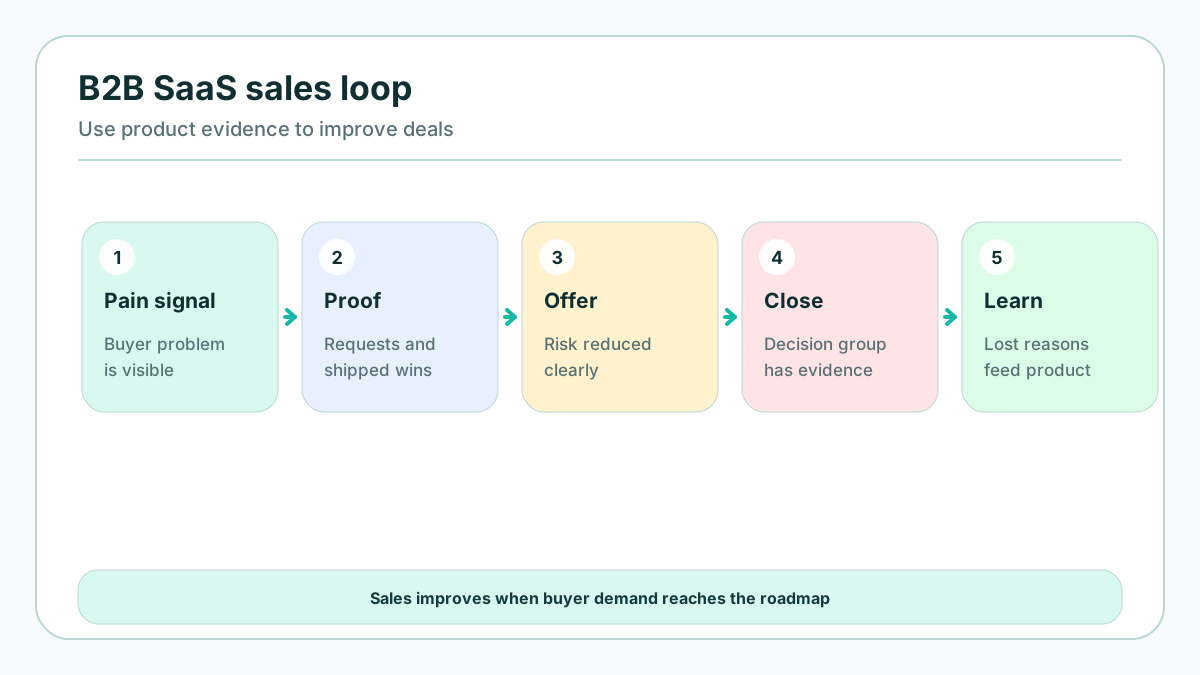
B2B SaaS sales gets easier when the team stops treating every opportunity as a pitch and starts treating it as a shared diagnosis. The seller's job is not to recite every feature. It is to understand the buyer's workflow, expose the cost of the current problem, prove that the product can create a better operating rhythm, and carry the learning back into product decisions.
That is the difference between a sales process that produces activity and one that produces revenue intelligence. More sequences, longer demos, and louder urgency rarely fix weak discovery or a product story that does not match the buyer's job. A stronger process helps the right accounts move faster, helps poor-fit accounts leave earlier, and gives product teams clearer evidence about what the market is asking for.
This guide is built for lean B2B SaaS teams that sell with limited time, small teams, and real product tradeoffs. It covers qualification, demos, proof, objections, roadmap feedback, handoffs, expansion, and measurement. It also shows where a lightweight feedback system can support sales without turning the roadmap into a custom work queue.
When sales calls keep surfacing feature requests, FeaturAsk gives prospects and customers a simple place to submit and vote on ideas. Teams can start with a 1 month free trial, no credit card required, then continue for $29.95/year.
Start with a clear definition of a qualified B2B SaaS opportunity
A qualified opportunity is not simply a company that agreed to a meeting. It is an account with a painful workflow, a credible owner, a reason to act, a path to approval, and enough product fit to make success realistic. If one of those pieces is missing, the seller should know which one and decide whether to advance, educate, nurture, or disqualify.
Useful qualification starts with the buyer's operating problem. Ask what process is breaking, how often it happens, who feels the impact, and what the team does today to work around it. The goal is not to extract a dramatic quote; it is to understand whether the pain is strong enough to survive budget review, internal comparison, and the buyer's other priorities.
Then qualify authority without turning the conversation into an interrogation. In many SaaS deals, the first champion is not the economic buyer. They may be the operator who feels the pain, the manager who owns adoption, or the technical evaluator who checks fit. Good discovery identifies the buying group early and gives the champion a reason to involve others before the deal stalls.
Timing matters too. A team with a strategic initiative, a renewal deadline, an audit requirement, a growth bottleneck, or a leadership mandate behaves differently from a team that is casually exploring. HubSpot's sales discovery guidance is valuable because it emphasizes understanding before pitching. For SaaS, add one extra question: what would need to be true inside your workflow for this product to become part of the way your team operates?
Use discovery to build the demo, not to check a box
Discovery should change what happens next. If every prospect receives the same demo after a discovery call, the seller did not really use the information. The best B2B SaaS demos are built from the buyer's current state, desired outcome, proof requirements, and risks.
A simple structure works well. Begin by restating the buyer's problem in their words. Confirm the success metric they care about, such as reducing support tickets, shortening review cycles, improving release communication, or increasing customer feedback quality. Then show the shortest credible path from today's pain to the desired outcome. Close with the proof, implementation steps, and buyer action needed to keep momentum.
Generic feature tours are especially risky in B2B SaaS because they create false engagement. Prospects may nod through a broad product walkthrough while silently waiting for the one workflow they care about. A tighter demo respects their time and gives the seller better data. If the buyer interrupts with a detailed workflow question, that is often a stronger signal than polite praise.
Create demo tracks around jobs, not personas alone. A revenue leader may care about pipeline blockers and retention signals. An operations owner may care about process consistency. A technical evaluator may care about integrations, permissions, security, and data structure. Each track should have its own opening story, proof point, and risk discussion.
Match proof to the buyer's perceived risk
Buyers do not ask for proof because they dislike your product. They ask because they must defend a decision inside their organization. A small self-serve account may need a fast setup path, clear pricing, and a trial that reaches value quickly. A larger account may need security documentation, implementation confidence, stakeholder alignment, legal review, and a business case.
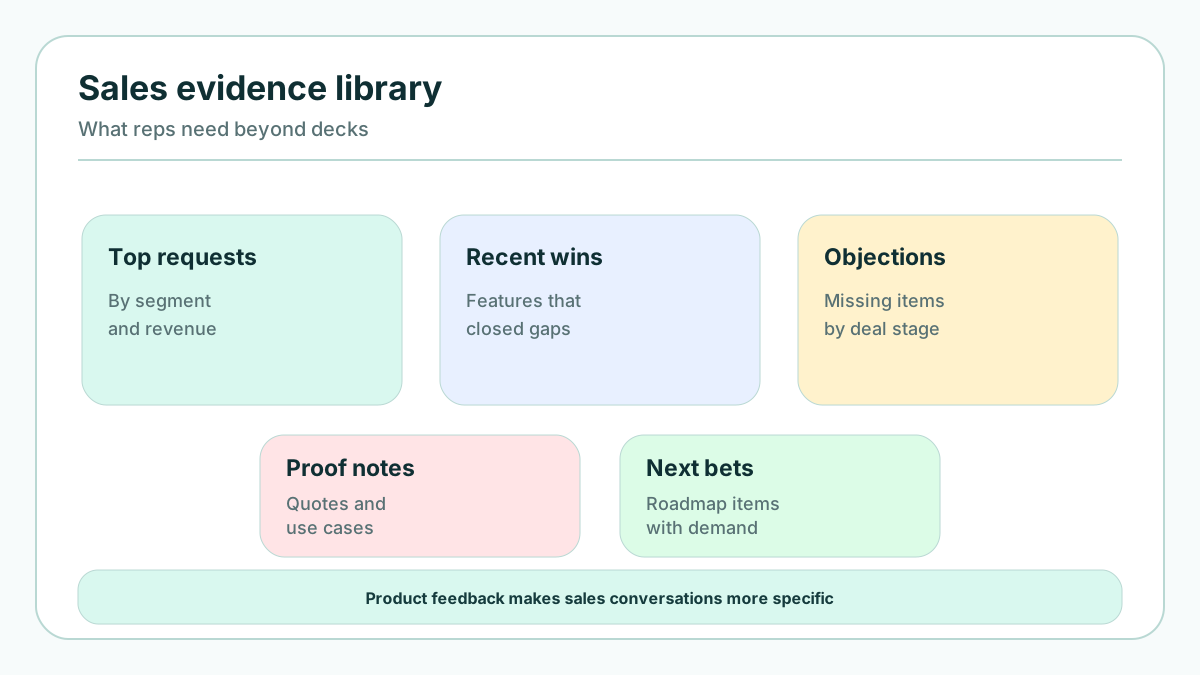
Treat proof as stage-specific. Early in the process, proof may be a relevant example, a short benchmark, or a workflow comparison. During evaluation, proof may be a sandbox, a pilot plan, technical documentation, or customer evidence. Near procurement, proof may become risk reduction: data handling, uptime, access control, support commitments, and onboarding responsibilities.
Salesforce's sales process resources are a useful reminder that stages should reflect buyer progress, not seller optimism. A deal is not stronger because a follow-up email was sent. It is stronger when the buyer invites a teammate, shares current data, validates the workflow, starts a trial, confirms budget, or commits to a decision date.
For SaaS teams, product proof is often inseparable from roadmap proof. Prospects want to know whether the product is moving in a direction that supports them. Do not promise custom development to win a deal. Instead, show how requests are captured, reviewed, prioritized, and communicated. A transparent feedback workflow can make the team look more reliable without overcommitting engineering.
If roadmap uncertainty is slowing qualified deals, try FeaturAsk as a lightweight request board and voting hub. It helps sales show that feedback has a visible path while keeping product decisions disciplined.
Turn objections into structured product intelligence
Objections are not just barriers to overcome. They are market data. A pricing objection may reveal weak value framing, poor qualification, or a segment that cannot support the target ACV. An integration objection may point to a true product gap. A security objection may be a documentation issue rather than a missing capability. A roadmap objection may indicate that buyers need more confidence in product direction.
The key is to capture objections in a way that product and leadership can use. Record the objection, the segment, the deal size, the buying stage, the competitor if relevant, the exact customer language, and the outcome. One lost deal should not redirect the roadmap, but ten qualified prospects asking for the same integration deserve review.
This is where sales and product need a shared evidence model. The article on qualitative vs. quantitative feedback explains why customer words and counted patterns should work together. Sales notes provide context. Vote counts, revenue impact, frequency, and segment concentration provide weight.
A weekly or biweekly sales-learning review can be short. Ask which objections appeared repeatedly, which deals changed stage because of product uncertainty, which requests came from ideal customers, and which product improvements would unlock both new sales and retention. The output should not be a list of demands. It should be a ranked set of market signals.
Build a sales-to-product loop that does not distort the roadmap
The fastest way to improve B2B SaaS sales is sometimes a product decision, not a new script. If qualified buyers hesitate because onboarding is confusing, the best sales enablement may be a better activation flow. If buyers repeatedly ask for the same report, the best objection handling may be a focused reporting improvement. If they cannot tell where the product is heading, a public roadmap may create confidence.
However, the sales team should not convert every live deal into an emergency roadmap request. That creates a loudest-deal problem where near-term revenue pressure overwhelms product strategy. The better approach is to separate deal-specific urgency from market evidence. Product should know which requests affect current opportunities, but prioritization should also consider strategic fit, customer concentration, effort, retention impact, and long-term positioning.
A lightweight feedback board helps because it makes demand visible without making every request a commitment. It gives sales a responsible answer: the request is captured, other customers can vote, product reviews patterns, and updates are shared when priorities change. That is more credible than vague reassurance and safer than promising a ship date that engineering cannot defend.
For small teams, FeaturAsk is built around that practical middle ground. You can collect requests, let customers vote, and use the results in sales conversations. The product offers a 30-day free trial with no credit card, and the paid plan is $29.95/year after the trial.
Protect trust with a clean handoff after the sale
A strong sales process can still fail if onboarding has to rediscover the entire deal. The handoff should preserve the promise that won the account. Sales should document the buyer's goal, success metric, decision criteria, key stakeholders, technical constraints, implementation risks, commitments made, and any requests that influenced the purchase.
Customer success should begin the kickoff by confirming those points. That tells the customer the team listened and prevents the buyer from repeating the same context. It also helps success identify where expectations need to be reset. If the customer expects a future capability, the team should clarify whether it is planned, under consideration, or simply logged as feedback.
The handoff is also a product signal. If new customers repeatedly need a workaround, custom explanation, import help, or manual configuration, that is not only a success burden. It is evidence that the product may need clearer onboarding, better defaults, more documentation, or a simpler workflow.
This is where related product communication matters. The guide on announcing product updates and new features is useful because expansion often depends on customers understanding what changed and why it matters. Sales, success, and product should agree on how updates reach customers after the contract, not only before it.
Improve pricing conversations by anchoring value early
Pricing pressure often appears late, but it is usually created early. If discovery does not quantify pain, if the demo does not connect features to outcomes, and if proof does not reduce risk, then price becomes the easiest thing for the buyer to challenge. Strong sellers anchor value before the pricing page appears.
That does not mean inflating ROI claims. It means connecting the product to real business consequences. What does the current workflow cost in time, churn risk, missed renewals, delayed launches, support volume, or lost visibility? What would improve if the team had a reliable feedback loop, a clearer roadmap, or better customer communication?
Pricing conversations are also a qualification tool. Some accounts are bad fits because they cannot justify the product, even if they like it. Others need help building an internal case. For those accounts, provide the champion with the language, proof, and implementation plan they need to explain the purchase internally.
Create expansion signals before renewal season
B2B SaaS sales does not end at the first contract. Expansion becomes easier when the product creates visible value, the team tracks adoption, and customer-facing teams notice new use cases early. Renewal season is too late to discover that an account never reached the promised outcome.
Sales, success, and product should agree on expansion signals. These may include active users, repeated workflow completion, feature adoption, request volume, votes from additional teams, stakeholder invitations, or usage tied to a strategic initiative. The signals depend on the product, but the principle is the same: expansion should be based on observed value, not hopeful account plans.
A feedback product has especially useful expansion signals. If more customer teams start submitting ideas, voting on requests, and following roadmap updates, the account may be ready for broader rollout. If feedback dries up, the team should investigate whether the board is hidden, the process is unclear, or customers do not believe updates will happen.
The guide to the benefits of a public product roadmap explains why transparency can support trust. In sales and expansion, trust is not abstract. It shows up when buyers believe feedback will not disappear into a private spreadsheet.
Measure the process with buyer progress, not vanity activity
Activity metrics are useful for managing effort, but they do not prove that buyers are moving. A team can send more emails, book more calls, and create more tasks while the quality of opportunities declines. A better scorecard includes buyer actions and product learning.
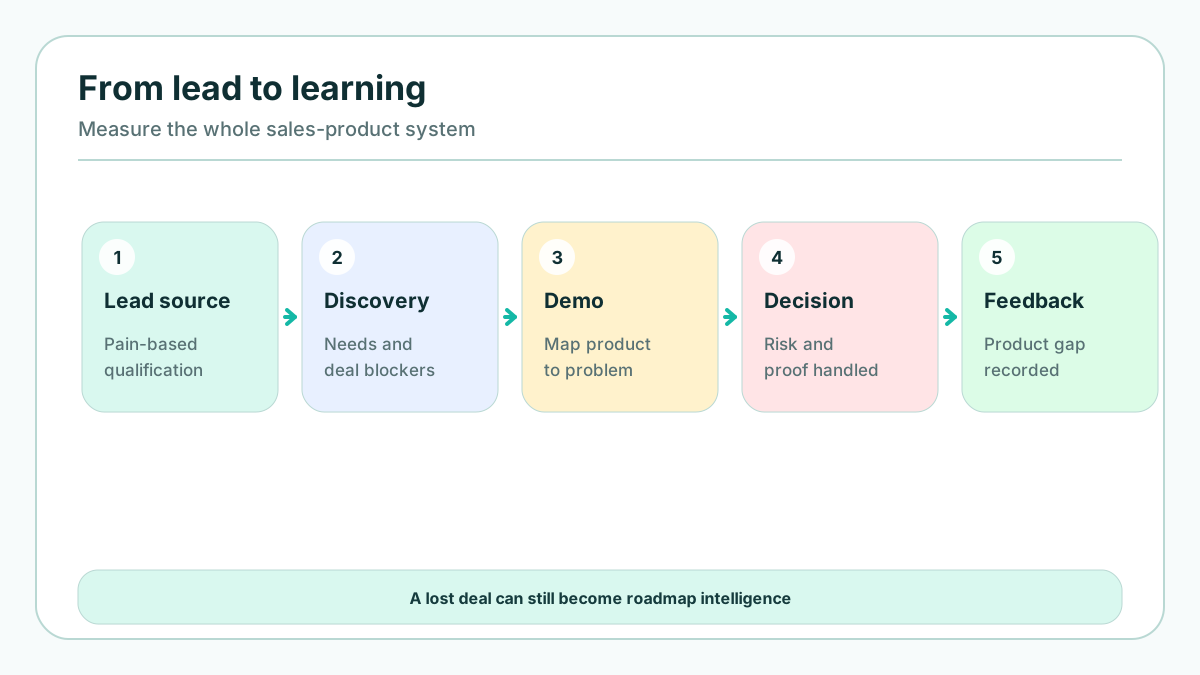
Track stage conversion, sales cycle length, win rate by segment, loss reasons, trial activation, proof assets used, stakeholder involvement, and handoff quality. Then add product intelligence: most common objections, most requested capabilities, requests tied to closed-won deals, requests tied to lost deals, and feedback themes that affect expansion.
Do not overcomplicate the dashboard. A small B2B SaaS team can start with five questions: Are we speaking to the right accounts? Are buyers taking meaningful next steps? Are demos tied to real workflows? Are repeated objections reaching product? Are new customers receiving the context they were promised?
The point of measurement is not to punish the team. It is to make the process easier to improve. When metrics reveal where deals slow down, the team can test a better discovery question, a sharper demo path, a new proof asset, a clearer pricing explanation, or a product improvement.
Sources worth checking
This article draws on public sales and SaaS process references from HubSpot on discovery calls, Salesforce on sales process design, Gong's sales insights library, and McKinsey's B2B growth research. Use those resources for broader process ideas, then validate changes with your own win/loss notes, buyer actions, product feedback, and renewal outcomes.
Conclusion
B2B SaaS sales improves when the process creates buyer progress and product intelligence at the same time. Strong discovery clarifies pain. Buyer-led demos show the shortest path to value. Proof reduces risk. Objections become structured evidence. Clean handoffs protect trust after the contract. Expansion signals reveal where customers are getting value.
If feature requests, roadmap questions, or repeated objections are slowing deals, use FeaturAsk to turn that demand into organized product feedback. Start with a 1 month free trial, no credit card required, then keep the workflow for $29.95/year.