Product Idea Submission Form: Collect Better Requests Without Extra Process
A product idea submission form sounds humble, but it solves a real operating problem. People
often have useful ideas at the wrong time for your team: late at night, while browsing a product
page, after watching a tutorial, or when they hit a missing option inside a workflow. If there
is no focused place to submit the idea, it ends up in email, chat, or nowhere at all.
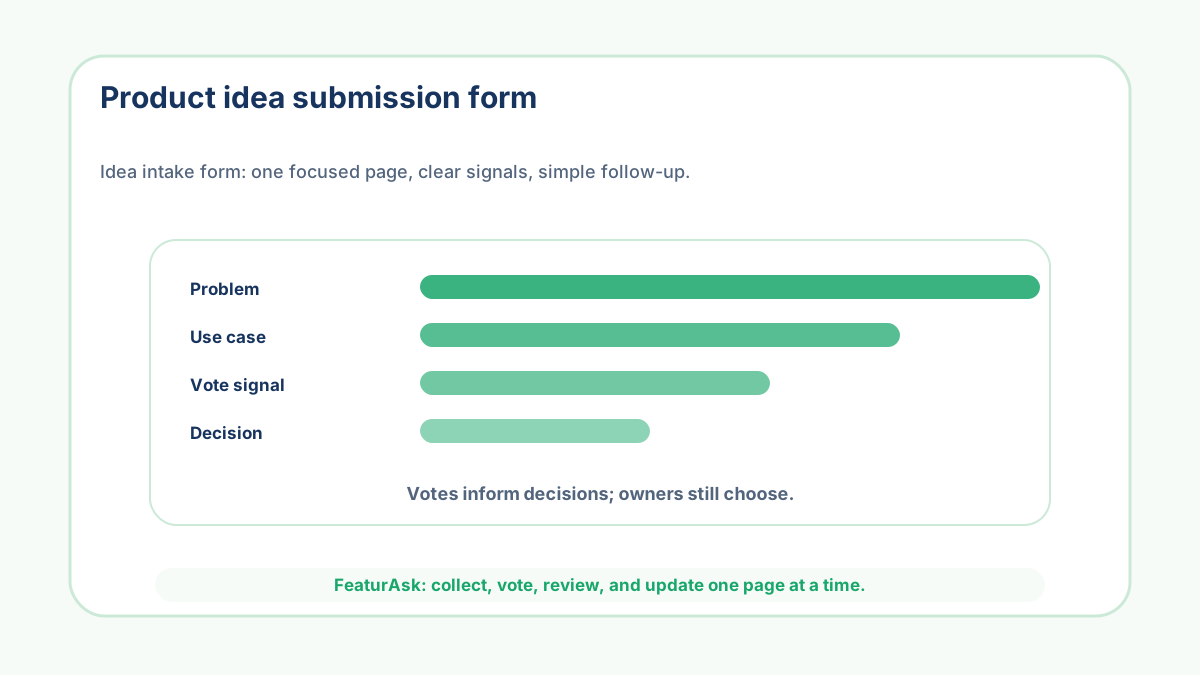
The form should not be a research questionnaire. Its job is to capture the idea, the reason
behind it, and one or two pieces of context that help the owner review it later. The lighter the
form, the more likely people are to use it. The clearer the prompt, the more likely the answer
will be usable.
FeaturAsk gives small teams a practical version of this workflow:
install the widget on one exact webpage, customize the heading and description, collect comments
and optional fields, let people vote, and manage requests with statuses. The trial lasts 30 days
with no credit card, and the plan is $29.95/year after that.
Ask for the idea in the customer’s own words
The most important field is the plain-language request. Do not force people to translate their
idea into your internal categories before they can submit it. A customer might say "I need a way
to compare last month with this month" before they know whether that means analytics, exports,
reports, or dashboard filters.
That wording is valuable because it preserves the problem. Internal teams are tempted to jump
straight to solutions, but customer language often shows the job they are trying to finish. Keep
the first field open enough for real words, then use optional fields to add structure.
Use one optional field for sorting and one for context
A practical form rarely needs more than two optional fields. One can help sort the request:
role, product area, use case, content category, store department, or customer type. The other
can capture priority context: how often this comes up, what the user tried, or what outcome they
need.
FeaturAsk supports up to two optional fields, which keeps the form from becoming a spreadsheet
disguised as a widget. If a field would not affect review, remove it. Every unnecessary question
is a tax on the person doing you a favor.
Place the form where the idea naturally appears
A product idea form works best when it lives near the moment that triggers ideas. For SaaS, that
may be a roadmap page, dashboard, template library, or integrations page. For ecommerce, it may
be a category page. For creators, it may be a content hub or course page. The page acts as a
silent prompt.
Because FeaturAsk uses one assigned webpage URL per subscription, the owner has to choose that
moment deliberately. That restriction is useful. It prevents the vague "tell us anything"
problem and makes each submission easier to interpret later.
Let voting reduce duplicate submissions
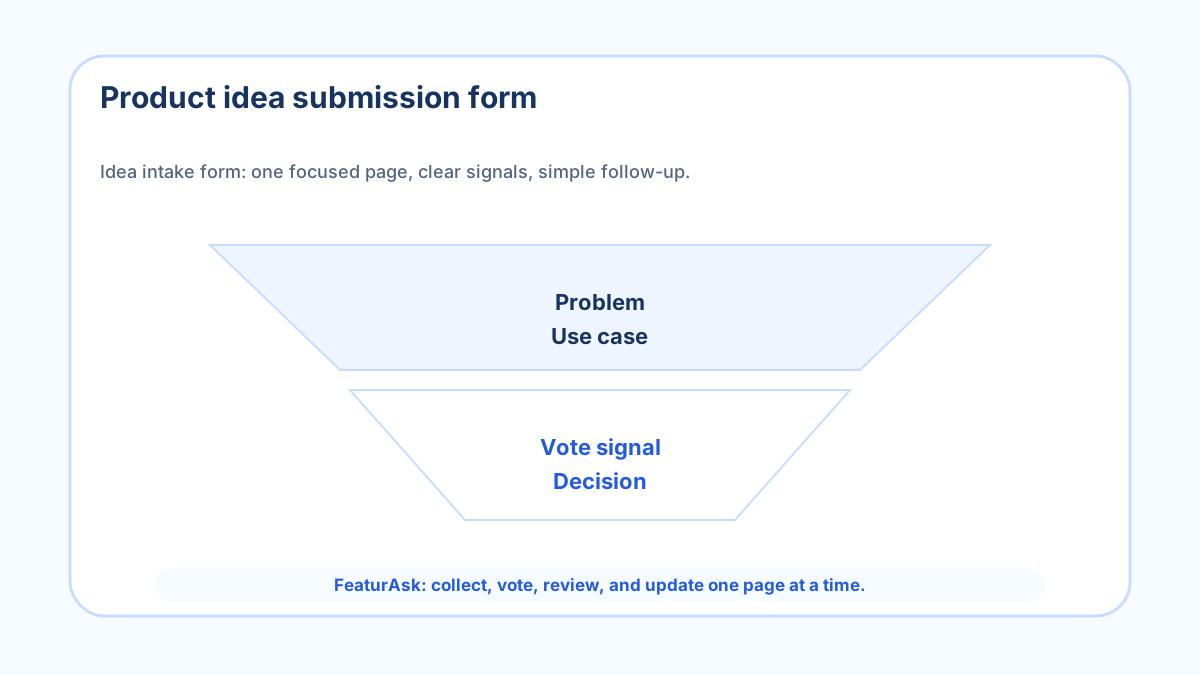
If people can see existing ideas, some will vote or comment instead of creating a duplicate.
That saves review time and gives the team a clearer signal. Five votes on one idea are easier to
understand than five separate messages with slightly different titles.
Voting should not be the only input. A low-vote idea may still matter if it comes from an
important customer group or reveals a painful workflow. Treat voting as a consolidation tool and
a signal of recognition, not as the whole prioritization method.
Protect the form from becoming a support channel
Product ideas and support issues often arrive together. A customer may suggest a new feature
when they are actually blocked by a bug or unclear instructions. The form description should
explain what belongs and where urgent help should go.
Moderation matters here. FeaturAsk lets owners remove unwanted requests, view details, search,
filter by status, and inspect optional field data. Those admin controls keep the idea form
useful after the first week, when the messy real-world submissions begin.
Review ideas with a small decision rubric
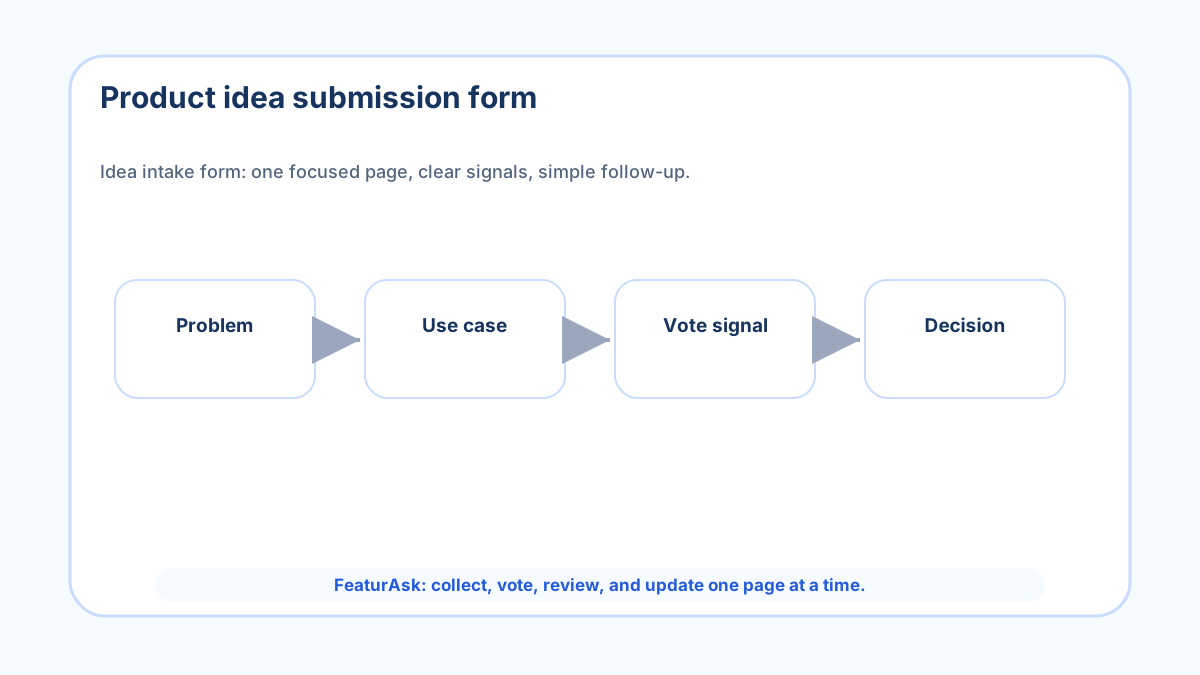
A lightweight rubric is enough for most small teams. Ask whether the idea appears more than
once, whether it fits the product direction, whether it reduces support load, whether it helps a
valuable customer segment, and whether the likely effort is reasonable. The point is to make
review consistent, not bureaucratic.
For broader public discussion, a customer idea board may be better.
For ecommerce-specific collection, a feedback widget for ecommerce can connect ideas to product demand. For startup roadmap visibility, a feature
request portal for startups may fit better.
Close the loop in language customers understand
People who submit product ideas do not need a long internal memo. They need a visible sign that
the idea was received and a plain status when it changes. Pending, Under Consideration, In
Progress, Completed, and Declined are enough for most boards.
If you want to start simple, FeaturAsk gives you the form, voting,
comments, statuses, moderation, and dashboard without requiring a large customer feedback stack.
Start with one page, learn what people submit, then decide whether the workflow deserves more
structure.
Write examples into the form so people submit better ideas
People often submit better product ideas when the form shows what a useful idea looks like. A
short description can do this without adding more fields. Instead of "Submit an idea," write
something like: "Tell us what you wanted to do, what got in the way, and what would make the
page more useful." That sentence teaches the customer how to help you.
Examples are useful because many customers are not product managers. They may know something
feels slow, confusing, or incomplete, but they do not know how to phrase it as a product
request. A good prompt turns vague reactions into reviewable notes. "I need a faster way to
reorder last month’s products" is much more useful than "make this better."
The form should also make it clear that ideas may be reviewed publicly. If votes and comments
are visible, customers should understand that their suggestion can become part of a shared
board. That expectation encourages cleaner titles and reduces private-support language that does
not belong in a public idea queue.
If you want to test this on a real page, FeaturAsk keeps the setup
small: customize the heading and description, collect comments and optional fields, and manage
ideas with plain statuses. The first version does not need to be perfect. It needs to teach
customers how to submit something you can actually evaluate.
Keep the first version intentionally small
The first version of a product idea form should feel almost too simple. That is usually a good
sign. If customers can understand the prompt in a few seconds and submit an idea without
preparing a business case, you will learn faster. The owner can always add structure later after
seeing the kinds of ideas people actually submit.
A small form also makes cleanup easier. You can rename vague ideas, ask follow-up questions in
comments, decline items that do not fit, and learn which optional field would have helped. That
learning is difficult if the first version already contains ten fields and three categories
nobody uses. Start with the shortest form that still gives you reviewable ideas.
Final form review before launch
A useful check after the first week is to read every submitted idea aloud and ask whether a
stranger could understand the request without the original customer in the room. If not, the
form needs a clearer prompt or a better optional field. The submission form is successful when
it creates ideas that remain understandable after the original conversation has faded. That small standard prevents private context from becoming the hidden requirement for understanding the queue. A reviewable idea should explain the desired change, the situation that created it, and the rough benefit for the person asking. Anything less usually turns into follow-up work for the owner.
Keep product ideas close to action
A product idea submission form should be short, specific, and easy to review later. Ask for the
idea in the customer’s own words, add only the optional fields that help triage, and put the
form where ideas naturally appear. The best form creates better decisions without adding process
theater.
Do not measure success by submission volume alone. A smaller set of ideas with clear use cases, comments, and visible outcomes is better than a crowded inbox full of requests nobody can interpret two weeks later.
A final useful habit is to review the form itself after the first few weeks. Look at the ideas that were easy to understand and the ones that required follow-up. If every good submission included context that your form did not ask for, add that prompt as an optional field and remove any field nobody used.