Customer Idea Board: Let Customers Help Shape Your Roadmap
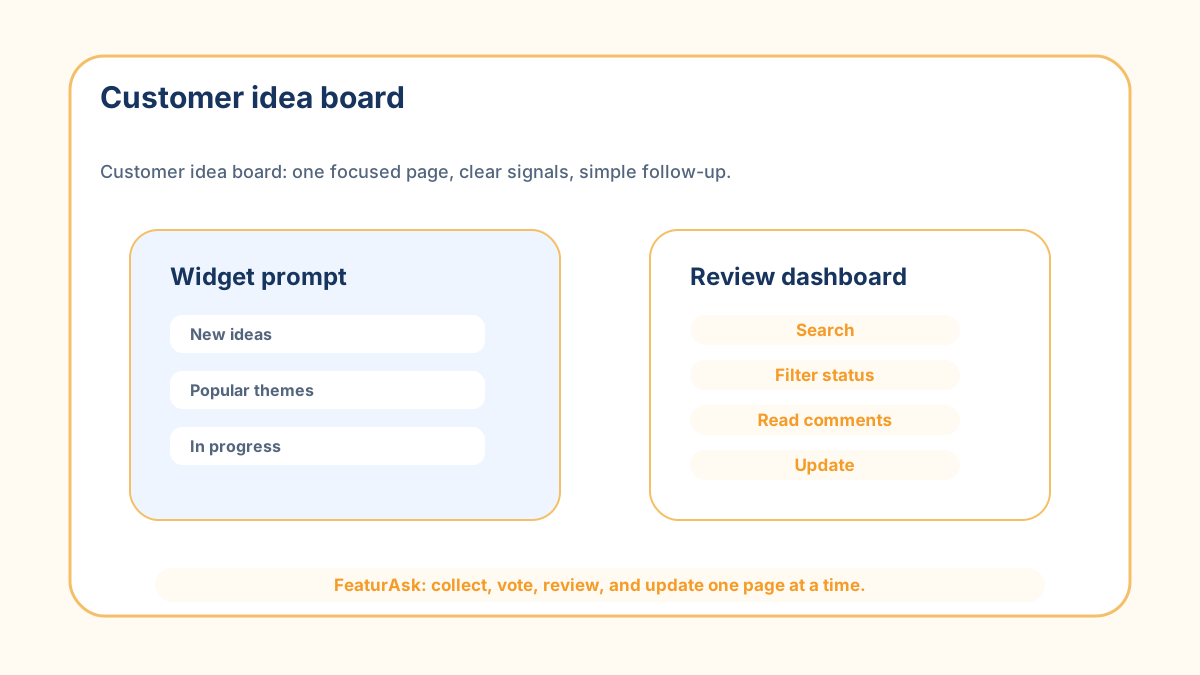
A customer idea board is a public memory for product suggestions. It gives customers a place to
submit ideas, vote on existing requests, add comments, and see whether the team is considering
or building something. Done well, it reduces duplicate requests and gives the team clearer
language for what customers want.
Done badly, it becomes a wall of wishes. Every idea looks equally important, old requests never
close, and the team either ignores the board or lets it bully the roadmap. The difference is not
the board itself. The difference is how narrowly the team defines the board, how honestly it
uses statuses, and how often someone reviews it.
FeaturAsk is designed for that practical version: a widget on one
exact webpage, customer voting, comments, moderation, searchable request management, and plain
statuses. There is a 30-day no credit card trial, and the paid plan is $29.95/year, which makes
it easier to test the habit before committing to a heavy system.
Give the board a boundary before customers give it ideas
A customer idea board needs a scope. Is it for product features, content topics, menu additions,
course ideas, service improvements, or ecommerce product demand? If you leave the scope vague,
customers will use the board for everything. That creates a noisy queue and makes the team look
unresponsive even when it is working hard.
Write the board description like a door sign. Tell people what belongs and what does not. A SaaS
board might welcome workflow improvements and integration requests, while sending account
problems to support. A creator board might ask for episode topics, not sponsorship pitches.
Clear boundaries make the board feel more useful, not less welcoming.
Use voting to measure recognition, not entitlement
Voting helps customers show which ideas they recognize as useful. It also helps the team spot
duplicates without reading a dozen private messages. But votes are not a contract. A highly
voted idea can still be a poor fit, too expensive, or outside the product strategy.
The healthiest boards explain this implicitly through status behavior. Popular ideas may move to
Under Consideration. Some may be declined with a short reason. Some quiet ideas may ship because
they open an important customer segment. The vote count starts a conversation; it does not end
one.
Keep comments attached to the problem
Comments are often more useful than the original idea title. A title might say "Add CSV export,"
while comments explain that customers need to send weekly reports to clients, reconcile
inventory, or move data into accounting software. That context changes the possible solution.
Encourage comments that describe the situation, not just agreement. "I need this because..." is
more useful than "+1." FeaturAsk supports customer comments so the board can gather the why
behind the vote instead of flattening every request into a popularity number.
Moderate the board so useful ideas are easy to find
Public boards need housekeeping. Spam, duplicate posts, vague requests, off-topic complaints,
and old ideas can make a board feel abandoned. Moderation is not censorship; it is how you keep
the board readable enough that customers continue to use it.
FeaturAsk gives owners moderation and deletion controls, plus status filtering and search in the
dashboard. Those admin details matter more than they sound. A board that cannot be cleaned
becomes a liability. A board that stays organized becomes a shared product notebook.
Use statuses to show motion without overexplaining
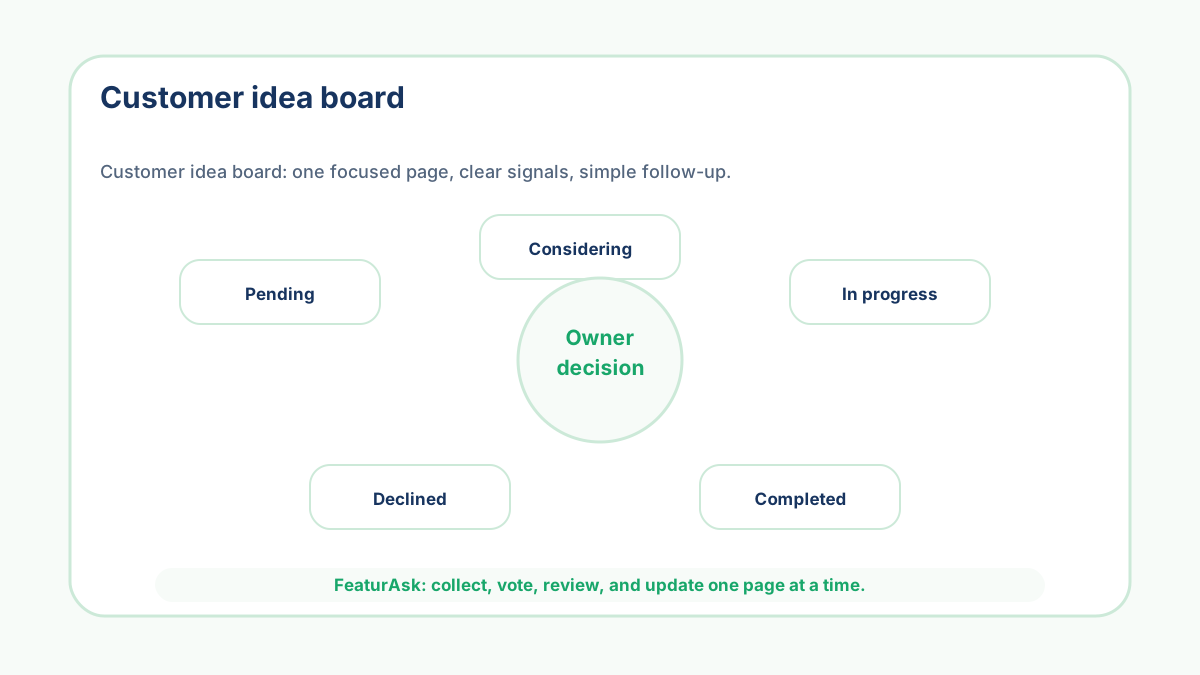
Plain status labels do most of the communication work. Pending means the idea is new. Under
Consideration means the team is evaluating it. In Progress means work started. Completed means
it shipped. Declined means it does not fit. Customers understand those labels because they match
how people talk.
The labels only work if the team uses them consistently. Leaving everything Pending makes the
board feel fake. Moving too many ideas to In Progress creates expectations the team cannot meet.
A small board with accurate statuses is more credible than a giant board with optimistic labels.
Connect the board to real planning conversations
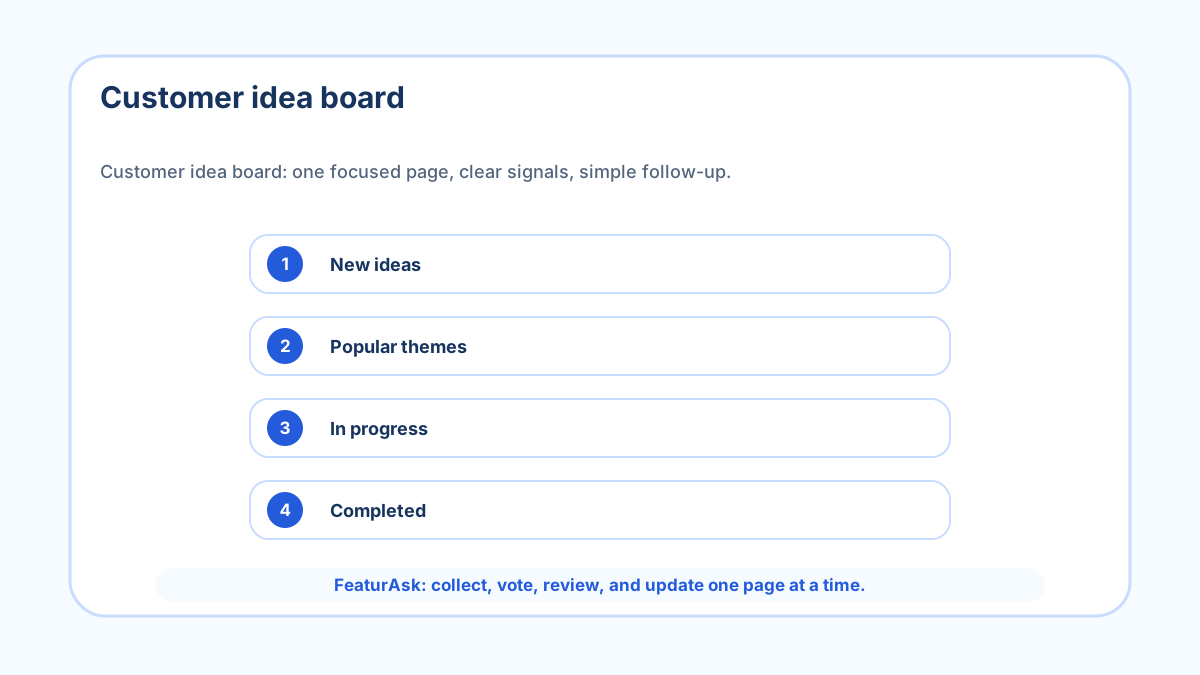
A customer idea board should feed planning, not sit beside it. During weekly or monthly review,
look for repeated pain, strong comments from important customer groups, low-effort wins, and
requests that reveal confusion in the current product. Bring that evidence into the same
conversation where you discuss support load, revenue, strategy, and engineering effort.
If you need a narrower intake path, a product idea submission form may work better. If you mainly want customers to compare visible ideas, read
about how to vote on product ideas. For SaaS-specific collection,
a feature request widget for SaaS keeps the request
closer to the product page that created it.
Know what success looks like after thirty days
A useful first month is not measured only by the number of submissions. Look for fewer duplicate
support messages, clearer customer language, requests that cluster around real workflows, and
enough voting or comments to separate passing wishes from persistent problems. The board should
make planning easier, not merely busier.
If you want to test the idea with a low-risk setup, FeaturAsk lets you
start on one page, customize the widget, collect votes and comments, update statuses, and review
requests from a simple dashboard. That is enough to learn whether customers will help shape the
roadmap before you buy more process than you need.
Make the board safe for honest no decisions
A customer idea board becomes healthier when customers see that not every idea will ship. That
sounds counterintuitive, but a board where every old request is still "planned someday" is less
trustworthy than a board where the owner makes clear tradeoffs. Declined is not a hostile status
when it is used plainly. It tells customers the team has looked at the request and decided it
does not fit right now.
Good no decisions are specific but brief. The idea may be outside the product focus, too narrow
for the current audience, already solved another way, or not worth the complexity it would add.
You do not need to debate every vote. You do need to show that the board is reviewed by a real
owner with a real point of view.
This is especially important for small businesses and creators, where the person reviewing ideas
is often the same person building, cooking, teaching, shipping, or answering customers. A public
board should reduce repeated conversations, not create a second job. Honest statuses help
customers self-select: they can vote for what fits the board and stop asking for things the
business has clearly ruled out.
For teams that want that lightweight public loop, FeaturAsk gives you
voting, comments, moderation, and statuses without asking you to run a full customer community.
Start narrow, make decisions visible, and let the board earn trust through steady maintenance.
Use board language that matches the audience
The words on the board should match the people using it. A SaaS audience may understand
"roadmap" and "integration." A restaurant audience may respond better to "menu ideas" and
"specials." A course creator may want "lesson requests" rather than "product suggestions." The
mechanics can be similar, but the public language should feel native to the page.
This is where customization matters. The heading, description, and visible labels should tell
visitors they are in the right place. A generic board sounds like software. A specific board
sounds like an invitation from the owner. That difference affects both participation and the
quality of suggestions people leave.
Final board review before publishing
One more practical rule: close stale ideas with a clear status or remove noisy entries during moderation before they make the board look abandoned.
Old requests are not automatically bad, but customers should be able to tell whether an idea is
still open, already handled, or no longer relevant. A tidy board signals that participation is
worth the effort. It also gives new visitors confidence that the business reads the board rather than merely collecting suggestions.
Keep the board useful after launch
A customer idea board should make useful suggestions easier to find, not turn the roadmap into a
popularity contest. Set the scope, invite votes and comments, moderate the board, and keep
statuses current. The board earns trust when customers can see what happened to their ideas.
A board also needs pruning. If an idea has been declined, deleted during moderation, marked declined, or handled in another request, show that outcome instead of leaving duplicate cards to compete for attention. Clean boards invite better contributions because customers can see the channel is maintained.
Before publishing the board, review the oldest open ideas and decide whether each one still deserves attention. If an idea is outdated, noisy, or no longer aligned with the product, use a clear status or moderation action rather than leaving it to confuse new visitors. A useful board is not just active; it is maintained.