Vote on Product Ideas: Use Customer Signals Without Letting Votes Run the Roadmap
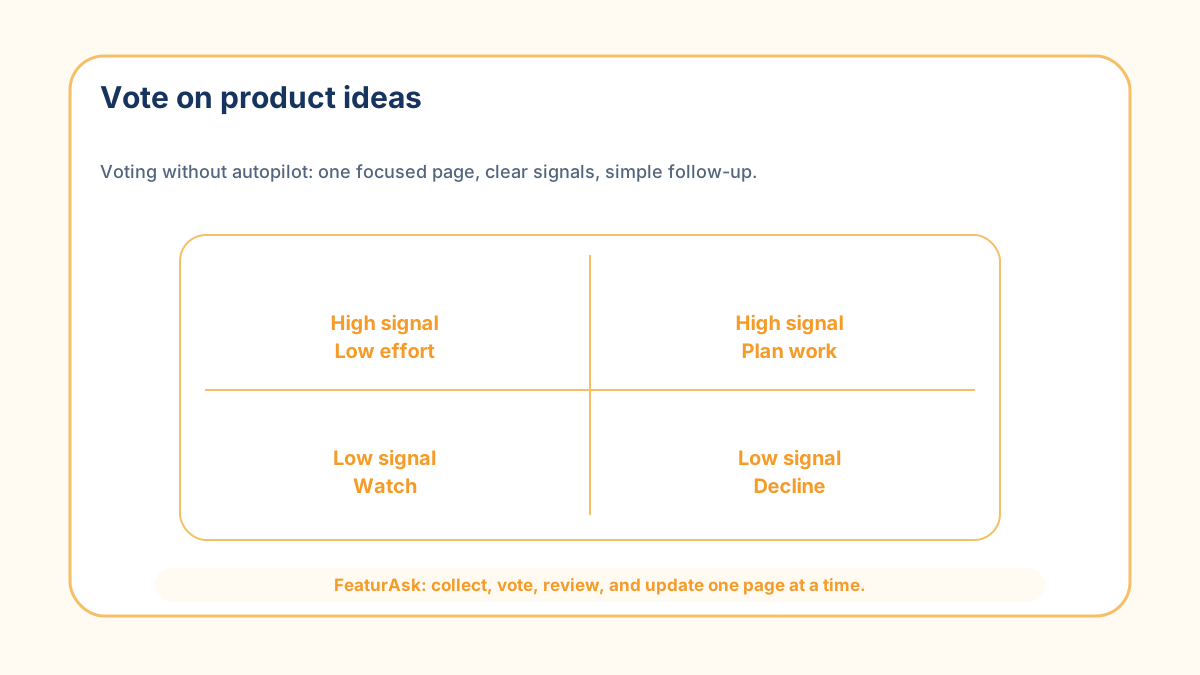
Letting customers vote on product ideas can be useful and misleading at the same time. Votes
show which ideas people recognize. They reduce duplicate messages. They make customer demand
visible. But votes also favor ideas that are easy to understand, easy to campaign for, or
popular with the loudest segment of your audience.
The best voting systems do not pretend popularity equals priority. They collect votes, comments,
and context, then help the owner compare that signal with strategy, effort, revenue, support
load, and product fit. Customers get a voice. The team keeps responsibility for the decision.
FeaturAsk supports that lighter model: customers can submit ideas,
vote, and comment, while the owner reviews requests with statuses, search, moderation, and
request details. It has a 30-day no credit card trial and costs $29.95/year, which makes voting
practical for small teams that do not want an enterprise roadmap platform.
Make the voting promise explicit
Before you invite votes, decide what a vote means. Does it mean "I would use this," "this blocks
me," "this would make me pay," or simply "I like this idea"? Customers do not need a legal
definition, but the page copy should guide them toward the kind of signal you want.
A short description helps: "Vote for the ideas that would make this product more useful to you."
That wording is stronger than "Vote for what we should build" because it avoids promising that
the highest count wins. The team is asking for evidence, not outsourcing the roadmap.
Use comments to understand the vote
A vote says yes. A comment explains why. Two customers may vote for the same export feature for
completely different reasons: one needs client reports, another needs backup files, another
needs spreadsheet analysis. The solution may change once you understand the job behind the vote.
Encourage people to add a sentence when they vote on an idea that matters. FeaturAsk supports
comments so the board can collect the story behind the signal. That context is what keeps voting
from becoming a shallow popularity contest.
Watch for vote campaigns and audience bias
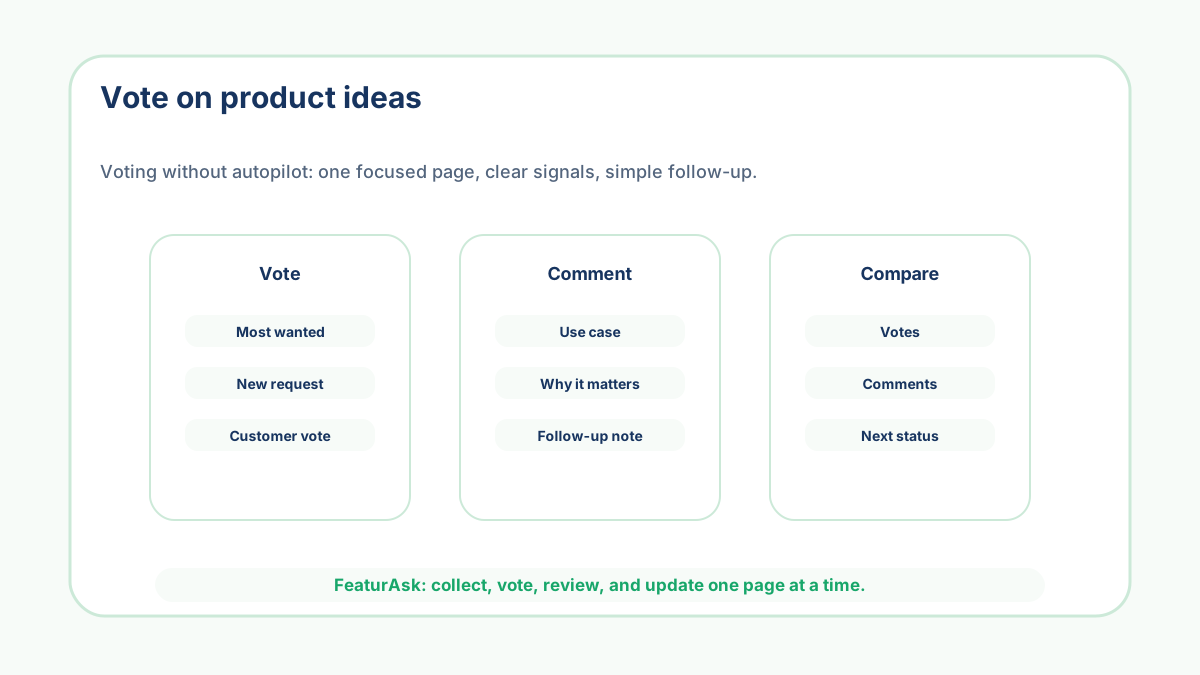
Public voting can be gamed informally even when nobody is trying to be dishonest. A power user
shares the board with friends, a niche community rallies behind one request, or a visible idea
gets more attention simply because it was posted first. Those votes are still information, but
they are not neutral data.
Review votes alongside customer type, comments, support history, and product direction. If the
board serves paying customers, a few detailed comments from active users may outweigh a larger
number of casual votes. The goal is not mathematical purity. The goal is better judgment.
Keep low-vote ideas from disappearing too soon
Some important product ideas start quietly. They may affect a smaller segment, solve a retention
problem, or open a use case that most users have not imagined yet. A voting board should not
bury those ideas forever just because they did not become popular in the first week.
Use statuses and review notes to keep promising ideas alive. Under Consideration can mean the
team sees strategic value even if the vote count is modest. Declined can mean the idea is clear
but not aligned. Completed can show that the team sometimes ships low-drama improvements that
make the product better.
Give the board a review cadence
Voting boards decay when nobody owns them. Set a review rhythm before launch: weekly for new
ideas, monthly for status changes, and quarterly for cleanup if the board grows. Small teams do
not need ceremony; they need a predictable moment when the board becomes part of planning.
During review, look at new vote clusters, repeated comments, requests tied to support volume,
and ideas that have been Pending too long. The review should end with a few visible status
changes or decisions. Otherwise customers learn that voting is decorative.
Match voting to the right collection format
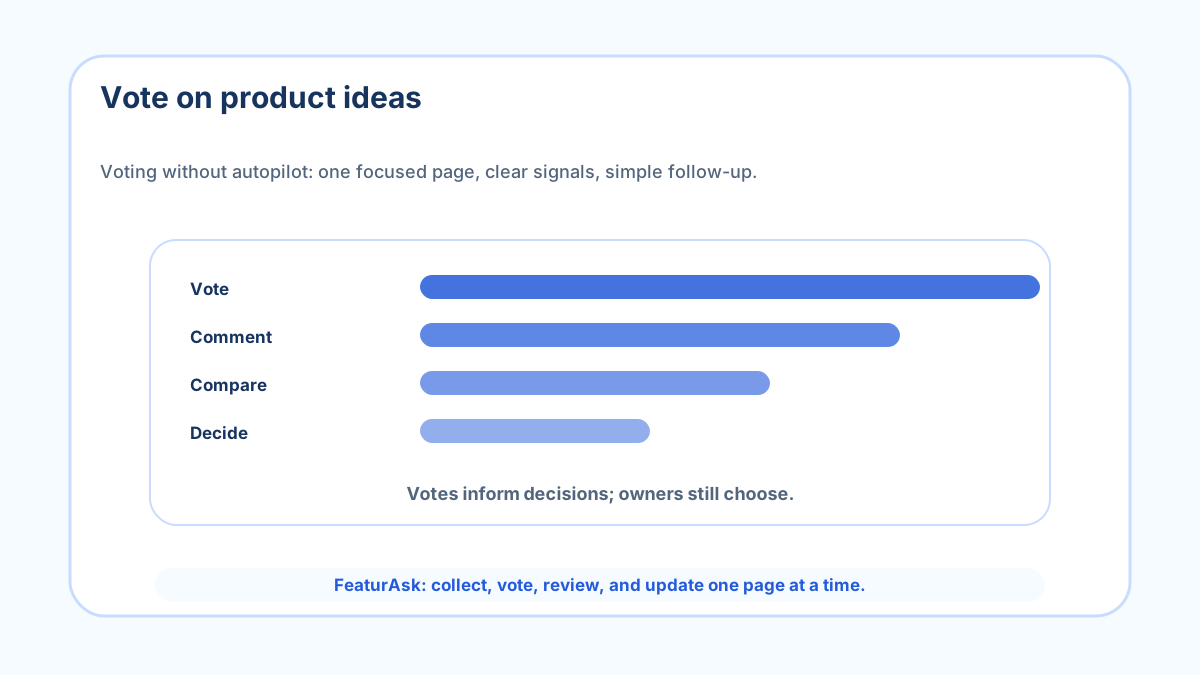
A public feature request board is best when transparency
is part of the value. A customer idea board works when discussion
matters as much as voting. A feature request tool for indie hackers should stay lean because solo builders cannot babysit a complex
workflow.
If your first need is simply to let visitors submit and vote on ideas from one page,
FeaturAsk is enough to test the loop. You can add heavier process
later if the board proves it changes decisions.
Judge success by better prioritization, not bigger numbers
A healthy voting board does not always produce more ideas. Sometimes it produces fewer
duplicates, clearer comments, and faster no decisions. Those are wins. The team should be able
to say which customer problems are gaining recognition and which requests are not worth pursuing
right now.
The final test is whether voting improves the next planning conversation. If the board gives you
sharper examples, clearer clusters, and more confidence about tradeoffs, it is working. If it
creates pressure without context, rewrite the prompt, narrow the scope, or change the review
habit before inviting more votes.
Publish the rules of the voting board in plain language
A voting board needs a short rule set. Not a legal page, not a manifesto, just a few plain
sentences near the widget or board description. Tell customers that votes help the team
understand demand, comments help explain use cases, and the final decision also considers
strategy, effort, and fit. That one paragraph prevents a lot of frustration later.
Without that expectation, customers may assume the top-voted idea should automatically win. When
it does not, the board can feel rigged even if the team made the right decision. Clear rules
make the process feel fairer because customers know what kind of influence they have. They are
helping the team prioritize, not buying a binding ballot.
The rules also guide better participation. Ask customers to vote for ideas they would personally
use, not just ideas that sound nice. Ask them to comment when their use case is different from
the existing description. Ask them to avoid duplicate posts if an idea already exists. These
small instructions improve the quality of the signal.
For a lightweight way to run that process, FeaturAsk lets customers
submit, vote, and comment while you keep control with statuses, search, and moderation. The
board can be public enough to invite participation while still clear that the roadmap belongs to
the owner.
Avoid hiding unpopular decisions
A voting board loses credibility when the team only updates easy wins. Customers notice when
hard or unpopular decisions disappear. If a highly voted idea does not fit, say so plainly. You
do not need a long defense. A short status note that explains the tradeoff is better than
leaving the idea open forever.
This habit also helps the team. Saying no publicly forces clearer product thinking. If the
reason is weak, maybe the idea deserves another look. If the reason is strong, future customers
can see the boundary before posting the same request again. The board becomes a source of
alignment rather than a backlog of unresolved pressure.
Final voting-board review
A final review habit is to compare votes with actual behavior. If many people vote for an idea
but nobody mentions it in support, churn notes, sales calls, or comments, treat it carefully. If
a modest vote count matches repeated pain elsewhere, treat that signal seriously. Voting is
strongest when it joins other evidence. That comparison keeps the board grounded in real customer work instead of visible enthusiasm alone. The owner should still ask who benefits, what problem gets easier, and whether the idea supports the direction of the product or business. Votes begin that judgment; they do not replace it. That keeps the feedback loop useful without surrendering product judgment to raw totals responsibly.
Let votes inform, not decide
Letting customers vote on product ideas is valuable when votes are treated as signals, not
commands. Pair votes with comments, context, and review discipline. The result is not a
democratic roadmap; it is a clearer picture of which customer problems deserve attention.
If the board teaches customers that votes are one signal among several, it becomes easier to make unpopular but correct decisions. People may still disagree, but at least the rules are visible before the vote happens.
A voting board also needs a review owner. If nobody is responsible for checking comments, merging duplicates, and updating statuses, the board will quietly turn into decoration. Give the job to a specific person or meeting, even if the review only takes fifteen minutes.
When a vote changes a decision, write down why. Maybe the comments revealed a use case the team had missed. Maybe the voters came from the exact customer segment you care about. Maybe the vote showed that a tiny improvement would remove a common annoyance. That record makes future prioritization smarter than a bare count ever could.