Feature Request Tool for Indie Hackers: Keep User Ideas Useful When You Are the Whole Team
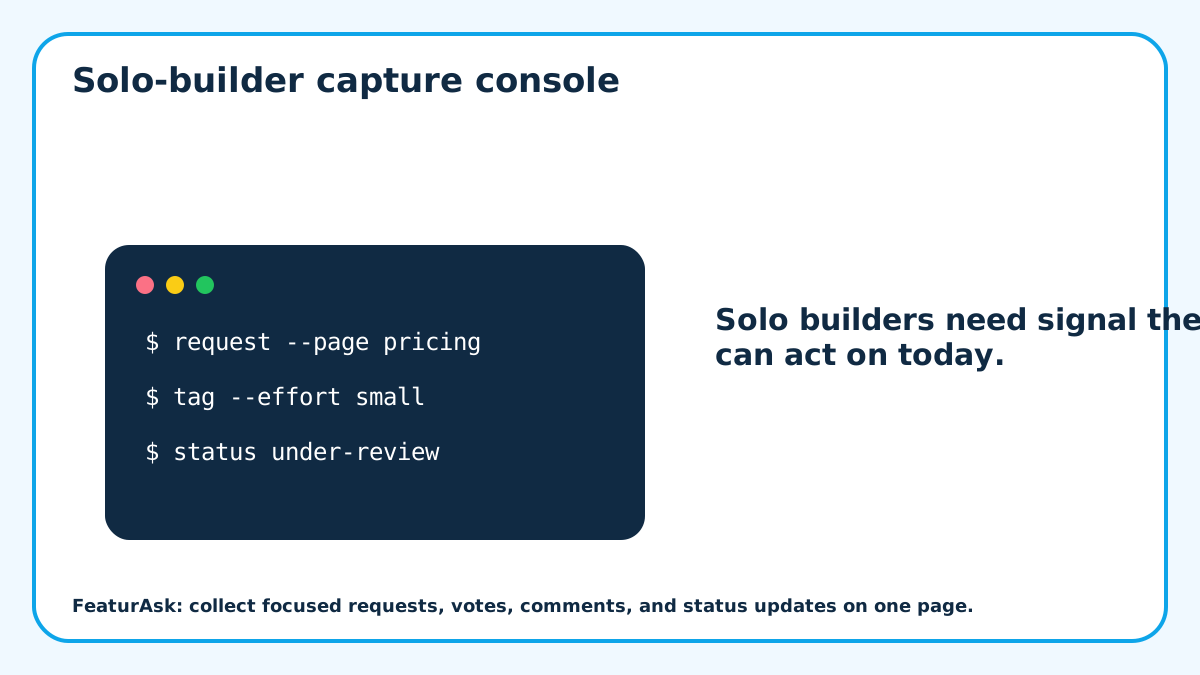
A feature request tool for indie hackers has a different job than a tool for a funded product team. You are not trying to create a perfect triage system. You are trying to avoid losing good ideas while still protecting the limited attention that keeps the product alive.
Indie products collect feedback in messy places: replies, DMs, GitHub issues, support emails, comments, community posts, and checkout notes. The danger is not only that ideas disappear. The bigger danger is that every idea feels urgent because there is no shared system for comparing them.
A lightweight request page gives solo builders a place to capture demand, let users vote, and review patterns without living inside a backlog all week.
Design for the solo-builder calendar
An indie hacker needs a feedback loop that can survive a busy week. If reviewing requests takes an hour, it will stop happening. Build the system around a ten-minute scan: new ideas, duplicates, surprising comments, and one decision to make before the next build session.
The form should be short because the reviewer is also the developer, marketer, support person, and accountant. Ask for the requested outcome, the current workaround, and one optional detail that helps sort the idea.
Catch ideas before they become private promises
Many solo builders accidentally promise features in one-to-one conversations. A public request tool changes that dynamic. Instead of saying “I’ll add that,” you can say “add it to the board so other users can vote and explain their use case.”
That small shift protects trust. Users see that ideas are collected fairly, and you avoid creating a hidden list of promises scattered across private messages.
Use votes to find demand you would otherwise miss
A solo founder may overvalue the loudest user because that user writes the longest emails. Votes provide a counterweight. They show whether quiet users recognize the same problem.
Still, vote totals need judgment. One request from a paying user who depends on the product every day may beat a popular idea from casual visitors. Compare votes with retention, revenue, product direction, and the amount of code you would have to maintain.
Keep statuses brutally simple
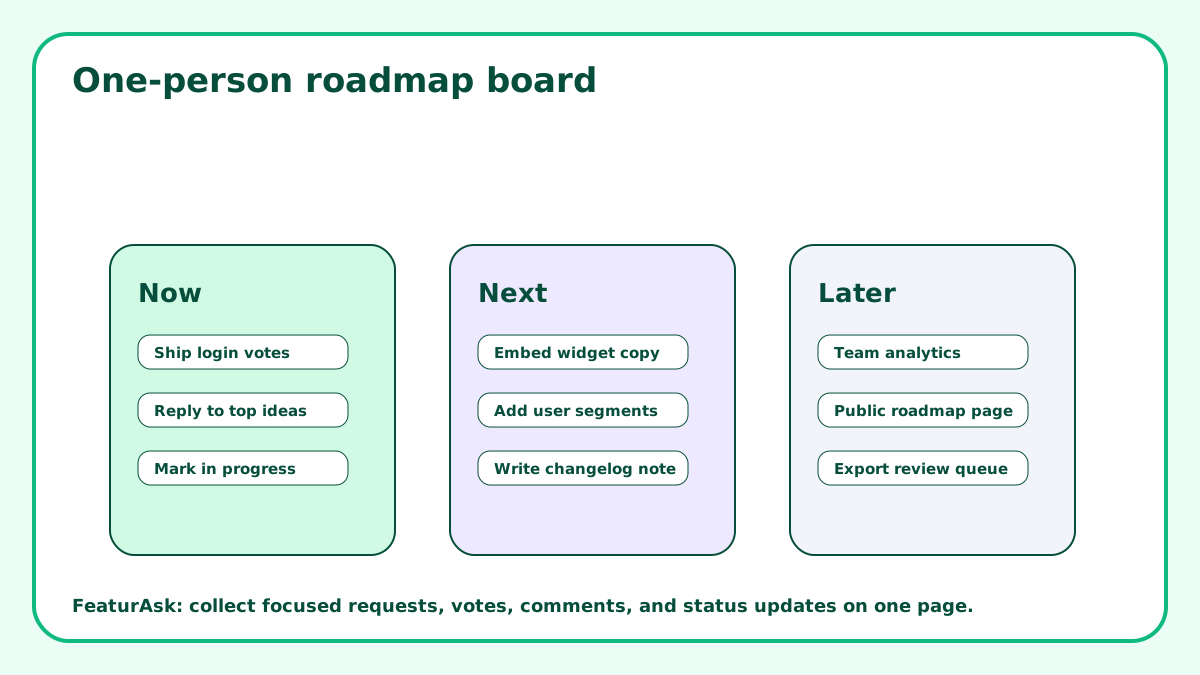
Indie hackers do not need twelve workflow states. Pending, Under Consideration, In Progress, Completed, and Declined are usually enough. More states create the illusion of process while adding maintenance.
Use Declined generously when an idea does not fit. A visible no is kinder than silent limbo. It also stops you from rereading the same request every time you feel guilty about the backlog.
How FeaturAsk fits an indie product
FeaturAsk is built for small web products that need a request loop on a specific page. You paste the generated widget code into the page body, match the widget to your branding, choose whether comments and dates/statuses display, and test it before launch.
The dashboard lets you search, filter by status, read comments, view request details, moderate bad submissions, and use optional fields for context such as plan, use case, or current workaround. FeaturAsk is $29.95/year after a 30-day no-card trial, which keeps the tool from becoming another monthly subscription an indie product has to justify.
Review requests beside your revenue notes
A feature request is more useful when you compare it with business context. Put your request review next to cancellation reasons, upgrade notes, onboarding friction, and support volume. That prevents the board from becoming detached from the product’s actual survival.
For a deeper prioritization habit, pair this article with feature request portal for startups, vote on product ideas, and feature request widget for SaaS.
Turn repeated ideas into experiments
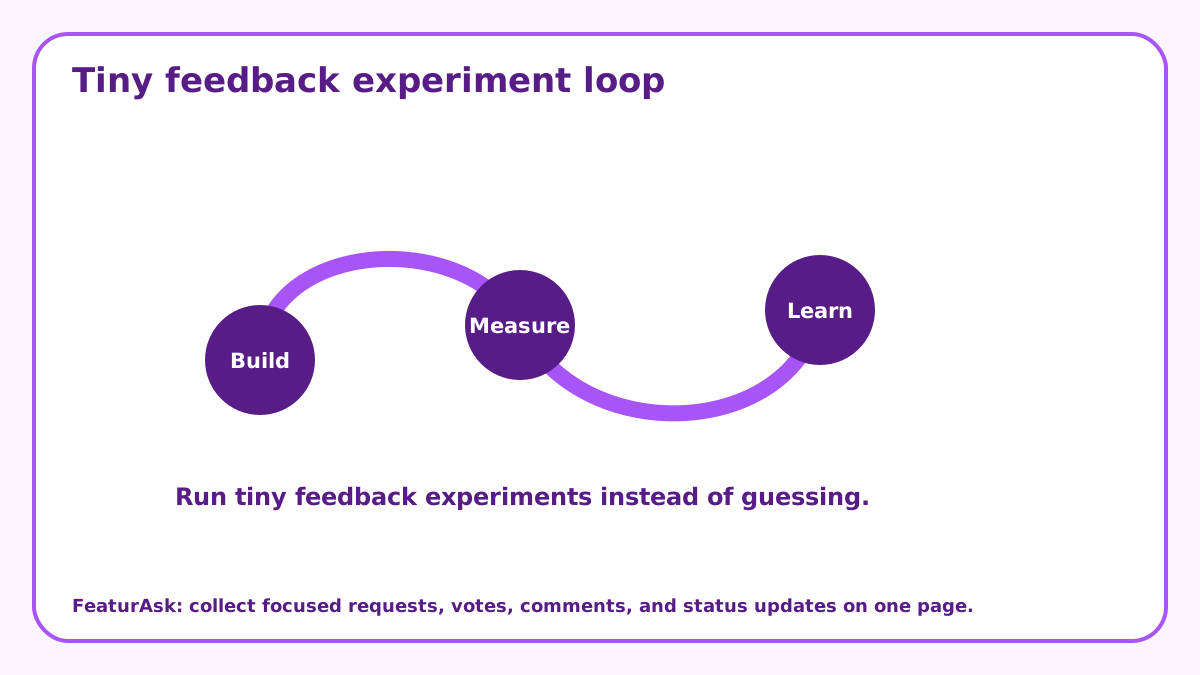
An indie builder does not need to build the full version immediately. A repeated request can become a landing-page test, a manual concierge workflow, a short beta, or a tiny prototype. The request board tells you where to look first.
If users ask for reports, maybe the first test is a weekly CSV email. If they ask for integrations, maybe the first test is a documented export. Small experiments keep the product moving without turning every request into a permanent feature.
Write board copy in your own voice
Indie products often win because they feel personal. The request tool should not sound like an enterprise portal. Say what kind of ideas you want, how often you review them, and how you decide.
Plain language works: “I review these every Friday. Votes help me spot patterns, but I still choose based on fit and effort.” That sentence does more for expectations than a long policy page.
Use the board to protect maker time
The biggest benefit for an indie hacker is not looking organized. It is saving attention. When every idea has a home, you can stop rereading old emails before each build session. The board becomes a holding area until review time, which keeps random requests from interrupting deep work.
This also helps with emotional noise. Solo builders often feel guilty when users ask for things they cannot build soon. A visible process makes the answer less personal. The request can be accepted into the system without becoming an immediate promise.
Choose one request to learn from each week
A solo product does not need to process every idea at once. Pick one request each week and decide what kind of evidence it needs. Maybe you need to ask the requester a follow-up question. Maybe you need to create a tiny manual workaround. Maybe you need to mark it declined because it points away from the product.
That one-request habit compounds. Over a month, you will have four real decisions instead of a vague sense that users want “more stuff.” It is also small enough to survive alongside coding, support, marketing, and billing.
Keep public promises intentionally modest
Indie products benefit from personality, but public roadmaps can create pressure. Avoid language that suggests votes guarantee delivery or that every popular idea will be built soon. Tell users how you review requests and what statuses mean.
A modest promise is stronger than a grand one. “I review this board weekly and use votes to spot patterns” is credible. “Help shape the future of the product” may sound exciting, but it can create expectations a one-person business cannot meet.
When to keep a request private
Not every useful request belongs on a public board. A paying customer might describe a sensitive workflow, a bug, or a business process they do not want visible. In those cases, capture the lesson without exposing the detail. You can create a public version that describes the general need while keeping the customer’s context private.
This protects trust. Indie products often grow through direct relationships, and one careless public card can damage that trust. Treat the board as a useful surface, not the only place feedback is allowed to exist.
Build a tiny decision log
A decision log can be as simple as three sentences beside the request: what users asked for, what you decided, and why. This helps future you remember why a request was declined or postponed. It also prevents the same idea from feeling new every time someone asks again.
The log does not need to be public in full. The public board can show a short status while your private notes keep the reasoning. That balance gives users visibility without forcing you to publish every tradeoff.
A monthly cleanup keeps the board from becoming guiltware
Indie founders often start request boards with good intentions and then avoid them once the list gets emotionally heavy. A monthly cleanup prevents that. Set duplicate ideas aside during review, decline ideas that no longer fit, and update anything that shipped quietly without a status change. The board should feel like an active workspace, not a reminder of everything you have not built.
During cleanup, look for requests that keep returning in different language. Those are worth a deeper note. One user may ask for templates, another for onboarding, and another for examples, but the shared need might be “help me get to my first result faster.” That is a better product insight than any single request title.
Price the attention cost, not only the build cost
A feature can be quick to code and expensive to own. Every new setting, workflow, export, or integration creates future support, documentation, testing, and edge cases. Indie hackers need to price that attention cost before saying yes.
When reviewing requests, write a short maintenance note: what will this require after launch? If the answer includes ongoing docs, support, compatibility checks, or manual customer education, the request may need a smaller experiment first. A simple board becomes powerful when it helps you protect future time, not only choose the next task.
Keep indie feedback small enough to use
A feature request tool for indie hackers should preserve attention. Use it to collect ideas in one place, compare demand, and make small decisions without creating a second job. The point is not to look like a big product team. The point is to listen consistently while staying small enough to ship. The best board is the one you still open when you are tired, busy, and tempted to avoid it. Keep the promise narrow, keep the review habit real, and let the system protect your attention.