Feature Request Portal for Startups: Learn Faster Without Letting Users Run the Roadmap
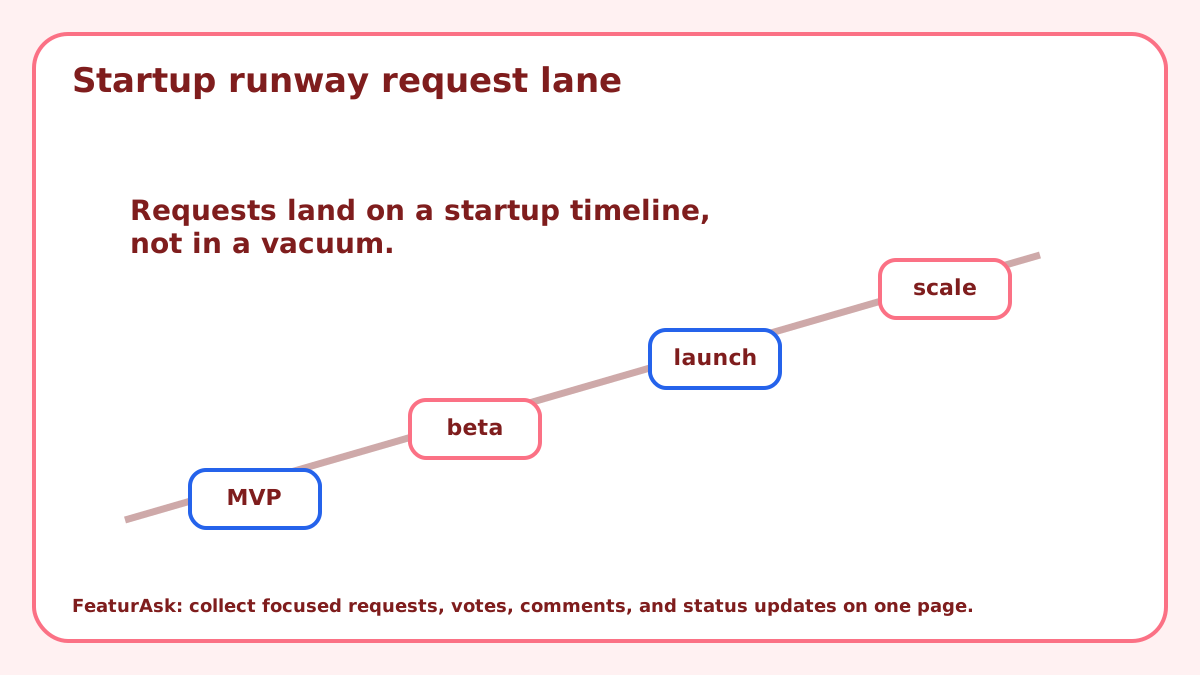
A feature request portal for startups should reduce uncertainty, not create a public wish list that drags the product in every direction. Early users are generous with ideas because they can see what is missing. That does not mean every idea is equally important, equally urgent, or even aligned with the product you are trying to build.
The startup job is to listen without surrendering the roadmap. You need a place where users can describe missing workflows, vote on other requests, and add comments that reveal why a request matters. You also need a review process that protects runway, focus, and positioning.
This article treats the portal as a learning system. The output is not a popularity contest. The output is clearer evidence for product decisions.
Use the portal to test product direction, not gather unlimited wishes
A startup portal works best when it is tied to a product thesis. If you are building for small SaaS teams, creators, or ecommerce owners, the portal should help you learn which missing capabilities block that audience. It should not collect every enterprise feature a random visitor can imagine.
Write the prompt so users explain the workflow they are trying to finish. “What are you trying to do that the product does not support yet?” is more useful than “What feature do you want?” The first question points to a job; the second often produces a noun.
Make early-user context impossible to miss
In a startup, the identity of the requester matters. A request from a target customer in an active trial deserves a different reading from a request by someone outside the market. Ask for one context field that helps interpretation: company type, team size, use case, current workaround, or plan stage.
This does not require a long form. One optional field can keep the request useful later, especially when the team reviews it after a week of sales calls, onboarding issues, and support conversations.
Treat votes as confidence, not authority
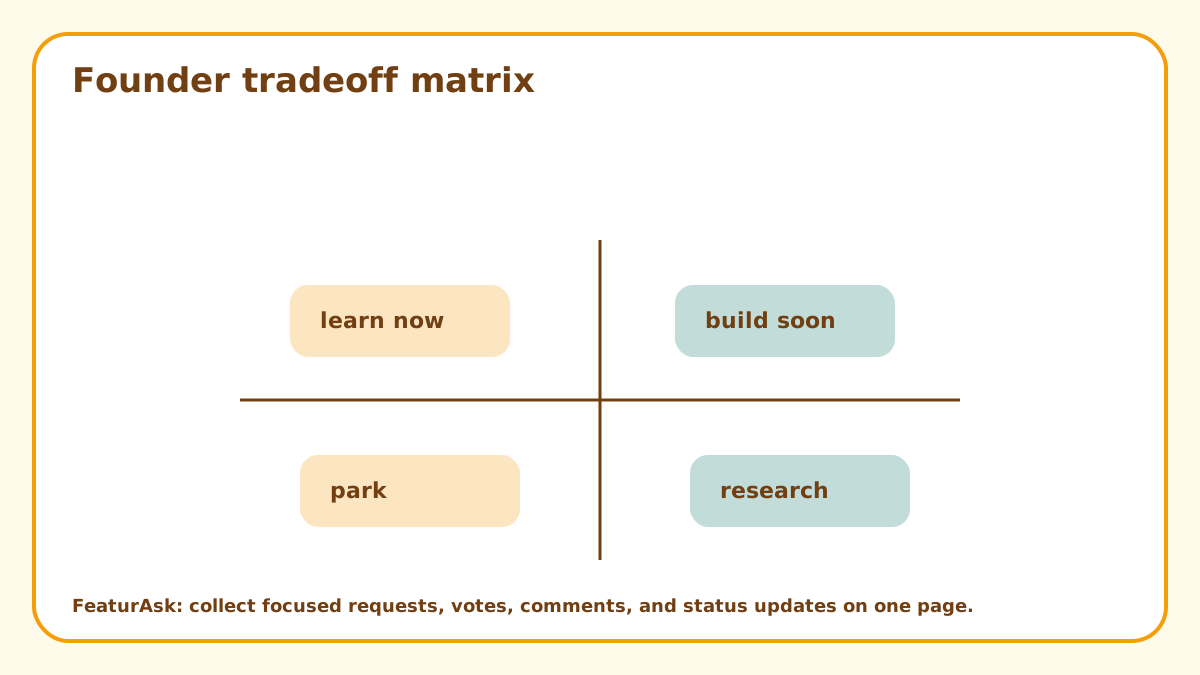
Votes tell you whether other users recognize the same pain. They do not tell you whether the feature belongs in the product. Early audiences can overvote visible ideas while underreporting boring infrastructure problems that matter more.
Use votes with comments, churn risk, revenue impact, support load, and implementation cost. Prioritization methods such as RICE scoring are useful because they force teams to compare reach, impact, confidence, and effort instead of mistaking raw demand for strategy.
Protect the roadmap from performative transparency
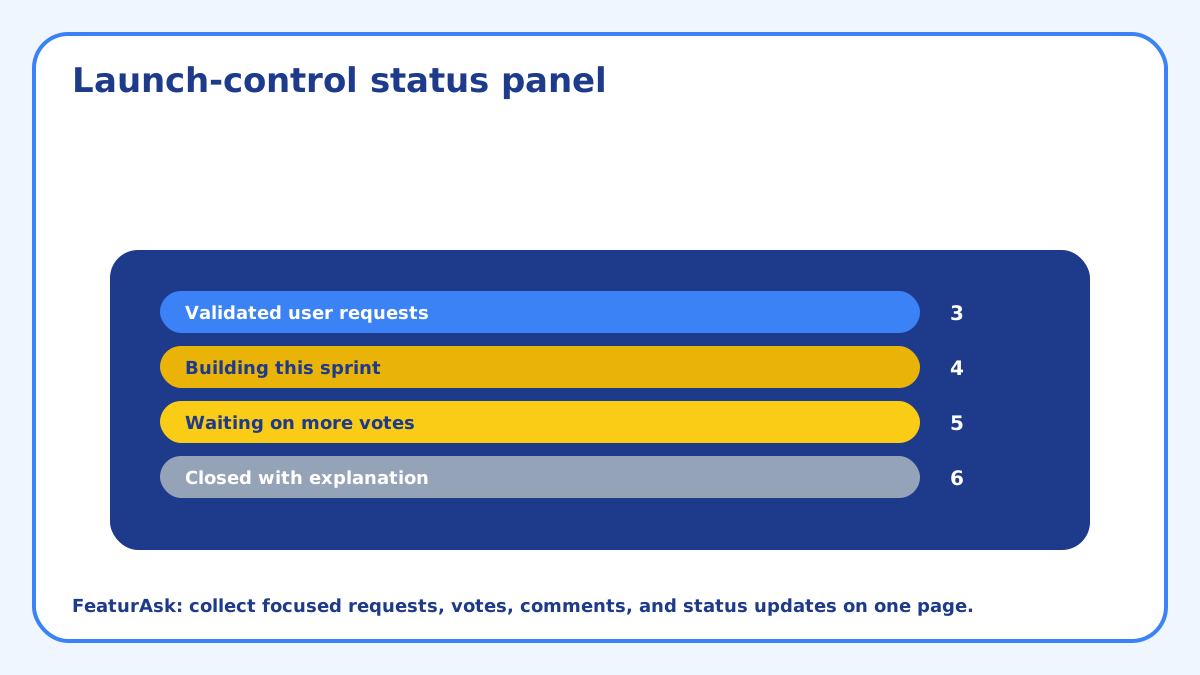
A public portal can build trust, but it can also create pressure if every status sounds like a promise. Use plain statuses that show movement without overcommitting: Pending, Under Consideration, In Progress, Completed, and Declined.
Declined should not feel like failure. A startup that says no clearly is often healthier than one that keeps every idea in “maybe someday.” If a request does not fit the product direction, mark it honestly and save the team from revisiting it every sprint.
How FeaturAsk supports a startup feedback loop
FeaturAsk is useful when a startup wants a request loop on one exact page: a beta page, pricing page, docs page, onboarding page, or public roadmap page. The widget code is pasted into the chosen page body, and the subscription is tied to that exact URL.
The dashboard keeps review simple. You can search requests, filter by status, view comments and details, moderate unwanted posts, and use up to two optional fields to capture startup-specific context. FeaturAsk has a 30-day trial with no credit card required and costs $29.95/year, which is easier to justify before a startup has a dedicated product operations budget.
Design the first review meeting before launch
Do not publish the portal until you know who will review it and when. A startup should pick a cadence before the first request arrives: weekly for active beta programs, biweekly for slower products, or after each customer interview cycle.
The meeting should ask four questions. What repeated pain appeared? Which requests came from target customers? Which ideas change activation, retention, or revenue? Which requests should be declined now so they stop consuming attention?
Place the portal where users already feel the gap
A feature request portal hidden in a footer becomes a catch-all. Put it near the experience you want to improve. A docs portal catches integration gaps. An onboarding page catches activation problems. A pricing page catches packaging questions.
Related formats can help when the portal scope changes: feature request widget for SaaS, product idea submission form, and vote on product ideas.
Use comments to find the workaround
The request title is rarely the whole story. Comments reveal whether users hacked around the missing feature, paid for another tool, delayed adoption, or misunderstood the product. Those details matter more than a short feature name.
When two requests sound similar, compare the workarounds. If the workaround is expensive or blocks activation, the request may deserve attention sooner. If it is a convenience request from a marginal use case, it can wait.
Separate discovery requests from retention requests
Startup teams often mix two different kinds of requests. Discovery requests come from prospects and early evaluators who are testing whether the product fits their world. Retention requests come from active users who already depend on the product and need fewer workarounds. Both matter, but they should not be read the same way.
A discovery request may reveal a market boundary. If every prospect in a segment asks for the same integration, the team has learned something about selling into that segment. A retention request may reveal the next improvement that keeps existing customers from leaving. Review the portal with those two lenses instead of ranking every idea in one flat list.
Build a no-list as carefully as a yes-list
Startups waste time when they keep reopening ideas that clearly do not fit. The portal should produce a no-list as well as a backlog. Decline requests that pull the product into a different market, require support the team cannot provide, or solve a problem outside the product’s promise.
This is not anti-customer. It is how a startup earns the right to build something coherent. A clear declined status, paired with a short explanation, protects focus and gives users a more honest answer than a permanent maybe.
What founders should review after thirty days
After a month, ask whether the portal changed your understanding of the market. Did target users describe the same missing workflow? Did comments reveal a workaround you had underestimated? Did a request explain why a trial stalled? Did any idea attract votes from the wrong audience?
Those answers help founders decide whether to build, interview, reposition, or ignore. A portal that only produces a longer feature list is not doing enough. A portal that sharpens customer learning is worth keeping.
What to ignore during early portal review
Some requests are tempting because they sound sophisticated. Enterprise permissions, advanced reporting, niche integrations, and complex admin controls can make a young product feel more mature. They can also pull a startup into a market it is not ready to serve. During early review, mark these ideas separately instead of mixing them with requests from your target customer.
Ignore requests that only make sense for a customer you do not want yet. Ignore ideas that require a support model you cannot provide. Ignore requests that would make onboarding harder for the users who already understand the product. A portal should help founders see demand, but it should also help them protect the product from premature complexity.
Use the portal in customer interviews
The request board can make interviews sharper. Before a call, check whether the customer has submitted or voted on anything. Ask what problem they were trying to solve, what they do today instead, and what would happen if the request never shipped. Those questions often reveal whether the request is urgent, nice to have, or a proxy for a different problem.
After the call, update the request with what you learned. That turns the portal into a memory system for the founding team. Six weeks later, you can see not only the vote count, but also the story behind the demand.
It should also create better conversations.
Keep startup requests tied to learning
A startup feature request portal should make learning faster and decisions sharper. Keep the prompt tied to your market, collect context, use votes carefully, and review requests against runway and positioning. The portal should help founders say yes with confidence and no without guilt. It should also create better conversations. When users can point to a public request and explain the workflow behind it, founders learn faster than they would from a bare roadmap vote.
A useful startup portal should also make silence visible. If an idea receives no votes, no comments, and no follow-up evidence after several review cycles, that tells the founders something too. The request may be unclear, poorly placed, or outside the audience that currently cares. Use that absence as a reason to rewrite the prompt, ask a customer directly, or mark the idea declined instead of letting it sit forever.