Product Nightmare Terrors: How to Avoid 7 Product Horrors
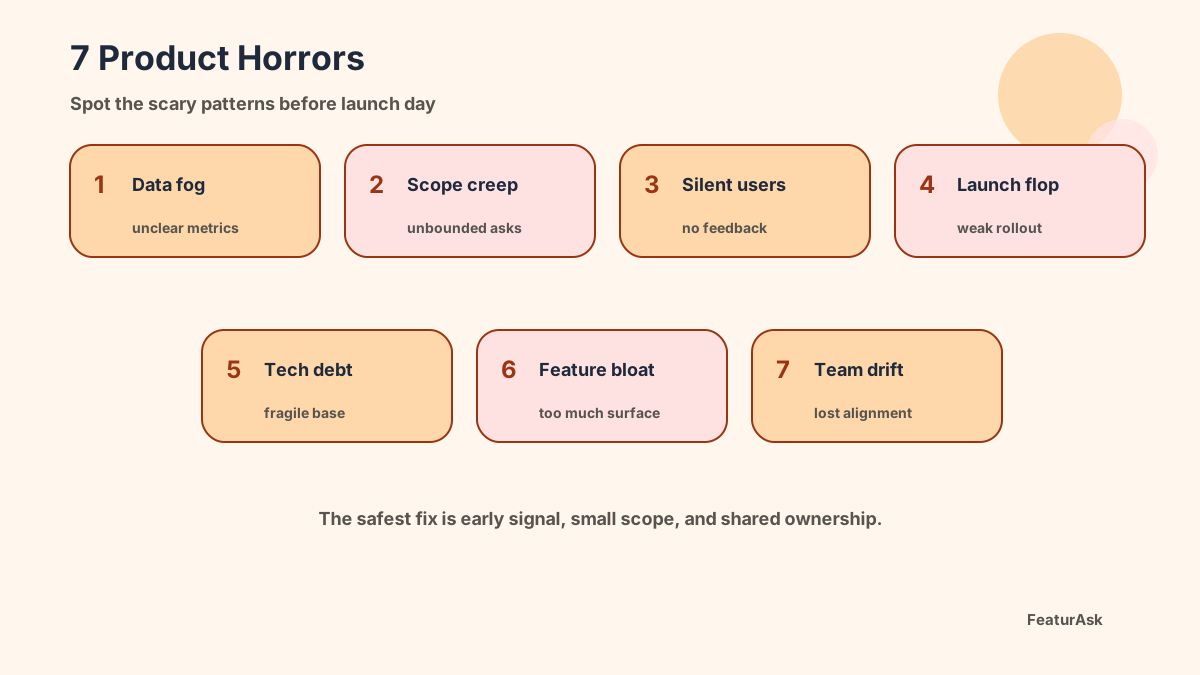
Every product team has a few scary stories. The roadmap that became a graveyard. The feature that kept growing new limbs. The launch that surprised support. The sprint ritual that ate the week. Product nightmares are rarely caused by one villain. They appear when feedback, priorities, quality, and communication drift apart.
The good news: most product horrors are preventable. You do not need a massive process. You need visible feedback, clear prioritization, small releases, quality habits, and honest communication. This guide covers seven product horrors and the practical controls that keep them from haunting your team.
If your team’s scariest monster is a chaotic feature request backlog, start with one shared feedback home. You can try FeaturAsk for one month free with no credit card and keep the simple $29.95/year plan if it helps calm the chaos.
Horror 1: The backlog lagoon
The backlog lagoon is where ideas sink, mutate, and occasionally rise to grab an unsuspecting product manager. It contains old promises, duplicate requests, vague tickets, executive drive-bys, support complaints, and half-written ideas from three strategies ago.
The fix is backlog hygiene. Create one intake system. Merge duplicates. Add tags. Archive stale ideas. Require a problem statement before an item can be prioritized. Review the top themes weekly and the full backlog monthly. Most importantly, make status visible so customers and internal teams know whether something is under review, planned, in progress, released, or declined.
A backlog should be a decision inventory, not a swamp. If an item has no evidence, no owner, and no strategic connection, it should not quietly occupy mental space forever.
Horror 2: Escape from the feature factory
The feature factory ships constantly but learns rarely. Everyone is busy. Roadmaps are full. Releases happen. Yet customers do not become more successful, churn does not improve, and the product becomes harder to explain.
The antidote is outcome thinking. For every roadmap item, define the customer problem, expected behavior change, and success metric. Ask what would prove the feature worked. If the answer is only “we shipped it,” the team is still trapped.
Outcome thinking does not mean ignoring delivery. It means delivery serves a measurable purpose. DORA’s research program has repeatedly emphasized fast feedback and learning as part of strong software delivery cultures. Product teams need the same discipline.
Horror 3: Night of the living bugs
Bugs are not undead because they exist. They become undead when they keep returning, spread across releases, and train customers not to trust new features. Quality debt steals product velocity because teams spend more time explaining, patching, and apologizing.
Prevent the horror with quality gates. Define done clearly. Include accessibility, error states, empty states, permissions, analytics, and support readiness. Reserve capacity for bugs and technical debt. Track escaped defects and support volume after launch. If a release creates too much cleanup, review what failed in planning or testing.
Small teams sometimes skip quality habits because they feel slow. In reality, quality debt compounds. The fastest team is the one that can keep shipping without reopening the same wound.
Horror 4: Scrumzilla
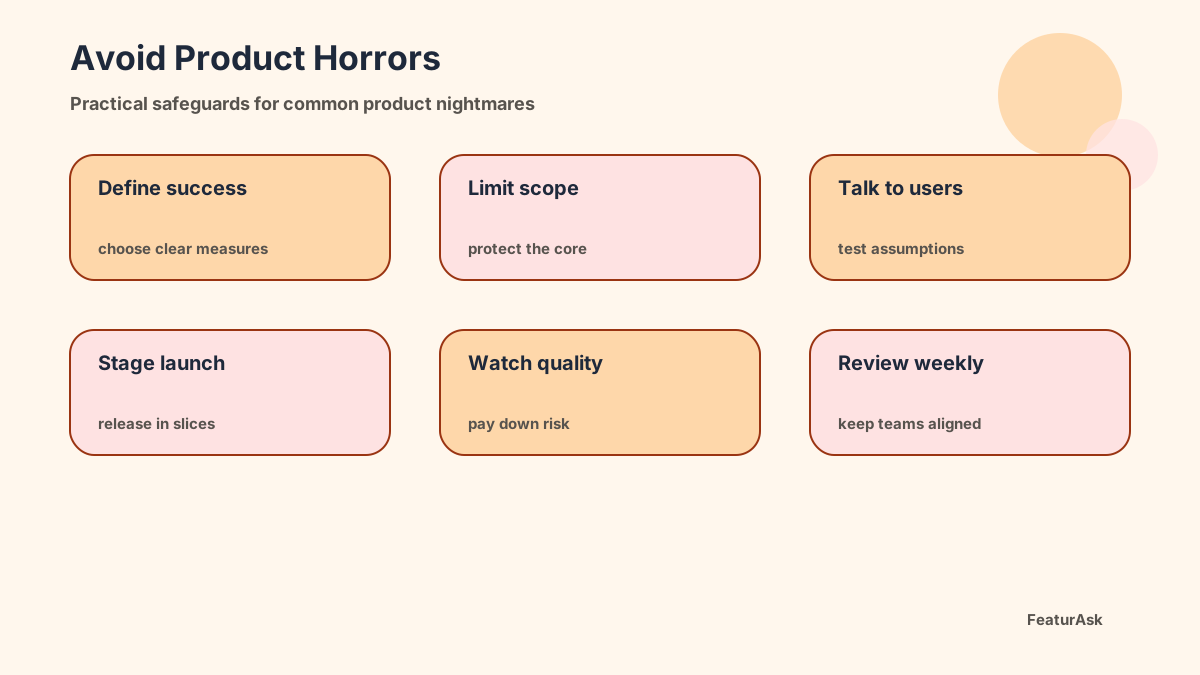
Scrumzilla appears when ceremonies become the product. Standups take too long. Refinement creates more confusion. Planning ignores discovery. Retrospectives repeat the same complaint. The team follows the ritual but loses the reason.
The cure is right-sized process. Keep ceremonies that improve decisions and remove or redesign the ones that do not. A daily standup should expose blockers. Refinement should clarify valuable work. Planning should connect capacity to priorities. Retrospectives should produce one or two changes the team will actually try.
The Scrum Guide describes Scrum as a lightweight framework, not a bureaucracy. If the framework becomes heavy, inspect and adapt.
Horror 5: The dangerous animals of product management
Some product animals are familiar: the HiPPO, the highest paid person’s opinion; the seagull stakeholder who swoops in, makes noise, and leaves; the raccoon team that hoards every shiny idea; and the chameleon roadmap that changes color for every audience.
Humor helps, but the underlying issue is governance. Product teams need decision rules. Who can add input? Who owns the decision? What evidence is required? How are trade-offs communicated? Without clear rules, personality fills the gap.
Use a decision log. Document major trade-offs. Invite stakeholders into the process, but do not let every opinion become a commitment.
Horror 6: Frankensoft
Frankensoft is a product stitched together from unrelated features. Each piece made sense in isolation. Together, they create confusing navigation, inconsistent permissions, duplicate workflows, and a value proposition nobody can summarize.
Prevent Frankensoft by maintaining product principles. Define what the product is for, who it serves, and what it should not become. Review new ideas against those principles. Invest in information architecture and design systems. Remove or consolidate features when they no longer fit.
Sometimes the brave product decision is not building. Sometimes it is simplifying what already exists.
Horror 7: The silent launch specter
The silent launch specter appears when a feature ships and nobody knows what changed. Customers who requested it are not told. Support learns from a ticket. Sales keeps using old messaging. The changelog is blank. Adoption suffers because communication failed.
The fix is launch communication. Before release, prepare internal notes, customer-facing release notes, help documentation, analytics, and a list of customers to notify. After release, close the loop with everyone who voted, commented, or joined a beta.
This horror is easy to prevent with a feedback and changelog workflow. FeaturAsk can connect requests, roadmap statuses, and announcements. If that would help your team, start with one month free and no credit card; the annual plan is $29.95/year.
Prevention system: one operating loop
These horrors look different, but the prevention system is similar. Collect feedback in one place. Clarify problems. Prioritize visibly. Write small briefs. Ship smaller releases. Measure outcomes. Communicate changes. Close the loop.
That loop creates calm because people know where decisions live. Customers know how to submit feedback. Support knows what to link. Engineering knows why a feature matters. Leadership can see trade-offs. Product managers stop relying on memory.
Warning signs to watch
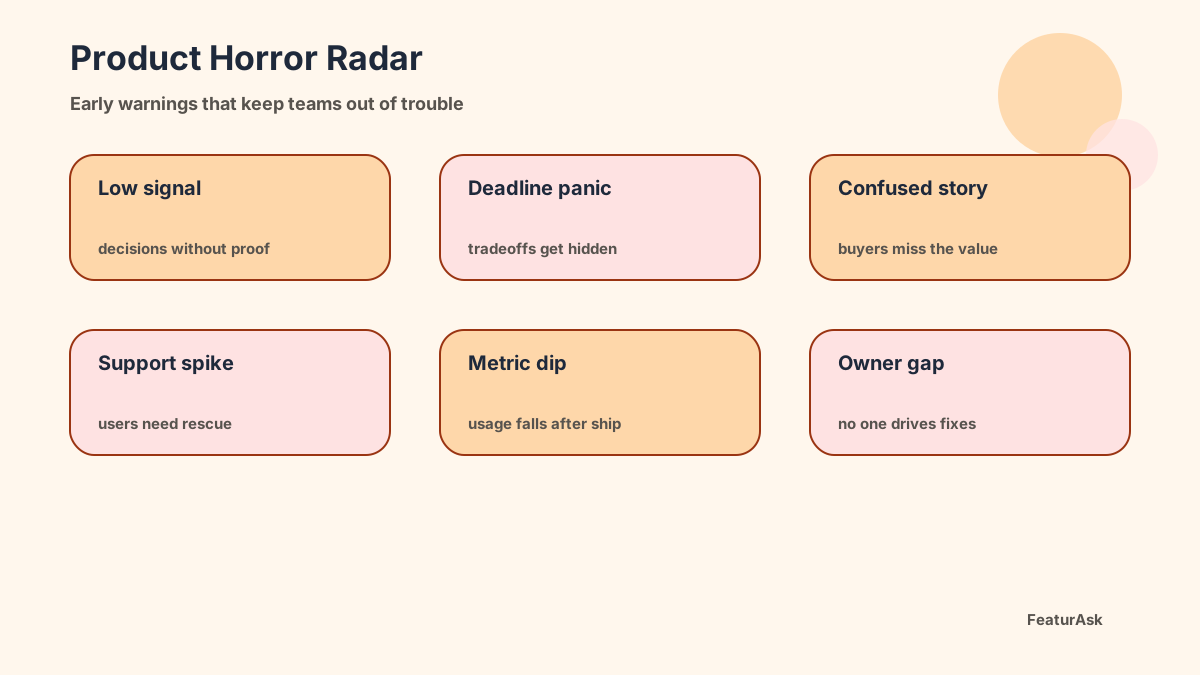
Watch for repeated phrases: “Where did that request go?” “Why are we building this?” “Did anyone tell support?” “Can we squeeze in one more thing?” “The roadmap says something different in the sales deck.” “We shipped it, but nobody uses it.” These are early hauntings.
When you hear them, do not only fix the individual issue. Fix the system that allowed it. A missing launch note may reveal no release checklist. A duplicate backlog item may reveal no intake owner. A confusing feature may reveal no product principle.
How to run a product nightmare retro
When a product horror appears, resist the urge to blame one person. Run a retro that examines the system. Start with a timeline: when did the signal first appear, who noticed it, what decisions were made, what assumptions were not tested, and where communication broke down? A timeline lowers defensiveness because it shows that failures usually accumulate.
Next, identify the missing control. Was there no intake owner? No acceptance criteria? No launch checklist? No customer notification process? No strategy filter? No quality gate? Name the control and decide whether it should be added, repaired, or simplified. Too many controls can create Scrumzilla, so choose the smallest change that would have prevented the issue.
End with one owner and one date. Product retros fail when they produce a haunted list of improvements nobody owns. A good retro produces a practical repair: create a release note checklist, archive stale backlog items, add a decision log, or require customer evidence for roadmap candidates.
A horror-proof release checklist
Before a feature ships, ask seven questions. Is the customer problem still clear? Is the smallest useful scope defined? Are acceptance criteria met? Are analytics or success signals in place? Are support and customer-facing teams briefed? Are help docs or release notes ready? Are customers who requested the change identified for follow-up?
This checklist should be short enough to use. The goal is not to create a gate that terrifies the team. The goal is to catch avoidable mistakes before they become public. A two-minute checklist can prevent a week of cleanup.
For larger releases, add a rollback or mitigation plan. What happens if adoption is lower than expected? What if a critical bug appears? What if customers misunderstand the change? A calm plan beats panic after launch.
Culture is the final monster repellent
Tools and checklists help, but culture decides whether product horrors return. Teams need permission to say “we do not know yet,” “this request does not fit,” “we should cut scope,” and “we need to fix quality before adding more.” Without that permission, the backlog lagoon and feature factory will always come back.
Leaders set the tone. If leaders reward only output, teams will ship output. If leaders ask about customer evidence, adoption, support impact, and learning, teams will build those habits. Product management is full of uncertainty; a healthy culture does not pretend otherwise. It makes uncertainty visible and manageable.
The least scary teams are not the ones with perfect plans. They are the ones that notice problems early, talk about them honestly, and repair the operating system before the sequel.
How to spot nightmares in metrics
Product horrors show up in data before they become dramatic stories. A backlog lagoon may appear as duplicate request growth, long time to first response, or many items with no owner. A feature factory may show high release volume with flat activation or retention. Night of the living bugs may show rising support tickets after every launch.
Scrumzilla may appear as longer cycle times, repeated carryover, and meetings that do not produce decisions. Frankensoft may show low usage of advanced features, confused navigation paths, or onboarding drop-off. The silent launch specter may appear as low adoption among the very customers who requested the feature.
Use these signals as smoke alarms. They are not proof by themselves, but they tell you where to investigate. Pair metrics with customer comments and team retros so you fix the cause rather than decorating the haunted house.
The role of customer-facing teams
Support, customer success, and sales are often the first to see the monster. They hear repeated complaints, confusing objections, and quiet disappointment. Bring them into the operating loop without letting every anecdote become a fire drill.
Give customer-facing teams a structured way to add feedback, tag accounts, link evidence, and check roadmap status. In return, product should provide clear updates they can share with customers. This exchange reduces rumor-driven roadmaps and helps everyone respond with confidence.
A small-team recovery plan
If the team is already inside a product nightmare, pick one recovery week. Day one: freeze new promises and list the visible symptoms. Day two: group the symptoms by system failure, such as intake, prioritization, quality, or launch communication. Day three: choose the smallest repair that would prevent the most repeat pain. Day four: communicate the new rule to internal teams and affected customers. Day five: review whether the repair is being used.
This short reset works because it avoids the fantasy of fixing everything at once. A team that creates one reliable feedback intake, one release checklist, or one roadmap status policy is already safer than it was the week before.
Useful references
Helpful external references include the Scrum Guide, DORA research, Atlassian agile retrospectives guidance, and the Nielsen Norman Group on design consistency. For deeper follow-up, pair this guide with FeaturAsk resources on feedback board software, customer feedback tools, and feature request software.
Product nightmares are scary because they feel inevitable. They are not. A few clear habits can turn the haunted house into a calmer operating system. If you want one simple place for requests, statuses, and customer updates, try FeaturAsk free for one month with no credit card and keep it for $29.95/year when it earns its keep.