Understanding User Feedback: How To Collect and Analyse It Effectively
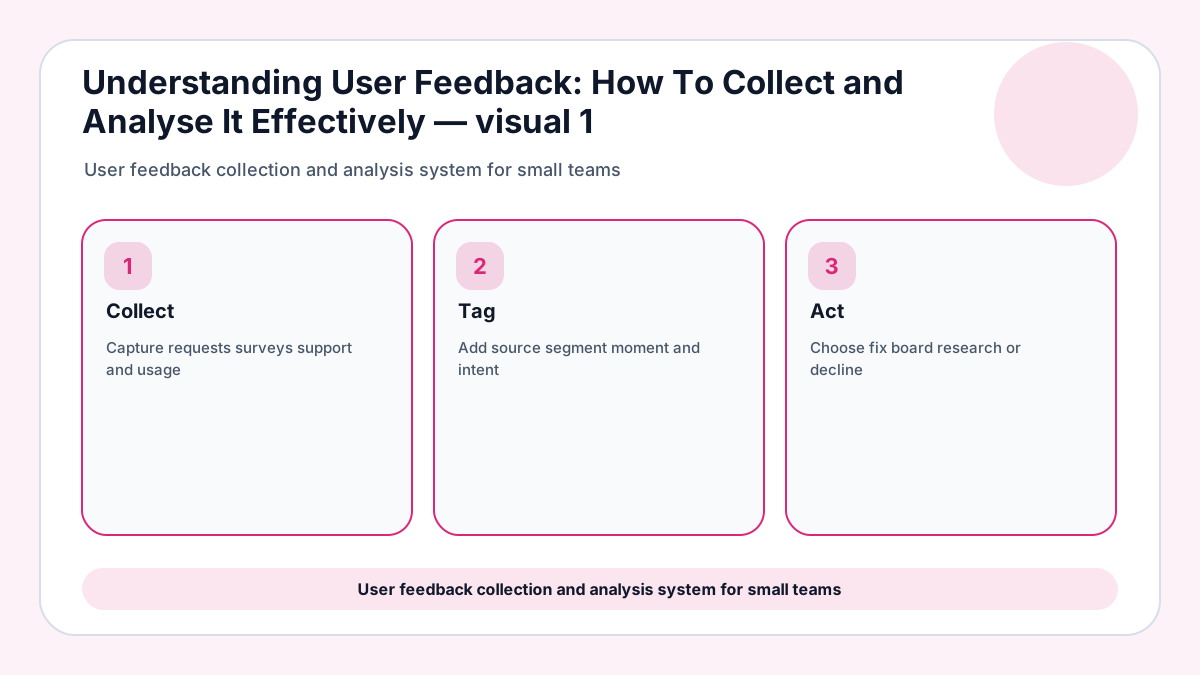
User feedback is the evidence customers give you about what they expected, what blocked them, what they value, and what they want next. It can arrive through feature requests, support tickets, surveys, reviews, interviews, analytics patterns, social comments, or churn notes. Frill’s source article covers collection channels; this FeaturAsk guide focuses on building an analysis loop that a lean team can repeat every week.
Collecting more feedback is not the same as understanding users. A team can fill a spreadsheet with comments and still miss the product decision hiding inside the pattern. Effective analysis means separating sources, preserving context, comparing repeated themes, and deciding what response each theme deserves.
If user feedback currently disappears into email, FeaturAsk gives small sites a request board, voting, moderation, and analytics for $29.95/year; the first month is free and no credit card is required.
For deeper feedback operations, connect this guide with FeaturAsk articles about how to collect customer feedback, customer feedback tools, and feedback board software. For outside grounding, see Nielsen Norman Group survey best practices and Qualtrics customer feedback guide.
How to collect feedback without creating an unusable pile
Start by naming the decision you want to improve. If the decision is roadmap priority, feature requests and votes matter. If the decision is checkout conversion, page comments, support chats, and analytics events matter more. If the decision is retention, churn notes and renewal objections deserve special weight.
A mixed intake can work only when every item gets source, segment, lifecycle stage, and next-action tags. Without tags, survey praise, bug reports, and strategic requests sit together and the team ends up prioritizing whatever comment arrived last.
1. Feature requests
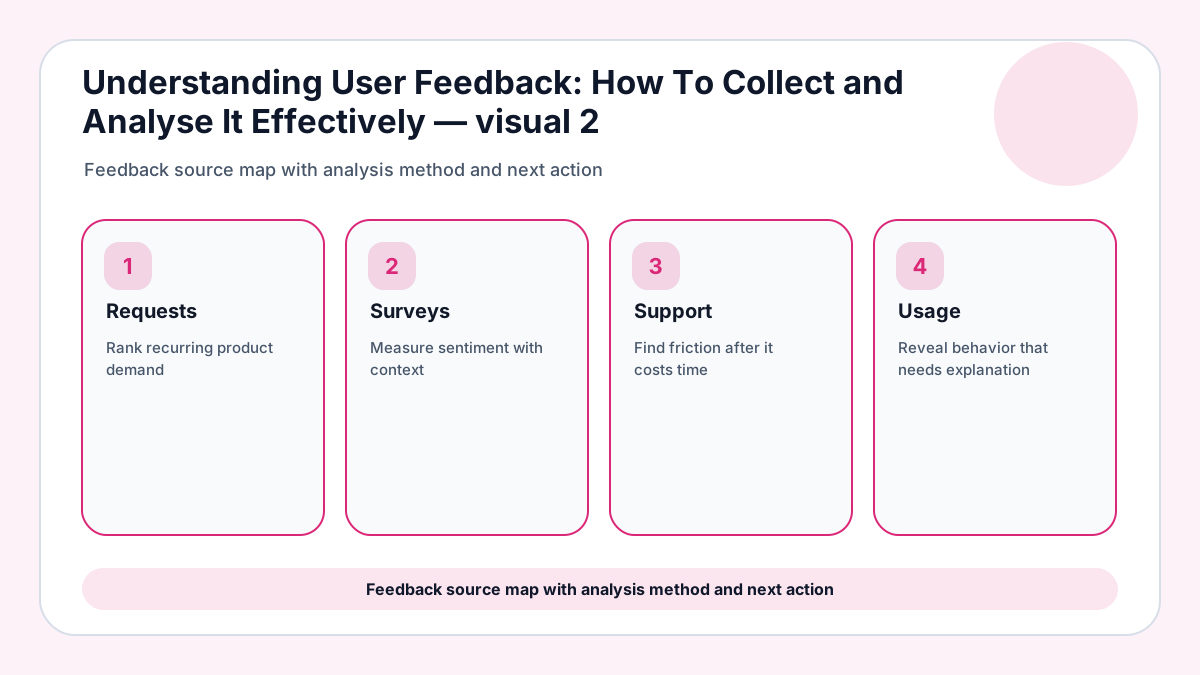
Feature requests reveal desired capabilities, but they need aggregation before they become roadmap evidence. One confident customer may describe a real opportunity; twenty similar votes from the right segment create a much stronger signal.
Ask requesters what job the feature would help them finish. That answer often matters more than the proposed solution.
2. Surveys and forms
Surveys are useful for structured questions, but they become weak when every question asks for a paragraph. Use short prompts, clear scales, and one open field that captures the reason behind the rating.
Analyse survey results by audience and moment. A complaint from a new trial user means something different from the same complaint after six months of paid usage.
3. Support and sales conversations
Support tickets show friction after it has already cost time. Sales objections show friction before conversion. Both sources are valuable because they carry urgency and specific wording.
Do not let these signals stay trapped in private tools. Summaries should feed the same theme map that product and marketing review.
4. Usage and behavior signals
Analytics can show where users stop, repeat, or avoid a workflow, but numbers rarely explain why. Pair behavior patterns with direct feedback so the team does not invent causes from a chart alone.
A drop-off point plus a cluster of comments gives a much stronger basis for action than either source by itself.
Teams that need an organized product-demand lane can run FeaturAsk beside surveys, support, and analytics instead of forcing every comment into one inbox.
A simple analysis loop for weekly decisions
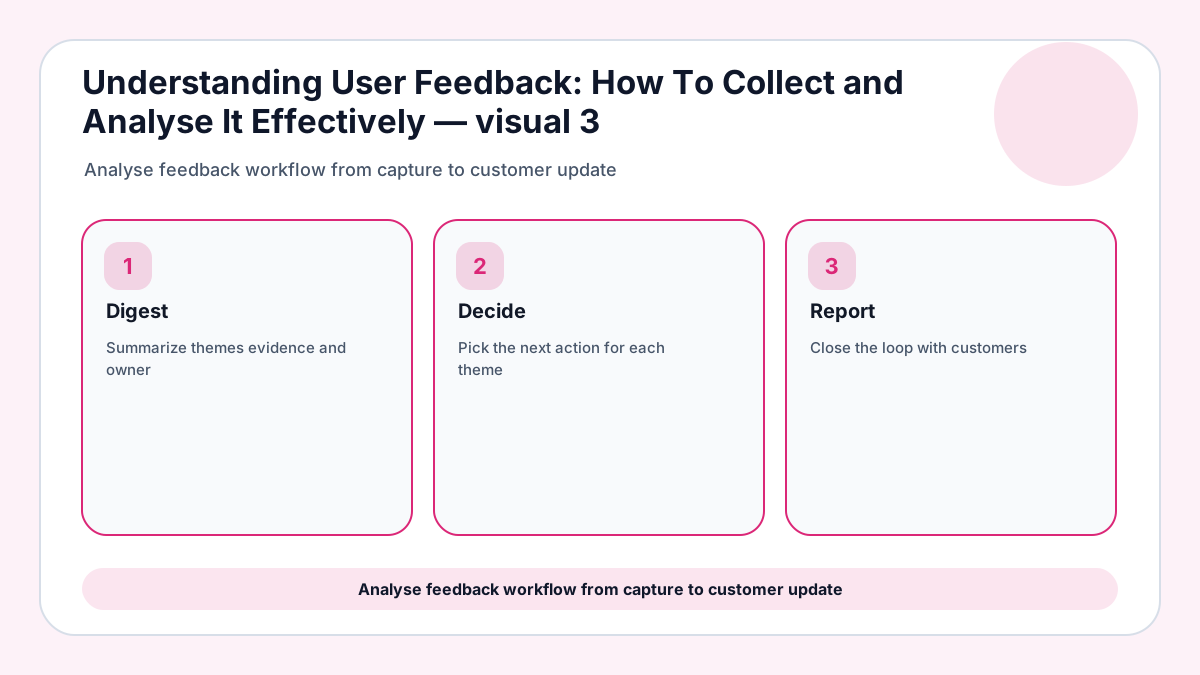
Create a weekly feedback digest with five columns: theme, evidence, affected segment, recommended action, and owner. The digest should be short enough for a founder or product lead to read before a planning conversation.
Group feedback by the job customers were trying to complete, not only by the page where the comment appeared. This prevents interface labels from hiding deeper needs such as trust, speed, control, or reporting clarity.
Decide what each theme becomes. Some themes need a bug fix, some need documentation, some need a public request, some need more research, and some should be declined because they do not fit the product direction.
Feature request analysis
For feature requests, cluster by desired outcome before discussing solutions. Ten customers may ask for different buttons while actually describing the same reporting, control, or visibility problem.
Survey analysis
For surveys, inspect the wording, audience, and timing before trusting the score. A rating collected after support recovery means something different from the same score collected after first use.
Support conversation analysis
For support and sales conversations, keep the customer’s phrase beside the internal tag. The wording often reveals the message, documentation, or product concept that needs to change.
Behavior signal analysis
For usage data, pair the number with a direct comment whenever possible. A drop-off can reveal where the problem happens, but feedback usually explains why the customer hesitated.
Feedback analysis details for small teams
Choose source-specific questions
Different channels deserve different questions. A public request board should ask what outcome the user wants; a cancellation survey should ask what changed; a support follow-up should ask whether the fix solved the immediate problem.
Using one universal question everywhere produces bland answers. Source-specific prompts respect the customer’s moment and give the team cleaner data to interpret.
Create a theme map before prioritizing
A theme map groups related feedback without forcing every comment into a roadmap item. Themes might include setup confusion, missing integrations, pricing uncertainty, reporting gaps, mobile friction, or trust concerns.
The map should be reviewed regularly because customer language changes as the product changes. A theme that was once a feature request may become a documentation issue after the team ships a first version.
Separate evidence from opinion
Feedback analysis should distinguish direct customer evidence from internal interpretation. The words customers used, the number of repeated requests, and the affected segment are evidence. The team’s explanation for why the issue happens is an interpretation.
Keeping those layers separate improves decisions. A founder can challenge the interpretation without dismissing the customer signal that prompted it.
Make closing the loop part of analysis
Analysis is incomplete if customers never learn what happened. The team should decide which themes deserve a public update, which need private follow-up, and which should be declined politely.
A visible loop encourages better future feedback. Customers are more likely to submit thoughtful requests when they can see that previous signals were read, grouped, and acted on.
Collection examples and analysis moves
Public request board
A public board works well when the team wants product demand to be visible and comparable. Analyse submissions by requested outcome, voter segment, urgency, and whether the request supports the product direction. The board should not become an unmanaged wishlist.
In-app survey
An in-app survey should ask about the task the user just attempted. Analyse the answer beside event data so the team can distinguish emotional frustration from a measurable workflow failure.
Support inbox
Support conversations are rich because customers describe problems in their own language. Tag them by fix type: bug, unclear copy, missing capability, billing concern, or account-specific confusion. That route determines who owns the follow-up.
Review mining
Public reviews reveal expectations and objections before prospects reach your site. Analyse review themes separately from active-customer requests because the writer may be evaluating category fit rather than requesting a specific feature.
Cancellation note
A cancellation note deserves careful weighting because it reflects a lost or at-risk account. Separate preventable product gaps from poor-fit customers, seasonal needs, and pricing sensitivity before turning the comment into a roadmap item.
Analysis routines that keep feedback useful
Decision lane
Give every item a lane: fix, explain, research, request, praise, or decline. The lane stops a support defect from competing with a strategic product request and keeps positive comments available for proof.
Source strength
A voted request, churn note, review, support transcript, sales objection, and analytics drop-off each carry a different kind of evidence. Compare context and consequence before deciding which signal deserves action.
Customer wording
Internal tags make reporting easier, but the customer’s own phrase explains the mental model. Preserve a short quote beside each theme so product, support, and marketing see how people describe the problem.
Theme map
Group comments by the job customers wanted to finish. Setup clarity, trust, reporting, mobile access, pricing uncertainty, and integration demand are more useful themes than page names alone.
Decision record
Write down whether the team fixed, watched, researched, declined, or promoted each major theme. The record prevents the same debate from restarting whenever a similar comment arrives.
Public learning loop
A monthly feedback note can show what changed, what is being reviewed, and what does not fit the product direction. It proves that collection leads somewhere without turning every request into a promise.
Intake design example
A public request board should not ask the same question as a churn survey. The board should clarify the desired outcome, while the churn survey should identify the moment value broke. Different prompts protect the analysis from vague answers.
Tagging example
Use a small tag set at first: source, segment, lifecycle stage, theme, and next action. A team can always add nuance later, but a bloated taxonomy discourages people from tagging feedback at all.
Prioritization example
A request with five votes from ideal customers can be stronger than a louder comment from a poor-fit account. Analyse both frequency and fit so roadmap decisions do not drift toward whichever voice is most recent.
Archive example
Move stale feedback out of the active view when plans, screens, or target customers change. Keep the record for history, but do not let old comments compete with current demand.
Sharing example
Send a brief feedback digest to anyone who talks with customers. Sales, support, and product will make better decisions when they see the same themes instead of maintaining separate informal lists.
Feedback planning checklist
Before adding another collection channel, decide who will review it, which tags are required, how often themes will be summarized, and where customers will see progress. A quiet but reviewed channel is more valuable than a busy channel no one owns. This checklist also helps small teams resist the temptation to collect every possible opinion before they have built the habit of acting on the feedback they already receive.
A final feedback safeguard is to separate analysis meetings from status meetings. The analysis meeting asks what the evidence means; the status meeting asks who is doing the work. Mixing them can cause the team to jump into assignments before it understands the pattern.
Another helpful practice is to keep examples of declined requests. They train the team to recognize poor-fit demand and make future decisions faster without being dismissive toward customers.
When the team lacks time, review fewer themes with better context rather than scanning every comment superficially. A focused digest that explains three strong patterns can change a roadmap conversation more than a long export of ungrouped notes. Feedback analysis improves when the team is honest about review capacity and designs the process around that constraint.
If a theme is important but vague, assign a research question instead of a build task. That keeps the team moving without pretending the evidence is already complete.
A clear question protects the roadmap from guesswork and keeps customer learning practical.
Especially for small teams today.
Final take on collecting and analysing feedback
User feedback becomes useful when the team can explain what changed because of it. The collection channel matters less than the operating habit that turns comments into decisions.
Build a loop you can maintain: capture context, group patterns, weigh evidence, choose an action, and tell customers when the team responds. That rhythm is enough to outperform a much larger pile of unreviewed comments.
For creators, ecommerce stores, service businesses, and SaaS teams, FeaturAsk makes collection easier to maintain after the first enthusiasm fades.