Quick Guide on Agile Release Planning
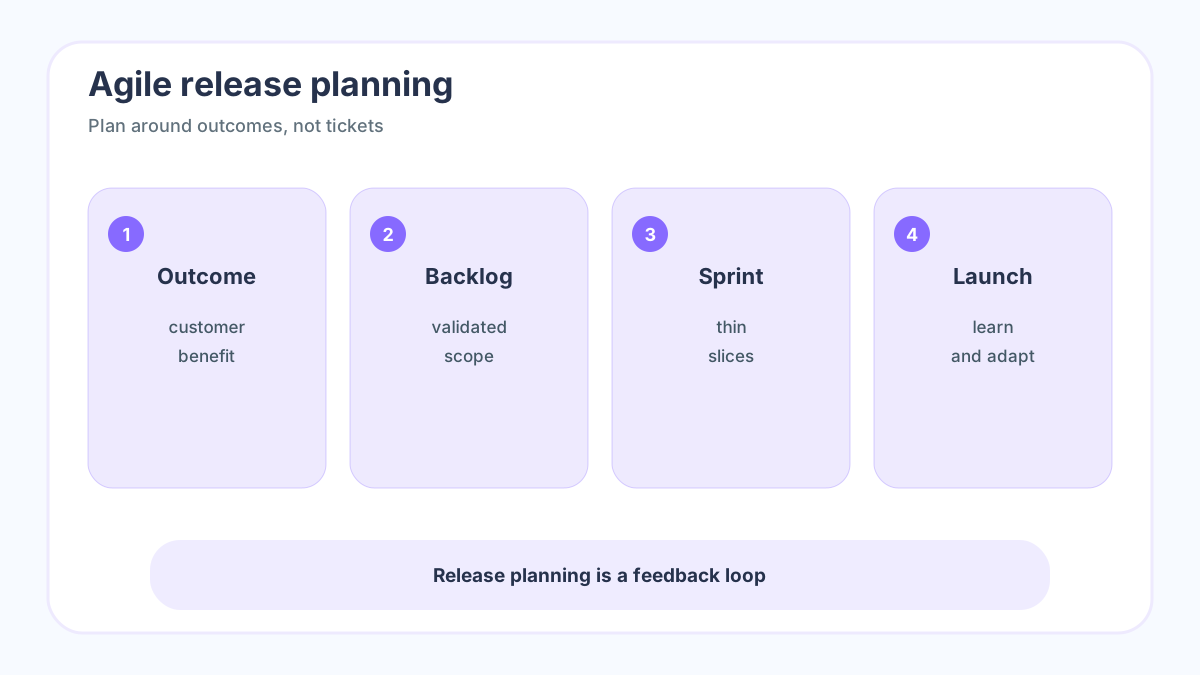
A practical agile release planning guide for small teams: outcomes, backlog signals, sprint scope, release notes, and feedback loops.
Agile release planning is a decision system, not a date promise
Agile release planning connects customer outcomes, backlog priority, sprint capacity, release risk, and communication. The Scrum Guide 2020 keeps Scrum focused on increments and adaptation; release planning should follow the same spirit. Atlassian release planning guide also stresses that release plans help teams coordinate what can ship and when.
The mistake is treating a release plan like a fixed project schedule. In agile work, the plan should describe the next valuable increment, why it matters, what must be true to ship, and how the team will communicate progress. It should also leave room for learning from users.
If you want a lightweight way to collect requests before you publish the next roadmap or update, try FeaturAsk for one month free with no credit card required. It is $29.95/year, so a small team can validate demand without buying an enterprise feedback suite.
Start with outcomes before scope
A release goal should be understandable outside engineering. “Reduce setup time for new workspace admins” is stronger than “ship onboarding epic.” It tells the team what tradeoffs to make when capacity changes. It also tells customers why the release matters.
Connect each outcome to evidence. Customer votes, comments, sales friction, support tickets, and usage data should explain why this release is worth doing now. FeaturAsk can capture the request side of that evidence so planning does not rely only on internal opinions.
Prioritize the backlog with feedback and risk
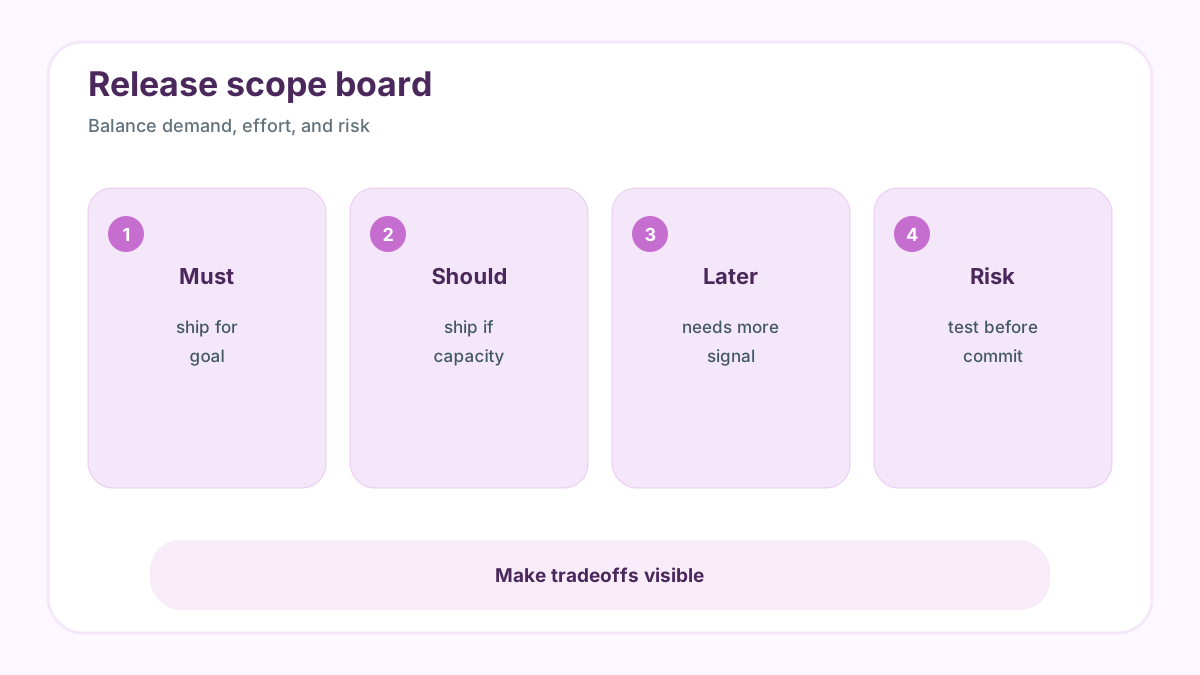
Backlog priority should balance demand, effort, risk, dependencies, and strategic fit. A high-vote request with a risky migration may need discovery before a release slot. A smaller request that unblocks many customers may be a better near-term release. Make those tradeoffs explicit.
Useful inputs include feedback board software, feature request tracking, and customer feedback management. Together they help the team see what customers asked for, how often, and how the work maps to current goals.
Turn release scope into sprint-level commitments
After the goal is clear, split the release into thin slices. Identify must-have scope, optional scope, release blockers, migration steps, support needs, and measurement. If a slice cannot be tested or explained, it is probably too large. If every item is “must have,” the plan is not agile yet.
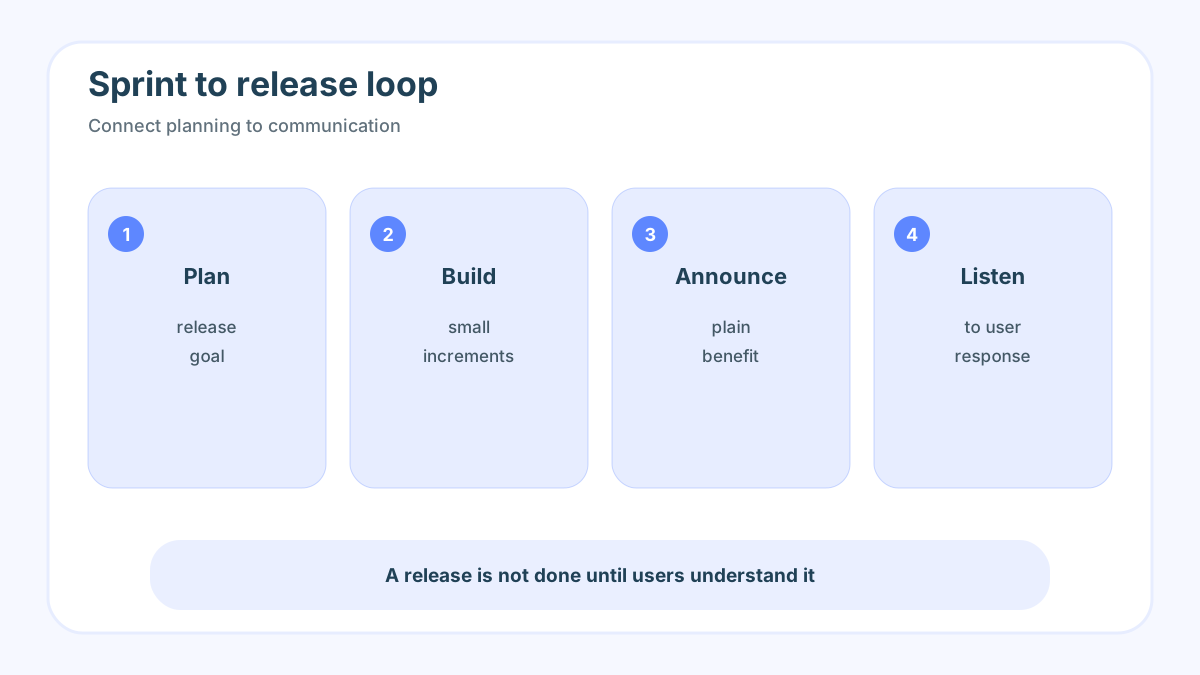
Review capacity honestly. Leave room for bugs, documentation, customer communication, and feedback after release. Small teams often under-plan the communication work, then ship valuable changes that customers never discover. A release is not done when code merges; it is done when the right users understand and can use the change.
For teams that only need a clean widget, voting, moderation, and a practical dashboard, FeaturAsk keeps the feedback loop simple with one month free, no credit card required, and pricing at $29.95/year.
Communicate progress before and after launch
Publish the release goal, current status, and expected user benefit in plain language. Do not expose every internal detail. Show enough progress to build trust and invite feedback. After launch, connect release notes back to the original request when possible so users see the loop closing.
A simple flow works well: collect requests, group them into problems, choose the release goal, ship thin slices, announce what changed, and ask whether it solved the job. Use feedback to tune the next release. That is agile planning as a loop, not a one-time calendar ceremony.
When you are ready to turn scattered comments into prioritized requests, start with FeaturAsk: one month free, no credit card required, then $29.95/year for a focused request board.
What belongs in an agile release plan
A useful release plan includes the release goal, the customer problem, the target users, the must-have scope, the optional scope, dependencies, risks, measurement, communication needs, and feedback plan. It should not become a giant requirements document. The point is to align the team on the next valuable increment and the conditions required to ship it safely.
For small teams, the best release plan often fits on one page. The team needs to know what outcome matters, which backlog items support it, what can be cut if capacity changes, and how customers will learn about the release. If the plan cannot explain those basics in plain language, it is probably hiding uncertainty rather than managing it.
Customer feedback in release planning
Customer feedback helps agile teams avoid planning releases around internal assumptions. Feature requests reveal demand. Votes help size interest. Comments explain context. Support tickets reveal friction. Sales notes show which missing capabilities block deals. Usage data shows whether previous releases changed behavior. Together, those signals improve backlog ordering.
The trap is treating feedback as an unlimited intake pipe. Agile release planning still needs a product point of view. The team should group requests into problems, choose the outcome that matters now, and say no to work that does not support the release goal. A feedback board is an input to planning, not a replacement for product strategy.
Estimation without false certainty
Agile teams do not need perfect estimates, but they do need enough sizing to make tradeoffs. Classify work as small, medium, large, or discovery needed. Identify dependencies and unknowns. Reserve capacity for bugs, documentation, analytics, support enablement, and release communication. Most missed release plans fail because teams planned only coding time.
Use confidence levels. A high-confidence small item can be committed. A low-confidence large item may need a spike before it enters a release. A medium item with customer urgency may be worth pulling forward if risk is low. These conversations are easier when the release goal is clear.
Release planning cadence
A practical cadence is quarterly theme, monthly release review, weekly sprint planning, and continuous feedback triage. The quarterly theme keeps the team oriented. Monthly review decides which release goal deserves focus. Weekly planning turns scope into sprint work. Feedback triage keeps new evidence visible without constantly derailing the team.
This cadence also improves customer communication. If users know that requests are reviewed weekly and roadmap decisions happen monthly, they are less likely to interpret silence as neglect. When a release ships, the team can connect it to the request history and explain what will happen next.
Agile release planning checklist
-
Write the release goal in customer language. A good goal names the user, the problem, and the benefit.
-
List candidate backlog items. Include only work that supports the goal. Put unrelated requests into a later review rather than dragging them into the release.
-
Mark scope as must, should, could, or later. This gives the team a cut line when capacity changes.
-
Identify dependencies and risks. Migration work, third-party APIs, data changes, support training, and documentation should be visible before sprint commitments are made.
-
Slice work into testable increments. Each slice should create something the team can review, test, or explain.
-
Plan communication. Decide what will appear on the roadmap, what will go into release notes, which users need targeted updates, and how feedback will be collected after launch.
-
Review results. Compare adoption, support questions, request comments, and follow-up votes with the original release goal.
Tools for agile release planning
Jira is strong for engineering execution, dependencies, and sprint reporting. Linear is fast for issue tracking and product-engineering teams that value lightweight workflows. Asana works well when release planning involves marketing, support, and operations tasks. Trello is useful for simple visual planning. Docs and spreadsheets are still fine for early-stage teams that need shared context more than complex workflow automation.
FeaturAsk plays a different role: it captures customer demand before and after the release plan. Use it beside whichever delivery tool you prefer. Requests and votes help shape the backlog; shipped updates and follow-up comments help evaluate whether the release solved the right problem.
Agile release planning FAQ
How far ahead should an agile team plan?
Plan themes farther ahead than features. A quarterly theme can guide direction, while detailed release scope should stay closer to the next few sprints where capacity and risk are clearer.
What if customer feedback conflicts with strategy?
Do not blindly follow either side. Use feedback to understand demand, then decide whether it supports the product direction. If it does not, explain the tradeoff and keep the request visible only if it may become relevant later.
When is a release ready to announce?
Announce when the team can explain the benefit, the affected users, any setup steps, and how customers can respond. If those details are unclear, the release communication is not ready even if the code is almost done.
Benefits of agile release planning
The first benefit is focus. A release goal helps the team avoid pulling unrelated backlog items into the same launch. The second is risk control. Dependencies and unknowns become visible before the sprint is overloaded. The third is better communication. Support, marketing, sales, and customers can understand what is coming and why.
The fourth benefit is learning. Because the plan is organized around an outcome, the team can check whether the release actually improved that outcome after launch. That is different from celebrating that every ticket shipped. Agile release planning should make the team better at choosing work, not only better at scheduling it.
Example release plan outline
Use a one-page outline: release goal, target users, evidence, must-have scope, optional scope, risks, measurement, communication plan, and post-release feedback question. Keep it short enough to update. If the plan becomes a long specification, the team will stop using it as a living decision tool.
Release planning anti-patterns
Avoid planning by ticket volume. Ten small tickets can still fail to create a meaningful customer outcome. Avoid planning by stakeholder pressure alone. A loud internal request should still be tested against customer evidence and release goals. Avoid planning without a communication owner. If nobody owns release notes, support readiness, and feedback collection, the release will feel unfinished even when the code works.
Avoid treating the backlog as a promise. Agile planning should make tradeoffs easier, not freeze every idea into a commitment. Keep future work in discovery until evidence, capacity, and risk justify moving it into a release. Customers appreciate honest status more than confident dates that slip.
Post-release review questions
After launch, ask five questions. Did the target users notice the release? Did they complete the intended workflow? Did support volume change? Did new requests appear around the same problem? Did the release move the metric or customer outcome that justified the work?
These questions turn release planning into learning. The answers may confirm the roadmap, reveal a missing follow-up, or show that the team solved the wrong part of the problem. Feed that learning back into the next planning cycle.
Final agile planning takeaway
A release plan is useful when it helps the team make better decisions under uncertainty. Keep the plan short, evidence-based, and easy to revise. Use customer requests to shape scope, delivery tools to coordinate work, and release communication to close the loop after launch.
The healthiest teams treat the plan as a shared learning artifact, not a compliance document. It should become clearer as evidence improves.
Include support and marketing in the review before launch. They often spot missing instructions, confusing benefit language, and customer objections that engineering planning alone will not catch.
If scope still feels uncertain, split the work again. Smaller increments reveal risk faster and give customers useful progress sooner.
That habit protects focus.
For release planning, the durable habit is outcome review. Return to the release goal after launch, compare it with customer response, and use the gap between plan and reality to shape the next sprint or release.