How to Prioritize and Launch Product Features for Success
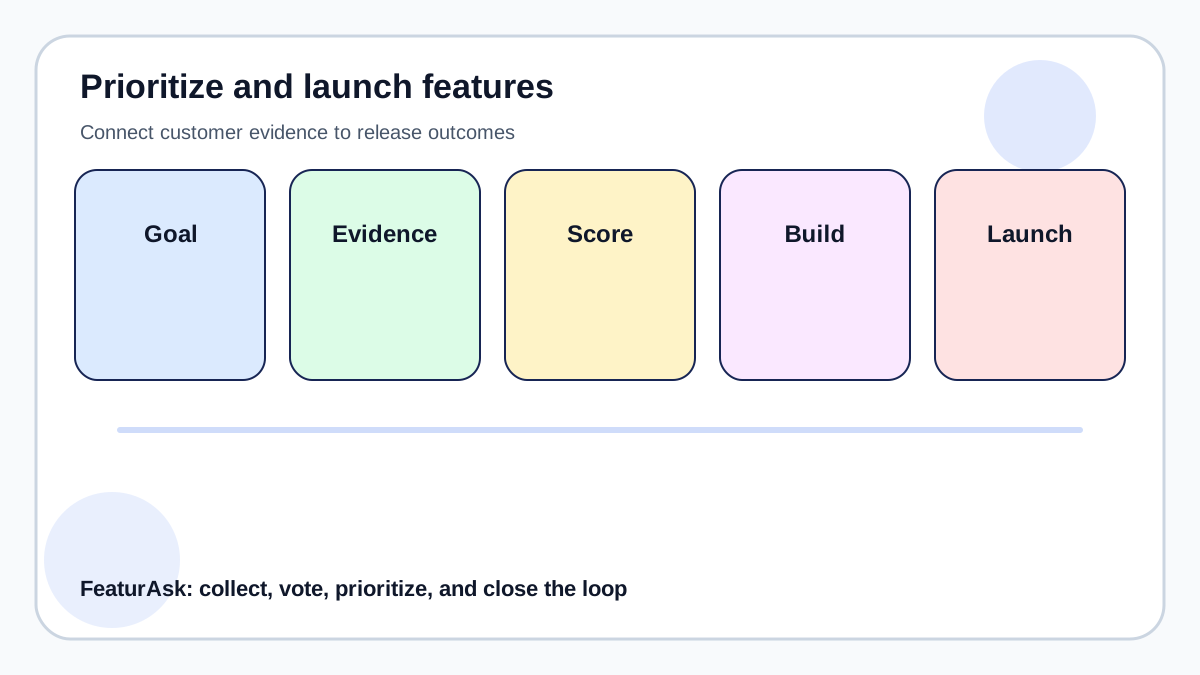
Feature success depends on two linked decisions: choosing the right thing to build and introducing it in a way customers understand. A team can prioritize a strong idea and still lose value with a weak rollout. It can also launch beautifully and discover the feature was the wrong bet. The safest 2026 workflow connects evidence, priority, build scope, announcement, and post-launch learning before work begins.
FeaturAsk supports this decision-to-launch loop by keeping requests, votes, comments, and statuses connected. You can try FeaturAsk for one month free with no credit card required and use the $29.95/year board to validate demand before and after a release.
This guide connects two jobs that are often separated: choosing the right feature and launching it in a way that proves whether the bet worked. For related setup decisions, see FeaturAsk's guides to feedback board software, the feature request process, and the feature prioritization matrix.
Current context matters. Intercom emphasizes segmentation and lifecycle context when communicating product changes. ProductPlan explains prioritization frameworks that connect ideas to roadmap strategy. Atlassian documents RICE-style scoring as a structured way to compare initiatives. Those sources point to the same conclusion: feedback and communication work best when they are specific, timely, and connected to decisions customers can understand.
Start with the outcome, not the feature
The most reliable feature decisions begin with a clear outcome. Are you trying to improve activation, reduce churn, increase expansion, lower support volume, or enter a new segment? Without that answer, teams compare ideas by excitement, executive preference, or the most recent customer call. A feature should earn priority because it moves a defined outcome for a defined audience.
Write the outcome as a decision filter. For example: “In Q2, prioritize requests that help first-time users publish a feedback board within ten minutes.” That filter makes tradeoffs easier. It also helps you decline good ideas that do not match the current goal.
Collect evidence before scoring
Evidence should include customer requests, vote volume, revenue or retention risk, support frequency, usage data, sales objections, and strategic fit. Do not score a feature until the evidence is attached. A high-impact guess is still a guess. A lower-scoring feature with strong evidence may be the better next bet. 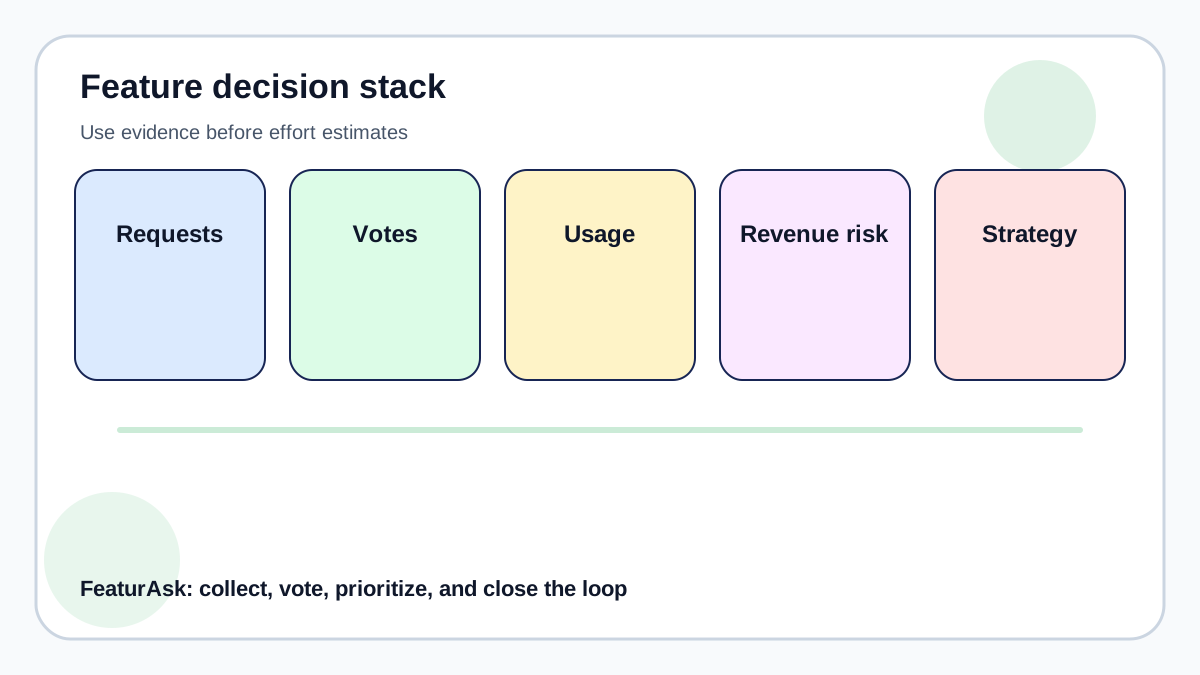
FeaturAsk helps by turning requests into visible demand. Customers can submit ideas, vote, and discuss. The dashboard gives a team a clearer view of what people keep asking for. If you need this workflow, FeaturAsk gives you one month free, no credit card required, and then costs $29.95/year.
Choose the right prioritization framework
RICE is useful when reach and effort are estimated consistently. Kano is useful when you need to understand delight, performance, and basic expectations. A value-versus-effort matrix is useful for quick planning. Opportunity scoring works well when customers rate importance and satisfaction. The framework matters less than discipline: use the same rules across competing ideas.
Do not let frameworks hide strategy. If a low-effort feature distracts from a major retention problem, it may still be the wrong choice. If a high-effort feature unlocks a critical segment, it may deserve investment. Use scoring to reveal assumptions, not to outsource judgment.
Prepare launch while the feature is being built
Launch work should not wait until engineering is done. During build, prepare the customer story, help docs, screenshots, segmentation, support notes, and feedback path. Decide who gets early access and what signal would change the release plan. If the feature came from customer requests, identify the voters and invite them to validate the solution.
This is where prioritization and announcement management meet. A launch should explain the problem solved, the audience served, and the next step. It should also admit what remains open. That honest loop makes future requests better because customers see how decisions are made.
Run a staged rollout and learn quickly
A staged rollout protects customers and improves learning. Start with internal testing, then friendly accounts, then a narrow segment, then broader release. Watch activation, error reports, support questions, and unexpected use cases. If the early segment does not understand the value, fix onboarding or messaging before expanding.
After release, review outcomes against the original goal. Did activation improve? Did support volume change? Did churn risk decrease? Did the public request thread quiet down or produce better follow-up ideas? FeaturAsk’s feature prioritization matrix, feature request process, and product announcement guide can support the full decision-to-launch loop. 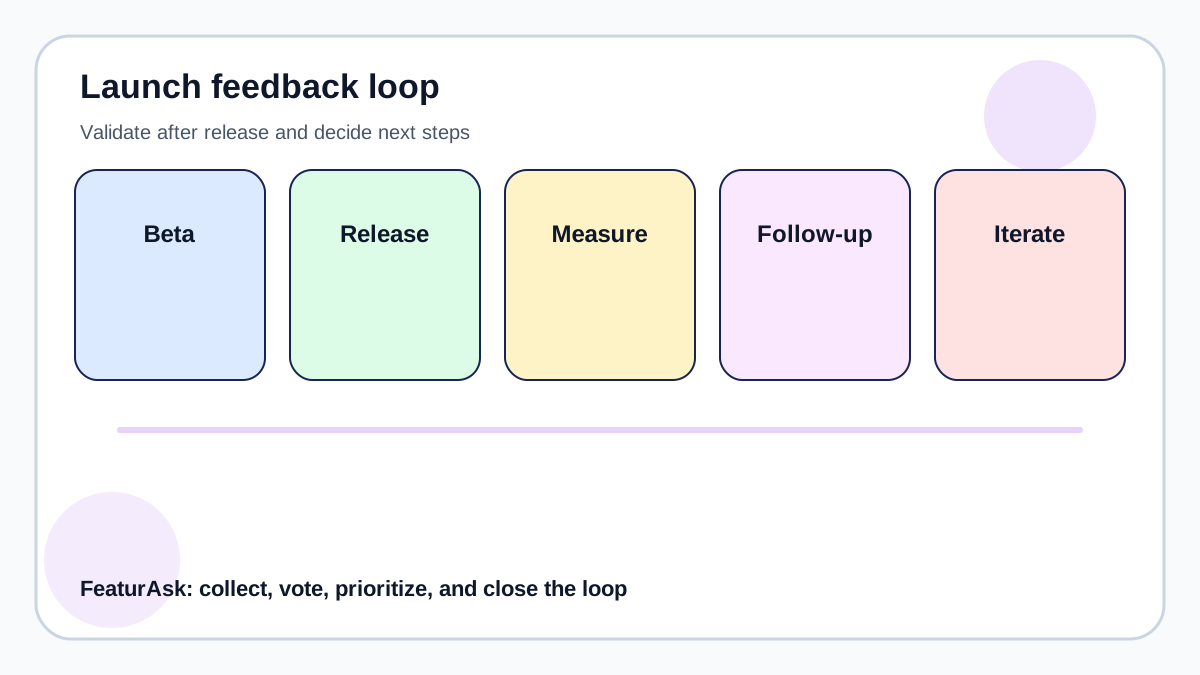
Common feature launch mistakes
The first mistake is treating every requested feature as a promise. A request is evidence, not a commitment. The second mistake is launching only to the loudest users instead of the segment that benefits most. The third mistake is hiding tradeoffs, which causes customers to assume silence means neglect. The fourth mistake is measuring launch success only by clicks.
Successful teams make the decision path visible. They show what was requested, explain what was prioritized, release in a measured way, and invite feedback on the next version. That turns feature work into a repeatable learning system instead of a series of disconnected launches.
Use the request thread as the launch memory
When a feature starts from customer demand, keep the original request thread alive through launch. Add a status update when it is planned, invite high-context voters to validate the beta, and return after release to ask whether the shipped version solves the job. That thread becomes a lightweight history of why the team made the bet.
If your roadmap decisions currently live in meetings, FeaturAsk gives you request collection, voting, moderation, and status updates with one month free and no credit card required. The $29.95/year price keeps it accessible while you test whether a visible board improves prioritization and launch feedback.
After release, summarize what changed, which evidence mattered, and what feedback would shape the next iteration. Create that loop with FeaturAsk on the FeaturAsk homepage when you want launch learning to feed the next priority decision.
Make the next decision easier
A successful launch should improve the next prioritization conversation. Save what you learned: which segment adopted the feature, which objections disappeared, which requests remained, and which assumptions were wrong. Add that evidence to the next priority brief instead of starting from memory.
FeaturAsk fits this loop because requests, votes, comments, and statuses stay connected. The team can see what customers asked for before the build, then return after launch to ask whether the solution worked. That is how feature prioritization becomes a learning system rather than a quarterly guessing exercise.
Pre-launch customer validation
Before a full launch, show the proposed workflow to a small group of customers who asked for the capability. Ask them to complete the job without a long explanation. Watch where they hesitate, what words they use, and what they assume will happen next. This validation is not a vote on whether engineering worked hard; it is a check on whether the feature solves the original problem.
If the test reveals confusion, fix the onboarding or narrow the first release. Shipping a smaller clear feature is usually better than launching a broader feature that customers cannot understand.
A sample feature decision walkthrough
Imagine customers keep asking for request status notifications. The outcome is clearer communication and fewer “what happened to my idea?” messages. Evidence includes repeated request-board comments, support tickets from admins, and votes from active accounts. The target user is the site owner who reviews ideas weekly and the customer who submitted an idea months ago. The first version might notify subscribers when a request moves to planned, in progress, shipped, or not planned.
Scoring might show high reach, medium impact, high confidence, and moderate effort. The launch risk is message overload, so the rollout plan should include notification preferences and a small beta. The announcement should explain that customers can now follow an idea and see status changes without emailing support. The success metric might be fewer duplicate status questions and more engagement on request threads.
This walkthrough shows why prioritization and launch planning belong together. If the team cannot explain how the feature will be announced or measured, it may not understand the value yet. If the launch plan reveals confusion, refine the feature before committing full effort.
Roadmap communication after prioritization
Once a feature is prioritized, communicate carefully. “Planned” should mean the team has decided to work on it, not merely that the idea is popular. “In progress” should mean active work. “Shipped” should include a short explanation of what changed. “Not planned” should be used respectfully and with a reason. Clear statuses prevent the roadmap from becoming a wish list.
Customers appreciate honesty more than vague optimism. If an idea is valuable but not aligned this quarter, say so. If more research is needed, ask for specific examples. If the team chose a different solution to the same problem, explain the connection. This is how a product team keeps trust while still making hard tradeoffs.
Post-launch review questions
After launch, ask whether the feature reached the intended audience, whether those users activated it, whether the original request thread is satisfied, whether support questions changed, and whether the next iteration is obvious. If the answer is unclear, collect more qualitative feedback before expanding scope.
Handling disagreement
Feature prioritization often creates disagreement because every function sees different evidence. Support sees pain. Sales sees revenue. Product sees strategy. Engineering sees complexity. Marketing sees positioning. A good priority brief gives each function a place to add evidence without letting any single viewpoint dominate.
When disagreement remains, return to the outcome. If the quarter is about activation, prioritize evidence connected to activation. If the quarter is about retention, prioritize evidence connected to retention. If the feature supports neither, it may be a good idea at the wrong time.
For feature launches, the practical standard is whether the chosen feature has a documented outcome, customer evidence, rollout plan, success metric, and post-launch review date.
A new teammate should be able to trace a shipped feature from request evidence to score, build scope, launch message, adoption result, and follow-up decision.
That clarity also helps launches. When the team knows why a feature won priority, the announcement can explain the customer problem instead of merely listing product changes.
End each feature review by asking which prioritization assumption survived the launch. If the chosen segment adopted the feature, keep that evidence for the next bet. If usage lagged, revisit whether the problem, message, or release scope was wrong.
The launch review should also name what the team will not do next. Clear non-follow-up decisions protect the roadmap from expanding automatically after every release and help customers understand the product boundary.
A launch owner should check the request thread after the first week and again after the first month. Early comments reveal usability problems; later comments show whether the feature became part of the customer workflow. Both signals belong in the next prioritization review.
That check also gives support and marketing better language. They can explain not only what shipped, but why the release matters and which customer problem it is meant to reduce.
For small teams, this review can be lightweight: one page for evidence, one page for launch notes, and one board thread for customer follow-up. The important part is consistency. Each feature should leave behind enough context to improve the next decision.