Guide to Feature Discovery: Top Examples, Channels & Tips
What feature discovery means
Feature discovery is the process of helping users find, understand, and adopt the product capabilities that are relevant to their goals. It includes onboarding, navigation, empty states, in-app prompts, emails, help content, webinars, release notes, customer success conversations, and user feedback loops.
The goal is not to show every feature to every user. Good discovery is selective. A new user needs the shortest path to first value. A power user may need advanced workflows. A dormant user may need a reminder tied to the problem they originally came to solve. A feature can be excellent and still fail if the right people never discover it at the right moment.
In 2026, feature discovery is harder because products are changing faster. AI-assisted development, frequent experiments, and personalized interfaces mean users can miss useful capabilities even when teams announce them. Discovery now needs both product UX and continuous listening.
When feature discovery matters most
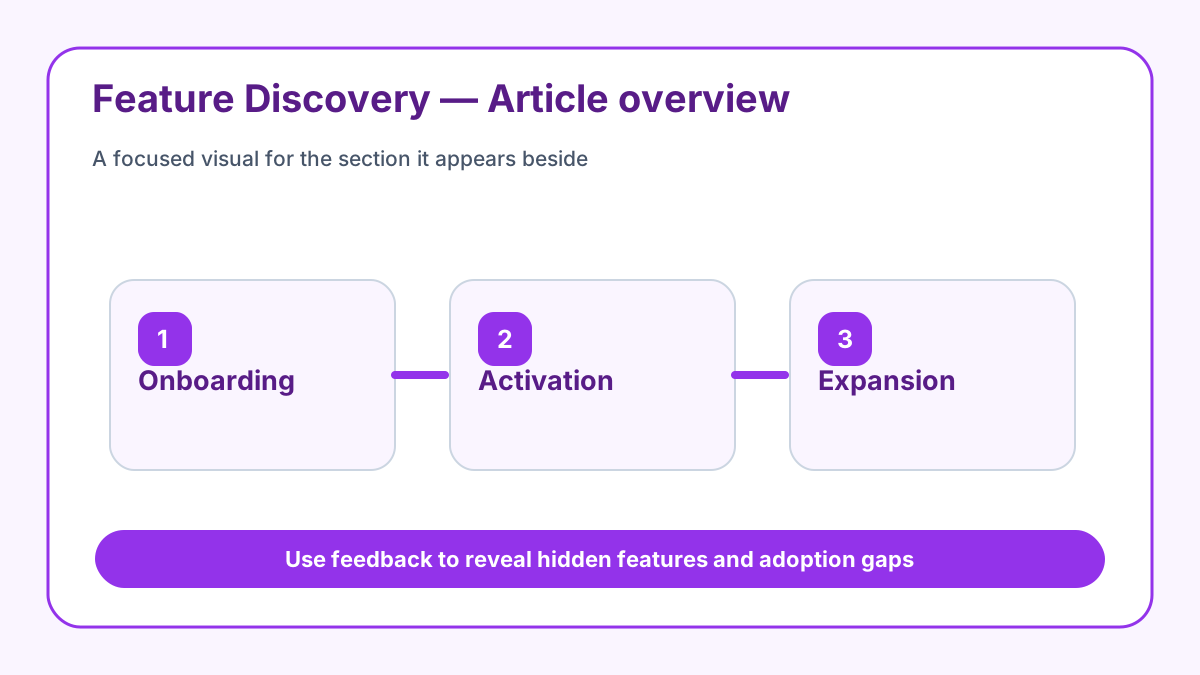
Onboarding is the obvious moment. Users are deciding whether the product can help them, so discovery should focus on the few actions that create value quickly. Do not introduce advanced features before users understand the core loop.
Activation is the second moment. Once users complete the first valuable action, introduce related features that make the result easier, faster, or more repeatable. For example, after a customer submits their first feature request, you might show voting, moderation, or status updates.
Retention and expansion are the overlooked moments. Existing users often keep using the product in the way they first learned it. They may not notice improvements that would save time. A good discovery system uses behavior, feedback, and lifecycle stage to reveal features when they become useful.
Top channels for feature discovery
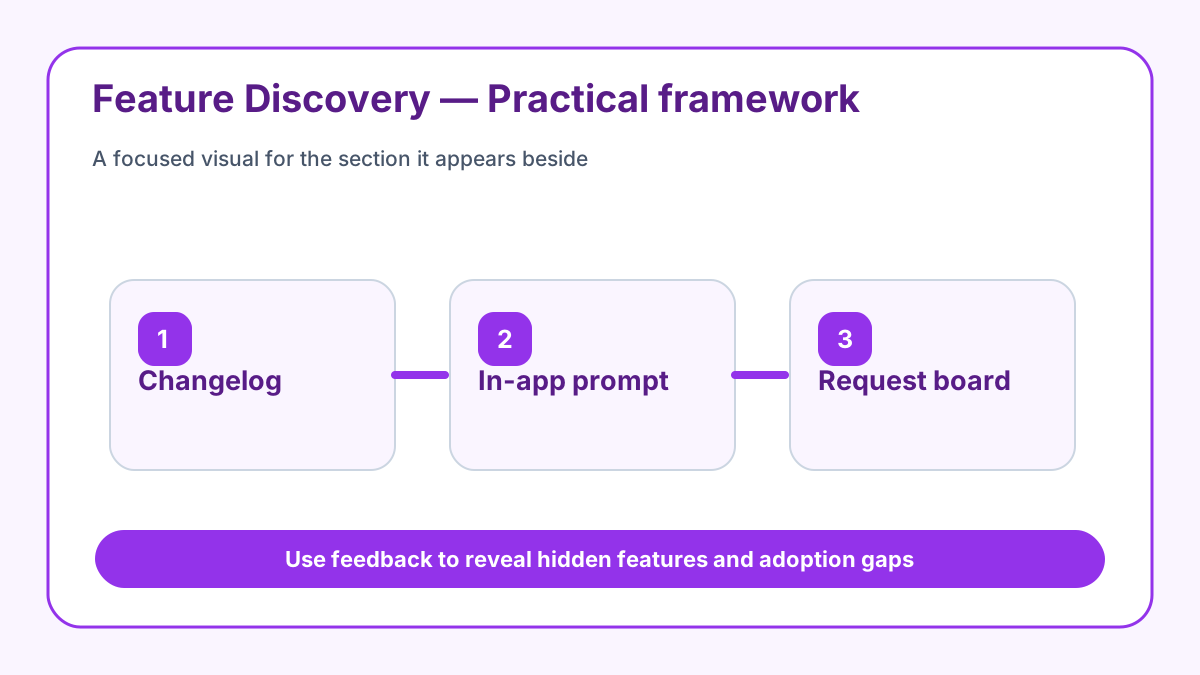
In-app widgets are powerful because they meet users where they are. A small prompt, checklist, or request widget can collect intent and point users toward relevant capabilities. For customer-driven products, a feedback widget can also reveal which features users expected but could not find.
Changelogs and release notes help existing users understand what changed. They work best when updates are grouped by problem, not just by shipped item. If you need structure, review changelog format and changelog examples for practical patterns.
Email can reintroduce features outside the product, especially for inactive users or customers who need help from teammates. Tooltips and walkthroughs can help inside the product, but they should be limited. Too many prompts become visual noise. Progressive disclosure is a useful UX principle here; see <a href="https://www.nngroup.com/articles/progressive-disclosure/" rel="nofollow">Nielsen Norman Group on progressive disclosure</a>.
Customer success calls, support replies, webinars, and community discussions are human discovery channels. They are especially useful for complex workflows because the user can explain what they are trying to accomplish before the team recommends a feature.
Examples of effective feature discovery
A feedback board can pin a “start here” request or announcement that explains a new capability and invites comments. This works because it combines discovery with response: users learn about the feature and can say whether it solves the need.
An empty state can teach a feature at the exact moment of need. If a dashboard has no data, it can show the two steps required to collect the first request, connect a widget, or import existing ideas. The best empty states are short, actionable, and connected to the next click.
A release email can segment by behavior. Users who have not tried a feature get a beginner explanation; active users get advanced tips; admins get setup instructions. Segmentation prevents the common problem of sending one generic announcement that helps nobody very much.
How feedback improves feature discovery
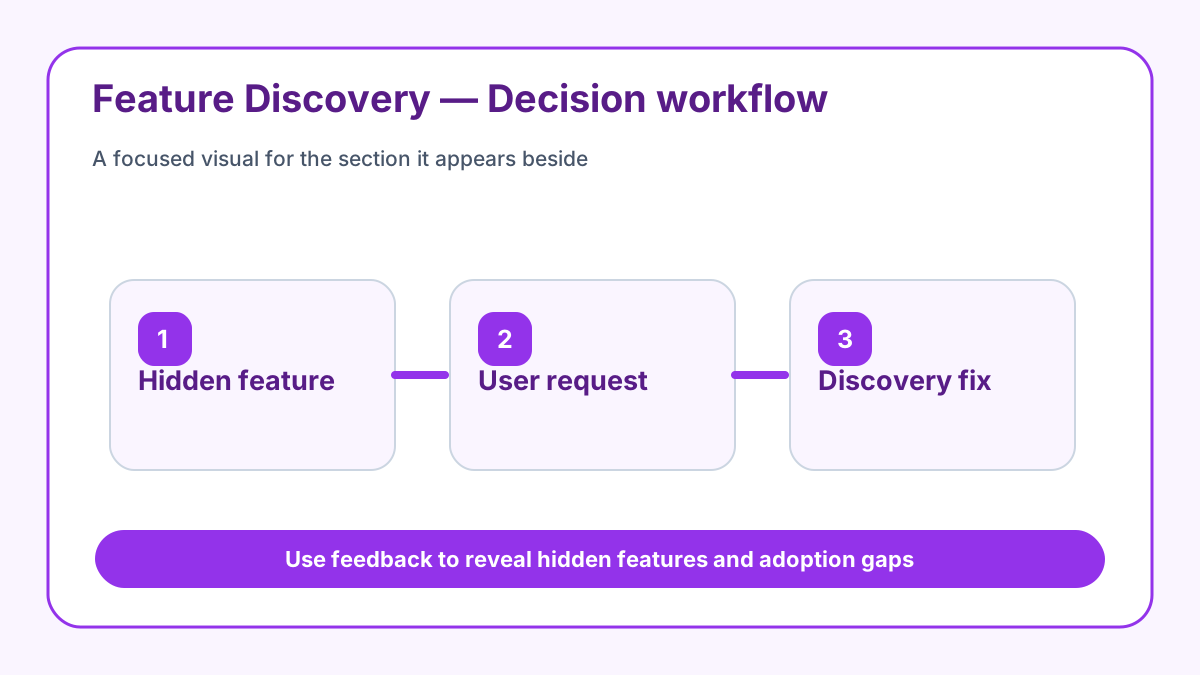
Feature discovery should be measured by behavior and by user questions. If users keep requesting a feature that already exists, that is not only a roadmap signal; it is a discovery signal. The feature may be hidden, named poorly, or explained in language users do not use.
A feature request board gives you a searchable record of these gaps. When multiple users ask for the same capability, check whether you need to build something new, improve navigation, rename a setting, create a template, or announce an existing feature more clearly. This connection between feedback and discovery is often missed in basic guides.
If you want to capture those signals directly from your website or product, FeaturAsk gives you an embeddable request widget, voting, moderation, and analytics for $29.95/year. Start the 30-day free trial with no credit card required and watch which “new feature” requests are actually discoverability problems.
Tips for helping users discover key features
Use segmentation, but keep it practical. Segment by role, plan, lifecycle stage, and core goal before building complicated personalization. A creator, ecommerce owner, SaaS admin, and service provider may need different examples even if they use the same tool.
Run small experiments. Test one onboarding checklist, one release-note format, one empty-state message, or one in-app prompt at a time. Measure activation, feature usage, support questions, and request volume. Discovery improvements should reduce confusion, not only increase clicks.
Scale what works and remove what does not. Old tooltips, outdated onboarding tours, and stale help links create friction. Treat discovery assets as product surfaces that need maintenance. A quarterly review can compare feature usage with recent customer feedback sources and support patterns.
Finally, build the right features in the first place. Discovery cannot rescue a feature that solves a weak problem. Combine feature discovery with feature voting, interviews, and usage data so you promote capabilities users actually care about. FeaturAsk keeps that loop affordable for small teams: $29.95/year after a one-month free trial, no credit card required.
Feature discovery metrics to monitor
Feature discovery should be measured by outcomes, not only message views. Useful metrics include activation rate, time to first value, feature adoption by segment, repeat usage, support questions about existing features, and the number of feature requests that describe something the product already does. That last metric is especially useful because it reveals hidden or poorly named capabilities.
Qualitative signals matter too. Read support tickets, request-board comments, onboarding notes, and cancellation reasons. If users say "I wish you had X" and X already exists, the problem is not the roadmap. It is language, placement, onboarding, or timing.
A quarterly discovery audit can compare your top features against actual user awareness. List the features that drive retention, then check whether each one appears in onboarding, navigation, help content, lifecycle email, release notes, and customer success scripts. Gaps become your discovery backlog.
Common feature discovery mistakes
The first mistake is front-loading every feature during onboarding. New users are trying to complete one meaningful task. Showing too much too early creates confusion and lowers activation. Use progressive disclosure and introduce advanced capabilities after the user has context.
The second mistake is announcing features once and assuming users saw them. People miss emails, skip changelogs, and forget tooltips. Important features need repeated, relevant reminders in different channels. Repetition is helpful when it is segmented and tied to user goals.
The third mistake is treating feature discovery as marketing only. It is also a product-design problem. Navigation labels, empty states, default settings, templates, and dashboard hierarchy all teach users what the product can do.
Using feature requests to find discovery gaps
A request board can reveal when users are asking for existing functionality. Instead of closing those requests silently, tag them as discovery gaps. Then decide whether the fix is a better label, a help link, a template, an onboarding step, a tooltip, or a product change.
This gives product managers a more current discovery loop than an annual UX audit. Users continuously tell you what they cannot find. Their language can improve feature names, help articles, and release notes. Over time, fewer duplicate requests should appear for the same hidden capability.
For this workflow, FeaturAsk gives small teams an affordable signal source: an embeddable widget, voting, moderation, and analytics for $29.95/year. Start the one-month free trial with no credit card required and look for requests that are really feature-discovery problems.
Feature discovery checklist for 2026 teams
Start by naming the three to five features that create the most durable value for each core segment. For a new user, that might be setup, first project, and first result. For an admin, it might be configuration, reporting, and team management. For a power user, it might be automation, templates, and advanced filters. Discovery improves when you know which features deserve attention.
Next, map each feature to a moment. Is it needed before signup, during onboarding, after first value, during expansion, or when a user hits a limit? Then choose the channel. A setup feature may belong in an onboarding checklist. A power-user feature may belong in a contextual prompt. A newly shipped capability may belong in a changelog and lifecycle email.
Finally, listen for mismatch language. Phrases such as “I did not know you had that,” “I thought I needed to request this,” and “Where do I find…” are feature-discovery signals. Tag them separately from true roadmap requests so the team can improve adoption without building unnecessary features.
AI-era feature discovery considerations
AI makes it easier for teams to ship small features, generate variants, and personalize experiences. That speed can create a discovery problem if users cannot keep up with change. Product teams should group related releases into meaningful outcomes instead of announcing every small improvement separately.
AI also changes user expectations. People increasingly expect products to suggest next steps, summarize changes, and adapt guidance to their intent. Even if a small team does not build AI personalization, it can use better segmentation, clearer empty states, and feedback-driven prompts to create a more relevant discovery experience.
One more practical test is the support-deflection test. Take the ten most common questions from support or sales and ask whether each answer is visible at the moment the user needs it. If the answer is hidden in a help center, buried in a release note, or explained only during demos, the product has a discovery gap. Fixing that gap can improve activation faster than building a new feature.
Feature discovery is therefore a maintenance discipline, not a one-time launch task. Every important feature should have an owner who checks whether the right users can find it, understand it, and connect it to a real workflow.
FAQ about feature discovery
Is feature discovery the same as product discovery?
No. Product discovery helps teams decide what to build. Feature discovery helps users find and adopt what already exists or has just shipped. They connect because requests for missing features may reveal either a product gap or a discovery gap.
What is the best feature discovery channel?
The best channel depends on timing. Onboarding is best for first value, in-app prompts are best for contextual help, changelogs are best for existing users, and customer success is best for complex accounts. Use the channel closest to the user’s goal.
How do you avoid annoying users?
Segment messages, limit prompts, test changes, and remove stale tours. Helpful discovery feels like timely guidance. Annoying discovery feels like interruption.