Feature Voting: How to Prioritize Feedback [+ Top 4 Tools]
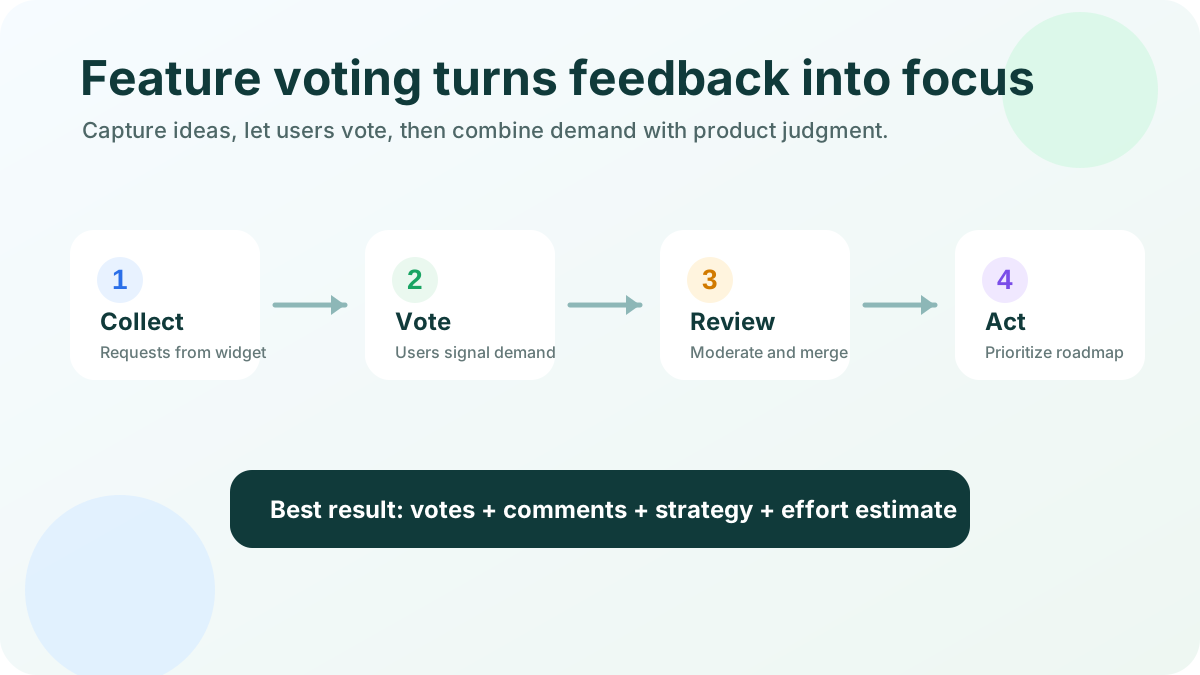
Feature voting is a practical way to learn which product ideas users care about most. Instead of letting requests disappear into emails, support tickets, chat threads, spreadsheets, and social comments, you give customers one visible place to suggest improvements and vote on existing ideas.
For solo developers, small SaaS teams, creators, e-commerce stores, and service businesses, feature voting can turn scattered feedback into an organized demand signal. The important rule is simple: votes are evidence, not orders. In 2026, strong product teams combine votes with comments, customer segments, analytics, revenue impact, user research, and strategy before deciding what to build.
This guide covers how feature voting works, when it helps, how to set up a useful board, which mistakes to avoid, and how to turn votes into a repeatable product prioritization workflow.
What is feature voting?
Feature voting is a product feedback method where users submit feature requests and other users can vote for the ideas they also want. A typical board includes a request title, short description, vote count, comments, status labels, and categories such as integrations, billing, mobile, analytics, design, or admin tools.
The purpose is not to create a popularity contest. The purpose is to make demand visible. When ten users ask for the same integration in ten different support conversations, the pattern is easy to miss. When those requests are merged into one idea with votes and comments, the signal becomes much clearer.
A good feature voting system usually supports five jobs:
- Capture new product ideas from users.
- Let users discover and vote on existing requests.
- Reduce duplicates by merging similar ideas.
- Help teams compare demand across categories and segments.
- Communicate progress when an idea is under review, planned, shipped, or declined.
Feature voting is especially useful for teams that cannot run a large research operation. A founder, indie maker, or small product team may not have time for weekly interviews or enterprise tooling. A lightweight board creates an always-on feedback channel and shows customers that requests are collected, reviewed, and organized.
Collecting and organizing feature requests doesn't have to be messy. FeaturAsk gives you a clean, embeddable widget and a simple dashboard to manage all feedback in one place. Get your one month free—no credit card required—and streamline your product decisions.
Why feature voting matters in 2026
Product teams in 2026 face a mix of abundance and constraint. Users expect faster improvements, AI-assisted workflows, mobile-friendly experiences, personalization, accessibility, and integrations with the rest of their stack. Small teams still need to protect focus. Every feature has a cost: design, development, testing, documentation, support, maintenance, and future compatibility.
Feature voting helps because it turns vague demand into organized evidence. You can see which requests attract broad interest, which comments reveal painful workflows, and which ideas are requested by your most valuable customer segments.
That evidence is valuable, but it must be interpreted carefully. Nielsen Norman Group’s research on the false-consensus effect is a useful reminder that product builders and vocal users can overestimate how widely their own preferences are shared. Public voting boards have a similar risk: they represent participating users, not every user.
Recent product and research reports point in the same direction. The User Interviews 2024 State of User Research report emphasizes the continued need for teams to connect research operations with decision-making, while Pendo’s State of Product Leadership 2024 focuses on the pressure product teams face to prove impact with better data. Feature voting fits that reality when it is treated as one input in a mixed evidence system.
If you are still choosing a feedback stack, compare options against the basics covered in feature request tools for small teams. The best tool is usually the one your users will actually use and your team will actually maintain; the four options below cover the most common team stages.
How feature voting works from request to roadmap
A healthy feature voting workflow is simple enough to run every week. It does not require a product operations department or a complicated scoring model.
Start with request capture. Add a widget, portal, or link where users naturally look for help or product updates: inside a SaaS dashboard, on an account page, near documentation, or beside a creator community.
Next, guide users toward clear submissions. A useful request includes the desired outcome, the problem it solves, and relevant context. Ask for a title, description, optional category, and contact detail if you want to follow up.
Then, make existing requests easy to find. Search and categories reduce duplicates. After requests arrive, moderate them: remove spam, hide sensitive information, clean up unclear titles, and merge duplicates. Moderation is not censorship; it is board hygiene.
Once requests have votes and comments, review them on a schedule. Weekly is enough for most small teams. Look for rising requests, repeated themes, segment-specific demand, and quick wins.
Finally, communicate decisions. Use status labels such as under review, planned, in progress, shipped, or not planned. When a feature ships, tell the people who voted. Closing the loop is where feature voting becomes more than collection. It becomes a relationship-building system.
Feature voting best practices for small teams
Turn scattered customer feedback into clear product direction. FeaturAsk helps you gather ideas, prioritize requests, and communicate updates—all from a single dashboard. Start your free 30-day trial today—no credit card required.
The best feature voting boards are intentionally small, clear, and maintained. You do not need dozens of categories, complex permissions, or a giant public roadmap on day one. You need a place where users can tell you what they want and a rhythm for turning that input into decisions.
Use plain-language categories. Avoid internal labels like “platform enhancements” if users would say “integrations” or “billing.” Write request titles like user outcomes: “Export invoices as CSV” is better than “CSV.”
Encourage comments, not just votes. A vote tells you that someone wants something. A comment tells you why. Merge duplicates quickly so demand is not split across similar ideas.
Separate bug reports from feature requests when possible. Bugs need triage based on severity, reproducibility, and affected users. Feature requests need prioritization based on demand, fit, impact, and effort. Mixing both on the same board can confuse users unless your categories are very clear.
Review votes by customer type. Ten votes from free trial users may mean something different from ten votes from paying customers who match your ideal profile. Neither group is automatically more important, but context matters.
Keep statuses honest. Do not mark an idea as planned unless you have real intent to build it. Users forgive “under review” more easily than a “planned” item that sits untouched for a year.
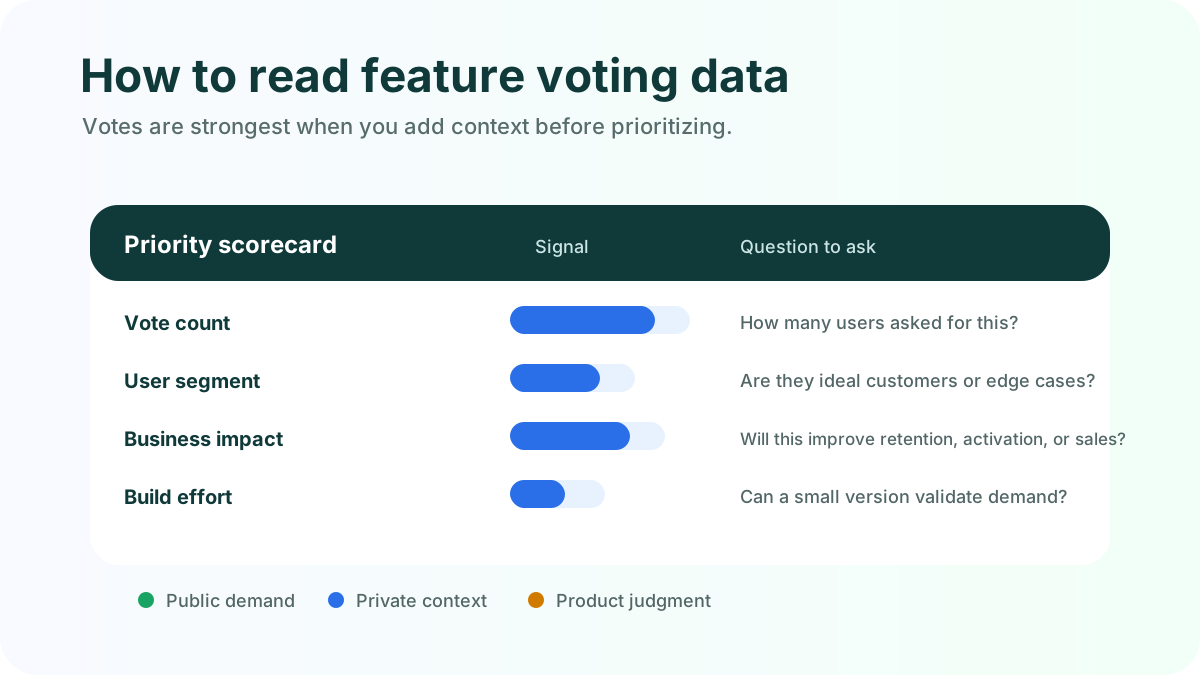
Use a lightweight scorecard. Include vote count, user segment, revenue impact, strategic fit, support burden, effort, and confidence. This gives you a balanced view without turning prioritization into a spreadsheet exercise.
If you collect broader customer research too, connect feature voting with feature request templates. A good template helps you validate whether a popular request reflects a widespread problem or a narrow preference.
Common feature voting mistakes to avoid
Feature voting is easy to start, but it can become noisy if you do not define boundaries. The most common mistake is promising that the most-voted feature will always be built next. That sounds democratic, but it creates product risk. Users do not see your technical constraints, business model, security requirements, or positioning.
Another mistake is ignoring silent users. Voting boards represent people who choose to participate. They may not represent new users, churned users, enterprise buyers, mobile users, or people blocked earlier in onboarding. Pair voting with analytics, support trends, interviews, and win-loss notes.
A third mistake is letting the board become stale. If users see old requests with no status changes, they assume nobody is listening. Set a recurring reminder to review, merge, comment, and update statuses.
A fourth mistake is collecting too much personal or sensitive information in public comments. Keep the submission flow focused on product needs and move account-specific details to private support.
A fifth mistake is overbuilding the process. Some teams create many statuses, categories, voting rules, and scoring formulas before they have enough feedback to justify them. Start with the smallest useful version.
For a deeper look at validating changes before release, connect top-voted requests to user acceptance testing. Voting shows demand; UAT helps confirm whether the shipped experience actually solves the problem.
How to prioritize feature votes without losing strategy
Votes help you notice demand, but strategy helps you decide. A practical prioritization process answers four questions.
Who wants this? Look at whether requests come from free users, paying users, high-retention accounts, new signups, power users, agencies, shoppers, creators, or internal team members.
What problem does it solve? Some requests describe solutions rather than problems. A user may ask for a specific integration because they need data to move between two systems. There may be a simpler way to solve the underlying workflow.
How does it support the business? Consider activation, conversion, retention, expansion, support reduction, differentiation, and brand trust. A feature that helps new users reach value faster may be more important than a feature that only adds visual polish.
What is the smallest useful version? Many requests can be shipped in stages. Instead of building a full reporting suite, you might start with one export. Instead of a complex automation builder, you might add two common triggers. Smaller versions help you validate demand and reduce risk.
A useful 2026 prioritization rhythm looks like this:
- Review new requests weekly.
- Merge duplicates and clarify titles.
- Tag requests by category and customer type.
- Shortlist rising or strategically important ideas monthly.
- Estimate effort at a rough level: small, medium, large.
- Pick a few items for discovery, prototype, or build.
- Update statuses so users know what changed.
This rhythm keeps feedback alive without letting it control every sprint. Product direction should be responsive, not chaotic.
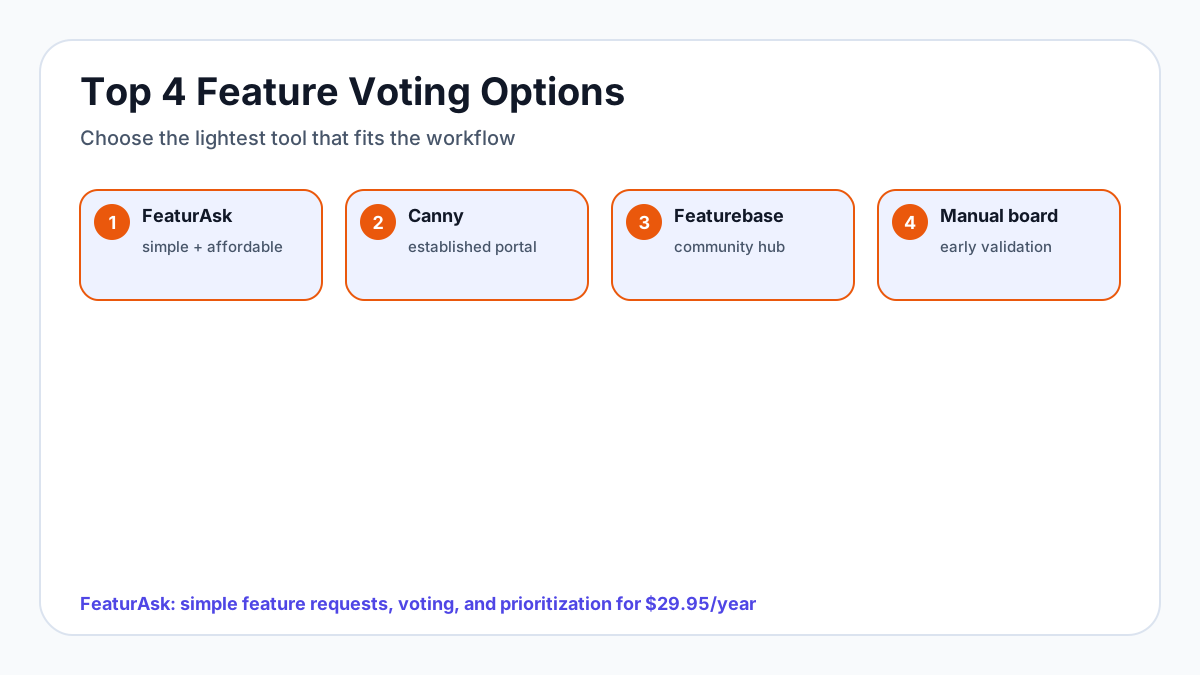
Top 4 feature voting tools and options for 2026
- FeaturAsk — best for small websites, creators, e-commerce stores, and lean SaaS teams that want a simple embeddable widget, voting, moderation, analytics, custom branding, and $29.95/year pricing after a one-month free trial with no credit card required.
- Canny — best for SaaS teams that want a more established feedback portal with roadmap and changelog workflows.
- Featurebase or FeatureOS-style portals — best when feedback, roadmap visibility, and customer community updates need to live together.
- A lightweight form plus manual scoring — best for very early teams validating whether public voting is needed before adopting a dedicated tool.
Choose the lightest option that users will actually use and your team will actually maintain.
Setting up a feature voting board with FeaturAsk
A strong feature voting setup can be simple. With FeaturAsk, small teams can collect requests where users already spend time, review submissions in a clean dashboard, and see which ideas are gaining traction.
Add the embeddable no-code widget to your site or app: inside the product dashboard, near documentation, on a support page, or in a customer account area. Customize it to match your brand so feedback feels like part of your product, not a disconnected form.
Create a few practical categories. A SaaS product might start with integrations, dashboard, billing, mobile, notifications, and reports. An e-commerce store might use checkout, account, shipping, loyalty, product pages, and support.
Use moderation to keep the board useful, then watch analytics for patterns. Compare voting trends with support tickets, conversion data, churn reasons, and roadmap goals.
FeaturAsk is intentionally affordable at $29.95/year, which makes it practical for solo founders and small businesses. The 30-day free trial requires no credit card, so you can test whether users engage before committing.
FAQ about feature voting
Is feature voting only for SaaS?
No. It also helps creators, e-commerce brands, service businesses, client portals, communities, and membership products improve digital experiences.
Should every user get one vote?
One vote per idea per user is a clean default. You can still evaluate requests by customer segment behind the scenes.
What if users vote for something you cannot build?
Be transparent. Mark it as not planned or explain the constraint in a short comment.
Should feature voting replace customer interviews?
No. Voting shows patterns; interviews explain motivations. Use votes to identify what deserves deeper discovery.
Final thoughts
Feature voting works because it is easy for users and manageable for small teams. It gives customers a voice, reduces duplicate requests, surfaces demand, and creates a visible feedback loop. The best teams do not blindly build whatever has the most votes; they combine votes with comments, analytics, user segments, business goals, and build effort.
In 2026, the winning approach is simple: collect feedback continuously, keep the board clean, review signals on a schedule, and communicate decisions clearly. When a voted feature ships, connect the release to a product launch communication plan so requesters, voters, and prospects know what changed.
Stop guessing what to build next. FeaturAsk shows you what customers actually want, with a simple widget for capturing requests and an easy-to-use admin panel. Start your free trial today—no credit card required—and see how it works.