How to Say No to Customers and Feature Requests
Saying no to customers is uncomfortable because a customer request is rarely just a request. It may represent a blocked workflow, a sales objection, a retention risk, or a user who cares enough to tell you what is missing. But saying yes to every request is worse. It creates a confused product, overcommitted roadmap, tired team, and customers who eventually stop trusting your promises.
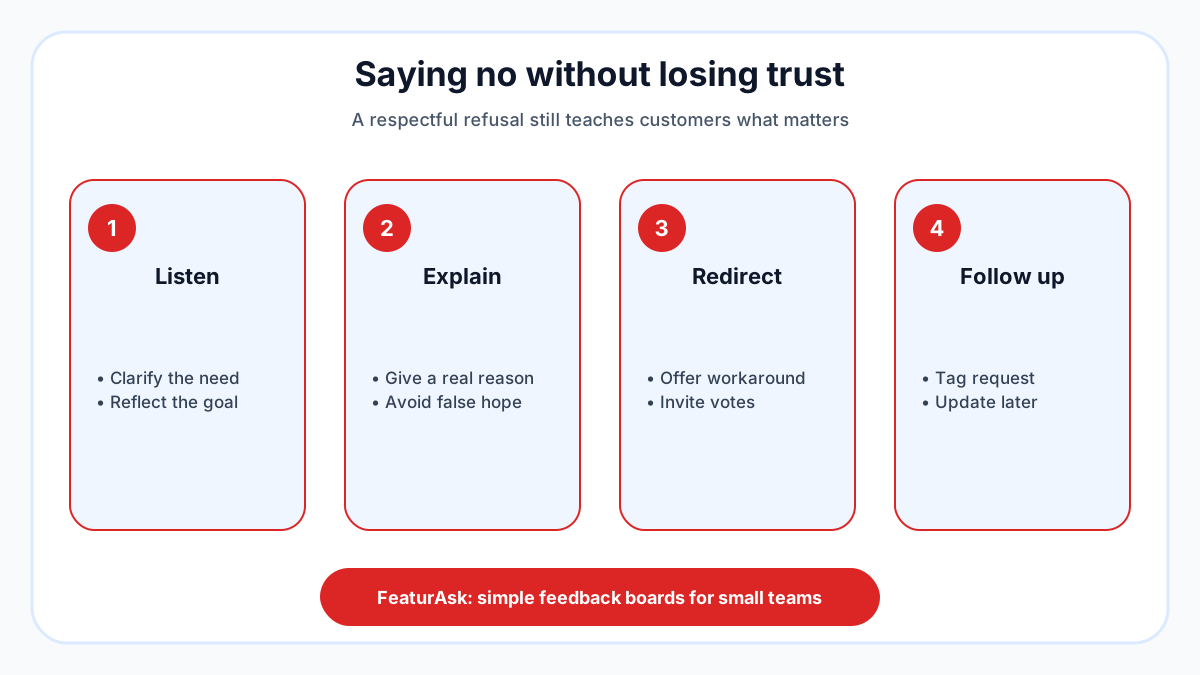
The goal is not to become defensive or cold. The goal is to decline the wrong work in a way that still respects the person, preserves useful feedback, and explains your product direction. A good no says: we heard you, we understand the need, this is not the right move now, and here is what you can do next.
This guide gives you a practical way to say no to customers and feature requests without damaging the relationship. It is written for founders, SaaS teams, product managers, support leads, and small teams where one person may be answering tickets and shaping the roadmap. For related background, see FeaturAsk's guides to feature requests, building a feature request process, and using a feedback portal to keep decisions visible.
Quick answer: how to say no to a feature request
Say no by first acknowledging the customer's goal, clarifying the need, giving a specific reason, avoiding false hope, offering an alternative when possible, and recording the request so future demand can be tracked. Keep the tone warm and direct. Do not blame the customer, hide behind vague policy, or promise that the team will “definitely consider it” if the decision is already no.
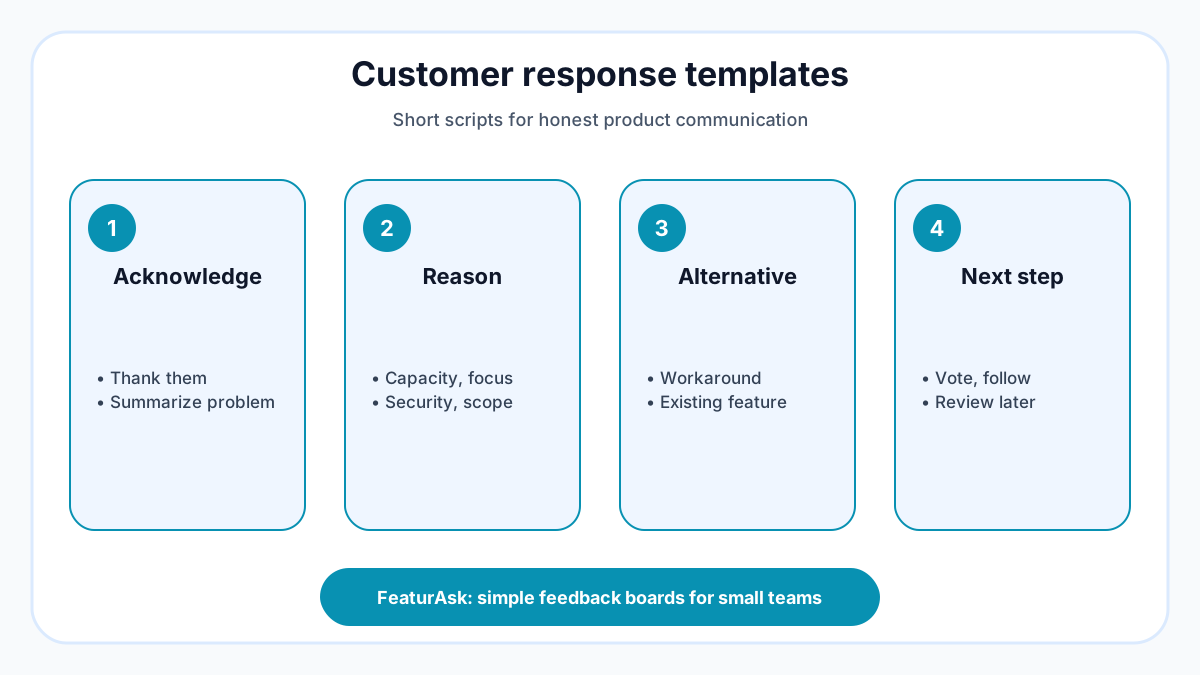
A simple structure works in most cases: thank them, summarize the request, explain the decision, offer a workaround or existing feature, and invite them to follow a public request if the idea may be reconsidered. The best refusals are not long. They are honest, useful, and easy to understand.
If your team needs a simple place to collect requests, votes, comments, and status updates before responding, try FeaturAsk for one month free with no credit card required. After the trial, it is only $29.95/year, which makes it practical for small teams that want a respectful feedback loop without expensive product-management software.
Why saying no is part of good customer service
Customer-centric teams listen carefully, but they do not outsource product strategy to the most recent request. A product exists to solve a defined set of problems for a defined audience. If every customer can redirect the roadmap, the product loses focus and the team loses the ability to make reliable commitments.
Saying no can actually improve trust when it is done well. Customers may be disappointed, but they understand boundaries. What damages trust is silence, vague promises, or a “yes” that never ships. A clear refusal lets the customer decide whether your product still fits their needs. It also teaches them what kinds of requests match your direction.
HubSpot's article on <a href="https://blog.hubspot.com/service/say-no-to-customers" rel="nofollow">how to say no to customers</a>, rechecked on May 22, 2026, emphasizes empathy, alternatives, and careful wording. Intercom's accessible guide to <a href="https://www.intercom.com/blog/customer-feedback/" rel="nofollow">customer feedback strategy</a>, also rechecked on May 22, 2026, reinforces a related point: feedback is valuable when it becomes part of a deliberate system, not when it turns into reactive promises.
Before you say no, make sure you understand the request
Many feature requests are incomplete on the first message. “Can you add Slack?” might mean notifications, login, data export, internal approvals, or a sales team trying to mirror a competitor's workflow. If you reject the first wording too quickly, you may miss the real problem.
Ask clarifying questions when the need is ambiguous: What are you trying to accomplish? What happens today instead? How often does this come up? Who on your team is affected? Would a workaround solve the problem temporarily? These questions show respect and often reveal that the original request is not the only possible solution.
Nielsen Norman Group's guidance on <a href="https://www.nngroup.com/articles/user-need-statements/" rel="nofollow">user need statements</a>, rechecked on May 22, 2026, is helpful because it encourages teams to frame the need before debating solutions. You are not just refusing a feature; you are deciding whether a user problem belongs in your product's focus.
Set expectations before requests arrive
The easiest no is the one customers already understand. If your feedback page says “We read every request, use votes and comments as evidence, and choose work based on product direction and capacity,” users are less likely to treat submission as a promise. If your statuses are clear, customers can see the difference between open, under review, planned, shipped, and not now.
Expectation-setting is especially important for public feedback boards. Voting should mean “I share this need,” not “the highest-voted idea automatically wins.” A short explanation near the submission form can prevent future frustration. It also gives support a consistent phrase to reference when a request cannot be accepted.
FeaturAsk helps here because the board itself can show statuses and comments. If you want to move requests out of private inboxes and into a visible process, start FeaturAsk free for one month with no credit card required; the paid plan is $29.95/year if it fits your workflow.
Valid reasons to say no
A no should include a real reason. You do not need to reveal sensitive strategy, internal conflict, or exact financial calculations, but you should give enough context for the customer to understand the decision.
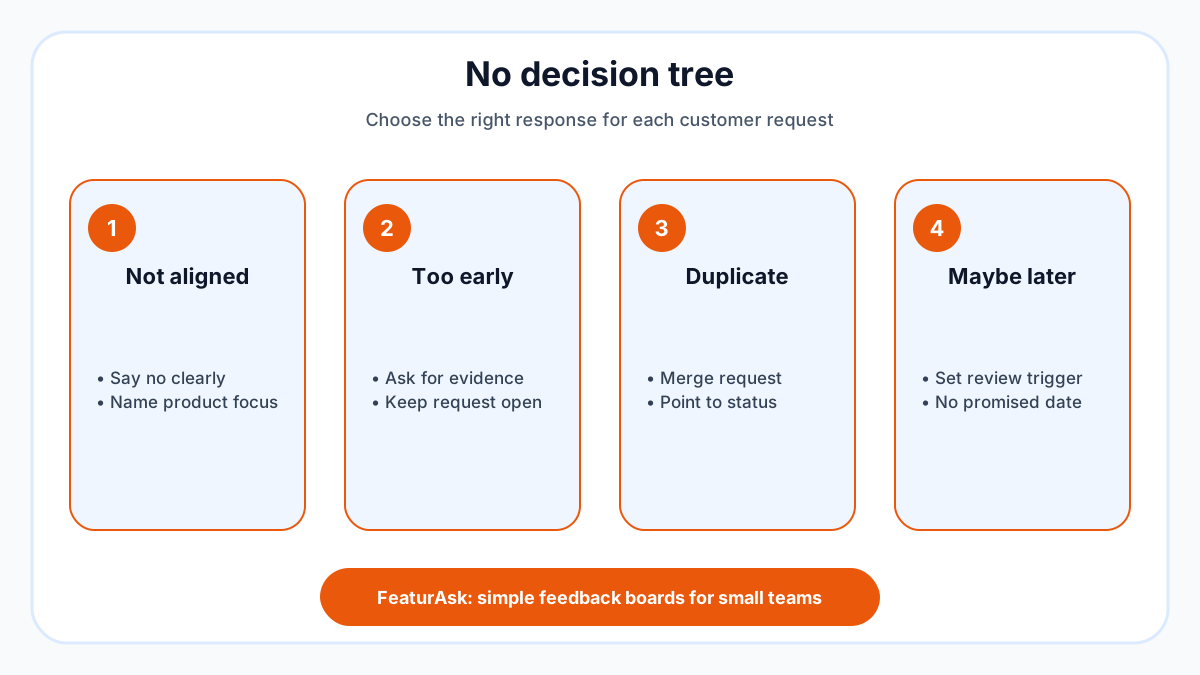
Common valid reasons include lack of strategic fit, too much complexity for the affected use case, security or compliance concerns, low demand from the target audience, conflict with product simplicity, duplicate functionality already available in another form, technical dependencies that must come first, or a current roadmap focused on a different problem.
Avoid weak reasons such as “we do not have time” unless capacity is truly the point. Customers hear that as “you are not important.” A stronger version is: “Our current roadmap is focused on faster onboarding, so we are not adding advanced reporting customization this cycle.” It explains the trade-off without sounding dismissive.
How to say no without sounding dismissive
Start with the customer's goal, not your limitation. “I understand you want teammates to get notified faster when a request changes” feels better than “We do not integrate with Slack.” Then state the decision plainly. Do not bury the no under paragraphs of apology.
Use warm, direct language: “We are not planning to build this right now.” “This does not fit our current product direction.” “We cannot support that workflow safely.” These sentences are clearer than “We will keep it in mind,” which often creates false hope.
After the decision, offer an alternative if one exists. That might be an existing feature, a workaround, an export, a Zapier-style automation, a help article, or a different plan. If there is no workaround, say so. Customers appreciate honesty more than a fake solution.
What to avoid when declining a request
Do not argue with the customer. You can explain your reasoning without trying to prove they are wrong. Do not blame engineering, leadership, or another department. Internal blame makes the company look disorganized. Do not over-apologize; one sincere apology for the inconvenience is enough. Do not invite endless debate if the decision is final. Do not promise review dates unless the team will actually review the request then.
Also avoid the “maybe later” trap. Maybe is useful only when there is a real trigger for reconsideration, such as more demand from a target segment, a dependency shipping, or a strategic theme changing. Otherwise, maybe later is just a slow no.
Templates for saying no to feature requests
Not aligned with product direction
“Thanks for explaining this use case. I understand that you want [goal] so your team can [outcome]. We are not planning to build [request] because our current product direction is focused on [focus area]. I know that may be disappointing, but I do not want to create a false expectation. If this changes, we will update the request here.”
Too complex for the value
“Thanks for the suggestion. We reviewed the request and the implementation would add significant complexity to [area of product]. Based on current demand and our roadmap, we are not moving forward with it right now. The closest option today is [workaround].”
Already possible another way
“Good news: the outcome is possible today, although not through the exact workflow you described. You can [steps]. I have added your note to the request for a smoother version so the product team can track demand.”
Duplicate request
“Thanks for sharing this. We already have a related request open here: [link]. I merged your feedback so your use case is included, and you can follow that request for updates.”
Not now, but worth tracking
“This is a valid use case, but it is not part of the next roadmap cycle. We are leaving the request open so other users can vote and add context. If we see stronger demand from our target customers, we will review it again.”
Handling rude or frustrated customers
A frustrated customer may be reacting to a real business problem. Stay calm, acknowledge the impact, and keep boundaries. You can say, “I understand this is causing extra work for your team. I want to be transparent that we are not building this right now, but I can help you find the best available workaround.”
If a customer becomes abusive, protect your team. A respectful no does not require accepting insults. Move the conversation back to the issue: “I want to help with the product question, but I cannot continue the conversation in that tone.” Then restate the available options.
Support teams should have escalation rules for angry customers, refund threats, security concerns, and enterprise accounts. Escalation does not mean the answer changes. It means the right person owns the relationship and the risk.
How public feedback boards make no easier
Private refusals disappear. Public or shared request boards create a visible trail: the request, the conversation, the status, and the reason. When a request is marked not now with a short explanation, future customers can find the answer before opening another ticket. Other users can still vote or comment if the need becomes more important.
A board also shifts the tone from one-to-one negotiation to product evidence. Instead of saying “we will not build your feature,” you can say “we are tracking this request, but it has not met our current prioritization criteria.” That does not remove disappointment, but it makes the process feel fairer.
A simple response workflow for small teams
First, route feature requests into one board or tracking system. Second, clarify incomplete requests before deciding. Third, merge duplicates. Fourth, label the request by segment, workflow, and strategic theme. Fifth, decide whether it is open, under review, planned, shipped, or not now. Sixth, reply to the customer using a short template customized with their specific need.
This workflow keeps support fast and product learning intact. You are not writing a custom essay every time, but you are also not throwing away useful customer evidence.
When to say yes instead
A request may deserve a yes when it repeatedly appears from target customers, solves a severe workflow problem, supports the current product strategy, has manageable effort, and improves retention, activation, or differentiation. Saying no well is easier when customers can also see that some requests do move forward.
That is why your feedback loop should include shipped updates, not only declined ideas. When you build something customers requested, update the original request and thank the contributors. This teaches users that the process is real.
FAQ
Should every feature request receive a personal reply?
At low volume, yes, a short reply is worth it. At higher volume, a visible status and public comment may be enough for common requests. High-value customers or sensitive issues still deserve personal follow-up.
Is it rude to say no directly?
No. Directness is respectful when paired with empathy and a reason. Vague language feels kinder in the moment but often creates more frustration later.
Should we tell customers a request is on the roadmap?
Only if it is truly planned. If the team merely likes the idea, use under review or open. Roadmap language should be reserved for real commitments.
What if a customer threatens to leave?
Acknowledge the impact and escalate if appropriate, but do not make a promise the team cannot keep. Sometimes the honest answer is that your product may not fit that customer's required workflow.
The best no protects the product and the relationship
Saying no is not a failure of customer service. It is part of building a focused product. Listen first, clarify the problem, explain the decision, offer alternatives when possible, and keep the request visible so future demand can be tracked.
FeaturAsk gives small teams a simple way to do that: collect requests, let users vote and comment, publish statuses, and close the loop when decisions change. Try FeaturAsk for one month free with no credit card required. If it works for your team, it is only $29.95/year.