Feature Requests: How to Collect Them and Engage Users in Roadmap Creation
Published: 2026-04-18
Feature requests are one of the clearest ways users tell you what they want your product, website, or service to do next. They can reveal missing workflows, confusing limitations, unmet expectations, and opportunities you would not find in analytics alone. They can also become a chaotic wish list if every idea is treated as a promise.
A healthy request system gives users a voice and gives the team a filter. Users should be able to submit ideas, vote on existing requests, explain their use case, and see whether anything changed. The team should be able to moderate duplicates, compare demand, prioritize tradeoffs, and communicate decisions. FeaturAsk provides that lightweight loop through a simple website widget and request board. You can start a free FeaturAsk trial with no credit card required; after the 30-day trial, it costs $29.95/year.
For related guidance, see FeaturAsk posts on feature request process, feature request software, feature prioritization matrix, and public roadmap examples. For broader context on roadmap communication, see Nielsen Norman Group’s article on product roadmaps.
Quick answer
Collect feature requests in one visible place, encourage votes and comments, group duplicates, review demand on a regular cadence, and update customers when a request is planned, shipped, researched, or declined. The best systems make participation easy without handing the roadmap to the crowd.
Feature requests are inputs, not strategy. They should inform product decisions by showing what users are trying to accomplish, how often the problem appears, and which segments care most. The roadmap still needs product judgment.
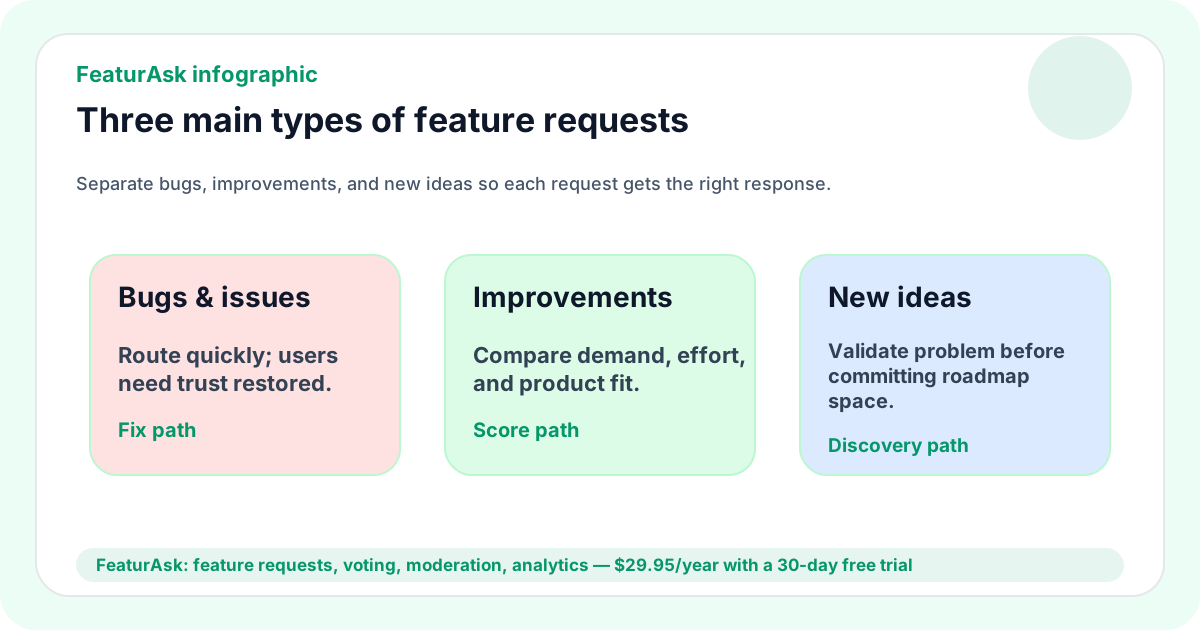
Three main types of feature requests
Most requests fall into three useful categories. Problem requests describe an outcome the user cannot achieve: “I need to share a filtered report with my client.” These are valuable because they leave room for the team to design the right solution.
Solution requests name a specific feature: “Add CSV export” or “Integrate with Slack.” They are easy to understand, but the team should still ask why. A requested solution may be correct, or it may be a workaround for a deeper need.
Enhancement requests improve something that already exists: “Make the dashboard faster,” “let me reorder fields,” or “show more context in notifications.” These requests often indicate friction in a core workflow. They may not look as exciting as new features, but they can have strong retention impact.
A good request board captures all three while nudging users to explain context. The more clearly users describe the job behind the idea, the easier it is to prioritize.
How to collect feature requests without chaos
The biggest mistake is allowing every channel to become its own backlog. A founder saves requests in notes. Support tags tickets. Sales keeps a CRM field. Users comment in chat. Someone runs a survey. Each source may contain useful signal, but the team cannot see patterns when the records stay separate.
Create one source of truth. That does not mean every user must submit through the same path. It means requests from support, sales, social media, community, and interviews should be copied or summarized into the same system. The central record should include the user goal, original wording, segment, duplicates, votes, comments, and status.
Keep intake short. Ask what the user is trying to do, what is missing or difficult, and why it matters. Long forms produce fewer submissions and often encourage users to guess what the team wants to hear. Short prompts produce more natural language, which is useful during prioritization.
Make the board easy to find after submission. Users who take time to suggest an idea often want to know whether others agree or whether the team responded. A visible link from the product, help center, account area, or community makes the board feel like part of the product rather than a forgotten form.
Why encourage upvotes and comments?
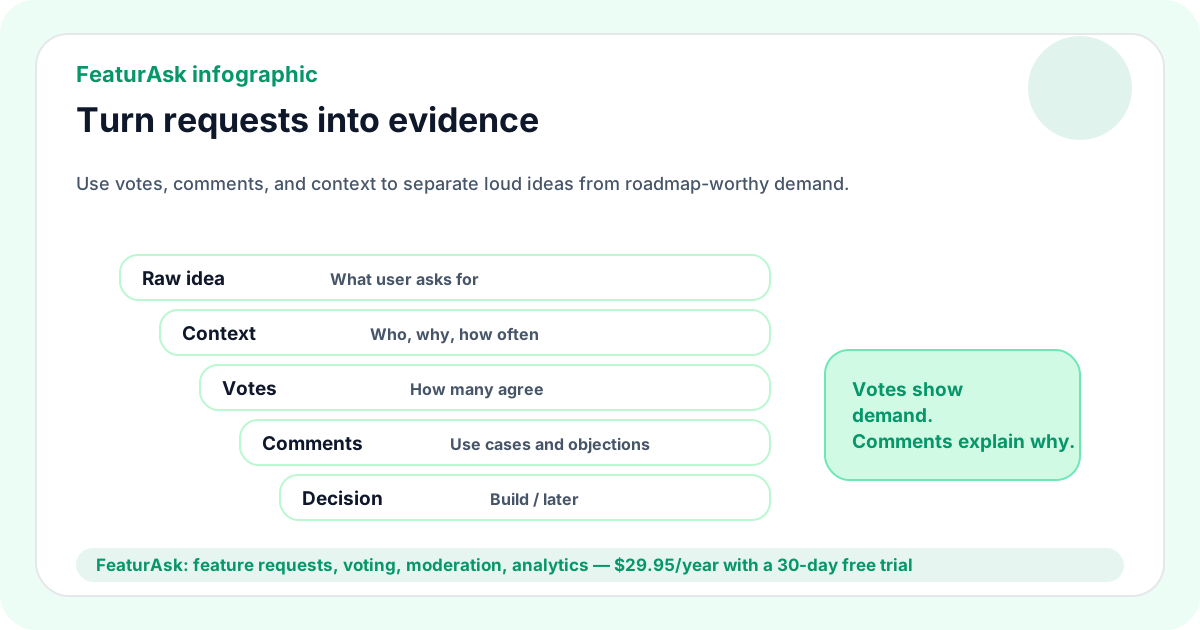
Votes help reveal repeated demand. If many users vote for the same request, the team knows the idea is not isolated. But votes are blunt. They do not show whether the request comes from paying customers, trial users, agencies, power users, or casual visitors. They also do not explain why the problem matters.
Comments add that missing depth. A comment can reveal a workflow, a failed workaround, a revenue impact, an accessibility issue, or a compliance need. Two requests with the same vote count may deserve different priorities because one has detailed comments from a critical segment and the other has shallow interest.
Encouraging public comments can also reduce support load. Users see that others have the same need, add their context instead of opening a duplicate ticket, and follow the eventual status update. The board becomes both a listening channel and a communication channel.
How to ask customers for feature requests
Ask at moments when users understand the product. Good moments include after onboarding, after repeated use, after a support conversation, when a user hits a limitation, or after a customer reads documentation and still cannot complete a task.
Use plain language. Instead of “Submit product feedback,” try “What would make this easier?” or “What should we improve next?” Then ask one follow-up: “What were you trying to do?” This shifts the conversation from shopping-list features to outcomes.
Avoid promising that every idea will ship. A better invitation is: “Share your idea, vote on existing requests, and help us understand what matters most.” That wording gives users a role in prioritization without implying that popularity automatically controls the roadmap.
FeaturAsk is useful here because the widget can sit close to the product or website moment where the idea appears. Users submit quickly, other visitors can vote, and admins can ask clarifying questions before turning the request into planned work.
Six ways to prioritize feature requests
First, look at customer demand. Count votes, duplicate requests, and repeated comments. Demand is not perfect, but repeated demand deserves attention.
Second, consider customer segment. A request from active users in your target market may matter more than a request from visitors who are not a fit. Segment context prevents raw vote counts from misleading the team.
Third, estimate business impact. The request may improve retention, conversion, expansion, activation, support cost, or brand trust. Tie impact to a real outcome rather than a vague sense that the feature would be nice.
Fourth, estimate effort. Include design, engineering, testing, migration, support, documentation, and maintenance. Small-looking features can be expensive if they introduce permissions, data models, or edge cases.
Fifth, check strategic fit. The request should reinforce the product direction. If it pulls the product toward a different audience, treat it carefully even when demand is loud.
Sixth, score confidence. How strong is the evidence? A request with votes, comments, interviews, and behavioral data is more reliable than a request supported by one persuasive anecdote.
A practical vetting process
Moderate first. Remove spam, merge duplicates, improve vague titles, and hide sensitive information. Then clarify. If the request names a solution but not a problem, ask a question before prioritizing it.
Next, tag the request by outcome and segment. Tags help teams see themes such as reporting, onboarding, integrations, billing, accessibility, or admin controls. Review tagged groups weekly rather than reacting to individual requests one at a time.
Assign statuses deliberately. Open means the team is collecting evidence. Researching means the problem is worth deeper discovery. Planned means the team has committed. Shipped means the work is available. Not now means the team understands the request but has chosen not to pursue it in the current horizon.
The “not now” status is important. It keeps the board honest. Users may be disappointed, but a respectful explanation is better than leaving popular ideas open forever.
How feature requests shape a roadmap
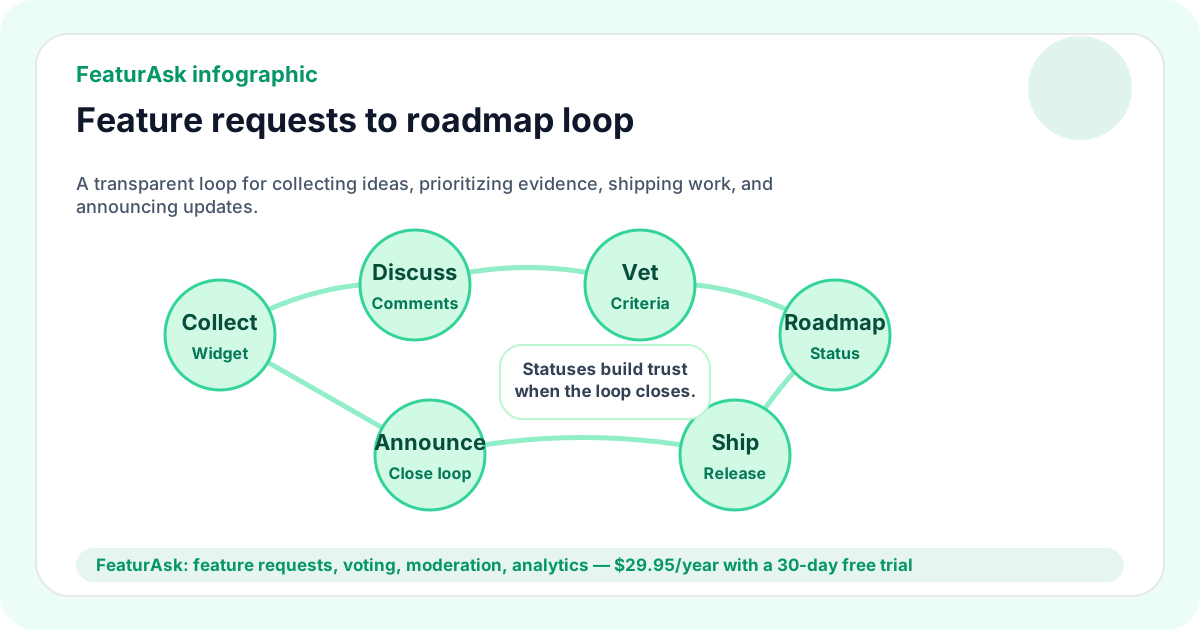
Feature requests should influence roadmap themes rather than dictate a list of individual tickets. If users ask for exports, share links, PDF reports, and integrations, the theme might be “make data easier to move and share.” That theme gives the team room to choose the strongest solution and sequence work intelligently.
A roadmap built from themes is easier to communicate. Customers can understand the direction without seeing every internal dependency. The team can say, “We are improving reporting workflows this quarter,” then link shipped work back to the requests that informed it.
Public status updates close the loop. When a feature ships, thank the users who contributed. When an idea is researched, ask for more context. When an idea is declined, explain the tradeoff. This is how request collection becomes user engagement rather than a hidden backlog.
Roadmap creation should still include non-request evidence. Analytics, usability tests, support volume, churn interviews, and strategic bets may reveal work users do not know how to ask for. The best teams combine explicit requests with these quieter signals, then use the public board to explain decisions in language customers understand.
Checklist for better feature requests
A useful feature request includes the user goal, current obstacle, affected workflow, frequency, urgency, segment, examples, and any workaround. The team should add duplicates, vote count, comments, internal notes, effort estimate, priority rationale, and current status.
Do not require customers to fill every field. Capture the basics from users and let the team enrich the record during review. The customer-facing experience should stay simple; the admin side can carry more structure.
Review quality as well as quantity. Ten comments that describe the same painful workflow can be more valuable than fifty vague votes. During weekly review, highlight requests with strong stories, clear business impact, or repeated workarounds. Those details often shape better solutions than the requested feature name alone.
FeaturAsk keeps this balance by letting users submit and discuss ideas in plain language while admins manage moderation and review. The product includes the request widget, voting, discussion, custom branding, mobile-friendly pages, and analytics in a straightforward $29.95/year plan after the 30-day free trial, with no credit card required.
How FeaturAsk fits
FeaturAsk is a simple feature request platform for small teams and websites that want feedback to be visible, organized, and affordable. It is useful when you have enough ideas to need structure but not enough complexity to justify an enterprise product suite.
Use it to collect requests close to the user experience, invite votes and comments, merge duplicates, and publish status updates. If your current feedback lives in scattered notes, launch a FeaturAsk board and test the loop for a month. You will quickly learn which requests attract demand and which need more research.
One-week implementation checklist
- Add one clear place for users to submit ideas.
- Write a prompt that asks for the desired outcome and current obstacle.
- Route support, sales, and community requests into the same board.
- Merge duplicates so demand accumulates.
- Review top requests weekly with demand, impact, effort, fit, and confidence in mind.
- Update statuses so users know what happened.
FAQ
Should every user see the roadmap?
Not always. Public visibility can build trust, but only show commitments you are prepared to maintain. It is fine to keep some research or sensitive work internal.
Are feature requests the same as product strategy?
No. Requests are inputs. Strategy decides which inputs matter, which audience the product serves, and which tradeoffs are worth making.
How do you decline a popular request?
Explain the reason clearly and respectfully. Mention the tradeoff, current priority, or workaround when appropriate. Do not leave popular requests open forever if the answer is no.
What does FeaturAsk cost?
FeaturAsk costs $29.95/year after a 30-day free trial, and no credit card is required to start. It includes the feedback widget, voting, discussion, moderation, custom branding, mobile-friendly pages, and the admin dashboard. When you want a cleaner feedback loop, try FeaturAsk.