12 Public Roadmap Examples for SaaS Companies
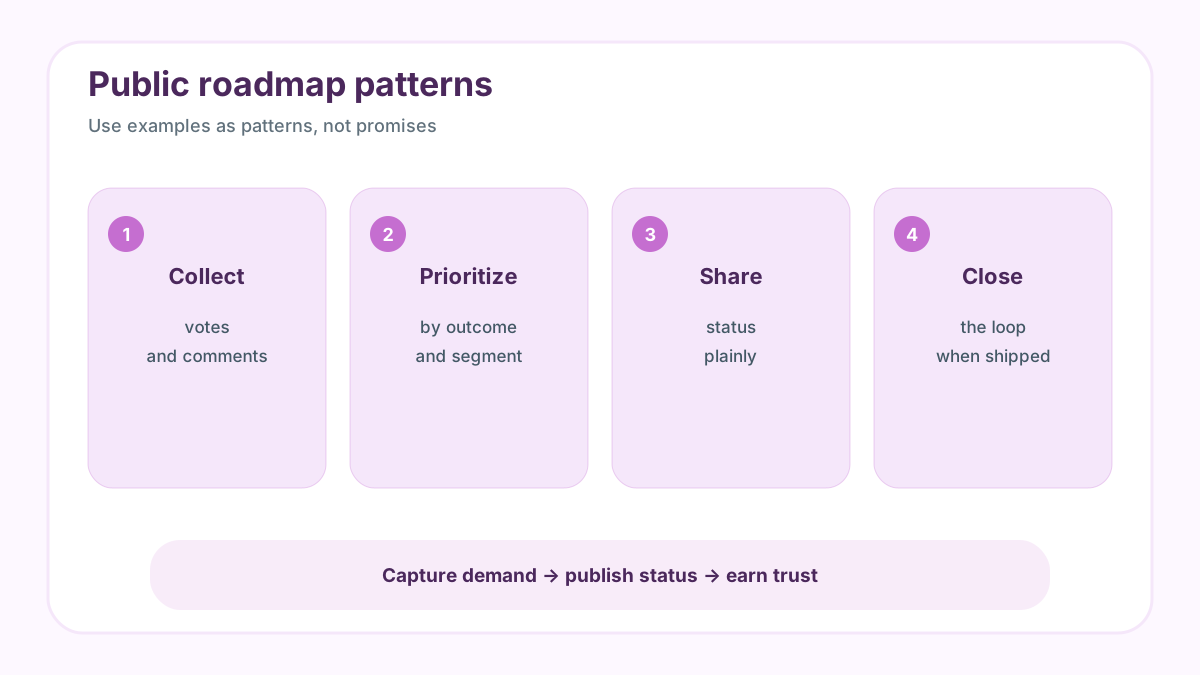
Study 12 practical public roadmap examples and learn how SaaS teams can share direction without overpromising.
Public roadmaps should reduce uncertainty, not create promises
A public roadmap is a visible explanation of where a product is going, why certain work matters, and how customers can influence priorities. The best examples do not read like a contract. They show themes, status, and evidence. That distinction matters because modern roadmap guidance from Atlassian product roadmap guide treats a roadmap as a communication tool, while ProductPlan roadmap guide emphasizes strategic outcomes over fixed feature calendars.
For a small SaaS company, the public version should be lighter than the internal plan. Keep engineering estimates, staffing constraints, revenue details, and sensitive customer names private. Share the problems you are considering, the features already committed, and the feedback signals that moved an item forward. A good roadmap invites customers into the decision without letting every loud request become an obligation.
If you want a lightweight way to collect requests before you publish the next roadmap or update, try FeaturAsk for one month free with no credit card required. It is $29.95/year, so a small team can validate demand without buying an enterprise feedback suite.
Public roadmap vs private-public roadmap
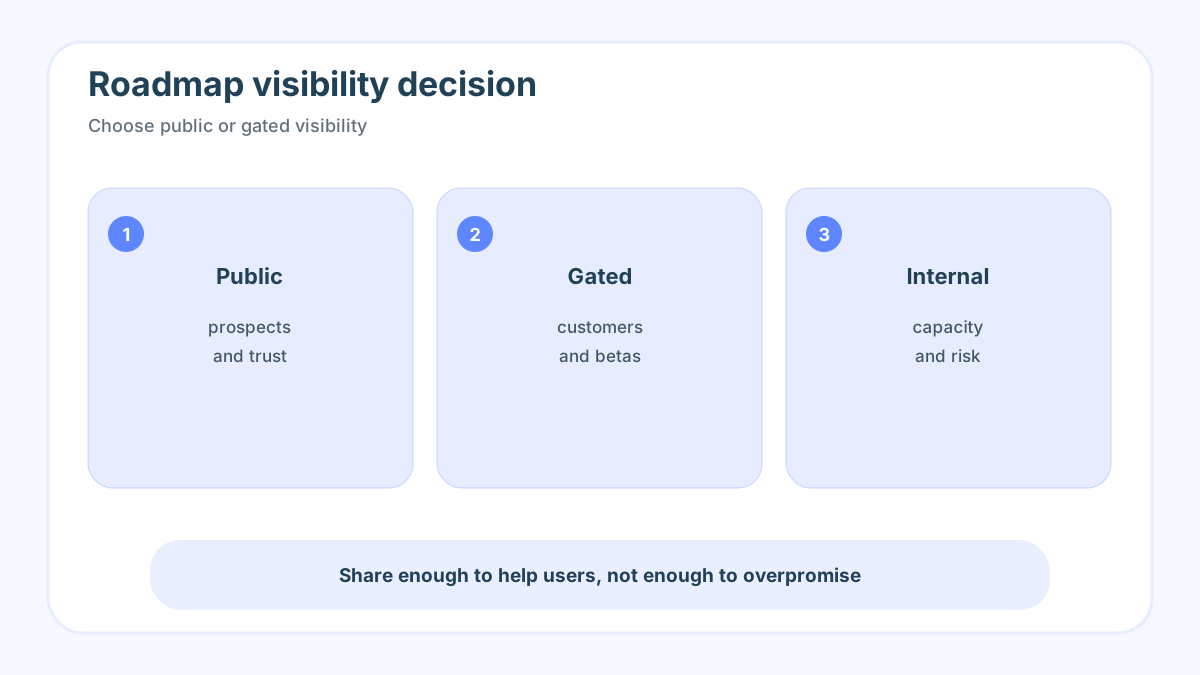
A fully public roadmap is indexable and useful for prospects, but it can attract competitors and create pressure when plans change. A private-public roadmap is visible only to signed-in customers, beta users, or a community list. It is often safer for early-stage SaaS teams because customers still see progress while the company protects positioning.
Use a fully public roadmap when transparency is part of your brand, when requests are broad, and when the product category benefits from visible momentum. Use a gated roadmap when the work involves security, enterprise accounts, regulated use cases, or sensitive integrations. In both cases, pair roadmap items with feedback capture so the board stays grounded in demand rather than internal guesses.
12 public roadmap examples worth adapting
-
FeaturAsk: the useful pattern is a lightweight request board connected to public priority signals. A small SaaS team can collect ideas on the site, let customers vote, and promote validated work to a roadmap without opening a heavy product-management suite.
-
Buffer: use the lesson of plain-language transparency. Buffer-style public communication works because customers can understand what is being considered and why it matters, not because the roadmap exposes every internal detail.
-
Loom: the lesson is product education around visible improvement. Video and collaboration tools benefit when shipped changes are easy to explain with screenshots, short clips, and status updates that show momentum.
-
ClickUp: broad platforms need categories. If your roadmap covers many product areas, group requests by workflow so users can find the items that affect them without scanning a giant backlog.
-
Gorgias: customer-support products should connect roadmap items to operational pain. A roadmap item is stronger when it says which support queue, merchant workflow, or response-time problem it improves.
-
Linear: highly technical audiences reward concise status language. A developer-focused roadmap should avoid marketing copy and explain the problem, status, and expected product behavior clearly.
-
GitHub public projects: the lesson is visible issue flow. Public project boards work when labels, milestones, and comments help contributors understand what is accepted, blocked, or already shipped.
-
Productboard-style portals: the useful pattern is evidence collection. A portal can connect customer notes, segments, and requests so priority is based on more than a raw vote count.
-
Canny-style boards: voting and duplicate merging are the key lessons. Popular ideas become easier to evaluate when repeated requests are grouped and customers can add context instead of creating new threads.
-
Notion public pages: simple documentation can function as a roadmap when the product is early. A clear page with current priorities, shipped updates, and a feedback link may be enough before the team needs a full portal.
-
Trello community boards: the lesson is visual scanning. Columns such as considering, planned, building, and shipped are familiar enough that customers understand progress without training.
-
Small SaaS status-style roadmaps: a tiny team can publish only the next few themes. The discipline is to keep the board current, explain tradeoffs, and close the loop when a requested improvement ships.
What these examples have in common
The strongest boards separate ideas, planned work, in-progress work, and shipped changes. They avoid vague buckets like “future” unless the company explains what would move the item forward. They also use simple language. Customers should not need to understand sprint labels, epics, or internal component names to know whether their request is being considered.
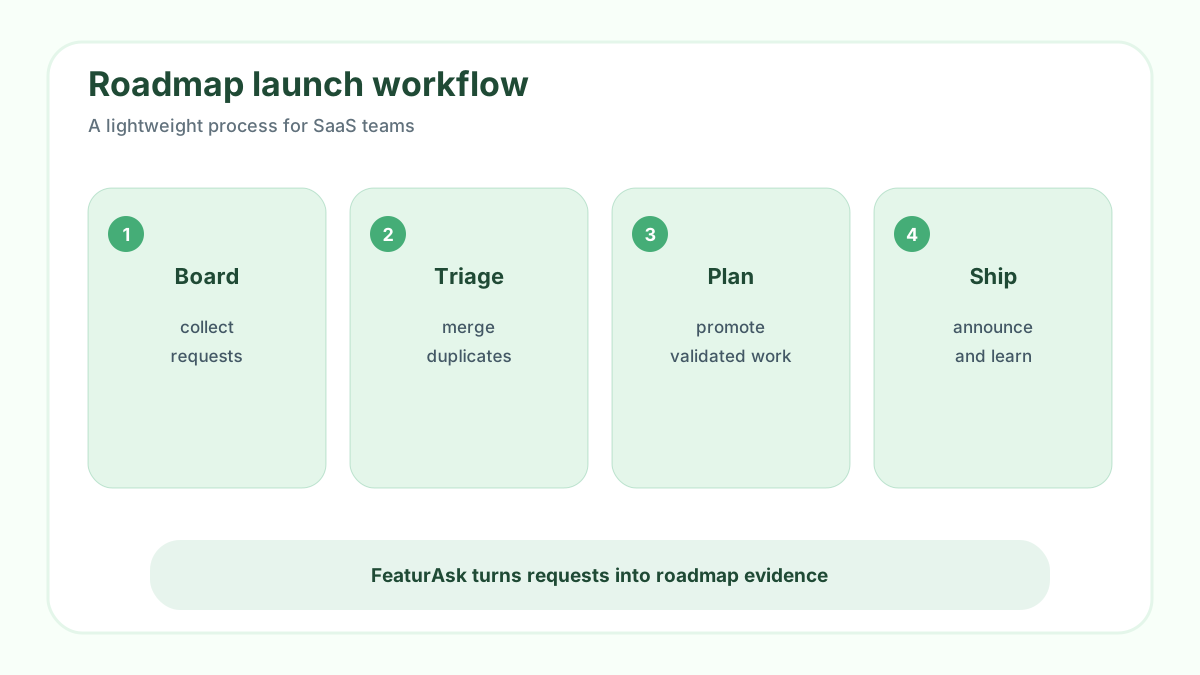
They also close the loop. A roadmap with no voting, comments, or shipped-state history becomes a static marketing page. A roadmap connected to customer requests becomes a living product conversation. That is why a simple widget such as FeaturAsk can be enough for many teams: capture demand, let users vote, moderate noise, and review popularity in one dashboard before writing the public update.
How to build a public roadmap without overpromising
Start with categories, not dates. Use statuses such as collecting feedback, planned, building, beta, and shipped. Write each item around a customer outcome: “export request trends for a team review” is clearer than “CSV module.” Attach feedback volume, customer segment, and urgency so the team can explain why one idea rose above another.
Then create an update rhythm. Review new requests weekly, promote only validated ideas, and publish shipped notes when a feature goes live. If an item stalls, explain the reason briefly. Silence is what usually damages trust, not a changed plan. For related setup thinking, see FeaturAsk’s guides to feedback board software, feature request tracking, and customer feedback management.
For teams that only need a clean widget, voting, moderation, and a practical dashboard, FeaturAsk keeps the feedback loop simple with one month free, no credit card required, and pricing at $29.95/year.
A practical roadmap template for small teams
Use this simple structure: problem statement, who asked, evidence, current status, expected next decision, and shipped note. Do not add a month unless the team has committed capacity. Do not publish everything from the internal backlog. Do not let votes alone decide priority; votes are an input, not strategy.
The most useful public roadmap is honest, short, and connected to action. It tells customers that you are listening and gives the product team a repeatable place to evaluate demand. Keep it lightweight, make it easy to change, and treat every shipped item as a chance to show that feedback matters.
When you are ready to turn scattered comments into prioritized requests, start with FeaturAsk: one month free, no credit card required, then $29.95/year for a focused request board.
Public roadmap mistakes to avoid
The first mistake is publishing a backlog dump. Customers do not need to see every idea your team has ever discussed. They need to understand which problems are being evaluated, which improvements are likely, and where their feedback can still change the decision. A public list with hundreds of untriaged requests suggests attention, but it often communicates the opposite: nobody is pruning, merging, or explaining priority.
The second mistake is using dates too early. Dates create confidence only when the team has committed capacity and understands the risk. For everything else, status labels are safer. “Collecting feedback” tells users the item is real but not promised. “Planned” means the team has enough evidence to reserve space. “Building” means the work has started. “Shipped” closes the loop. That vocabulary is easy for customers to understand and safer for small teams than a calendar full of guesses.
The third mistake is letting votes become the whole strategy. Votes reveal visible demand, but a roadmap also needs segment fit, revenue impact, support burden, product vision, technical risk, and customer urgency. A niche integration requested by five enterprise customers may outrank a popular cosmetic request. A public roadmap should show that priority is evidence-informed, not popularity-only.
How to evaluate the 12 examples
When you study a public roadmap example, look for five things. First, can a new visitor understand the product direction in less than a minute? Second, are roadmap items written as user benefits rather than internal tickets? Third, can customers vote or comment without creating support chaos? Fourth, does the company explain shipped work? Fifth, does the board show enough restraint to feel maintained?
Those questions matter more than copying a famous company’s layout. A simple two-column roadmap can outperform a complex portal if it is current, honest, and connected to feedback. The design should serve the decision process. The process should serve customers. If either part becomes performative, the roadmap stops building trust.
Roadmap governance for small SaaS teams
Give one person ownership of triage, but do not make one person the only decision maker. A practical model is weekly cleanup, monthly prioritization, and quarterly strategy review. Weekly cleanup merges duplicates, removes spam, clarifies vague requests, and thanks users for useful context. Monthly prioritization asks which items have enough signal to move forward. Quarterly review checks whether the public board still matches company strategy.
Write a short policy for customers. Explain what each status means, how votes are used, why some requests will not be built, and how users will hear about shipped work. This prevents the roadmap from feeling like a suggestion box where every popular idea deserves an immediate yes. It also gives your team a consistent answer when customers ask why a request has not moved.
FeaturAsk angle for public roadmap teams
Many SaaS teams do not need a heavy product suite to get started. They need an embedded way to collect requests, a voting mechanic that reveals demand, moderation controls, and a dashboard that helps the team review patterns. That is exactly the lightweight gap FeaturAsk fills. Put the widget where users already ask for improvements, group duplicate requests during triage, and use vote and comment data as one input to the roadmap.
The result is a roadmap that is easier to defend. Instead of saying “we think customers want this,” the team can say “this request came from a repeated pattern, has visible votes, and matches our next release goal.” That is the difference between transparency as marketing and transparency as operating discipline.
Buyer and customer impact
Public roadmap examples are also useful for prospects. A buyer who sees a maintained roadmap can tell whether the product is active, whether the team understands the category, and whether common customer requests are acknowledged. That does not mean every prospect should influence strategy. It means transparent product communication can reduce uncertainty during evaluation.
For existing customers, the roadmap creates a shared language. Instead of asking support for a private status update, customers can point to a visible item, vote, add context, and watch for movement. That saves support time and gives product managers a cleaner record of demand.
A better example-review habit
Review public roadmap examples quarterly, not once. Products change, boards get abandoned, and best practices shift. Save screenshots or notes about what each example does well: status design, request intake, shipped history, category organization, or customer education. Then adapt only the pieces that match your audience and operating rhythm.
Final selection advice
Do not copy a roadmap example because the company is well known. Copy the operating habit behind it: clear statuses, maintained requests, visible shipped history, and honest tradeoffs. If a smaller board helps your team update customers every week, it is better than a beautiful portal that nobody maintains.
For roadmap work, the durable habit is maintenance. Archive stale ideas, merge duplicates, and explain why status changed. A public roadmap earns trust only when customers can see current priorities, recent shipped work, and a believable path from request to decision.