Embrace Customer Co-creation for Product Managers
What customer co-creation means in 2026
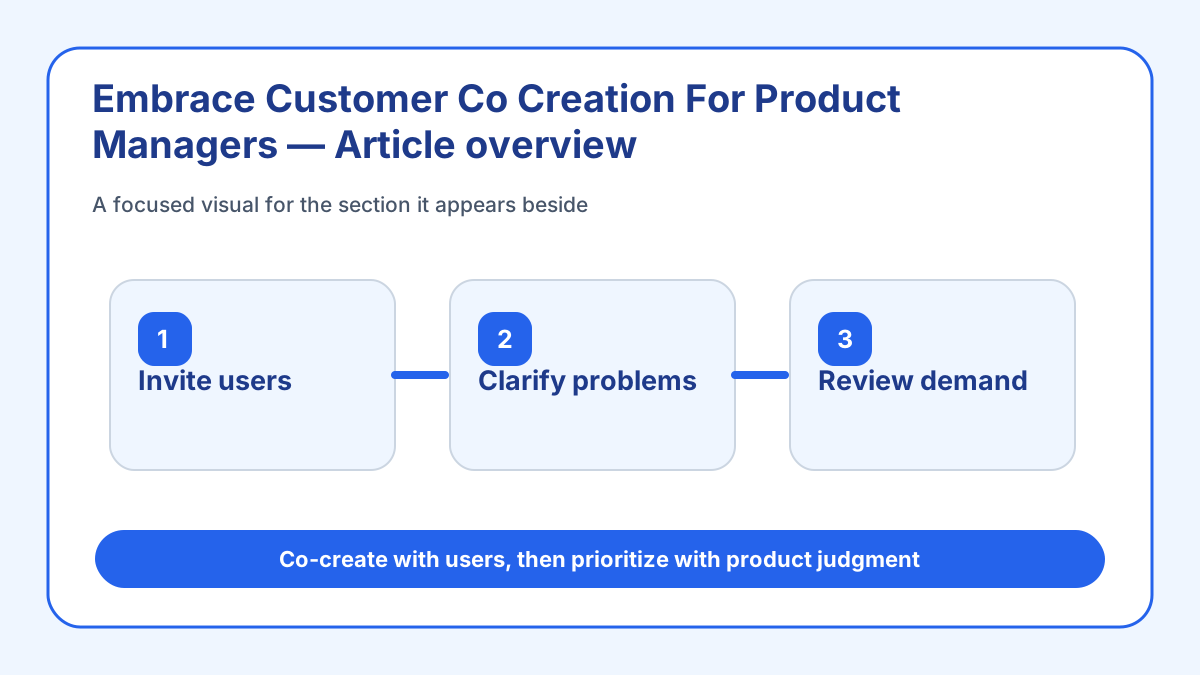
Customer co-creation is the practice of inviting customers into the product learning loop before the roadmap is locked. For product managers, it means treating users as informed collaborators rather than a last-minute validation panel. The best programs combine open feature requests, focused interviews, prototype feedback, voting, and clear follow-up so the team can see both demand and context.
The important distinction is that co-creation is not outsourcing product strategy to customers. Users are experts in their problems, workflows, language, and willingness to change. Product managers are responsible for strategy, sequencing, constraints, and tradeoffs. When those roles are clear, collaboration produces better discovery without creating a public promise that every request will be built.
In 2026, co-creation also needs to be lightweight. Teams are moving faster, AI prototypes make ideas easier to test, and customers expect visible response loops. A small SaaS, creator business, ecommerce site, or service company does not need an enterprise research operation to participate. A simple request widget, voting board, and monthly review rhythm can turn scattered suggestions into a usable discovery system.
Benefits of customer co-creation for product managers
The first benefit is better problem framing. A feature idea often hides a deeper job to be done: a user asks for an export, but the real need is sharing progress with a manager; a customer asks for a dashboard, but the real pain is not knowing what changed since last week. Co-creation gives product managers the words and examples needed to separate the requested solution from the underlying problem.
The second benefit is adoption. Customers who influence a feature are more likely to understand why it exists, how it solves their problem, and where it fits in their workflow. That does not guarantee success, but it reduces the risk of shipping a feature that looks good in a roadmap meeting and then gets ignored. You can connect this work with a broader customer feedback strategy so requests, research, and product goals reinforce each other.
The third benefit is prioritization evidence. Votes, comments, duplicate requests, customer segments, and urgency notes help teams compare opportunities. A request from one large account, twenty small customers, or a group of churn-risk users can mean very different things. Co-creation preserves that nuance so product managers can make a transparent decision instead of relying on the loudest internal voice.
Customer co-creation frameworks that actually work
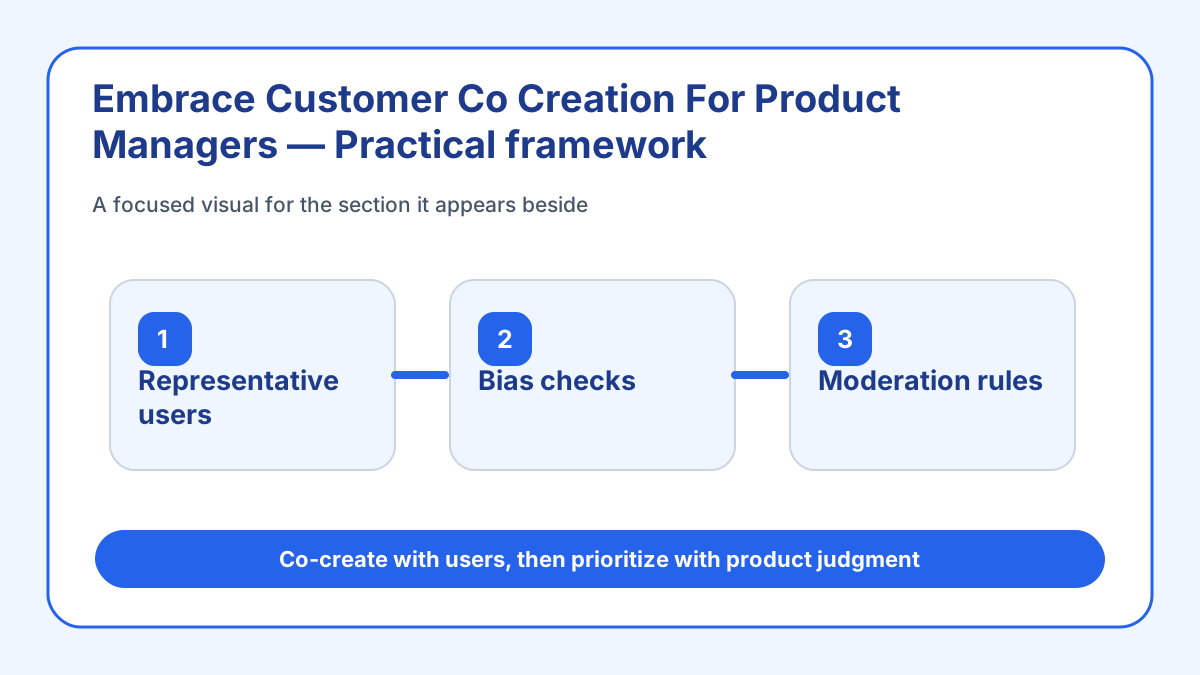
Crowdsourcing is the simplest framework: invite users to submit ideas and vote on suggestions in a shared space. It works well for products with a broad user base, websites with repeat visitors, and communities that already want to influence what comes next. The risk is popularity bias, so votes should be paired with comments and product judgment. Our guide to feature voting explains how to use votes as evidence rather than automatic orders.
Participatory design is a deeper approach where representative users join workshops, prototype reviews, or concept tests. It is especially useful when workflows are complex or accessibility, trust, or behavioral change matters. The practice has a long UX history; for additional background, see <a href="https://www.interaction-design.org/literature/topics/participatory-design" rel="nofollow">Interaction Design Foundation on participatory design</a>.
Customer advisory boards can help B2B teams, but they should not be the only co-creation channel. Advisory customers are often sophisticated and vocal, which is useful, yet they may not represent smaller or newer users. Balance them with open request collection, support trends, and short interviews. A healthy program has multiple doors into the same decision process.
How to launch a small-team co-creation system
Start with one visible place to collect ideas. The form should ask for the request, the problem it solves, and optional context such as role, plan, or urgency. Keep it short enough that customers will actually use it. If your current process is scattered across inboxes, support chats, and sales notes, first consolidate those ideas before adding a complex scoring model.
Next, define review rules. A weekly or biweekly triage can merge duplicates, clarify titles, tag requests, and reject out-of-scope ideas. A monthly prioritization review can compare demand, effort, strategic fit, and confidence. This is where a lightweight tool beats a spreadsheet: users can see existing ideas, vote instead of duplicating, and understand whether a request is new, under review, planned, or shipped.
If you want a fast path, try FeaturAsk as the simple co-creation layer: add the widget to your site, collect feature requests, let users vote, moderate ideas, and review analytics from one dashboard. It costs $29.95/year, includes a one-month free trial, and requires no credit card, so small teams can test the workflow before committing budget.
How to choose the right customers to involve
Do not invite only the happiest customers. Include new users, power users, recent churn risks, support-heavy accounts, and quiet customers whose behavior suggests friction. The mix matters because each group sees a different part of the product. New users reveal activation gaps, power users reveal scale limits, and quiet users often reveal unclear value.
Segment requests lightly. You do not need a perfect enterprise data model, but you should know whether an idea came from a paying customer, a free visitor, a creator, a service business, an ecommerce store, or a SaaS admin. That helps product managers avoid treating all votes as equal when the business impact is not equal.
One practical insight Frill-style co-creation articles often skip: define disqualification rules. Some ideas are valid but not right for the product. A public board is healthier when teams say no clearly, explain why, and leave room for future reconsideration. Silence creates more frustration than a respectful decision.
Turn co-creation into roadmap decisions
After ideas are collected, convert them into decision notes. For each candidate feature, summarize the problem, representative quotes, number of interested users, affected segments, expected impact, effort, risks, and open questions. This turns raw collaboration into material that engineering, design, marketing, and leadership can evaluate.
Then close the loop. When you decide not to build something, explain the tradeoff. When you plan something, describe the problem you are solving rather than promising a rigid date. When you ship, notify the users who asked and invite them to test the result. That loop builds trust and improves future feedback quality.
For teams that want this without heavyweight software, FeaturAsk keeps the loop manageable with request collection, voting, moderation, and a simple dashboard for $29.95/year. Start the 30-day free trial with no credit card required and see which ideas customers raise first.
Co-creation pitfalls product managers should avoid
The most common mistake is treating co-creation as a popularity contest. A public board can surface demand, but high vote counts do not automatically mean the idea belongs on the roadmap. Product managers should review who is voting, what problem is being described, how often the workflow occurs, and whether the request supports the product's strategic promise. This is where comments and lightweight segmentation matter more than raw volume.
A second mistake is inviting feedback without explaining the rules. Customers should know what happens after they submit an idea: moderation, duplicate merging, review cadence, possible statuses, and the difference between "planned" and "under review." Clear rules reduce frustration because users understand that participation is valued even when every suggestion cannot be built.
A third mistake is co-creating only with power users. Power users can identify advanced workflow gaps, but they may also request complexity that new users do not need. Balance them with first-time users, trial users, churn-risk customers, and quiet customers whose behavior suggests confusion. A good co-creation program protects product simplicity while still learning from experienced users.
Metrics that show whether co-creation is working
Track input quality before output quantity. Useful measures include percentage of requests with a clear problem statement, duplicate rate, number of users adding comments to existing requests, number of roadmap candidates supported by customer evidence, and time from submission to first admin response. These metrics show whether the feedback system is becoming easier to use and easier to review.
Track decision quality after shipping. Did the co-created feature reduce support tickets? Did the requesting users adopt it? Did it improve activation, retention, conversion, or customer satisfaction? Did the public status update reduce duplicate requests? This closes the loop between customer participation and product outcomes.
Also track trust signals. If customers keep voting, commenting, and returning after decisions are made, the process is healthy. If requests pile up with no response, users will assume the board is decorative. A small team can avoid that by reviewing requests monthly and publishing concise status changes.
Practical co-creation workflow for a small team
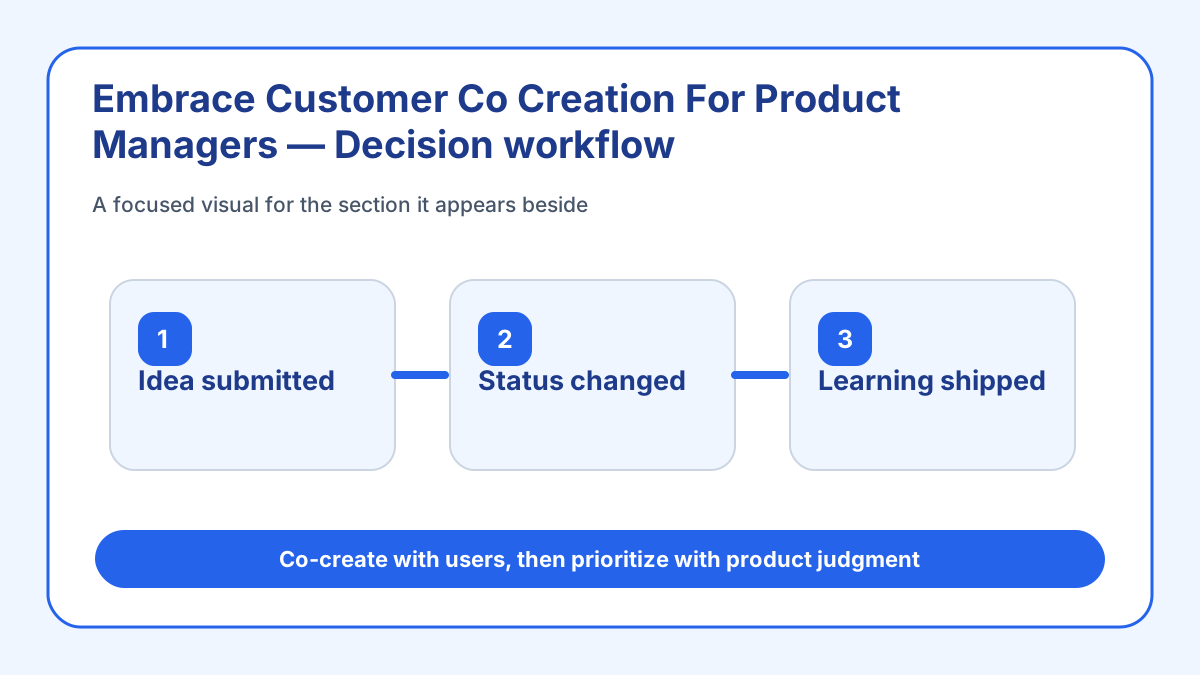
Use this monthly workflow: collect ideas continuously, merge duplicates each week, select five to ten candidates for review, score them against demand, fit, effort, and confidence, then update statuses. Keep the language simple: new, under review, planned, shipped, and not planned. The goal is not to create a perfect governance machine; it is to keep customer insight moving.
A founder, product manager, or website owner can run this process in less than an hour a week when the input is organized. That is the practical advantage of a visible request board over scattered messages. Users can add context to existing ideas instead of creating new threads, and the team can see which problems repeat.
For a low-friction starting point, try FeaturAsk and turn your website into a co-creation channel. The widget, voting, moderation, and analytics are designed for teams that want useful customer input without enterprise overhead, and the $29.95/year plan includes a one-month free trial with no credit card required.
What Frill-style guides often miss about co-creation
Many co-creation guides explain the benefits but skip the operating detail that makes the practice sustainable. The missing piece is decision hygiene. Every idea should have a clear owner, a status, a reason for that status, and a next review point. Without those four details, customer collaboration becomes a collection exercise rather than a product-management system.
Another missed insight is that co-creation can reduce scope, not only add features. When customers explain the job behind a request, the team may discover that a smaller improvement solves the need. A better label, a default setting, a saved template, or a small workflow shortcut can outperform a large feature if it removes the real friction. This is especially valuable for small teams because simplicity is often part of the product advantage.
A third missed insight is that the public feedback experience shapes brand trust. Customers notice whether a board is organized, whether duplicates are merged, whether outdated ideas remain open forever, and whether shipped updates are acknowledged. A tidy co-creation loop says the team listens and makes deliberate choices. A neglected board says the opposite.
FAQ about customer co-creation
Is customer co-creation the same as customer feedback?
No. Customer feedback can be a one-way signal, such as a survey answer or support comment. Co-creation is more collaborative: customers submit ideas, clarify problems, react to concepts, vote on priorities, and see what happens next. Feedback is the raw input; co-creation is the operating system around it.
Should product managers build the most requested feature?
Not automatically. Build the feature when the request matches strategy, solves a meaningful problem, has enough evidence, and can be delivered without damaging product focus. High votes should earn careful review, not automatic approval.
Can small businesses use co-creation?
Yes. A restaurant can collect menu ideas, a creator can collect content requests, an ecommerce store can collect product demand, and a SaaS team can collect feature requests. The process can be simple as long as the team responds consistently.