How to Develop the Right Customer Feedback Strategy for 2026
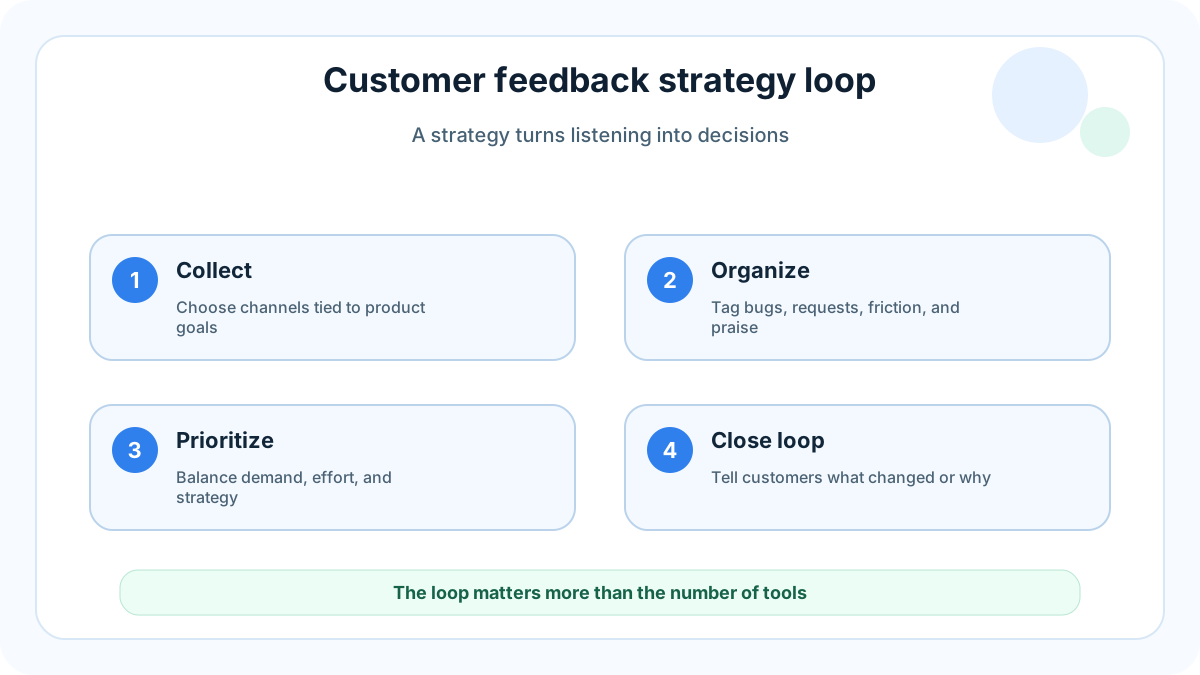
A customer feedback strategy is the repeatable system your team uses to hear customers, understand what their input means, decide what to do, and communicate the outcome. It is not just a survey. It is not just a support inbox. It is the operating rhythm that turns customer feedback into better product decisions, clearer priorities, and a customer experience people trust.
That matters more in 2026 because customers have more choices, more public channels, and less patience for companies that ask for input but never respond. The Zendesk CX Trends report highlights how quickly expectations around service, personalization, and responsiveness continue to rise. Meanwhile, Qualtrics’ guide to collecting customer feedback reinforces a simple point: feedback is most useful when it is collected intentionally and connected to action.
For small teams, the hard part is not believing in feedback. The hard part is building a loop that does not require an enterprise budget, a full research department, or a maze of dashboards. You need a simple way to capture requests, remove noise, identify patterns, make decisions, and show customers that their voice changed something.
For a simple request-capture layer, FeaturAsk gives you one month free with no credit card required, then costs $29.95/year.
What is a customer feedback strategy, and why does it matter?
A customer feedback strategy defines five things: what feedback you collect, where you collect it, how you organize it, how you prioritize it, and how you close the loop. Without those rules, feedback becomes a pile of comments that everyone agrees is valuable but nobody uses consistently.
Good strategy prevents three common problems. First, it stops feedback from being trapped in separate tools. Sales hears one thing, support hears another, product reads reviews, and leadership sees only a summary. Second, it keeps loud opinions from automatically becoming roadmap priorities. One frustrated customer may be right, but one vote is not the same as validated demand. Third, it helps customers see progress. People are more willing to share useful feedback when they believe someone is listening.
The goal is not to do everything customers request. The goal is to make better decisions with customer evidence. Sometimes that means building a requested feature. Sometimes it means improving onboarding, changing copy, fixing a bug, creating help content, or explaining why a request is not on the roadmap.
A strong customer feedback strategy also gives your team a shared language. Instead of asking, “What are people saying?”, you can ask: Which segment is affected? How often does this appear? Is it blocking activation, retention, expansion, or satisfaction? Is it a product gap, a usability issue, a communication issue, or a support problem?
The main types of customer feedback
Customer feedback comes in several forms, and each type answers a different question.
Feature requests tell you what customers wish your product could do. They are especially valuable when connected to voting, customer type, use case, and frequency. If your team needs a better request pipeline, start with a dedicated system rather than scattering ideas across chat threads. See our guide to customer feedback sources for more places these ideas appear.
Bug reports reveal broken experiences. They need fast triage, reproduction steps, screenshots, device details, and a severity rating. Treating a bug report like a feature request slows down fixes; treating every feature request like a bug creates false urgency.
Satisfaction feedback includes CSAT, NPS, CES, reviews, testimonials, and short rating prompts. It helps you understand sentiment and friction over time. It is useful for measuring customer experience, but numbers alone rarely explain what to build next.
Qualitative research includes interviews, usability tests, discovery calls, sales objections, cancellation conversations, and open-ended survey responses. This is where you learn the “why” behind behavior.
Behavioral feedback comes from product analytics, heatmaps, session replays, and usage data. It shows what customers actually do, not only what they say. It is powerful when paired with direct feedback, because a request from a highly engaged customer may mean something different than a request from someone who never completed onboarding.
Public feedback includes app store reviews, social posts, community threads, and review sites. It can be messy, but it is often emotionally honest. Public complaints can also reveal gaps in communication, not just gaps in the product.
How to collect and analyze customer feedback in steps
A useful customer feedback strategy should be simple enough to run every week. Here is a practical process.
1. Define the decision you want feedback to improve
Do not begin with “we need more feedback.” Begin with a decision. Are you trying to improve activation? Choose the next product feature? Reduce support tickets? Understand churn? Improve your pricing page? Each decision needs different inputs.
If your decision is product prioritization, collect feature requests, votes, account context, and user stories. If your decision is support improvement, tag recurring issues and measure effort. If your decision is customer experience, combine satisfaction surveys with open comments and follow-up conversations.
2. Choose a few reliable channels
Small teams should not open ten feedback channels on day one. Start with the channels that customers already use and add one dedicated place for structured input. Common choices include an in-app widget, a website feedback button, support ticket tags, post-purchase surveys, cancellation forms, customer interviews, and a public request board.
A dedicated board is useful because it gives customers one obvious place to submit ideas and vote. It also prevents your team from losing suggestions in private chats. If you are comparing options, our customer feedback software guide explains when to use boards, surveys, support tools, and analytics products.
3. Capture context, not just comments
A raw comment is helpful. A comment with context is actionable. Capture the customer segment, plan level, lifecycle stage, use case, urgency, and related revenue when available. Ask one short follow-up question such as: “What are you trying to accomplish?” or “What happens if this is not solved?”
For feature requests, the most important context is the job behind the request. Customers may ask for a specific solution, but the real need may be speed, clarity, automation, compliance, or collaboration.
4. Tag and group feedback weekly
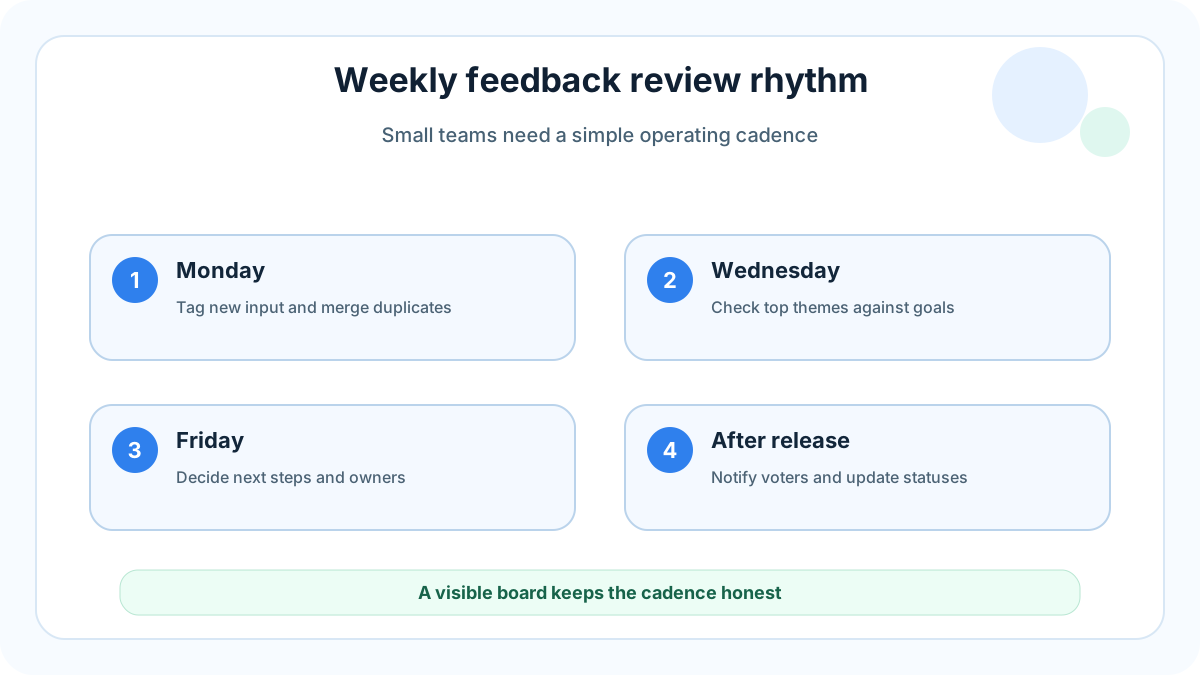
Feedback analysis should not wait until a quarterly planning meeting. Review new feedback on a weekly schedule. Merge duplicates, tag themes, separate bugs from ideas, and mark unclear comments for follow-up.
Use a simple taxonomy: feature request, bug, usability issue, onboarding gap, pricing concern, integration request, documentation gap, support complaint, and praise. Then add theme tags such as billing, dashboard, mobile, reporting, invite flow, or notifications.
5. Look for patterns across sources
A single source can mislead you. Support tickets overrepresent frustrated customers. Surveys overrepresent people willing to answer surveys. Public reviews overrepresent strong emotions. Product analytics may show friction but not motivation.
Look for overlap. If a request appears in support tickets, votes, sales calls, and cancellation notes, it deserves attention. If a complaint appears only once but affects a critical workflow for high-value accounts, it may still be urgent.
How to prioritize customer feedback
Prioritization is where most feedback systems fail. Teams either overreact to the latest message or bury useful feedback under a rigid scoring model.
Start by separating intake from commitment. When a customer submits an idea, acknowledge it, but do not imply it will be built. Your system should make it clear that feedback is reviewed, grouped, and considered alongside product goals.
Then score feedback with a lightweight framework. For small teams, use five questions:
- How many customers have this problem?
- Which customer segments are affected?
- How severe is the pain or opportunity?
- How well does it fit the product strategy?
- How expensive is it to solve well?
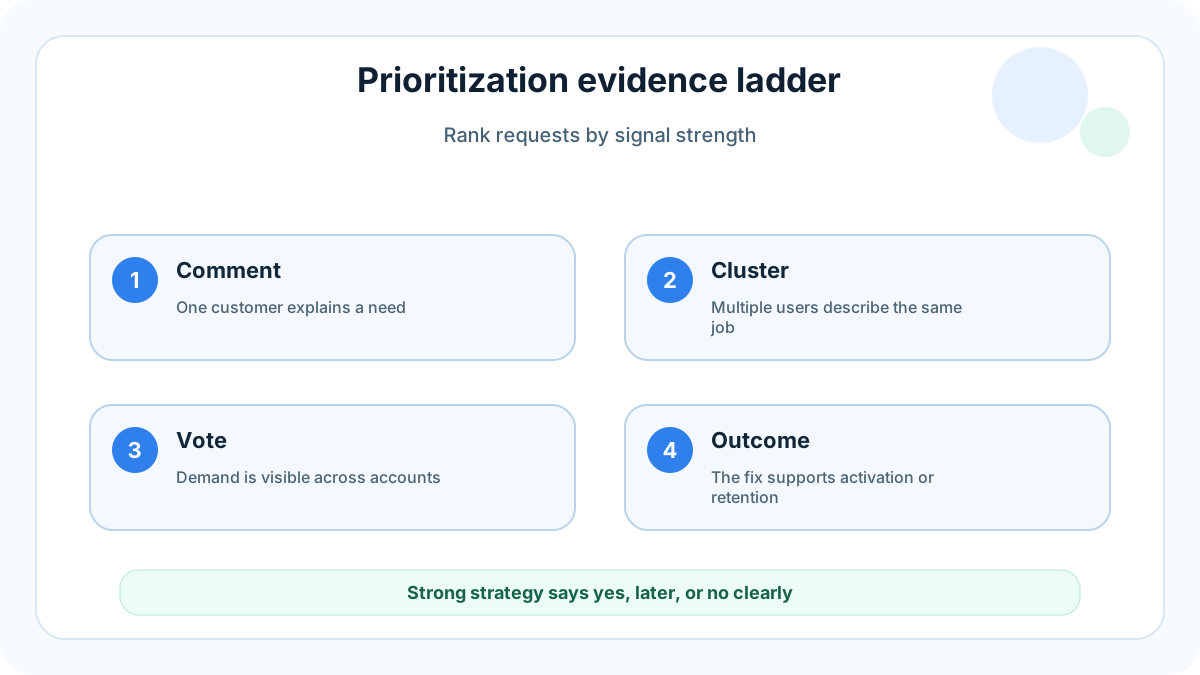
Votes are useful, but they are not the whole answer. A feature with many votes from free users may be less urgent than a request from a smaller number of paying customers if it directly affects retention. A request that sounds simple may have hidden maintenance cost. A request that supports your product vision may deserve investment even before it becomes the most popular item.
Use voting to reveal demand, then combine it with business context and product judgment. Our guide to feature voting explains how to use votes without letting popularity alone control the roadmap.
A good prioritization meeting should end with one of four outcomes for each major theme: do now, research more, keep watching, or decline. “Maybe someday” is not a useful status unless you define what evidence would change the decision.
Using feedback to improve product and customer experience
Customer feedback should lead to more than a backlog. It should improve the full customer experience.
For product teams, feedback reveals gaps between the product you intended to build and the way customers actually use it. A repeated request may point to a missing feature, but it may also point to poor discoverability. Before building, ask whether the problem can be solved with better defaults, clearer labels, onboarding, templates, help content, or small workflow changes.
For support teams, feedback helps reduce repeat questions. If the same confusion appears every week, do not only improve the reply macro. Improve the product screen, tooltip, billing explanation, or documentation that caused the confusion.
For marketing and sales, feedback reveals language. Customers describe their problems differently than your landing page does. Use their words to improve positioning, comparison pages, onboarding emails, and product launch messaging.
For leadership, feedback provides evidence for tradeoffs. It helps explain why the team is choosing one initiative over another. The best customer feedback systems make roadmap decisions less political because everyone can see the signal behind the choice.
When your feedback strategy needs a visible request board, FeaturAsk can turn repeated requests into clearer priorities.
Communicating changes back to customers
Closing the loop is the part customers remember. If they spend time sharing input and never hear back, trust drops. If they see progress, even small progress, they are more likely to contribute again.
There are several levels of follow-up. At minimum, acknowledge receipt. For public boards, show statuses such as under review, planned, in progress, shipped, or not planned. For major requests, notify voters and commenters when the status changes. For customer interviews or high-impact support cases, send a personal note when a fix or improvement ships.
Do not overpromise. Customers would rather hear a clear “not planned right now” than silence. When declining a request, explain the reason briefly: it does not fit the product direction, it would make the product too complex, it conflicts with another priority, or there is a workaround.
When you ship improvements, connect the change to customer input. A changelog, product update email, or release note can say: “Customers asked for a faster way to export reports, so we added scheduled exports.” For launch communication structure, see our product launch communication plan.
This habit creates a feedback flywheel: customers speak, the team acts, customers see the result, and more customers share better input.
Handling unhappy customers
Unhappy customers are not a problem to hide from your feedback strategy. They are one of its most important inputs. A complaint often contains a clear signal about expectation, friction, or broken trust.
Respond quickly, but do not rush into defensiveness. Thank the customer, restate the issue, ask for missing context, and explain the next step. If the problem is a bug or service failure, give a realistic timeline. If the request is outside your scope, be honest and helpful.
Separate emotion from evidence. A frustrated message may include exaggeration, but it can still point to a real workflow failure. Track the underlying theme, not only the tone. Also look for avoidable triggers: confusing pricing, surprise limitations, unclear onboarding, slow support handoff, or missing status updates.
Small teams can turn unhappy customers into advocates by being unusually responsive. You do not need enterprise automation to do this. You need ownership, a place to track the issue, and a habit of follow-up.
Building a feedback culture
A feedback culture means customer input is part of how the team works, not a quarterly project. It does not mean every decision is outsourced to customers. It means the team regularly reviews evidence, talks to customers, and explains decisions clearly.
Create a simple ritual. Once a week, review new feedback for 30 minutes. Once a month, review the top themes and compare them with product goals. Once a quarter, look at closed-loop performance: how many requests were reviewed, how many were shipped, how many were declined, and how quickly customers were updated.
Share feedback across functions. Support should see what product shipped. Product should see recurring support complaints. Marketing should see the exact phrases customers use. Leadership should see the tradeoffs behind roadmap choices.
Make feedback visible, but keep ownership clear. If everyone owns the feedback process, nobody does. One person should maintain the board or repository, merge duplicates, prepare the weekly review, and make sure status updates are sent.
The simplest way to manage customer feedback
The simplest feedback system for a small team has four parts.
First, give customers one easy place to submit feedback. A visible widget or board is better than asking people to email random team members. Second, let customers vote or react so demand becomes visible. Third, review the board on a schedule and move items through clear statuses. Fourth, notify customers when something changes.
This is the FeaturAsk angle: small teams need a repeatable feedback loop without enterprise cost. You should not have to buy a complex customer experience platform just to learn what your users want next. You need a lightweight way to collect customer feedback, prioritize feature requests, and show customers that their input matters.
If you are keeping the loop intentionally lightweight, FeaturAsk is a practical board for collecting and reviewing customer requests.
If you are starting from zero, do not overdesign the process. Add one feedback entry point, define three to five statuses, review feedback every week, and communicate changes. Once the loop works, you can add surveys, interviews, analytics, and deeper segmentation.
The right customer feedback strategy for 2026 is not the biggest system. It is the one your team actually runs: consistent collection, clear analysis, practical prioritization, and visible follow-through.