The Best Product Techniques for Roadmap Prioritization
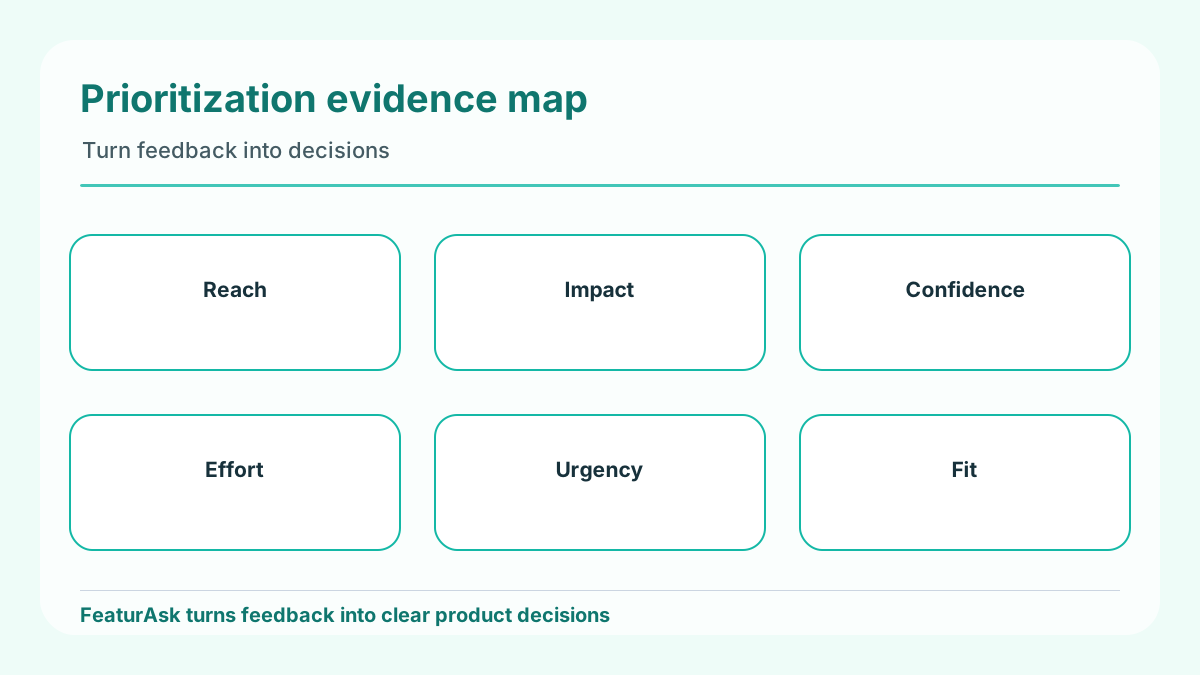
Updated 2026-03-27. Roadmap prioritization is not a single meeting where the product team ranks a list and everyone agrees. It is a repeatable decision system. The team gathers evidence, translates requests into outcomes, weighs impact against effort, and keeps enough flexibility for new information. Without that system, roadmap planning turns into opinion, politics, or whichever customer complained most recently.
The strongest prioritization technique for a small SaaS team is rarely a complex formula alone. It is a visible feedback loop plus a lightweight scoring habit. FeaturAsk gives the team a place to collect demand; the product team then adds context such as customer segment, urgency, revenue risk, implementation cost, and strategic fit.
Prioritization advice is only useful when it respects both strategy and changing evidence. This guide uses Atlassian’s reminder that roadmaps start with goals and trade-offs https://www.atlassian.com/agile/product-management/product-roadmaps, along with the Scrum Guide’s definition of an ordered, emergent backlog tied to the product goal https://www.scrumguides.org/scrum-guide.html.
If your scoring meetings need cleaner customer input, try FeaturAsk for one month free without entering a credit card and bring votes, comments, and request history into the discussion. The annual cost is $29.95/year.
Quick answer
Roadmap prioritization is the discipline of choosing with evidence instead of momentum. A useful technique makes the trade-off visible: which customer pain is real, which business goal it supports, which risk it carries, and what the team will learn if the bet is wrong.
Related FeaturAsk guides cover feature request prioritization, customer feedback management tools, and public roadmap strategy.
Start with evidence, not ideas
-
Collect requests from users, sales calls, support conversations, churn notes, and internal observations.
-
Merge duplicates so five versions of the same need become one strong signal.
-
Keep the original wording nearby because it preserves the customer problem better than a rewritten ticket title.
Attach a short rationale to each ranked item so the next review starts with the last decision, not a fresh argument.
Separate bugs, chores, bets, and user value
-
Bugs need severity and frequency scoring.
-
Technical chores need risk, maintainability, and future speed context.
-
Feature bets need expected user value and evidence quality.
-
Revenue asks need segment fit, not just deal size.
Pair each scoring pass with a customer quote or usage signal so the number has context.
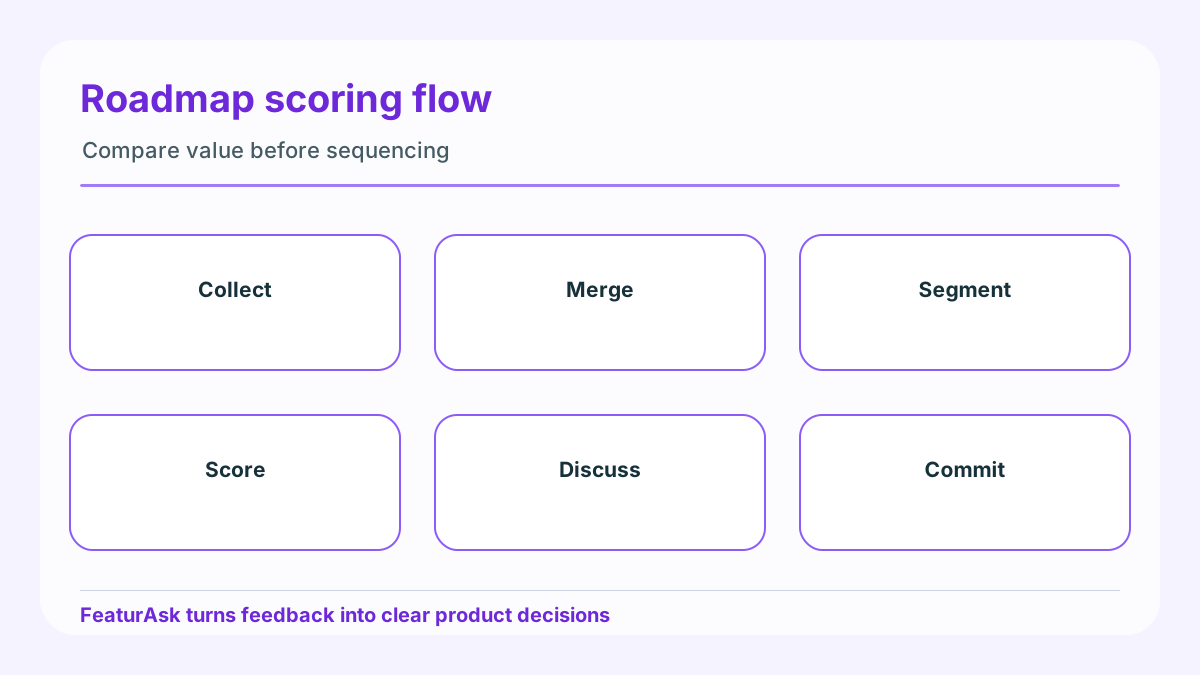
Use 8 practical scoring lenses
-
Reach: how many users or target accounts will benefit.
-
Impact: how strongly the work improves activation, retention, revenue, or support load.
-
Confidence: how good the evidence is.
-
Effort: engineering, design, data, QA, and release communication.
-
Urgency: whether delay creates churn, security, compliance, or competitive risk.
-
Strategic fit: whether the work supports the current product goal.
-
Learning value: whether the item reduces uncertainty.
-
Trust value: whether shipping it proves the team listens.
Record the rule that moved an item up or down, particularly when popularity and strategy disagree.
For small product teams, FeaturAsk keeps request capture, voting, and moderation close to the prioritization conversation. It costs $29.95/year, includes the first month free, and does not ask for a credit card to start.
Make trade-offs visible
-
A roadmap is a communication artifact, not a promise list.
-
Show why high-vote items may wait if effort is huge or strategy is weak.
-
Show why a lower-vote infrastructure item may happen if it unlocks several customer-facing improvements.
Give every promising idea a review moment, otherwise the ranked list becomes stale theater.
This habit connects to B2B SaaS sales signals when roadmap choices affect revenue conversations, and to SaaS product management books when the team wants broader methods.
Review priority as new data arrives
-
Re-score items at a fixed cadence, not every time someone posts a passionate request.
-
Use shipped updates and follow-up comments to test whether the expected value appeared.
-
Archive stale items so old noise does not crowd current demand.
Tell requesters when a priority changes, ships, or gets replaced by a better solution.
Techniques worth combining
Use RICE when you need a fast numerical comparison of reach, impact, confidence, and effort. Use MoSCoW when a launch needs clear must-have, should-have, could-have, and will-not-have boundaries. Use Kano when satisfaction matters and you need to separate basic expectations from delighters. Use opportunity scoring when customers can rate importance and satisfaction with the current workaround. Use cost-of-delay thinking when timing risk is the central question. None of these methods should replace judgment; they make judgment easier to explain.
A lightweight prioritization operating loop
-
Pull new requests into one review queue before assigning scores or debating roadmap slots.
-
Combine duplicate requests before scoring so demand is measured by the problem, not by fragmented wording.
-
Add segment, urgency, confidence, and effort tags before comparing candidate work.
-
Balance impact, effort, confidence, and risk, then write the decision rationale in product language.
-
Share status changes when selected work advances, waits, or gets declined for a stated reason.
Treat the scoring method as a decision aid, not the decision itself. The practical loop is to collect evidence, name the trade-off, choose the lens, record the call, and revisit the outcome once customers have reacted.
Choosing the right technique for the decision
Different roadmap decisions need different prioritization techniques. Use RICE when the team has enough data to compare reach, impact, confidence, and effort. Use MoSCoW when a launch scope needs fast boundaries. Use Kano when user satisfaction is the question and you need to separate expected basics from delight features. Use opportunity scoring when customers can rate both importance and current satisfaction. Use cost-of-delay thinking when timing risk is more important than raw vote count.
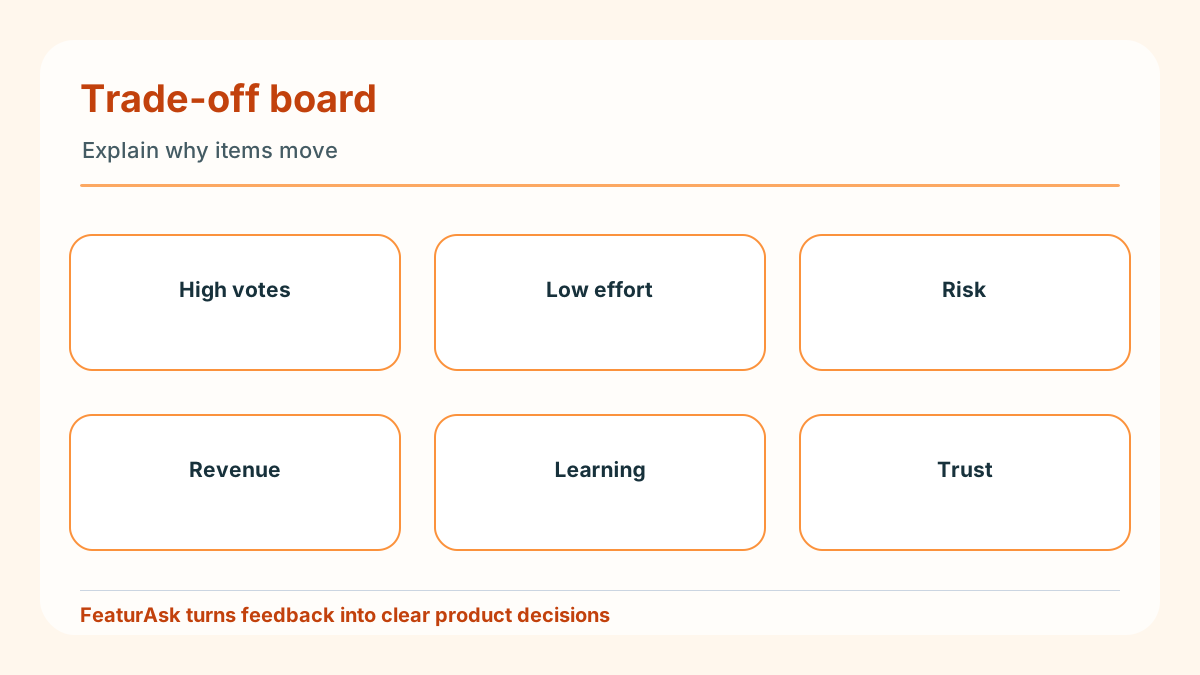
The mistake is pretending one framework can answer every decision. A high-vote feature with low strategic fit may still wait. A low-vote infrastructure item may move forward because it unlocks several customer-facing improvements. A quick feature may be delayed if it distracts from a product goal. The framework should make those trade-offs visible, not hide them behind a score.
For small teams, the best pattern is a two-pass review. First, use customer votes and comments to shortlist real demand. Second, use a lightweight framework to compare the shortlist against effort, confidence, urgency, and strategy. Publish the reasoning in plain language so stakeholders understand why the roadmap changed.
Match the technique to the decision type
Roadmap prioritization fails when every decision is forced through the same formula. A security fix, a churn-risk workflow, a speculative growth bet, and a small quality-of-life request should not compete as if they were identical. Start by naming the decision type. Is this about protecting trust, increasing activation, reducing support load, opening revenue, or learning whether a market segment cares?
For trust and reliability work, use severity, affected customers, and risk reduction. For customer-requested enhancements, use evidence strength, segment value, frequency, and implementation effort. For growth bets, include expected learning and reversibility because the first version may be an experiment. For technical debt, connect the work to delivery speed, defect risk, onboarding cost, or infrastructure limits instead of asking customers to vote on internals they cannot evaluate.
This category step keeps prioritization honest. RICE, ICE, MoSCoW, Kano, weighted scoring, and opportunity scoring can all be useful, but none of them saves a team that mixes unlike work without context. The technique is a conversation aid, not a substitute for judgment.
Use customer evidence without outsourcing strategy
Votes are powerful because they show demand in a visible way. They are not a board of directors. A popular request may serve the wrong segment, conflict with the product direction, or require months of work that delays more urgent improvements. A quiet request may matter deeply to paying customers who rarely comment. Treat votes as one input beside revenue impact, strategic fit, effort, risk, and confidence.
Segment the evidence before scoring. A request from ten free users, three high-retention customers, and one enterprise buyer may require three different interpretations. Comments also matter because they reveal the job behind the request. “Add export” could mean compliance reporting, sharing data with a client, leaving the product, or building a dashboard in another tool. The motivation changes the priority.
FeaturAsk helps at the evidence layer by collecting requests, votes, and comments in one place. Product teams still make the final trade-off, but they no longer begin with scattered anecdotes from support calls, DMs, spreadsheets, and Slack threads.
A decision meeting that does not drag
Keep the prioritization meeting small and prepared. Before the meeting, clean duplicates, summarize the top themes, attach user quotes, estimate rough effort, and state the current business goal. During the meeting, choose a short list of candidates, name the reason for each decision, and identify unknowns that require discovery. After the meeting, update public statuses and private backlog items so nobody has to infer what happened.
Limit the number of active bets. A team that chooses twelve “top priorities” has chosen none. Two or three visible bets are easier to explain, staff, measure, and revise. If stakeholders want more items, ask what should be removed. Prioritization is the discipline of making trade-offs explicit.
Record one sentence for every important no. “Not now because we are reducing onboarding friction first” is better than silence. Customers may not love the answer, but they can understand the product direction. Internally, the sentence prevents the same debate from restarting every week.
Choosing among eight lenses
Use RICE when you have reasonable reach and effort estimates. Use ICE for early experiments where speed matters more than precision. Use Kano when you need to distinguish delight features from basic expectations. Use opportunity scoring when users rate importance and satisfaction. Use cost of delay when timing changes the value. Use risk scoring for security, compliance, or reliability issues. Use story mapping when the workflow sequence matters. Use a simple vote-plus-effort matrix when the team is young and needs clarity fast.
Do not pretend the score is objective. The value is in exposing assumptions. If confidence is low, run discovery. If effort is uncertain, ask engineering for a range instead of a fake exact number. If strategy is unclear, pause scoring and clarify the goal. A perfect spreadsheet cannot fix a vague product direction.
FeaturAsk gives smaller teams a practical signal layer for $29.95/year after a one month free trial with no credit card required, making it easier to bring real votes and comments into whichever prioritization method you choose.
Questions product teams ask
What should happen to low-vote strategic work?
Keep it visible internally and explain the strategic reason. Not every important decision will be popular before customers experience the benefit, especially infrastructure, positioning, or workflow simplification.
How often should scores change?
Review scores when new evidence arrives, not on an arbitrary daily cycle. Weekly or biweekly review works for active teams, while monthly review may be enough for smaller products with slower request volume.
Can one framework run the whole roadmap?
One framework can provide consistency, but use category-specific inputs. Reliability, retention, activation, and growth work deserve different evidence, even when the final roadmap uses one ranked list.
One final practice helps teams avoid stale scores: keep a small decision log beside the roadmap. Note the customer segment, evidence source, confidence level, and reason the item won or lost priority. When a stakeholder challenges the order later, the team can improve the assumption instead of restarting the debate from memory. That log also teaches new teammates how priority decisions are made.
Conclusion
The best roadmap prioritization technique is the one that makes trade-offs visible and keeps customer evidence connected to business goals. Categorize the work, gather clean signals, pick a scoring lens that fits the decision, and write down why each item moves forward or waits. That approach gives small teams the benefits of structure without turning product judgment into a ritualized spreadsheet.