The Benefits of a Public Product Roadmap and Why You Need One
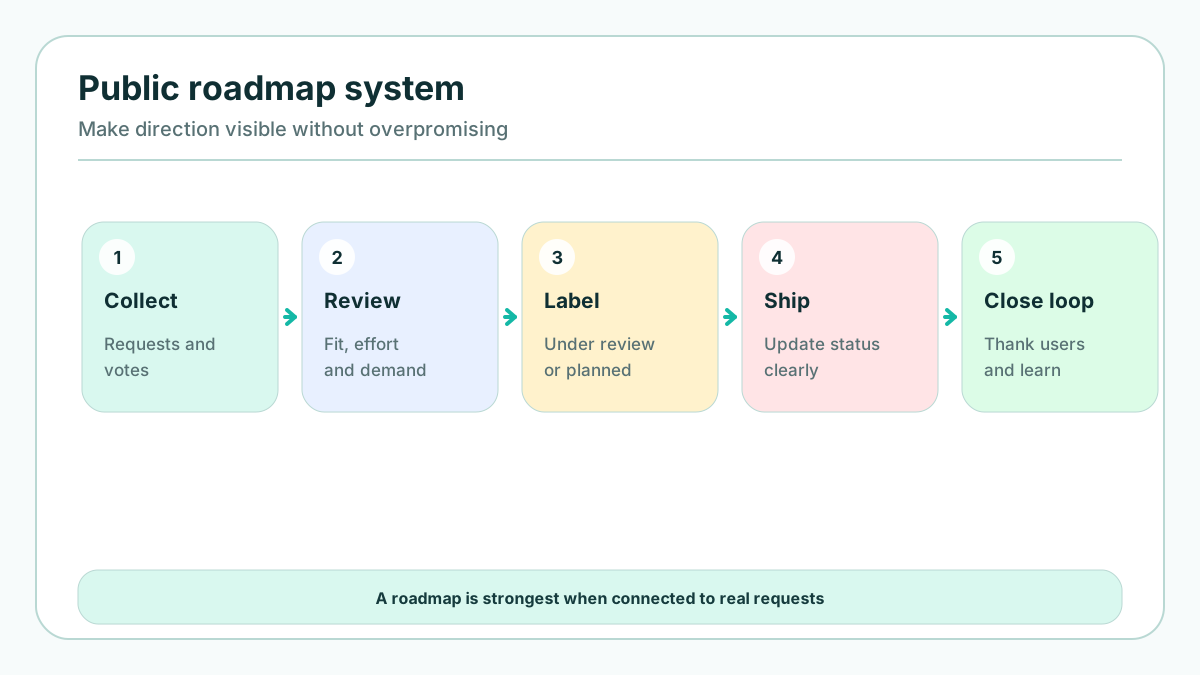
A public product roadmap is a visible promise about how your company listens. It does not have to reveal every internal debate, engineering constraint, or quarterly target. It does need to show that customer problems are being captured, considered, prioritized, shipped, and explained with care.
That distinction matters because many teams publish roadmaps for the wrong reason. They want fewer support tickets, more sales confidence, or a quick way to look transparent. Those benefits only appear when the roadmap is maintained as an operating system, not a static marketing page. A neglected roadmap creates the opposite effect: old cards, vague labels, and missed dates make customers wonder whether the team has lost momentum.
This guide explains the practical benefits of a public product roadmap, the risks to avoid, what to publish, what to keep private, and how SaaS teams can run a credible public board without turning every idea into a delivery contract.
If you want a lightweight way to collect ideas and show product direction, FeaturAsk includes a 1 month free trial with no credit card required, then costs $29.95/year.
What a public product roadmap actually is
A public roadmap is a customer-facing view of product direction. It usually includes feature requests, improvements under review, planned work, items currently in progress, and recently shipped updates. The best public roadmaps are organized around customer problems and outcomes rather than internal project names.
It is not the same thing as your internal roadmap. Your private planning system may include revenue assumptions, engineering estimates, staffing dependencies, legal considerations, security details, competitive analysis, and account-specific commitments. Those details belong inside the company. The public version should translate product thinking into useful customer language: what problem is being explored, why it matters, what status it has, and how customers can contribute feedback.
A good public roadmap also differs from a changelog. A changelog records what already happened. A roadmap explains what the team is learning and where it may go. Together, they create a loop from request to shipped update.
For teams still designing that internal-to-external workflow, the FeaturAsk guide to roadmap planning for SaaS founders and product managers is a useful companion to this public-facing guide.
Public roadmaps reduce uncertainty for customers
Customers do not expect perfect foresight. They do expect signals. When a product is important to their workflow, silence forces them to guess whether a missing capability is being considered, ignored, delayed, or rejected. A public roadmap reduces that uncertainty by giving users a single place to check direction.
This is especially valuable in SaaS because buyers often plan around future capability. A team evaluating your product may need to know whether an integration is on the horizon. An existing customer may need to decide whether to build a workaround. A power user may want to follow progress on a workflow improvement before moving more of their team into the product.
Clear visibility can reduce support repetition as well. Instead of answering the same question in tickets, calls, and sales conversations, the team can point users to a maintained card. The answer becomes consistent, searchable, and open to additional context. That does not eliminate the need for human communication, but it prevents scattered promises from becoming the unofficial source of truth.
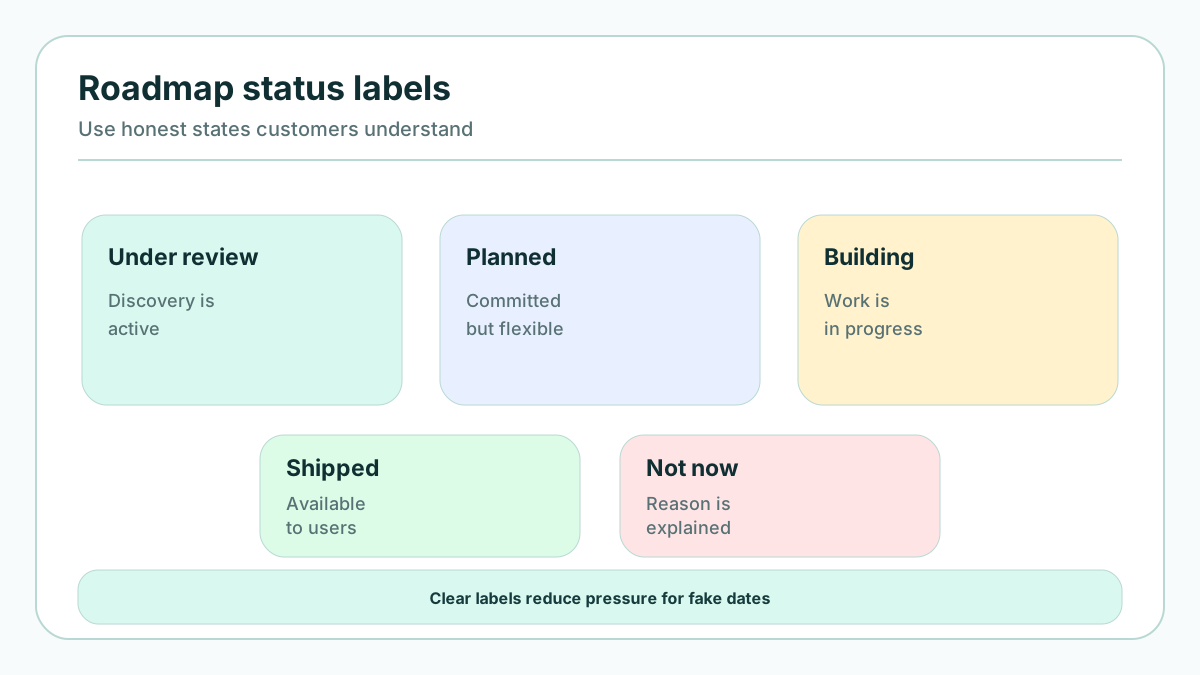
The key is to communicate uncertainty honestly. "Under review" is useful when it means the team is collecting evidence. "Planned" is useful when it means the problem is strategically important and likely to be addressed. "In progress" should mean active work, not a hopeful placeholder. Customers can handle changing priorities when the labels are credible.
Transparency improves prioritization quality
A public roadmap is not only a broadcast channel. It is a research surface. When users vote, comment, describe use cases, and explain the cost of a missing feature, the product team gets evidence analytics alone cannot provide.
Votes show demand concentration, but comments explain motivation. A request with 200 vague votes may be less urgent than a request with 20 detailed comments from high-retention customers in your target segment. Segment information matters too. Trial users, admins, technical buyers, front-line operators, and enterprise accounts often value different work. A public board helps reveal those differences before the team commits months of engineering time.
That evidence should be combined with a prioritization method, not substituted for strategy. Frameworks such as RICE prioritization help teams balance reach, impact, confidence, and effort. A roadmap board can strengthen those inputs by showing who is affected, how often the problem appears, and whether the request aligns with the intended market.
Public feedback also exposes wording problems. If customers keep asking for "better reporting," the real need may be scheduled exports, multi-account dashboards, audit logs, or clearer filtering. The roadmap card becomes a place to ask follow-up questions and separate the desired outcome from the first suggested solution.
The biggest risk is overpromising
The strongest argument against public roadmaps is that they can create false certainty. If every item has a date, every idea appears committed, and every customer comment receives a cheerful "coming soon," the roadmap becomes a promise machine. That pressure can push teams into shipping the wrong thing, hiding tradeoffs, or apologizing every time legitimate learning changes the plan.
Avoid that trap by publishing statuses, not fantasy schedules. Time horizons are useful when they are honest, but exact dates should be rare unless the work is already committed and low risk. Many teams are better served by labels such as under consideration, planned, in progress, shipped, and not planned. Each label should have a plain-language definition.
External roadmap guidance supports this direction. Atlassian's product roadmap guide frames roadmaps as communication tools for goals, priorities, and progress rather than simple date charts. ProductPlan's roadmap resources similarly emphasize alignment and strategic context. Those principles become even more important when the audience includes customers, prospects, and partners.
A public roadmap should also include disclaimers in normal human language. You do not need legalistic warnings on every card, but users should understand that priorities can change as the team learns from customers, technical discovery, and business constraints. The goal is not to avoid accountability. The goal is to be accountable for the right thing: thoughtful product decisions, not premature delivery guesses.
With FeaturAsk, small teams can start with customer requests and simple roadmap statuses before deciding whether any item deserves a public delivery window.
What to include on a public roadmap
A useful public roadmap card gives customers enough context to understand the decision without exposing sensitive internal detail. At minimum, each card should include the user problem, the intended outcome, the current status, and a way to add feedback.
For example, "CSV export" is weak because it names a solution without explaining the pain. "Export filtered customer lists for finance and onboarding reviews" is stronger because it describes who benefits and why the work matters. The better card invites better comments about file formats, permissions, scheduling, fields, and audit requirements.
Public cards commonly include:
- Problem statement: the friction users experience.
- Status: under review, planned, in progress, shipped, or not planned.
- Rationale: why the team is considering, prioritizing, delaying, or declining it.
- Scope notes: what is included, excluded, and affected.
- Feedback prompt: the specific question you want users to answer.
- Update history: meaningful status, scope, or availability changes.
The roadmap should also show shipped work. This is often neglected, but it is one of the highest-trust parts of the board. Shipped items prove momentum, close the loop with voters, and create a visible history of product responsiveness. If you maintain detailed release notes separately, connect shipped roadmap cards to those notes so customers can move from "you listened" to "here is how to use it." For launch communication, see Successfully Announce Product Updates and New Features.
What to keep private
Transparency does not mean publishing everything. Some information creates risk without helping customers make better decisions: internal engineering estimates, unreleased security architecture, private customer names, contract-specific obligations, hiring dependencies, revenue assumptions, and competitive notes should stay inside the company.
Be careful with experimental ideas too. A product team needs room to explore weak signals and challenge assumptions before inviting public expectations. Use the public roadmap for problems that are ready for structured feedback, not for every idea from a brainstorming session.
Sensitive enterprise requests require translation. If a large customer asks for something that could help the broader market, publish the general problem statement rather than the account, contract pressure, or internal escalation behind it.
How public roadmaps support sales and customer success
Sales teams often get roadmap questions before a buyer is ready to commit. Without a public source of truth, reps may improvise. Even well-intentioned improvisation can create future pain: one prospect hears "next quarter," another hears "soon," and the product team inherits a promise it never approved.
A public roadmap gives sales a safer answer. Reps can point to visible statuses, explain feedback collection, and avoid inventing commitments. Customer success teams gain the same leverage: they can attach users to existing cards, add account context, and notify the right people when the work ships.
Support teams also benefit. Repeated tickets about the same missing feature can be directed to a single card where customers see status, alternatives, and updates. This reduces duplicate writing and helps support identify whether confusion is caused by a missing feature, poor documentation, or unclear positioning.
Governance keeps the roadmap trustworthy
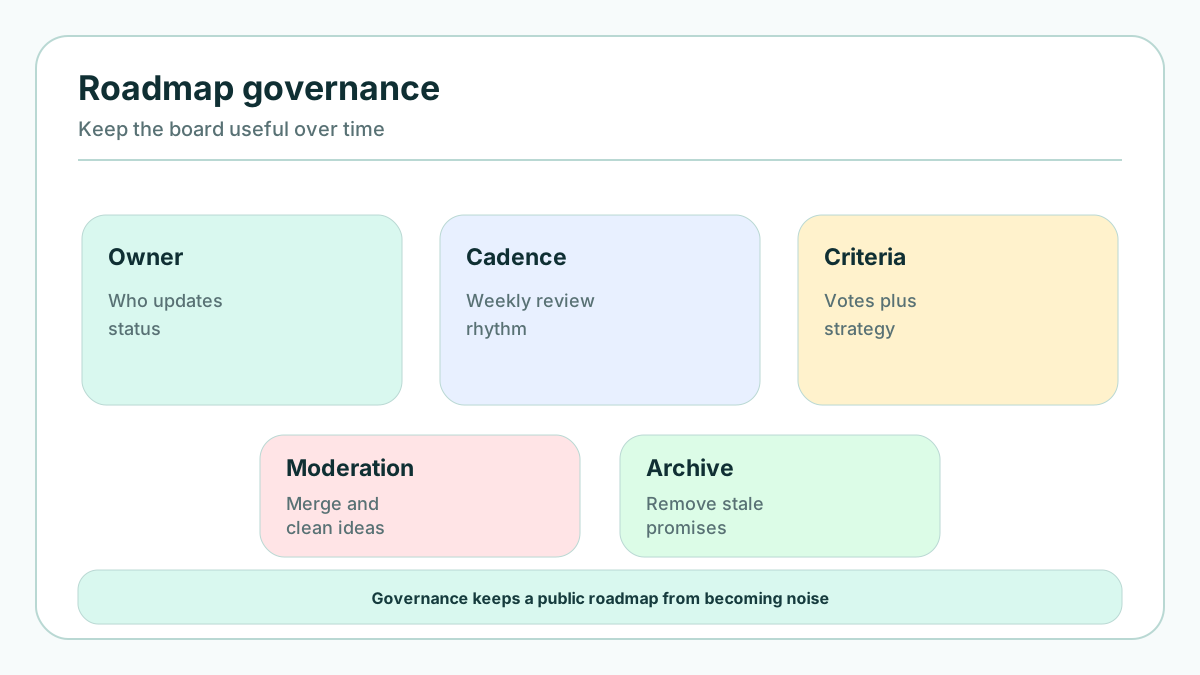
A public roadmap needs ownership. Without governance, the board gradually fills with stale ideas, ambiguous statuses, and abandoned discussions. The team should decide who can create cards, who can change statuses, how often requests are reviewed, and what criteria move an item from one stage to another.
A practical monthly review is enough for many small SaaS companies. During that review, look for cards with rising demand, cards with high-value comments, cards that no longer match strategy, shipped items that need closure, and old requests that deserve a respectful decline. Maintenance does not have to be heavy, but it must be consistent.
Status definitions are especially important. "Under review" should not mean "we do not want to say no." It should mean the team is gathering evidence. "Planned" should not mean "someone liked the idea." It should mean the problem fits strategy and is expected to be addressed. "In progress" should mean active design or engineering work. "Shipped" should mean customers can use the result. "Not planned" should include a short explanation when possible.
Respectful declines can build trust. Customers may not love hearing no, but they usually prefer a clear boundary to indefinite silence. A good decline explains the product principle: the request is too account-specific, outside the target market, inconsistent with the product's simplicity, or better solved by an integration. That kind of explanation teaches customers how your team thinks.
A simple launch plan for your first public roadmap
You do not need a giant migration project to publish a useful roadmap. Start small. Choose 10 to 20 real requests that represent common customer problems, active discovery, planned work, and recently shipped improvements. Rewrite each card in customer language. Add statuses. Remove sensitive detail. Then invite a small group of customers or customer-facing teammates to review whether the board is understandable.
Before launch, prepare the internal rules. Decide which statuses you will use, how often the board will be reviewed, who responds to comments, and when shipped cards move to release notes. Create a short support script so everyone explains the roadmap the same way. If you use sales or success teams, give them examples of safe language: "planned" does not mean "guaranteed by Friday," and "under review" does not mean "ignored."
After launch, measure whether the roadmap is helping. Useful signals include fewer duplicate feature-request tickets, more specific customer comments, better sales handoffs, higher engagement from target segments, and faster closure of feedback loops after shipping. If the board gets traffic but no useful input, your prompts may be too vague. If it attracts many off-strategy requests, your positioning may need sharper boundaries.
FeaturAsk is built for this lightweight workflow: collect requests, show public status, close the loop, and keep pricing simple. You can try FeaturAsk for 30 days with no credit card; after the free trial, it is $29.95/year.
FAQ
Should every SaaS company have a public roadmap?
Not every SaaS company needs a fully public roadmap, but most benefit from a visible feedback and status system. If customers repeatedly ask what is coming next, if sales is making inconsistent roadmap claims, or if support keeps collecting duplicate requests, a public roadmap can reduce confusion and improve prioritization.
Should a public roadmap include dates?
Use dates sparingly. Status, direction, and rationale are usually safer than exact dates. Publish a date only when the work is committed, the dependency risk is low, and the customer genuinely needs the timing to plan.
How often should a public roadmap be updated?
Review it at least monthly. High-growth teams or teams with frequent releases may update it weekly. The important point is consistency: stale cards and unanswered comments damage credibility.
What is the difference between a public roadmap and a feature request board?
A feature request board captures demand. A public roadmap communicates product direction and status. They work best together when requests can graduate into roadmap items, receive updates, and move into shipped announcements.
Conclusion
A public product roadmap builds trust when it is honest, maintained, and connected to real decisions. It reduces uncertainty for customers, improves prioritization evidence for product teams, gives sales and success a safer source of truth, and creates a visible loop from request to shipped improvement.
The best roadmap is not the one with the most cards or the boldest dates. It is the one that helps customers understand direction while giving the team room to learn. Keep sensitive details private, define statuses clearly, close the loop on shipped work, and decline off-strategy ideas with respect.
If you want to start without heavy enterprise tooling, FeaturAsk gives small SaaS teams a public feedback and roadmap workflow with a 1 month free trial, no credit card required, and simple $29.95/year pricing afterward.