Ultimate Guide to SaaS Go-To-Market Strategy
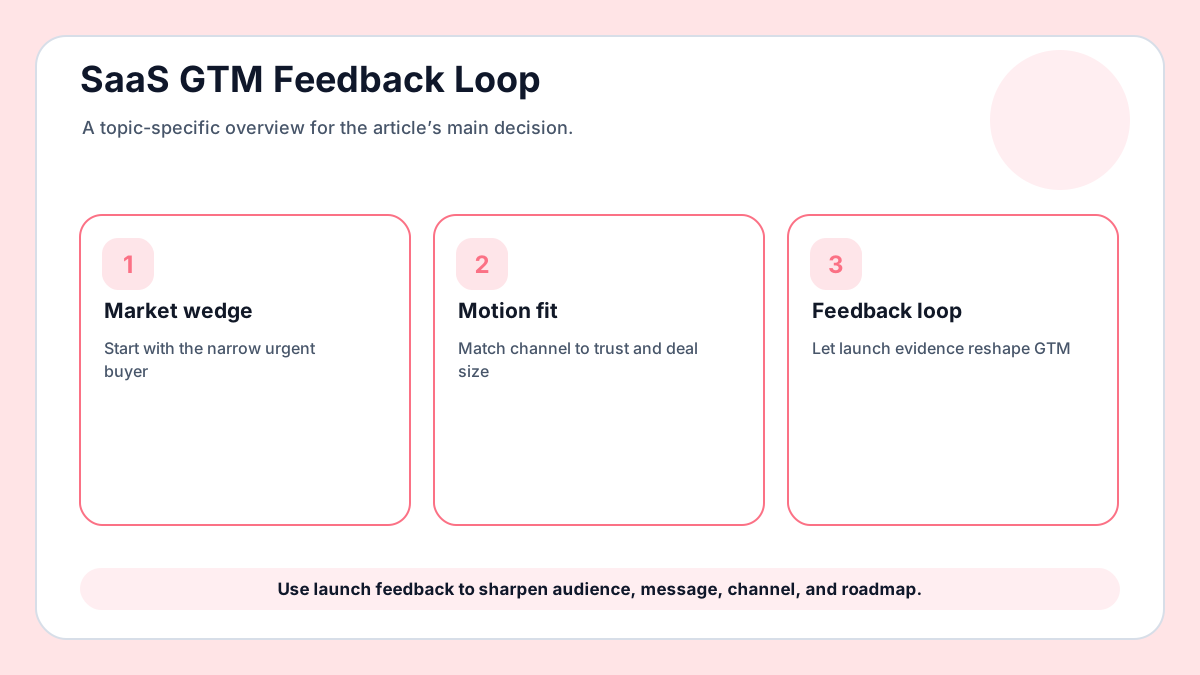
A SaaS go-to-market strategy is the connection between a product promise, a specific customer, a repeatable path to reach that customer, and the proof that the promise is working. Frill’s source article covers the classic GTM pieces; this guide keeps the same search intent but makes the plan more practical for lean SaaS teams that need feedback loops before, during, and after launch.
For SaaS teams that want launch feedback without building a portal from scratch, FeaturAsk offers a copy-paste widget, voting, and request management for $29.95/year, plus a 30-day free trial with no credit card required.
For the feedback side of GTM, see FeaturAsk guides on product feedback tools, feedback widgets, and roadmap prioritization. For market context, see ProductLed on product-led growth and McKinsey growth and marketing insights.
How to evaluate the options
Do not start with a channel spreadsheet. Start with the buying moment. A founder evaluating a $30 annual widget behaves differently from a VP evaluating a six-figure platform. Your GTM choices should reflect urgency, risk, onboarding effort, and the evidence needed before someone trusts the product.
1. Define the narrow market wedge
A SaaS go-to-market strategy becomes easier when the first audience is specific enough to recognize itself. Instead of saying “small businesses,” name the workflow, budget, trigger event, and switching pain that makes the product urgent. Best fit: founders choosing an initial beachhead. Check whether this option shortens the path from customer signal to team decision for this specific use case during the GTM launch cycle.
2. Map the job customers already do
Customers rarely wake up wanting new software. They want fewer support emails, faster approvals, clearer feedback, or a simpler buying path. Map the old behavior before pitching the new one. Best fit: teams translating features into outcomes. Ask whether the workflow can stay organized when feedback volume doubles and another teammate joins the review during the GTM launch cycle.
3. Pick the motion before the channel
Product-led, sales-led, founder-led, partner-led, and content-led motions demand different proof. Choose the motion that matches deal size, onboarding complexity, and how much trust a buyer needs. Best fit: teams avoiding channel scatter. Confirm that customers understand what to submit, how the team responds, and where status will appear later during the GTM launch cycle.
4. Set price against the alternative
Pricing should make the desired customer feel the switch is sensible. Compare against spreadsheets, monthly enterprise tools, agency time, or internal labor, not only against direct competitors. Best fit: budget-conscious SaaS offers. Evaluate the admin view with real examples, because clean sample data often hides daily maintenance work during the GTM launch cycle.
5. Build message tests from objections
A strong GTM plan records the questions buyers ask before they convert. Turn those objections into landing-page sections, email sequences, demos, and product education. Best fit: teams improving conversion copy. Look for export access and clear ownership rules before committing historical feedback to a new system during the GTM launch cycle.
6. Create distribution loops
A distribution plan should explain how each new customer can create more qualified attention. Examples include public widgets, shared boards, referral prompts, partner templates, or content based on real questions. Best fit: products with visible user value. Test the mobile experience and notification flow with a real visitor rather than relying only on screenshots during the GTM launch cycle.
7. Use feedback before launch day
Private beta feedback is not only for fixing bugs. It shows which persona is most excited, which promise is clearest, and which feature proof belongs in the first launch story. Best fit: teams launching with evidence. Decide whether the tool clarifies priority or merely creates another inbox for unranked comments during the GTM launch cycle.
8. Measure adoption, not noise
Traffic and signups matter, but activation, repeated use, qualified requests, and expansion intent tell a sharper GTM story. Track the behaviors that prove the promise is becoming a habit. Best fit: operators setting useful metrics. Review how duplicates, spam, and partial requests are handled before the public collection point goes live during the GTM launch cycle.
9. Plan the first ninety days after launch
The launch is a start line, not the strategy. Decide what will be reviewed weekly, which segments will get interviews, and what evidence would justify changing the offer. Best fit: teams protecting momentum. Make sure the reporting view answers the question your next planning meeting will ask during the GTM launch cycle.
10. Turn roadmap choices into marketing proof
When customers see their feedback shape the product, roadmap updates become acquisition and retention assets. Close the loop publicly when it is safe and privately when the request came from a specific account. Best fit: product-led teams using feedback as trust. Prefer a tool that makes follow-up easy, because silence after collection weakens trust during the GTM launch cycle.
What small teams should do after choosing
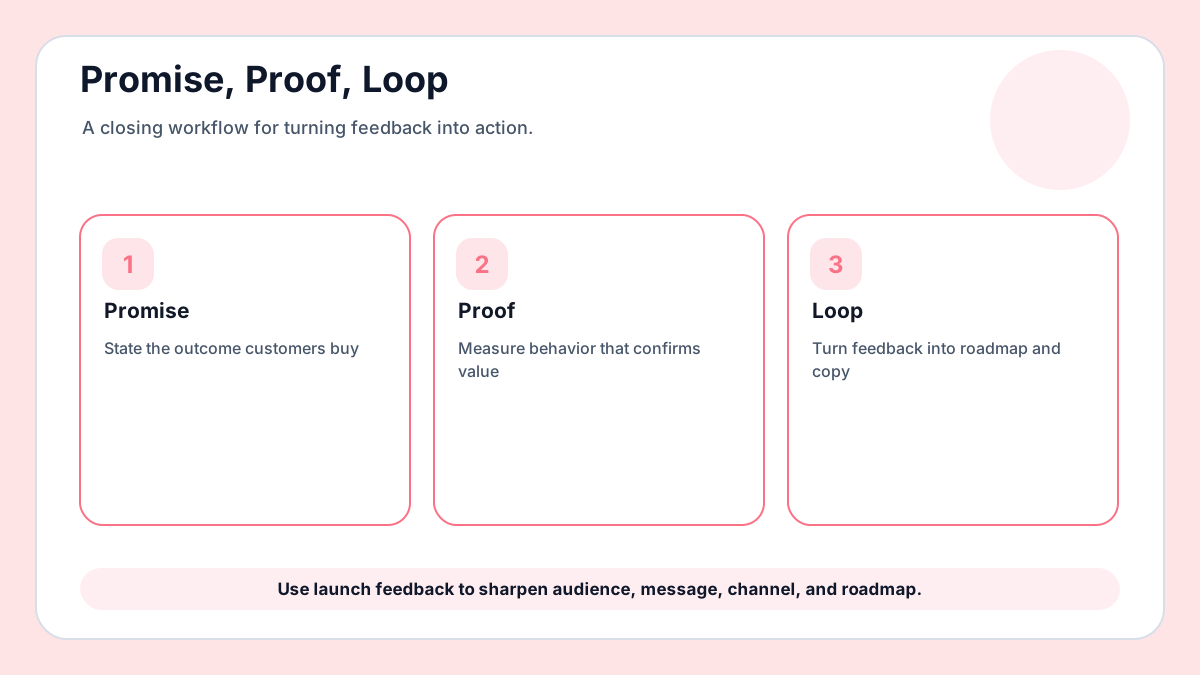
A strong GTM system is not static. Every sales objection, support question, feature request, cancellation reason, and activation drop-off updates the plan. The team that learns fastest usually beats the team with the prettiest launch calendar.
During beta or early access, FeaturAsk can capture which missing features actually influence adoption instead of letting feedback disappear into calls and chat threads.
Final recommendation
A SaaS GTM strategy should describe who needs the product now, why the promise beats the current workaround, how the team will reach that buyer, and what evidence will change the next move. Keep the plan close to customer feedback so the message, onboarding, and roadmap sharpen together.
When the first GTM loop depends on listening visibly, FeaturAsk gives small SaaS teams a simple feedback surface they can afford to keep running all year.
A practical GTM worksheet for the first launch cycle
Write the first version of the strategy as a one-page operating document. Include the target segment, the painful trigger, the alternative the buyer uses today, the promise, the proof, the first channel, the activation event, and the feedback loop. If any line needs a paragraph of caveats, the team probably has not made a decision yet.
Interview customers before choosing the message hierarchy. Ask what changed recently, what they tried before, what risk they see in switching, and which result would make the product feel worth keeping. Those answers reveal whether the market wants speed, affordability, accuracy, collaboration, compliance, or confidence.
Choose one primary acquisition motion for the first test. Content can educate a market, outbound can validate a narrow account list, partnerships can borrow trust, and product-led loops can spread through visible usage. Running all of them at once makes it hard to know which promise is working.
Connect pricing to the adoption motion. A low-friction product-led offer should make the next step obvious without a sales call. A higher-touch product can justify a demo if the buyer needs risk reduction, migration help, or proof for a committee. Confusing price architecture is often a GTM problem disguised as a billing problem.
Use product feedback as launch instrumentation. Feature requests, objections, and repeated questions show where the promise is unclear or incomplete. A roadmap conversation can become a positioning insight when several prospects ask for the same proof before they will activate.
Build the first content plan from actual buyer questions. Instead of publishing generic thought leadership, answer the objections that appeared in interviews, demos, support chats, and beta notes. This makes content useful for acquisition and for sales enablement at the same time.
Set a review cadence that forces learning. Every week, look at activation quality, conversion by segment, the most repeated objection, the most requested capability, and the channel that produced customers with the clearest need. Every month, decide whether to narrow the segment, adjust the promise, change the onboarding path, or double down.
A GTM strategy should become more specific after contact with the market. If the plan sounds equally true for every SaaS product after a month, it is not yet a strategy; it is a collection of activities. The feedback loop is what turns those activities into a compounding system.
Common GTM traps for lean SaaS teams
The first trap is copying the channel mix of a larger company. A mature competitor may succeed with paid search, analysts, field sales, and partner events because it already has brand demand. An early SaaS team usually needs a sharper wedge, a smaller audience, and a feedback loop that reveals whether the promise is resonating.
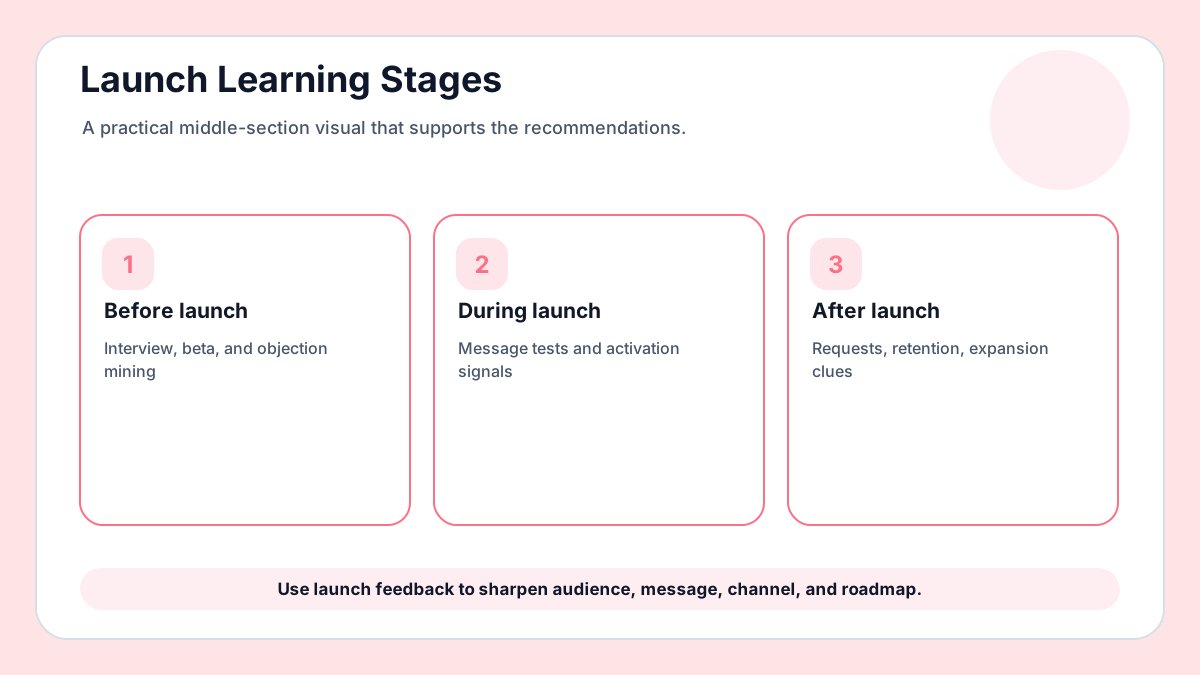
The second trap is treating launch as one announcement. A useful launch sequence has pre-launch learning, launch-week conversion, and post-launch follow-up. Each phase needs a different question: who cares, who activates, and who keeps using the product after the novelty disappears.
The third trap is measuring attention without measuring commitment. Newsletter clicks, social likes, and demo views can be encouraging, but they do not prove willingness to switch. Track the behavior that shows risk has been overcome: completed setup, invited teammates, submitted feedback, paid renewal, or repeated use of the core workflow.
The fourth trap is hiding roadmap uncertainty. Early buyers know the product will evolve. What they need is confidence that the team listens, prioritizes clearly, and communicates what changed. A visible request loop can turn uncertainty into participation when it is managed honestly.
The final trap is building a GTM plan that ignores retention. Acquisition creates the first conversation, but retention proves the market fit is real. Feed churn reasons, support patterns, and roadmap requests back into positioning so the next cohort hears a clearer promise than the previous one.
Example GTM loop for a small SaaS launch
Imagine a small SaaS team launching a lightweight workflow tool. The first audience is not every operations team; it is solo founders and tiny teams that already use spreadsheets but now need a shared customer-facing request surface. The initial message should speak to that pain directly instead of promising an abstract productivity platform.
The first channel might be content aimed at the exact problem, founder communities where the pain appears, and product-led onboarding that gets a visitor to the first visible outcome quickly. The first activation metric might be installing the widget, receiving the first request, or sharing a public board with customers. Those behaviors prove more than a signup count.
The feedback loop begins before the public launch. Beta users submit confusing setup moments, missing settings, and wording that helped them understand the value. The team turns those comments into onboarding copy, help articles, pricing clarifications, and a tighter homepage. Each improvement makes the next visitor easier to convert.
After launch, roadmap decisions become part of the GTM motion. If many users request the same integration, the team can publish a status update, invite voters to test it, and reuse the learning in sales conversations. That public learning loop makes the product feel alive without pretending every request will ship immediately.
This kind of GTM plan is modest but durable. It has a defined buyer, a reachable channel, a measurable activation event, and a way to learn from real demand. For a lean team, that is more useful than a large slide deck filled with channels nobody has time to operate.
Keep the document visible, short, and revised after real customer evidence arrives.
GTM planning also benefits from an explicit stop-doing list. If a channel creates low-fit trials, if a persona asks for work the team cannot support, or if a message attracts curiosity without activation, remove it from the next cycle. Focus is a strategy choice, not a lack of ambition.
Use the plan as a learning instrument, not a frozen presentation. The strongest GTM teams revise faster because customers keep teaching them where value is clearest.