Understanding the RICE Framework for Feature Prioritization
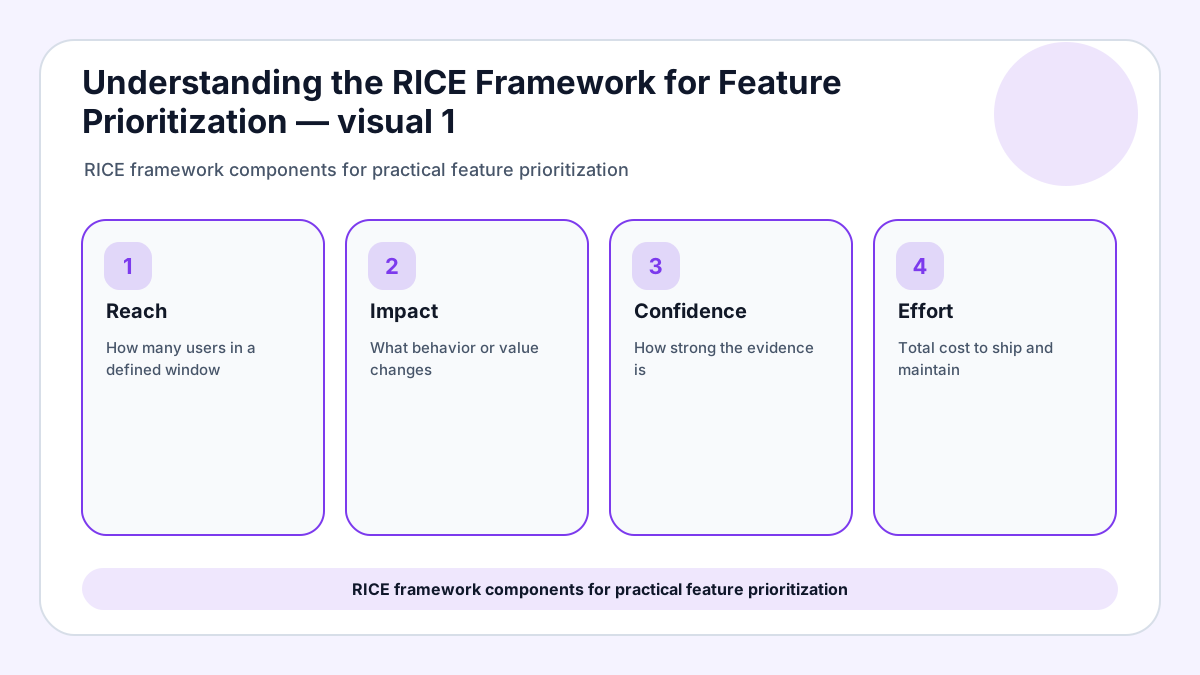
The RICE framework helps teams compare feature ideas by estimating reach, impact, confidence, and effort. It is popular because the formula is simple, but the quality of the answer depends entirely on the quality of the inputs. Frill’s source article introduces the four parts; this guide focuses on how smaller SaaS, creator, ecommerce, and service teams can use RICE without pretending that every number is scientific.
RICE is most valuable when it forces a team to state its assumptions. A request with broad reach but weak confidence should not beat a narrower idea backed by repeated customer evidence and low effort. The score starts the conversation; it should not end the conversation.
RICE needs evidence, not vibes, and FeaturAsk gives small teams a $29.95/year request board where reach and confidence signals can start with real customer votes; the first month is free and no credit card is needed.
RICE works better when the evidence is clean, so keep nearby FeaturAsk resources on customer feedback collection, feedback board software, and roadmap prioritization in the decision file. For outside grounding, see Intercom RICE scoring overview and ProductPlan prioritization guide.
How each RICE input should be grounded
Reach estimates how many people will benefit within a defined period. Do not use total website visitors unless the feature affects every visitor. Use trial users, paying accounts, abandoned checkouts, support tickets, feature-request voters, or active projects depending on the decision.
Impact describes the expected change in behavior or business value. A feature might improve activation, reduce churn, shorten setup time, create expansion revenue, or remove a support burden. The more specific the outcome, the easier it is to challenge the score later.
1. Reach
Set the reach window before scoring begins. A request that affects fifty high-fit accounts this quarter may matter more than a vague idea that could someday affect thousands of visitors.
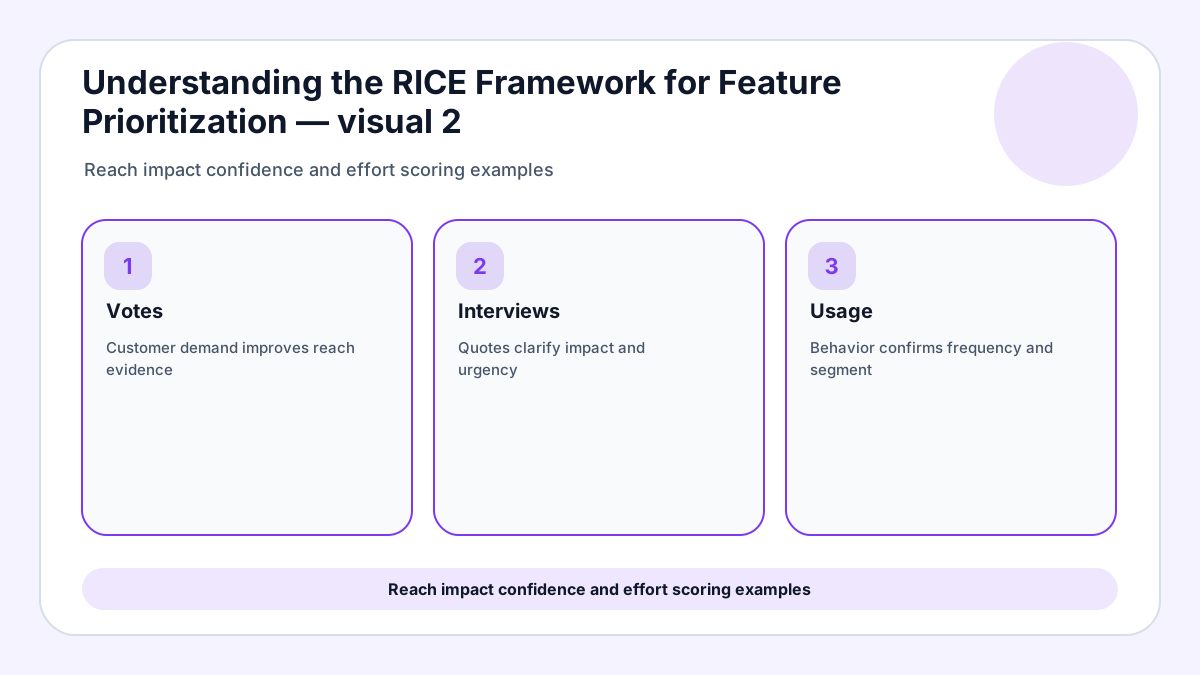
Use direct evidence where possible: voted requests, support clusters, sales objections, analytics events, and account notes. When evidence is thin, mark the confidence score honestly instead of inflating reach.
2. Impact
Impact is not a synonym for excitement. Tie the number to a measurable behavior such as completing onboarding, upgrading a plan, recovering a checkout, or reducing repetitive support questions.
Small teams should use a compact scale and define examples for each level. A shared definition prevents the loudest stakeholder from turning every favorite idea into maximum impact.
3. Confidence
Confidence protects the framework from fantasy math. Customer votes, interview quotes, repeated tickets, and usage data raise confidence; guesses, competitor envy, and isolated anecdotes lower it.
A low-confidence idea can still win if it is cheap to test. The key is to label it as a test rather than pretending the team already knows the result.
4. Effort
Effort should include design, engineering, QA, documentation, support training, and future maintenance. A feature that looks small in code can be expensive if it changes onboarding, billing, or permissions.
Use the same unit for every item. Person-weeks, story points, or rough size bands can all work as long as the team does not mix them inside one ranking table.
If your scoring meeting lacks trustworthy inputs, FeaturAsk can keep feature requests, votes, and comments organized before they become roadmap candidates.
A RICE workflow that does not become spreadsheet theater
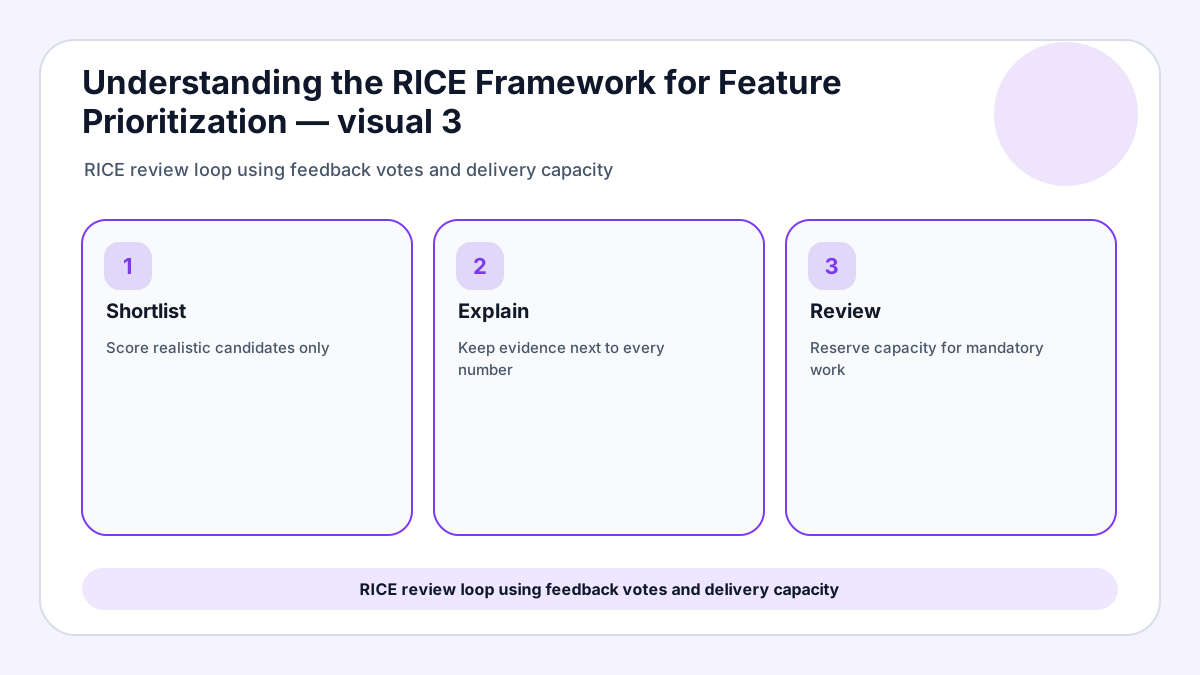
Start with a shortlist, not the entire backlog. Pull candidates from customer requests, revenue blockers, strategic bets, and maintenance work, then score only the items that could realistically enter the next planning window.
Write the evidence beside each number. “Reach: 140 trial users per month based on onboarding event count” is useful; “Reach: many users” invites false precision.
Review the sorted list with a decision rule. Some teams reserve capacity for maintenance, compliance, or customer commitments before applying RICE to growth ideas, which prevents the highest score from crowding out necessary work.
Reach evidence example
Estimate reach from the population that can actually use the feature within the scoring window. Votes from active accounts, onboarding event counts, support clusters, and sales objections are stronger than total visitor counts because they describe the affected audience.
Impact evidence example
Impact should describe the behavior you expect to change. A high-impact score might mean more users finish setup, fewer accounts churn, more trials upgrade, or support volume drops for a known issue.
Confidence evidence example
Confidence rises when several sources agree. A request with votes, customer quotes, usage friction, and revenue context deserves a different confidence level from an idea inspired by one internal opinion.
Effort evidence example
Effort must include design, build, QA, rollout, documentation, support readiness, and maintenance. A quick code change can still be expensive if it creates new permission rules or recurring education work.
RICE scoring details for lean teams
Create scoring rules before ideas enter the table
RICE becomes political when every participant invents a different meaning for reach, impact, confidence, and effort. Write a small scoring guide before the meeting begins, including examples from your own product.
A shared guide does not remove judgment, but it makes disagreement easier to inspect. When two people score impact differently, they can discuss the behavior they expect to change instead of defending a personal number.
Keep confidence honest when evidence is uneven
Confidence is the pressure valve in the framework. A persuasive sales anecdote, a competitor feature, or a founder hunch may be worth exploring, but it should not receive the same confidence as repeated requests from paying accounts.
Low confidence is not a shame label. It simply means the next step may be a prototype, a landing-page test, a request-board vote, or a customer interview before full delivery begins.
Account for maintenance in effort
Teams often score effort as the time needed to build version one, then forget documentation, support training, migration, analytics, permissions, and future edge cases. That shortcut favors ideas that look small but create long-running product drag.
Add a maintenance note to every effort estimate. If the note is hard to write, the team probably does not understand the feature enough to compare it fairly.
Use RICE with strategic exceptions
A strict score sort can produce strange decisions when the product has obligations that are not optional. Security fixes, reliability work, legal requirements, and existing customer commitments may need reserved capacity before the RICE list is considered.
The framework is healthiest when everyone knows which work is being scored and which work is mandatory. That boundary prevents a growth idea with a shiny score from crowding out foundations that keep the product trustworthy.
RICE examples for common roadmap debates
Missing integration
A requested integration may have modest reach but high impact for a valuable segment. Score reach from voters and sales notes, impact from blocked deals or retention risk, confidence from repeated evidence, and effort from authentication, API limits, documentation, and support maintenance.
Onboarding simplification
An onboarding fix may reach every new trial user, but impact depends on where people currently drop. Use activation analytics and support comments to avoid overrating a cosmetic change that does not affect completion.
Admin reporting
A reporting feature often receives strong stakeholder support because it looks strategic. RICE forces the team to ask who reads the report, what decision it changes, and whether a lightweight export would provide enough value at lower effort.
Performance improvement
Reliability work can be hard to score because customers rarely request it as a feature. Estimate reach from affected sessions, impact from failure severity, confidence from logs, and effort from engineering investigation plus rollout risk.
Creator workflow request
A creator or small service team may ask for a workflow that larger SaaS teams ignore. Do not discard it because total reach looks smaller. If the segment is your best-fit audience and the effort is low, the score may justify a focused improvement.
How to run a RICE meeting without fake precision
Evidence cards
Each candidate should arrive with a compact evidence card. Include request count, affected segment, revenue or retention context, usage data, strongest quote, and the reason the idea belongs in the current planning window.
Reach boundaries
Reach should describe the audience that can benefit within the chosen period. Trial users in onboarding, paying accounts using reporting, or stores receiving product questions are better units than total visitors.
Impact calibration
Impact becomes useful when the team names the behavior expected to change. The score should connect to activation, upgrades, churn reduction, checkout recovery, support deflection, or another observable outcome.
Confidence tiers
Confidence improves when sources agree. A request backed by votes, interviews, support clusters, and behavior data should outrank an idea based on a single stakeholder hunch, even if both sound persuasive.
Effort completeness
Effort needs more than engineering time. Add design, QA, rollout, documentation, support readiness, analytics, and maintenance so a small feature with hidden operational cost does not distort the ranking.
Decision memory
Save the winning score, rejected alternatives, and review date. Later comparisons between predicted and actual outcomes will sharpen the scoring guide and reveal which assumptions the team tends to overrate.
RICE backlog hygiene
Do not score stale ideas forever. If an item has not gathered fresh evidence in several planning cycles, move it to a parking lot and free the team from rescoring the same weak candidate every month.
RICE communication
Explain the winning items in plain language after the meeting. Customers and teammates do not need the whole spreadsheet; they need to know which requests had the strongest reach, impact, confidence, and delivery fit.
RICE review timing
Schedule a post-release check when the score is approved. If the chosen feature was expected to improve activation or reduce support, decide the measurement window before engineering starts.
RICE exception handling
Some work should bypass the ranking table. Security, reliability, legal, and contractual commitments may require reserved capacity so the framework does not accidentally compare optional growth ideas with obligations.
RICE planning checklist
Before scoring starts, remove duplicates, merge overlapping ideas, and define the scoring window. Then ask each participant to write evidence before numbers. This order matters because the framework should reveal assumptions rather than hide them behind arithmetic. After the meeting, keep a short note explaining why the winner beat close alternatives. That note becomes useful when a stakeholder asks why a visible request did not make the roadmap or why a smaller fix outranked a dramatic feature idea.
A final RICE safeguard is to mark which inputs are measured, estimated, or guessed. The label prevents a guessed impact number from sounding as trustworthy as a measured reach count. It also tells the team where a small discovery task could improve the next planning conversation.
Another useful habit is to review low-effort winners separately. Small improvements can compound when they remove daily friction, but they should not consume the whole roadmap if the product also needs a larger strategic move.
When the team is split, run the cheapest evidence-gathering step before committing the build. A request-board prompt, customer call, or usage query can clarify confidence faster than another argument around the spreadsheet.
Do not skip that learning step when confidence is thin.
Final take on prioritization
RICE is a prioritization aid, not a machine that knows your strategy. It works when inputs are honest, evidence is visible, and leadership still checks whether the winning item fits the product direction.
Use the framework to expose trade-offs. The best result is not a perfect number; it is a clearer conversation about who benefits, how much it matters, how sure you are, and what the team must spend.
For teams that want prioritization discipline without a heavyweight portal, FeaturAsk supplies the intake layer that makes RICE less speculative.