8 Great Product Management Certifications for Every Level
A product management certification can help you build vocabulary, practice structured thinking, and signal commitment to a hiring manager or promotion committee. It will not magically make someone a great product manager. The real job still depends on judgment, customer insight, prioritization, communication, and the ability to turn uncertainty into useful decisions.
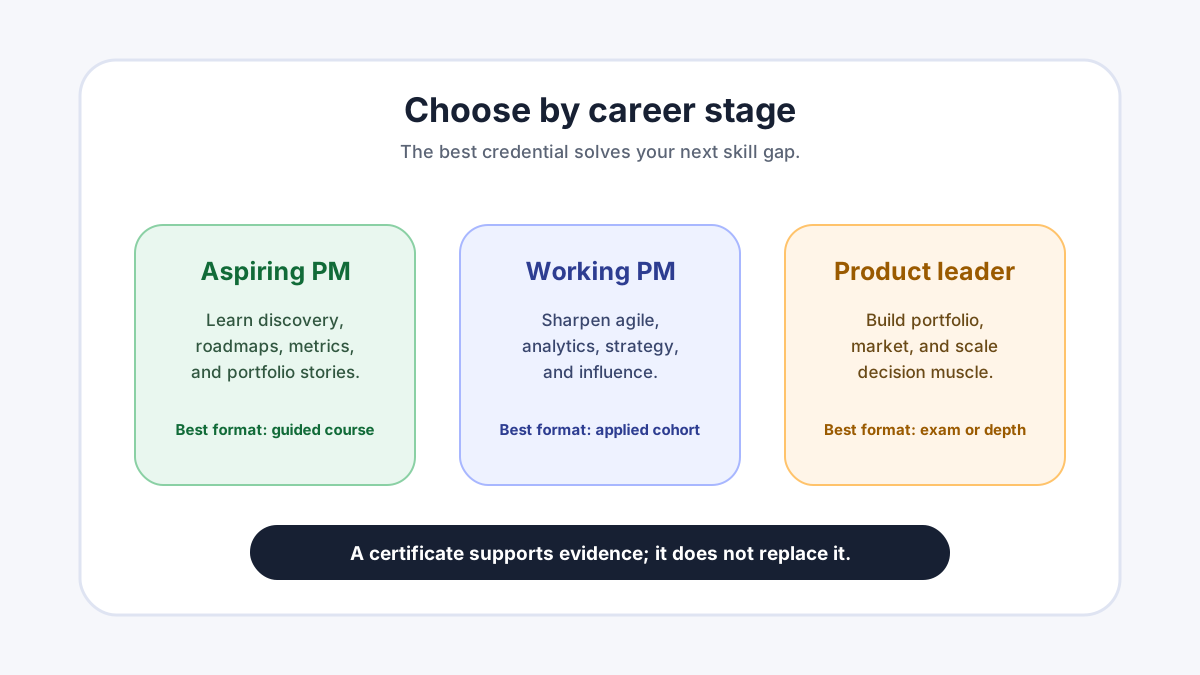
The best certification depends on your level. A career switcher needs fundamentals and portfolio projects. A working product manager may need stronger discovery, analytics, or stakeholder influence. A senior product leader may benefit from product strategy, portfolio thinking, or scaled delivery frameworks. This guide covers eight options and explains when each one is worth considering.
This guide compares eight certification options by career stage, proof value, and practical fit so you can avoid paying for a credential that will not change your day-to-day product work. Current factual references are linked to official program pages where possible, including PMI-ACP certification details, Scaled Agile POPM certification details, General Assembly product management course details, and PDMA NPDP certification details.
What is a product management certification?
A product management certification is a structured learning program that verifies completion, exam performance, or both. Some programs focus on agile delivery, some on discovery and product strategy, and others on new product development, portfolio management, or practical product career skills.
Certifications vary widely. A short course may help you understand common frameworks and build confidence. A professional exam may validate experience and terminology. A university certificate may provide deeper academic structure. A cohort-based program may be most useful because it gives you feedback from instructors and peers.
Before comparing logos, decide what problem you want the certification to solve. Are you trying to get your first product role? Move from project management to product management? Become more credible in agile environments? Lead portfolio decisions? Fill a skills gap in analytics or discovery? The clearer the goal, the easier the choice.
When a certification is worth it
A certification is worth it when it changes your behavior or opens a door you could not open otherwise. It can help career switchers learn product vocabulary, practice case thinking, and explain their transition. It can help working product managers find gaps in discovery, metrics, roadmap communication, or stakeholder management. It can help teams align on shared methods when everyone has learned product work informally.
It is less useful when you expect the credential alone to replace experience. Hiring managers usually care more about evidence: customer problems you understood, trade-offs you made, launches you influenced, metrics you improved, and lessons you learned. A certificate supports that story; it does not substitute for it.
If you are currently building a product, pair the course with a real feedback loop. Use customer requests, votes, interviews, and release outcomes as your practice material. FeaturAsk can help here: start a feedback board with one month free and no credit card and use real customer demand in your coursework or portfolio. If it fits, the plan stays simple at $29.95/year.
Quick comparison by learner level
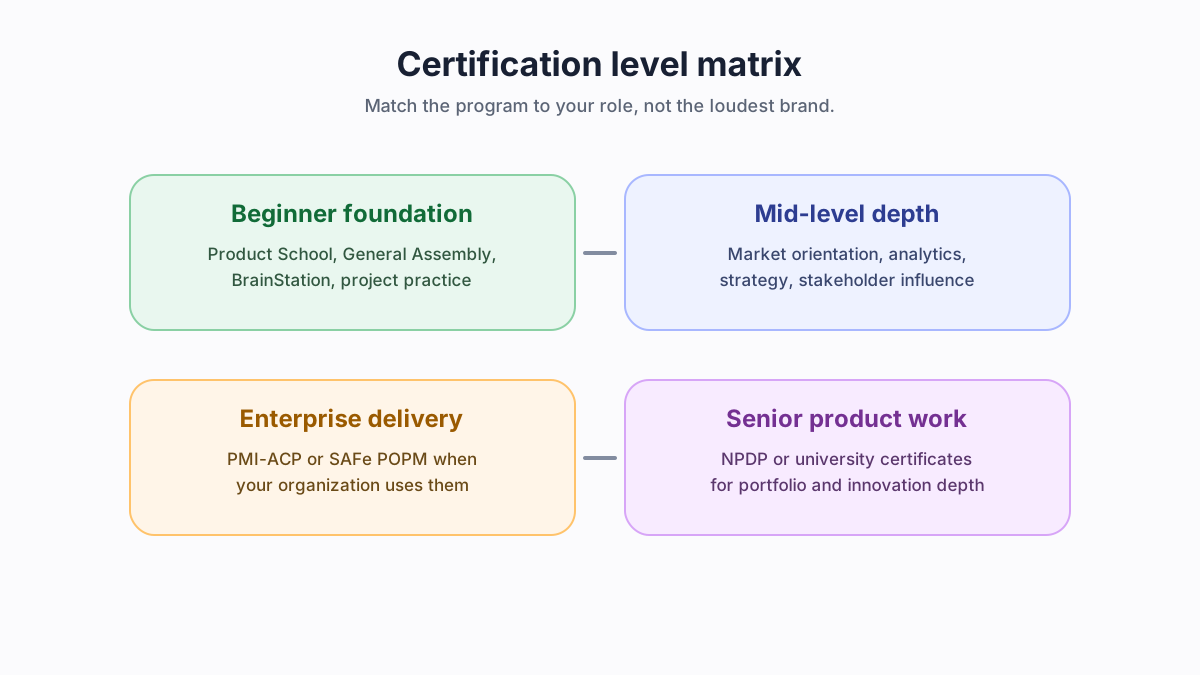
Beginners should look for programs that teach product discovery, problem framing, prioritization, roadmap basics, and stakeholder communication. Mid-level product managers should focus on applied strategy, analytics, experimentation, and cross-functional leadership. Senior product managers and product leaders should look for portfolio decisions, business model thinking, scaling patterns, and organizational influence.
Also consider the learning format. Self-paced courses are flexible but require discipline. Cohort courses create accountability and discussion. Exam-based certifications can be useful in organizations that value formal credentials. University programs may be more expensive and time-consuming, but they can provide structure and recognition.
1. Product Management Certification by Product School
Product School is one of the most recognizable product management training brands. Its certification programs are designed for people who want product-specific frameworks, practical exercises, and exposure to instructors with industry experience.
This option fits aspiring product managers, associate PMs, and professionals moving from adjacent roles such as business analysis, UX, engineering, marketing, or customer success. It is especially useful if you want guided practice on product sense, prioritization, go-to-market thinking, and interview storytelling.
The main value is product-specific language and career framing. The potential downside is that any broad product course can feel general if you already have several years of PM experience. Experienced PMs should review the syllabus carefully and choose a level that stretches them.
2. General Assembly Product Management Short Course
General Assembly’s product management course is a practical option for people who want a structured introduction without committing to a long graduate certificate. It typically emphasizes customer problems, MVP thinking, roadmaps, metrics, and stakeholder communication.
This is a strong fit for career changers and early-stage PMs who learn best through projects and instructor feedback. It can also help founders and operators who perform product work but have never learned the formal vocabulary.
Use this type of course to build a portfolio artifact. For example, choose a real product problem, write a product brief, map user needs, define success metrics, and prepare a roadmap narrative. Related FeaturAsk resources can help: the product brief guide explains how to frame a product bet, while the innovation roadmap guide shows how to connect decisions to strategy.
3. BrainStation Product Management Certificate
BrainStation’s product management certificate is another practical course option for learners who want structured product fundamentals. It can be useful for professionals who want a guided overview of product lifecycle, discovery, strategy, prototyping, metrics, and go-to-market collaboration.
This program fits learners who prefer a classroom-style experience and want assignments that translate into a portfolio. It may also appeal to designers, marketers, analysts, and developers who work closely with product teams and want to participate more effectively.
As with any short certificate, the value depends on how actively you apply the material. Do not only complete exercises. Interview users, inspect product data, write decision memos, and practice explaining trade-offs.
4. Pragmatic Institute Product Management Certification
Pragmatic Institute is known for product management and product marketing training, especially in B2B environments. Its courses often emphasize market problems, positioning, buyer understanding, launch, and cross-functional alignment.
This option fits product managers, product marketers, and commercial leaders who need stronger market orientation. It is particularly relevant when a company struggles to connect roadmap decisions to customer segments, competitive context, and go-to-market execution.
The benefit is that it pushes product managers beyond feature delivery. The risk is that learners who only need entry-level product basics may find a market-driven framework too broad at first. Review the course path and choose the level that matches your current role.
5. PMI Agile Certified Practitioner (PMI-ACP)
PMI-ACP is not a product management certification in the narrow sense. It is an agile certification from the Project Management Institute. It can still be valuable for product managers who work closely with agile delivery teams and want stronger fluency in agile principles, practices, and terminology.
This option fits product managers coming from project management, scrum-heavy organizations, or environments where delivery credibility matters. It may also help product owners who need to collaborate with engineering teams using agile practices.
Choose PMI-ACP if your gap is agile execution and team collaboration. Do not choose it if your main gap is product discovery, customer research, pricing, or product strategy. Agile knowledge helps you ship, but product management also requires deciding what is worth shipping.
6. SAFe Product Owner/Product Manager Certification
The SAFe Product Owner/Product Manager course is designed for organizations using the Scaled Agile Framework. It covers responsibilities for product owners and product managers in a scaled agile environment, including program increments, backlogs, and coordination across teams.
This option fits product professionals in large enterprises where SAFe is already part of the operating model. It can help you speak the language of your organization and understand how planning, prioritization, and delivery ceremonies work at scale.
It is less useful for small startups that do not run SAFe. If your team has eight people and ships continuously, a scaled framework certification may be more process than you need. If your company has dozens of teams coordinating releases, it may be practical.
7. University of Washington Certificate in Software Product Management
The University of Washington certificate is a more academic and structured option for people who want depth in software product management. University certificates can be helpful when learners want a recognized institution, a longer learning arc, and a curriculum that covers product planning, requirements, design collaboration, and business considerations.
This option fits professionals who can commit more time and want a formal learning environment. It may be attractive to people transitioning from engineering, program management, or technical roles into product management.
The trade-off is time and cost. A university certificate can be valuable, but it should connect to your career plan. Before enrolling, compare the curriculum with the roles you want and ask whether you will leave with artifacts, feedback, and a stronger story for hiring or promotion.
8. PDMA New Product Development Professional (NPDP)
The NPDP certification from the Product Development and Management Association focuses on new product development and management. It is broader than software product management and can be relevant for product leaders working across physical products, services, and complex innovation portfolios.
This option fits experienced product managers, product development professionals, innovation leaders, and people in industries where formal new product development processes matter. It may be especially useful outside pure SaaS or in companies with stage-gate, portfolio, and cross-functional development models.
NPDP is more appropriate when you already have experience and want a recognized professional credential. Beginners may get more immediate value from a practical product management course before attempting a broader professional certification.
How to choose the right certification
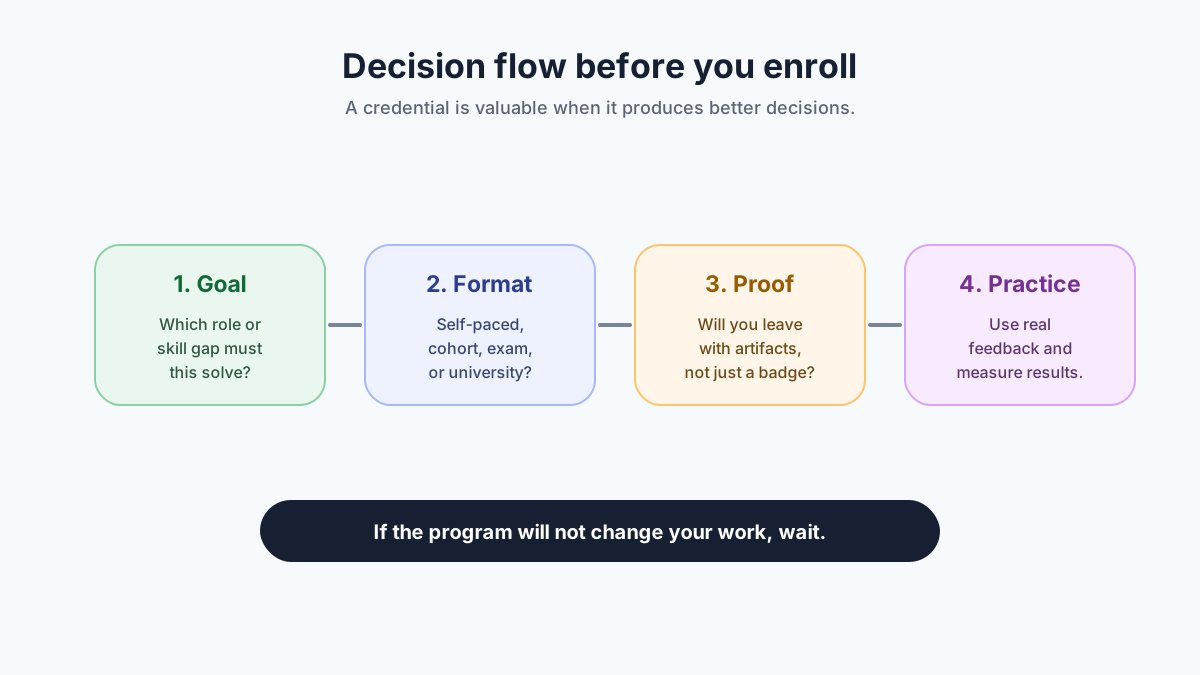
Start with your target role. If job descriptions mention product discovery, customer interviews, roadmaps, and metrics, choose a product-specific course with projects. If job descriptions mention SAFe, program increments, or scaled agile, SAFe POPM may be relevant. If your organization values PMI credentials and agile delivery, PMI-ACP may help. If you work in innovation or broader product development, NPDP may match better.
Next, compare the evidence you will have after completion. A certificate is nice, but a portfolio artifact is stronger. Look for programs that help you produce a product brief, opportunity assessment, roadmap, metric tree, experiment plan, user research synthesis, or launch narrative.
Finally, calculate opportunity cost. A cheaper course that you complete and apply may beat an expensive program you cannot finish. A prestigious credential that does not fit your target role is not a good investment.
Skills no certification should skip
Every credible product management path should strengthen five skills. First, customer discovery: finding and interpreting real user problems. Second, prioritization: making trade-offs when everything seems important. Third, communication: aligning engineering, design, sales, support, marketing, and leadership. Fourth, measurement: defining success before launch and learning after launch. Fifth, judgment: knowing when to persist, change direction, or stop.
If a program focuses only on templates, be cautious. Templates are useful, but product management is decision work. You need practice with ambiguity, conflict, weak signals, and imperfect data.
A feedback tool can make that practice concrete. Collect requests, tag themes, compare votes with account context, and review outcomes after release. If you want a lightweight place to do that, try FeaturAsk free for one month with no credit card. It costs $29.95/year after the trial and keeps the learning tied to real customers.
How to turn a certification into career proof
While you take the course, create evidence. Pick one product problem and follow it through the full loop: user segment, pain, evidence, alternatives, prioritization, roadmap placement, success metric, and post-launch feedback plan. Write a concise case study that explains the trade-offs, not just the final recommendation.
If you do not have access to a live product, use a public product and make assumptions explicit. Interview users if possible. Analyze reviews, support forums, or public feature requests. Build a lightweight prototype or roadmap narrative. The goal is not to pretend you were the product manager; it is to show how you think.
Use FeaturAsk-style internal resources to structure the work. The release notes best practices guide can help you show how you would communicate shipped changes, and the SaaS growth metrics guide can help you connect product decisions to business outcomes.
Common certification mistakes
The first mistake is choosing the most recognizable credential without checking fit. Recognition matters, but relevance matters more. The second mistake is collecting certificates instead of building judgment. One well-applied course can be more useful than five badges. The third mistake is ignoring the hiring market. Look at roles you want and note which skills, frameworks, and tools appear repeatedly.
The fourth mistake is skipping practice with real customers. Product management is not just a classroom subject. You need to hear messy feedback, resolve contradictions, and make decisions when the data is incomplete. The fifth mistake is treating agile delivery as the whole product job. Shipping efficiently is important, but product managers must also discover the right problems and define success.
FAQ
Do product managers need certification?
No. Many excellent product managers do not have a certification. A certification can help with structure, confidence, and signaling, but experience and demonstrated judgment usually matter more.
Which certification is best for beginners?
Beginners should choose a product-specific course that includes projects, feedback, and practical artifacts. General Assembly, BrainStation, Product School, and similar programs can be useful if the format matches your learning style.
Which certification is best for enterprise product owners?
If your company uses SAFe, SAFe Product Owner/Product Manager may be directly relevant. If agile delivery credibility is the gap, PMI-ACP can help. If broader product development is the focus, NPDP may be more appropriate.
Will a certification help me get a product manager job?
It can support your application, especially if you are switching careers, but it rarely wins the job by itself. Pair it with a portfolio, customer research examples, metrics thinking, and clear stories about trade-offs.
How should I practice after completing a course?
Keep a live feedback loop. Review customer requests weekly, write product briefs for promising ideas, connect decisions to roadmap themes, and close the loop after releases. FeaturAsk gives you one month free with no credit card and stays at $29.95/year, so you can practice real feedback management without adding a heavy platform.