16 Types of Customer Feedback [+ Automated Prioritization Tips]
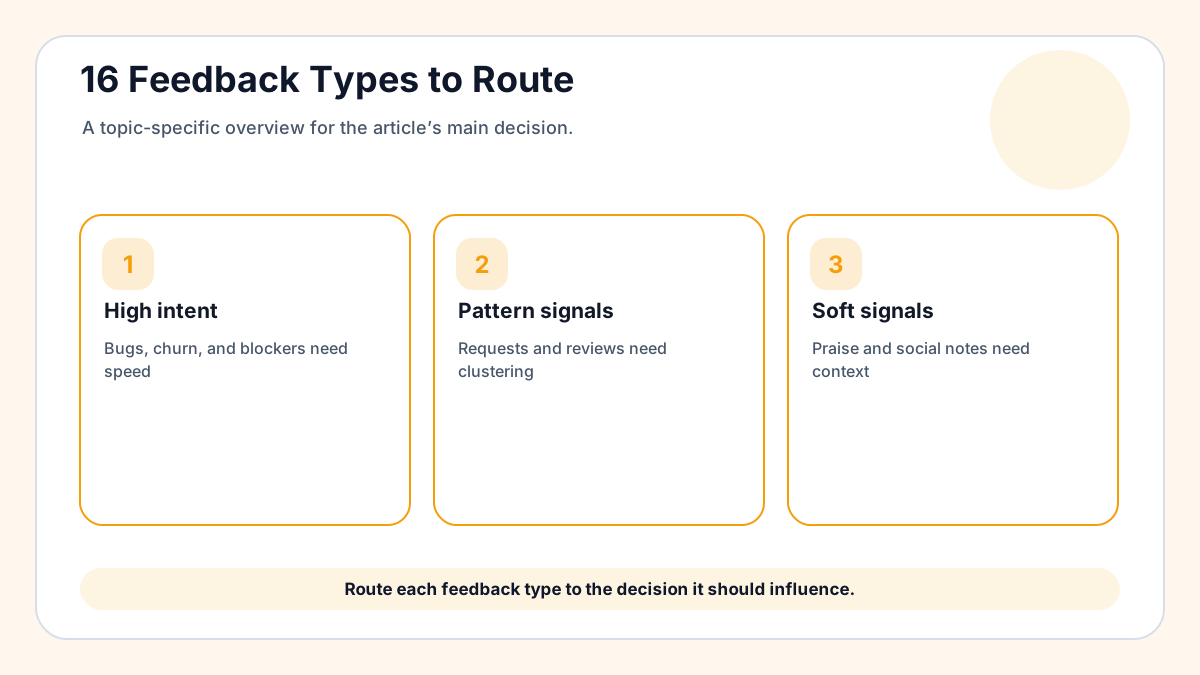
The most useful customer feedback program does not treat every comment the same way. A review, a bug report, a churn note, and a feature request all carry different levels of intent. Frill’s source article catalogs feedback types; this version adds an operating lens for prioritizing those signals so small teams can decide what deserves action first.
When feature requests are one of the loudest feedback types, FeaturAsk gives customers a place to submit and vote while your team manages the signal for $29.95/year, starting with a 30-day free trial and no credit card required.
For implementation detail, pair this taxonomy with FeaturAsk posts about collecting customer feedback, customer feedback tools, and feature request templates. For market context, see Nielsen Norman Group on survey design and Harvard Business Review on jobs to be done.
How to evaluate the options
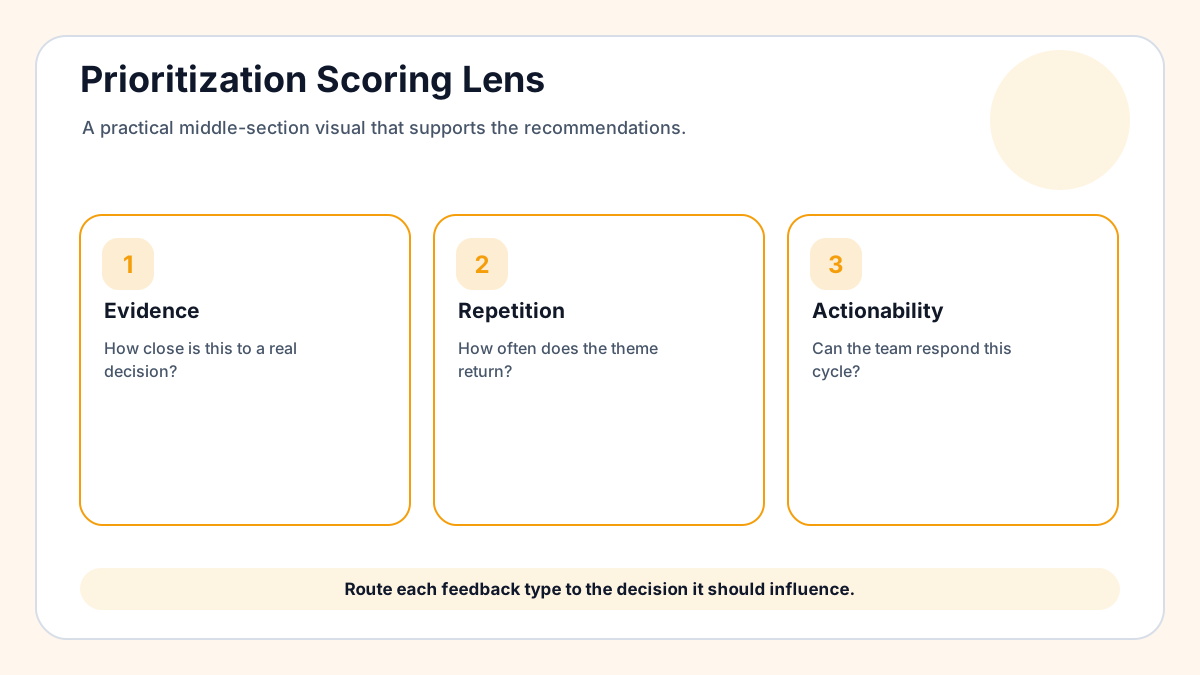
Prioritization starts with source quality. A complaint from a paying account that tried a workflow today should not sit beside a vague social comment with no context. Score feedback by evidence strength, business impact, repetition, and whether the team can fix it within the next planning window.
1. Customer survey responses
Customer survey responses can be valuable only when the team records the context around it. For customer survey responses, record the source, the customer moment, the likely owner, and whether the next step is product work, support recovery, or clearer communication. Best fit: teams that can route customer survey responses with source, urgency, and a named next action. Check whether this option shortens the path from customer signal to team decision for this specific use case for this feedback category.
2. Online reviews
Online reviews can be valuable only when the team records the context around it. For online reviews, record the source, the customer moment, the likely owner, and whether the next step is product work, support recovery, or clearer communication. Best fit: teams that can route online reviews with source, urgency, and a named next action. Ask whether the workflow can stay organized when feedback volume doubles and another teammate joins the review for this feedback category.
3. Support conversations
Support conversations can be valuable only when the team records the context around it. For support conversations, record the source, the customer moment, the likely owner, and whether the next step is product work, support recovery, or clearer communication. Best fit: teams that can route support conversations with source, urgency, and a named next action. Confirm that customers understand what to submit, how the team responds, and where status will appear later for this feedback category.
4. Social media mentions
Social media mentions can be valuable only when the team records the context around it. For social media mentions, record the source, the customer moment, the likely owner, and whether the next step is product work, support recovery, or clearer communication. Best fit: teams that can route social media mentions with source, urgency, and a named next action. Evaluate the admin view with real examples, because clean sample data often hides daily maintenance work for this feedback category.
5. Bug reports
Bug reports can be valuable only when the team records the context around it. For bug reports, record the source, the customer moment, the likely owner, and whether the next step is product work, support recovery, or clearer communication. Best fit: teams that can route bug reports with source, urgency, and a named next action. Look for export access and clear ownership rules before committing historical feedback to a new system for this feedback category.
6. Feature requests
Feature requests can be valuable only when the team records the context around it. For feature requests, record the source, the customer moment, the likely owner, and whether the next step is product work, support recovery, or clearer communication. Best fit: teams that can route feature requests with source, urgency, and a named next action. Test the mobile experience and notification flow with a real visitor rather than relying only on screenshots for this feedback category.
7. Sales objections
Sales objections can be valuable only when the team records the context around it. For sales objections, record the source, the customer moment, the likely owner, and whether the next step is product work, support recovery, or clearer communication. Best fit: teams that can route sales objections with source, urgency, and a named next action. Decide whether the tool clarifies priority or merely creates another inbox for unranked comments for this feedback category.
8. Churn reasons
Churn reasons can be valuable only when the team records the context around it. For churn reasons, record the source, the customer moment, the likely owner, and whether the next step is product work, support recovery, or clearer communication. Best fit: teams that can route churn reasons with source, urgency, and a named next action. Review how duplicates, spam, and partial requests are handled before the public collection point goes live for this feedback category.
9. Cancellation survey notes
Cancellation survey notes can be valuable only when the team records the context around it. For cancellation survey notes, record the source, the customer moment, the likely owner, and whether the next step is product work, support recovery, or clearer communication. Best fit: teams that can route cancellation survey notes with source, urgency, and a named next action. Make sure the reporting view answers the question your next planning meeting will ask for this feedback category.
10. Onboarding friction
Onboarding friction can be valuable only when the team records the context around it. For onboarding friction, record the source, the customer moment, the likely owner, and whether the next step is product work, support recovery, or clearer communication. Best fit: teams that can route onboarding friction with source, urgency, and a named next action. Prefer a tool that makes follow-up easy, because silence after collection weakens trust for this feedback category.
11. Community comments
Community comments can be valuable only when the team records the context around it. For community comments, record the source, the customer moment, the likely owner, and whether the next step is product work, support recovery, or clearer communication. Best fit: teams that can route community comments with source, urgency, and a named next action. Score setup time honestly and include the weekly effort required to keep the space tidy for this feedback category.
12. Product usage anomalies
Product usage anomalies can be valuable only when the team records the context around it. For product usage anomalies, record the source, the customer moment, the likely owner, and whether the next step is product work, support recovery, or clearer communication. Best fit: teams that can route product usage anomalies with source, urgency, and a named next action. Check whether the platform fits your privacy, branding, and customer-communication expectations for this feedback category.
13. NPS or CSAT comments
NPS or CSAT comments can be valuable only when the team records the context around it. For nps or csat comments, record the source, the customer moment, the likely owner, and whether the next step is product work, support recovery, or clearer communication. Best fit: teams that can route nps or csat comments with source, urgency, and a named next action. Use one pilot workflow to reveal friction before migrating every feedback source for this feedback category.
14. Live chat transcripts
Live chat transcripts can be valuable only when the team records the context around it. For live chat transcripts, record the source, the customer moment, the likely owner, and whether the next step is product work, support recovery, or clearer communication. Best fit: teams that can route live chat transcripts with source, urgency, and a named next action. Compare the result with your current workaround, not only with the vendor feature checklist for this feedback category.
15. In-app microcopy reactions
In-app microcopy reactions can be valuable only when the team records the context around it. For in-app microcopy reactions, record the source, the customer moment, the likely owner, and whether the next step is product work, support recovery, or clearer communication. Best fit: teams that can route in-app microcopy reactions with source, urgency, and a named next action. Keep the trial narrow so the team can judge signal quality without process noise for this feedback category.
16. Partner or agency feedback
Partner or agency feedback can be valuable only when the team records the context around it. For partner or agency feedback, record the source, the customer moment, the likely owner, and whether the next step is product work, support recovery, or clearer communication. Best fit: teams that can route partner or agency feedback with source, urgency, and a named next action. Ask what decision this feedback will influence before adding another collection point for this feedback category.
What small teams should do after choosing
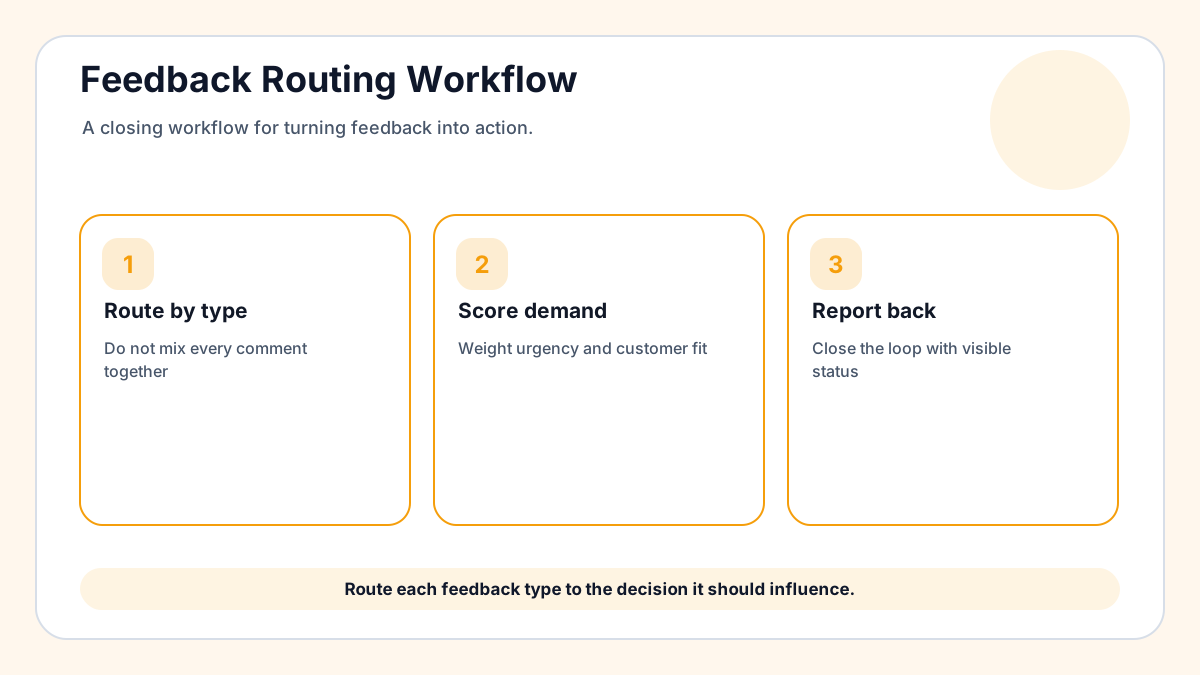
Once the types are separated, create paths. Bugs go to triage, repeated requests go to a public board or backlog, checkout confusion goes to conversion review, and praise goes to marketing proof. The type determines the route, and the route determines whether the customer hears back.
A small team can use FeaturAsk as the request lane while leaving support tickets, reviews, and analytics in their own systems, which keeps prioritization cleaner.
Final recommendation
Treat feedback type as a routing rule. A bug should not wait behind a testimonial, a churn reason should not be scored like a casual suggestion, and a feature request should not disappear into a support inbox. Clear routes make prioritization faster and make customer follow-up more believable.
If your feedback types are currently mixed in one inbox, FeaturAsk can separate product demand from general comments before the next roadmap conversation.
Automated prioritization tips that do not create blind spots
Automation should assist judgment, not replace it. A simple scoring model can look at source, frequency, urgency, account fit, revenue exposure, and whether the team can act soon. The score is a sorting aid; the final decision still needs product context and a quick review of the actual customer words.
Keep separate queues for separate feedback types. Bug reports need severity and reproduction steps. Feature requests need demand, fit, and likely effort. Reviews need sentiment and public-response urgency. Churn notes need retention themes and whether the customer left because of price, missing value, or a broken expectation.
Use voting carefully. Votes are excellent for seeing repeated demand, but they can overrepresent the loudest audience if every customer segment shares the same board. When possible, pair vote totals with customer type, plan, geography, or use case so a niche but valuable segment does not disappear inside the average.
Protect qualitative nuance. A short complaint from one strategic customer may matter more than ten vague likes from anonymous visitors. Store the original comment beside every tag so the team can reread the context before changing a roadmap, help article, or checkout flow.
Create escalation rules. A security concern, payment failure, accessibility blocker, or data-loss report should skip the normal prioritization queue. A pricing objection, missing integration, or confusing setting can be reviewed in the weekly product-feedback rhythm. The rules prevent urgent operational issues from waiting behind nice-to-have ideas.
Review stale themes monthly. Some feedback types lose value quickly because the product, audience, or market changed. Archive themes that have not appeared recently, merge duplicates that fragment vote totals, and refresh labels that no longer describe how customers talk.
The goal of automation is a cleaner conversation. When every feedback type has a destination, customers get better responses and teams spend less time debating whether a comment is research, support, roadmap input, or marketing proof.
Prioritization also improves when every route has a service-level expectation. A severe bug may need same-day review, a repeated feature request may need weekly clustering, and a testimonial may need permission before marketing uses it. Different clocks prevent the team from treating every signal as equally urgent.