Qualitative vs Quantitative Feedback: The Ultimate Guide
Learn when to use qualitative and quantitative feedback, how to combine both, and how to turn signals into product decisions.
The core difference
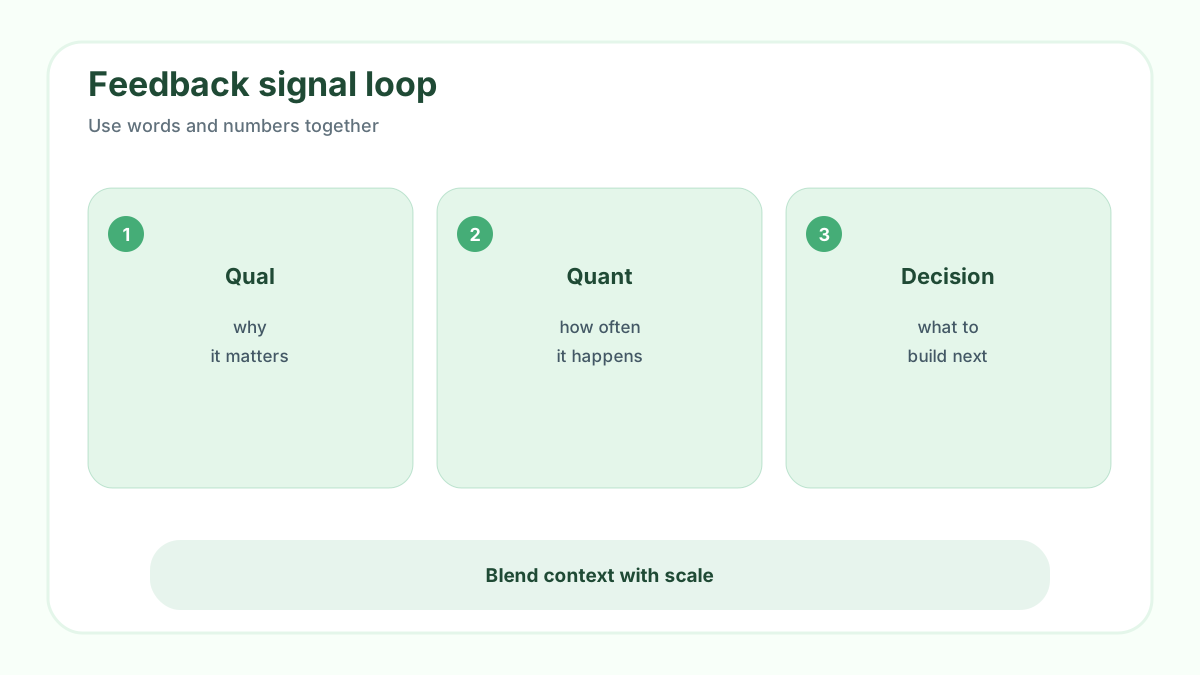
Qualitative feedback explains why something happened. Quantitative feedback shows how often it happened, how many people experienced it, or how strongly a pattern appears. A useful product team needs both. Nielsen Norman Group on qualitative vs quantitative UX research frames the distinction clearly for UX research: numbers help compare and size patterns, while words help understand causes. Survey design guidance such as SurveyMonkey guide to survey research also matters because weak questions can turn both types into misleading evidence.
For FeaturAsk-style product decisions, qualitative feedback often comes from comments, interviews, open-ended requests, support tickets, and sales notes. Quantitative feedback comes from votes, frequency, account value, usage analytics, survey scores, and trend counts. Neither should automatically outrank the other.
If you want a lightweight way to collect requests before you publish the next roadmap or update, try FeaturAsk for one month free with no credit card required. It is $29.95/year, so a small team can validate demand without buying an enterprise feedback suite.
What qualitative feedback is good for
Use qualitative feedback when you need language, motivation, context, and edge cases. A customer can tell you that the export is “too slow,” but the deeper issue may be that the file arrives after their weekly meeting. That detail changes the solution from a faster query to scheduled exports.
Qualitative feedback is especially valuable early in discovery, after a surprising metric change, or when a feature request contains many possible interpretations. It is weaker when the team uses a few vivid comments to justify a broad roadmap shift without checking how common the need is.
What quantitative feedback is good for
Use quantitative feedback when you need scale, comparison, priority, and tracking. Votes on a request board, recurring survey responses, activation rates, churn patterns, and adoption metrics help you decide whether a problem is isolated or widespread. They also help you evaluate whether a shipped change worked.
Numbers become dangerous when teams forget what they measure. A highly voted feature may be easy to understand, not strategically important. A low-volume request from a high-value segment may matter more than a popular nice-to-have. Pair numeric signal with customer context from feature request tracking, customer feedback management, and product feedback tools.
How to combine both without slowing the team
Start with the decision you need to make. If the decision is “which feature goes into the next release,” collect request volume, segment, urgency, and supporting comments. If the decision is “why did onboarding drop,” combine funnel analytics with interviews and session notes. If the decision is “what should we announce,” combine adoption data with the language customers used when asking for the feature.
A practical cadence is weekly triage for new qualitative input, monthly trend review for quantitative signal, and quarterly roadmap recalibration. Small teams do not need a research operations department to do this. They need a consistent place to gather requests, a clear definition of evidence, and a rule for when evidence changes priority.
For teams that only need a clean widget, voting, moderation, and a practical dashboard, FeaturAsk keeps the feedback loop simple with one month free, no credit card required, and pricing at $29.95/year.
A simple mixed-method feedback model
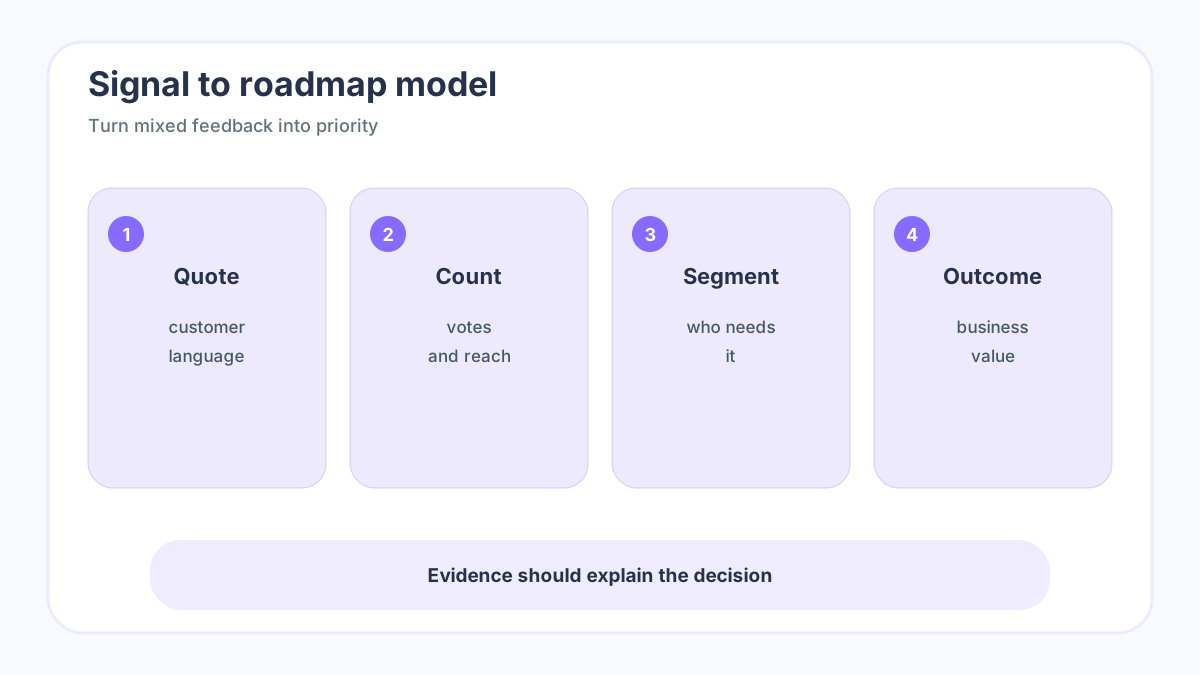
Use four fields on every product request: customer quote, vote count, affected segment, and expected business or user outcome. The quote preserves nuance. The count shows demand. The segment prevents popularity from hiding strategic customers. The outcome keeps the team focused on value rather than feature shape.
FeaturAsk is built for this kind of lightweight collection. Visitors submit ideas, other users vote, and the team reviews demand in a dashboard before moving items to the roadmap. That gives small teams a practical bridge between qualitative comments and quantitative priority without building a custom feedback warehouse.
When you are ready to turn scattered comments into prioritized requests, start with FeaturAsk: one month free, no credit card required, then $29.95/year for a focused request board.
The danger of choosing only one type
Teams that rely only on qualitative feedback can overreact to the loudest story. A frustrated customer with a vivid example may point to a real problem, but the team still needs to know how often the problem appears and which customers are affected. Without scale, a roadmap can drift toward anecdote.
Teams that rely only on quantitative feedback can miss the reason behind the pattern. A dashboard may show that adoption dropped after onboarding step three, but it will not always explain whether the copy is confusing, the setup is too long, or the customer does not understand the value. Without context, a team can optimize the wrong thing.
Good feedback practice is not about declaring one type superior. It is about sequencing. Use qualitative input to understand the problem and generate hypotheses. Use quantitative input to size and prioritize patterns. Then use qualitative input again after release to learn whether the solution actually helped.
Collection methods and when to use them
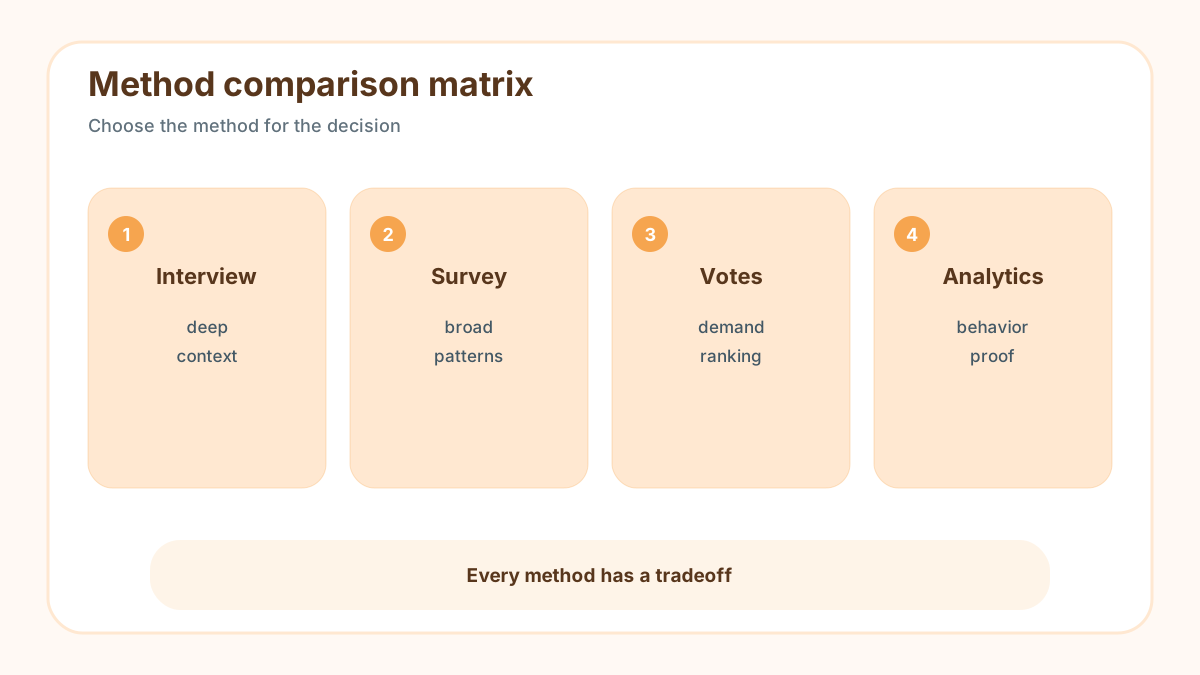
Interviews are best when the team needs depth. They reveal language, emotion, and the customer’s environment. Open-ended surveys are useful when the team needs a broader sample but still wants words. Feedback forms and request boards are valuable because they collect real demand at the moment customers feel it. Reviews and social comments can reveal public perception, but they need careful interpretation because the sample is self-selected.
Quantitative methods answer different questions. Votes show relative demand for visible ideas. Rating scales show direction, but only if the question is clear. Product analytics show behavior, not motivation. Polls can test tradeoffs quickly. Support category counts can reveal recurring pain. The strongest teams combine these signals instead of forcing one tool to answer every question.
A prioritization example
Imagine three requests. One has 200 votes from free users, one has 30 votes from paying teams, and one has 8 detailed comments from enterprise admins describing a painful workflow. A simplistic quantitative model picks the 200-vote request. A purely qualitative model might pick the enterprise workflow because the comments are detailed. A mixed model asks better questions: which request matches strategy, who is affected, what revenue or retention risk exists, how hard is the work, and what evidence is missing?
That mixed model creates better roadmap conversations. The team may ship a small version of the popular request, schedule discovery for the enterprise workflow, and reject the middle request because it does not match the product direction. The decision is not perfect, but it is explainable.
How to keep feedback clean
Define fields before collecting data. For each request, capture the customer’s words, the problem, the affected segment, the number of similar requests, urgency, and the desired outcome. Merge duplicates so vote counts are not split across many versions of the same idea. Tag requests consistently. Review old requests so stale demand does not distort current priority.
Avoid leading questions. “Would you love our new reporting dashboard?” produces weak data. “What decision are you trying to make from reports today?” produces useful qualitative input. “Which of these three report improvements would help most this month?” produces more useful quantitative input. Better questions make both data types more trustworthy.
Qualitative vs quantitative feedback comparison
| Question | Qualitative feedback | Quantitative feedback |
|---|---|---|
| What it answers | Why customers feel, struggle, or ask for something | How many customers show the pattern |
| Common methods | Interviews, comments, open-ended forms, support notes | Votes, surveys, ratings, analytics, counts |
| Strength | Context, language, emotion, edge cases | Scale, comparison, trend tracking, prioritization |
| Weakness | Can overrepresent loud stories | Can hide motivation and nuance |
| Best FeaturAsk use | Understand the request in the customer’s words | Rank visible demand across requests |
Use the table as a decision aid, not a rulebook. A team trying to understand a confusing workflow should start with qualitative comments and interviews. A team choosing between known feature requests should review vote count, segment, and frequency. A team measuring whether a release worked should combine adoption data with follow-up comments.
Feedback-specific implementation checklist
-
Define the decision first. Are you choosing roadmap priority, diagnosing churn, improving onboarding, or validating a release? Different decisions need different signals.
-
Collect both context and scale. Every important request should include the customer’s words, a count or trend, segment information, and the intended outcome.
-
Merge duplicates. Ten similar requests scattered across forms, support tickets, and calls should become one visible theme with supporting evidence.
-
Review bias. Ask whether the sample overrepresents a vocal segment, a recent incident, or a customer tier. Then decide whether more research is needed.
-
Close the loop. When a request ships or gets deferred, explain the decision so customers learn how their input is used.
Why this matters for FeaturAsk users
FeaturAsk gives small teams a practical mixed-method starting point. A visitor can explain the request in words, other users can vote, and the team can review popularity in the dashboard. That does not replace interviews or analytics, but it gives the team a central signal instead of scattered notes across email, chat, and support tools. The result is a feedback loop that is simple enough to maintain and structured enough to guide product decisions.
Feedback-specific FAQ
Which feedback type should come first?
Start with qualitative feedback when the problem is unclear. Start with quantitative feedback when the problem is already known and the team needs to size priority. In most roadmap decisions, use both before committing meaningful engineering time.
Are votes enough to prioritize features?
No. Votes are useful, but they need segment, urgency, effort, and strategic context. A request with fewer votes from the right customer segment can be more important than a popular nice-to-have.
How much feedback is enough?
Enough means the team can explain the decision and the risk. Sometimes that requires five interviews. Sometimes it requires hundreds of votes and usage data. The standard should be decision confidence, not a fixed sample size.
Pros and cons in practical terms
Qualitative feedback is strong because it gives language the team can reuse in product copy, onboarding, support docs, and release notes. It reveals edge cases and emotional context. Its weakness is representativeness: the loudest or most recent story can feel bigger than it is.
Quantitative feedback is strong because it helps compare options and track change over time. It can show whether a problem affects 2% or 40% of active users. Its weakness is interpretation: a metric can show where something happened without explaining the customer’s goal or frustration.
The best teams write decisions with both: “We are prioritizing this because 87 customers voted for it, three target segments mentioned it in interviews, and usage data shows the current workaround is frequent.” That sentence is more persuasive than either a story or a number alone.
Final decision rule
If the team cannot explain why customers need something, collect qualitative feedback. If the team cannot explain how common or important the need is, collect quantitative feedback. If both answers are weak, do not commit the roadmap yet. Better evidence now prevents expensive rework after release.
Document the reason for each important decision. Future teammates should be able to see which comments, votes, segments, and metrics shaped the roadmap choice.
Revisit older feedback before a major release. A request that looked small six months ago may become urgent after a segment grows, a workflow changes, or a new integration makes the problem easier to solve.
For feedback analysis, the durable habit is evidence pairing. Keep customer quotes beside vote counts, segment labels, and usage patterns so roadmap debates include both the human reason and the measurable size of the need.