11 Must-Know User Feedback Strategies for SaaS Companies
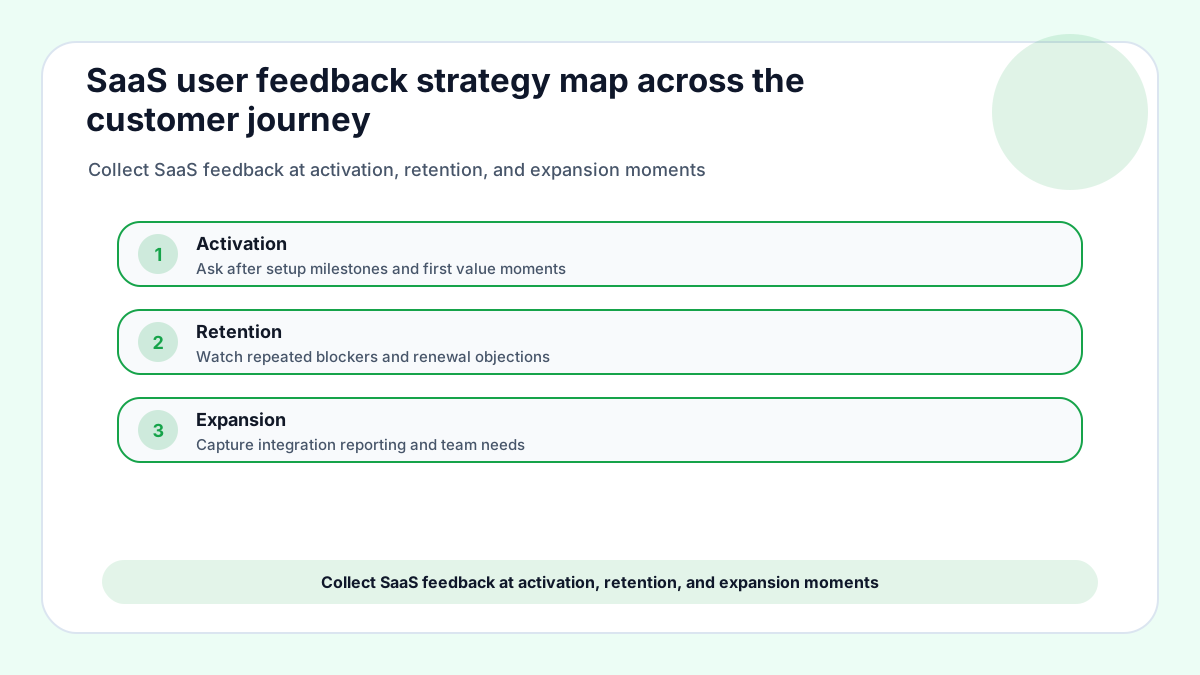
User feedback for SaaS is different from general customer research because the relationship continues after signup. A user may struggle during onboarding, discover a missing workflow after week three, request an integration before expansion, or complain only when renewal is at risk. The strongest strategies organize feedback around lifecycle moments and operating discipline, because each comment means something different before activation, after adoption, near expansion, or during churn risk.
A SaaS company should not chase every comment. The goal is to collect the right signal at the right moment, preserve enough context to interpret it, and decide whether the response is product, support, documentation, pricing, onboarding, or communication. That distinction keeps feedback useful instead of turning it into a loud backlog.
When feature demand is scattered across chat and email, FeaturAsk gives SaaS teams a public request channel, voting, and analytics for $29.95/year; the first month is free and no credit card is required to start.
Pair this strategy list with FeaturAsk posts about customer feedback tools, feature request templates, and roadmap prioritization when you turn feedback into planning inputs. For outside grounding, see Intercom's RICE prioritization guide and Atlassian's user story guidance.
Collect continuously, but ask at meaningful moments
Continuous collection does not mean constant interruption. Ask for feedback after onboarding milestones, failed setup actions, repeated searches, upgrade hesitations, cancellation attempts, or successful feature use. The timing tells the team which part of the journey the comment describes.
Keep passive channels open as well. A feedback widget, public request board, and support form let users speak when the problem is fresh instead of waiting for the next quarterly survey.
Use different prompts for different moments. A new trial user can describe activation confusion; a power user can explain workflow depth; a churning account can identify value gaps.
Prioritize by business impact and customer job
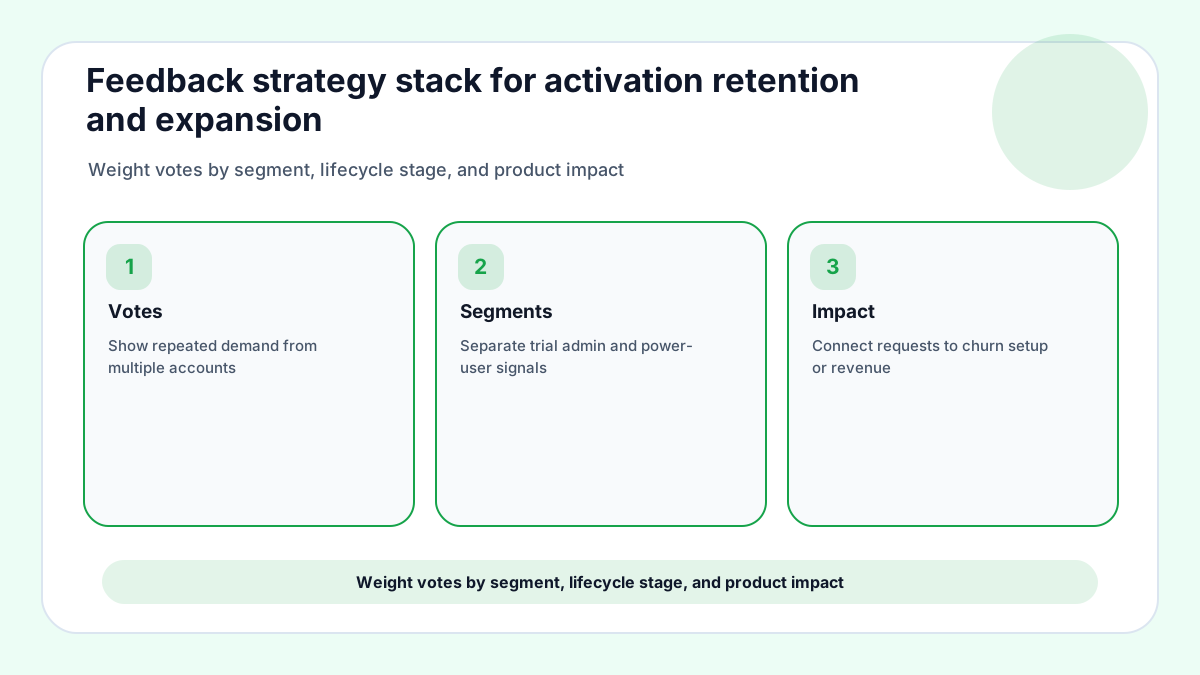
SaaS feedback becomes clearer when each item includes the customer job, plan, lifecycle stage, revenue relevance, and workaround. A request from a high-fit account that cannot finish a core workflow may outrank a popular idea from casual visitors.
Feature voting helps reveal repeated demand, but votes should not be the only input. Combine votes with retention risk, expansion potential, implementation cost, and strategic fit.
Document the reason behind each decision. A declined request can still build trust if customers understand why it does not fit the product direction.
Use incentives carefully
Rewards can increase survey volume, but they can also attract shallow answers. Incentivize thoughtful participation with beta access, public recognition, early previews, or a chance to influence a workflow rather than only gift cards.
For high-value accounts, the better incentive may be closing the loop. Customers give better feedback when they believe the team will listen and explain the outcome.
Never reward only positive sentiment. The most useful SaaS feedback often comes from friction, confusion, and unmet expectations.
A SaaS feedback strategy works better when customers can see a place for ideas, and FeaturAsk provides that visible lane without forcing a small team into a complex suite.
Create a public roadmap without overpromising
A public roadmap should communicate direction, not guarantee every date. Use statuses such as under review, planned, in progress, and shipped with concise context. Avoid turning the roadmap into a contract that every request will be built.
Group related requests under themes so customers see that the team understands the underlying job. Five requests for export formats may point to one reporting workflow problem.
Update old items. A stale roadmap teaches customers that feedback disappears, while small status notes show that someone is still maintaining the conversation.
Segment feedback by lifecycle and account type
Add a small “decision reason” field to each segment view so the team remembers why onboarding comments, expansion requests, and churn warnings received different treatment.
Trial users, new paying accounts, admins, end users, agencies, ecommerce operators, and enterprise buyers may ask for different things. Segmenting feedback prevents one audience from drowning out another.
Lifecycle context is especially important. A feature requested during onboarding may indicate setup confusion; the same request from a mature account may reveal a real scaling limit.
Create separate review views for activation, retention, expansion, and support reduction. That split helps a small team decide which business problem each theme addresses.
Turn feedback into a weekly SaaS ritual
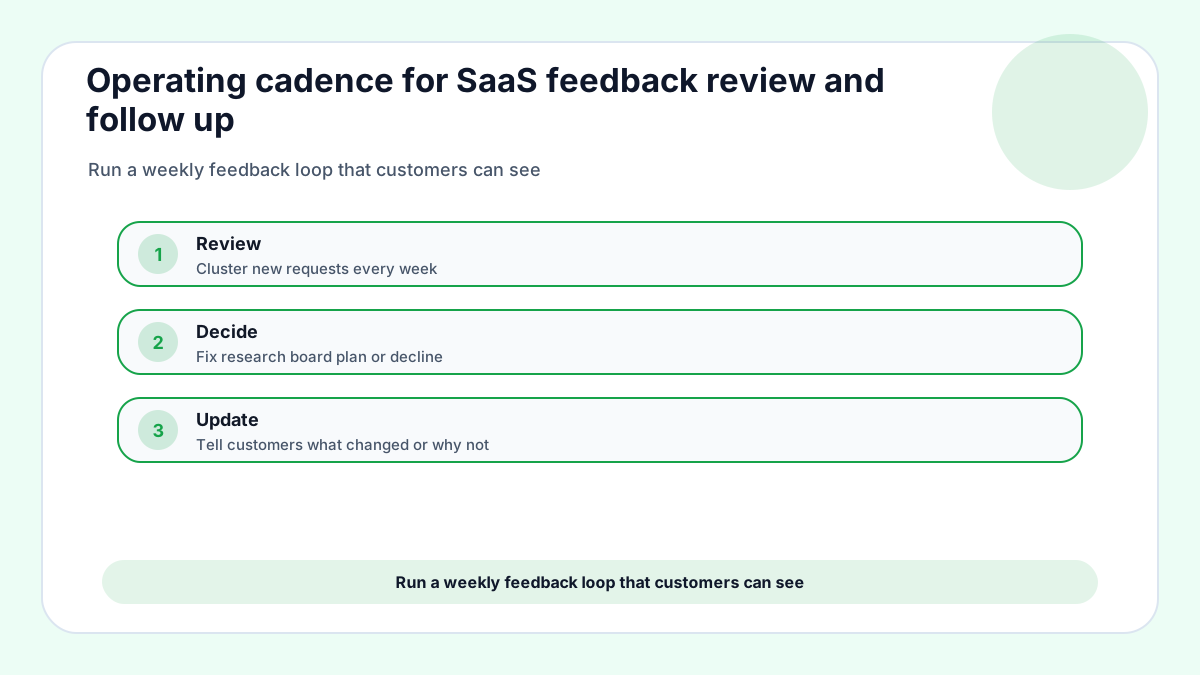
Reserve a short weekly review for new requests, duplicates, urgent problems, and emerging themes. The meeting should end with actions, not a bigger spreadsheet.
Bring prepared clusters rather than raw comments. Each cluster should include customer examples, number of related signals, affected segment, possible response, and owner.
Close the loop in the same week when possible. Even a short note that an idea is being reviewed can keep customers engaged while the team gathers more evidence.
SaaS cadence checkpoint
Pick one lifecycle moment this week and improve only that feedback loop. A narrow experiment around onboarding, expansion, or renewal will teach more than a broad survey that nobody has time to interpret.
For SaaS founders who want a repeatable request loop before hiring product operations, FeaturAsk keeps collection, voting, and status changes lightweight enough to maintain weekly.
11 SaaS feedback strategies with operating details
First, keep an always-available request channel for users who encounter an idea while doing real work. Second, add moment-based prompts after onboarding, export, upgrade, cancellation, and collaboration events. Third, tag each item by lifecycle stage so activation noise does not bury retention risk. Fourth, keep a public status model small enough that customers understand it.
Fifth, use voting to expose repeated demand, but combine it with segment and revenue context. Sixth, interview a few requesters before building a complex feature so the team understands the job behind the suggestion. Seventh, connect support tickets to product themes when tickets repeat. Eighth, review churn notes for language that reveals missing value, unclear positioning, or workflow friction.
Ninth, invite engaged customers into beta conversations when the team already has a strong signal. Tenth, publish release notes or request updates so users know feedback changed something. Eleventh, reserve capacity for small friction fixes. SaaS teams often over-focus on large roadmap items while ignoring tiny blockers that hurt activation every day.
Feedback by SaaS lifecycle moment
During activation, ask what prevented the user from reaching first value. The answer may be a missing template, confusing setup, permissions, or uncertainty about what to do next. During retention, ask which repeated task still feels slow or risky. During expansion, ask what would make the product trustworthy for more teammates, more projects, or a larger budget.
Each lifecycle moment deserves a different review lens. Activation feedback should be judged by setup speed and aha moment clarity. Retention feedback should be judged by repeated workflow value. Expansion feedback should be judged by team adoption, integrations, reporting, permissions, and confidence. Mixing these lenses can make a small request look less important than it is.
Turning SaaS feedback into roadmap confidence
A useful roadmap candidate includes customer wording, affected segment, vote count or frequency, business impact, and a smallest useful version. It also includes a reason not to build yet. That reason might be weak evidence, poor strategic fit, unclear workflow, or a better workaround. Writing the reason forces the team to make a decision rather than letting every request sit in limbo.
Close the loop even when the answer is no. SaaS users can accept a declined request when the explanation is respectful and consistent. Silence is worse because it teaches customers that feedback disappears. A short update can protect trust while preserving roadmap focus.
How to combine feedback channels without chaos
A SaaS company can collect feedback through a widget, request board, support inbox, cancellation survey, sales notes, interviews, and analytics. The trick is not to force every channel into one format. Each channel has a job. The widget captures in-the-moment ideas, the board aggregates demand, support reveals friction, cancellations show value gaps, and analytics exposes behavior that needs explanation.
Create a routing rule for each channel. Bugs go to support or engineering triage. Feature ideas go to the request board when they are repeatable and customer-facing. Pricing confusion goes to positioning or packaging review. Onboarding friction goes to activation work. Requests from strategic accounts get segment context before they influence the roadmap.
The weekly review should not read every raw item aloud. Instead, bring clusters: new high-frequency requests, urgent blockers, churn-related signals, and themes that are ready for a decision. Each cluster should have a recommended action. That keeps the meeting focused on movement rather than collection.
SaaS teams should also protect product direction. Customers are experts in their problems, but not always in the best product shape. A request for a feature may be better solved with a template, integration, workflow change, or clearer default. The team’s job is to translate demand into outcomes, not to copy every proposed solution.
Finally, make feedback visible enough to build trust. A public request status, a short changelog mention, or a direct follow-up can show customers that the company listens. The response does not have to be long. It has to be clear, timely, and honest about what will happen next.
Metrics that show a SaaS feedback strategy is working
Track review latency: how long it takes for a new request to receive a label or merge decision. Track repeat rate: how often the same theme appears after a fix or status update. Track activation impact for onboarding feedback, retention impact for recurring workflow pain, and expansion impact for team or integration requests.
Also track customer response quality. Are users adding context, or only posting one-line wishes? Better prompts, clearer categories, and visible updates usually improve the depth of future feedback. When users see that the team asks good follow-up questions, they learn to describe problems with more useful detail.
Keep the loop small enough to maintain
A SaaS feedback strategy should make the product easier to improve every week. It should show where activation fails, what retention pain repeats, which expansion requests matter, and when customers deserve an update. The best system is not the one with the most channels. It is the one that preserves context, routes signals correctly, and helps the team choose a response. Start narrow, review consistently, and grow the feedback program only after the first loop is trusted.
A final operating rule helps SaaS teams stay consistent: every feedback item should have a destination. Some items become support follow-up, some become product requests, some become onboarding improvements, some become research prompts, and some are declined. The destination matters because customers notice when a company collects feedback but never chooses a response. A clear destination also helps teammates add feedback confidently because they know it will not disappear into an undefined backlog.
A SaaS company should also review feedback that arrives after a feature ships. Post-launch comments reveal whether the change solved the original job or only addressed the surface request. If the same theme returns under a new name, the team should revisit the underlying workflow instead of declaring the release complete.
This week's SaaS feedback drill
Choose one SaaS customer example from the current week, route it to the right destination, state the likely response, and decide who owns the follow-up. If ownership is unclear, fix the feedback cadence before adding another collection channel.
For SaaS teams, the best feedback habit is the one that survives busy weeks. A small reliable loop beats a broad program that disappears whenever support volume rises.
This is especially important for lean SaaS teams where one founder may own product, support, and customer communication at the same time.
That restraint keeps feedback useful instead of exhausting the team.
Small teams should document that owner in the same place customers submit feedback.