Canny vs Productboard: Feature and Pricing Comparison
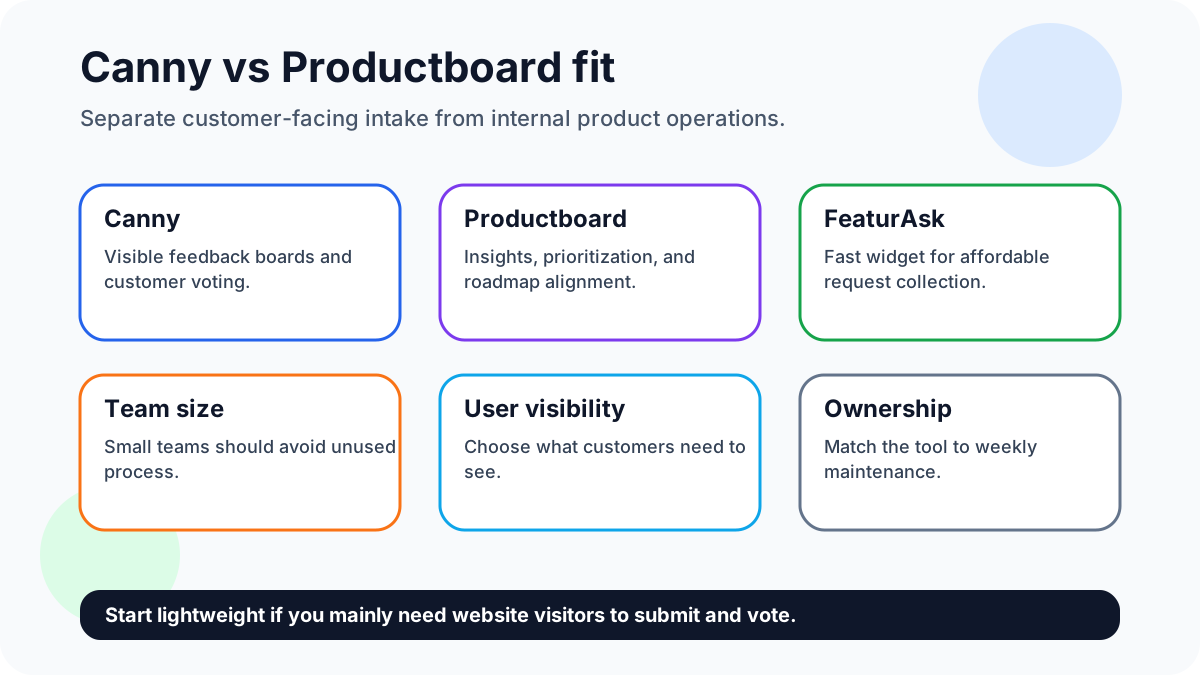
Canny and Productboard are often compared because both help teams understand what customers want. But they are not the same kind of product. Canny is centered on feedback collection, voting, and customer-facing product updates. Productboard is a broader product management and product discovery platform built to help teams centralize insights, prioritize features, and align roadmaps.
The right choice depends on the problem you need to solve. If customers need a place to submit and vote on ideas, Canny may be a closer match. If product managers need to connect feedback to strategy, segmentation, prioritization, and roadmap planning across a larger organization, Productboard may fit better. If you run a small SaaS, ecommerce store, creator site, agency portal, or local service website, both may be more complex than your first feedback loop requires.
Canny’s live pricing page positions the product around avoiding the cost of building the wrong features (<a href="https://canny.io/pricing" rel="nofollow">Canny pricing</a>). Productboard’s pricing page presents plan options and a free trial path for its product management platform (<a href="https://www.productboard.com/pricing/" rel="nofollow">Productboard pricing</a>). Always verify current packaging before buying because product tiers, limits, and trial terms change.
Quick verdict
Choose Canny if you want a customer-facing feedback board with voting, statuses, and a direct path from requests to updates. Choose Productboard if your product team needs a deeper system for insights, prioritization, roadmap planning, and stakeholder alignment. Choose a lighter alternative if you mainly need to ask website visitors what to build next.
For that lightweight path, sign up for FeaturAsk and start a 30-day free trial with no credit card required. FeaturAsk is $29.95/year and focuses on the essentials: a feature request widget, votes, comments, custom branding, moderation, analytics, and a clean dashboard for small teams.
Canny overview
Canny is a feedback management tool for collecting ideas from users, letting users vote, merging duplicates, showing statuses, and communicating progress. It is popular with SaaS companies that want a public or private portal where customers can see what others have requested.
Canny’s strength is clarity. Users understand the board. Product teams can see repeated demand. Customer-facing statuses help close the loop. It is a practical choice when feedback intake and customer communication are the main pain points.
The limitation is that a feedback board is not a complete product strategy by itself. Votes need interpretation. Customer segments matter. Strategic fit matters. The team still needs a way to decide which requests support the product’s direction.
Productboard overview
Productboard is built for product management at a broader level. Teams use it to consolidate customer insights, connect feedback to feature ideas, prioritize work, and share roadmaps. It is stronger when a company has multiple inputs, stakeholders, segments, and product managers who need a shared planning system.
The strength is depth. Productboard can help a team connect feedback to product decisions across a more mature organization. The tradeoff is operational weight. If a small website simply wants to collect suggestions from visitors, Productboard may be more system than necessary.
This is the most important buying question: are you buying a feedback portal, or are you buying a product operations platform?
Feature comparison
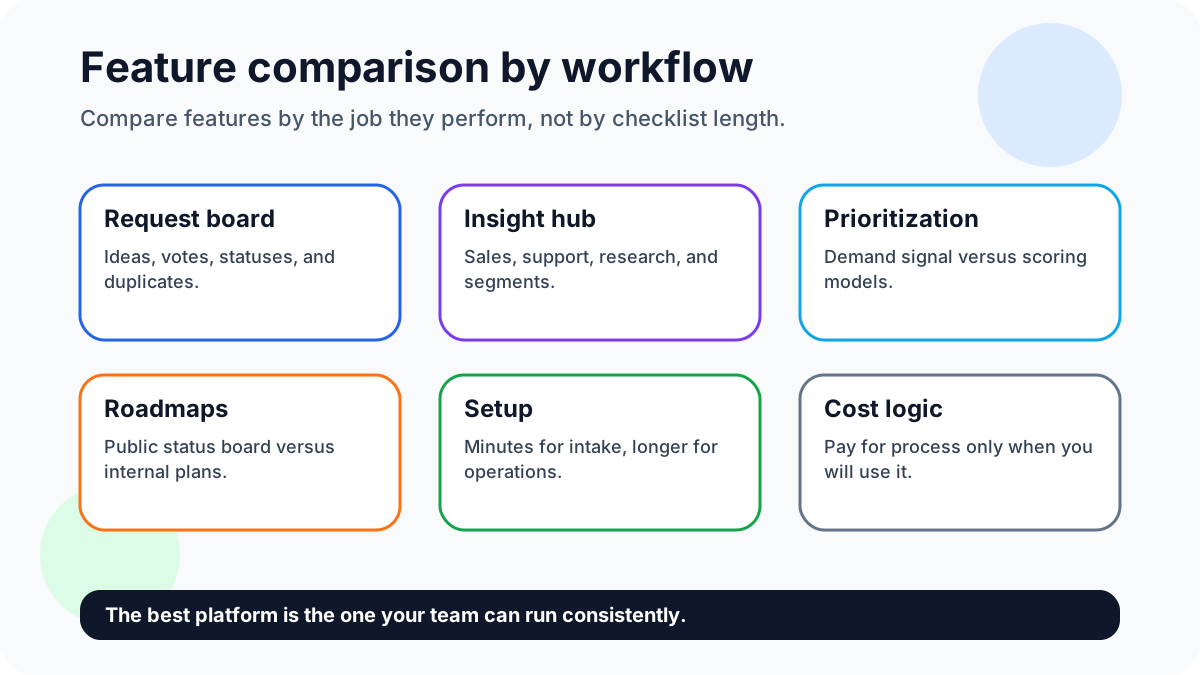
Feedback collection
Canny is more directly associated with customer-facing idea boards. It is easy to understand why a user would submit a request, vote on another request, and follow progress. That makes it useful when transparency is part of the customer experience.
Productboard also centralizes feedback, but the workflow is more product-team oriented. It is useful when insights come from sales, support, research, interviews, calls, and customer segments, then need to influence prioritization.
If your feedback is currently scattered, start by reading FeaturAsk’s guide to feature request tools. The first win is often creating a single intake path before optimizing a complex prioritization model.
Prioritization
Productboard is stronger when prioritization needs multiple dimensions: customer importance, segment, revenue, strategy, effort, and stakeholder alignment. That can be valuable for established teams.
Canny’s voting and feedback data can inform priority, but teams still need judgment. Votes show demand, not final strategy. A small number of high-value customers may matter more than a large number of casual visitors. For a deeper view on using votes carefully, see FeaturAsk’s guide to feature voting.
Roadmaps
Productboard has a stronger roadmap and planning story for product organizations. Canny can communicate statuses and planned items effectively, especially for customer-facing transparency.
For small teams, the simplest roadmap is often enough: under review, planned, shipped, and not planned. Users do not always need a multi-quarter planning artifact. They need a trustworthy signal that the team is listening and making progress.
Setup and maintenance
Canny is usually closer to a focused feedback workflow. Productboard often requires more configuration because it is supporting a broader product management process. Neither is bad; they simply assume different maturity levels.
The hidden cost is not only setup. It is maintenance. Who reviews new feedback? Who tags insights? Who updates statuses? Who explains why a popular request is not planned? Without ownership, both tools can collect dust.
Pricing and small-team fit
Pricing pages tell only part of the story. The bigger question is whether the tool’s operating model matches your stage. A funded SaaS with product managers may need Productboard. A SaaS with strong customer-facing feedback needs may choose Canny. A small website that wants one embeddable request widget may not need either yet.
For bootstrapped teams, every recurring subscription competes with hosting, email, analytics, support, design, and marketing. A simple annual tool can be easier to justify than another monthly product operations platform.
If you want to collect feature requests without committing to a large platform, try FeaturAsk free for one month with no credit card required. It is built for small teams that want user requests, votes, and a dashboard for $29.95/year.
When Canny is the better choice
Canny is the better choice when your main need is a feedback board. Choose it if users should submit ideas directly, vote publicly or privately, and see statuses. It is also a good fit when product updates and request follow-up are central to your customer communication.
Canny may be less ideal if your bigger issue is internal product planning across many teams, portfolios, and stakeholder groups.
When Productboard is the better choice
Productboard is the better choice when you need a product management system, not just feedback intake. Choose it if product managers need to consolidate insights, connect them to features, prioritize with multiple data points, and share roadmaps with stakeholders.
Productboard may be less ideal if your team is early, small, or mainly needs to hear from website visitors. Buying a deep planning platform before you have a feedback habit can slow you down.
When FeaturAsk is the better first step
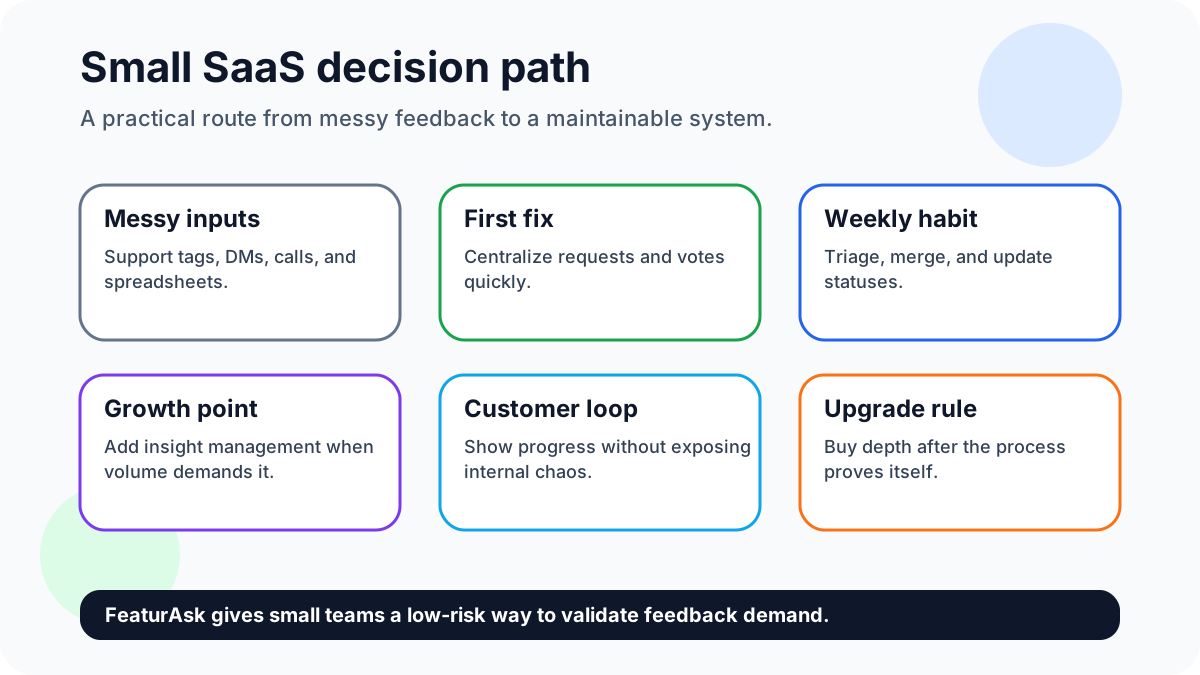
FeaturAsk is a better first step when you want a fast, affordable way to collect ideas from a website. Add the widget, invite users to submit requests, let others vote, and review the dashboard each week. That is enough for many small products to identify repeated demand.
This does not mean you will never need Canny or Productboard. It means you can earn that decision with evidence. Start small, learn what users ask for, and upgrade only when the workflow outgrows a lightweight board.
FeaturAsk’s guide to active vs passive customer feedback can help you design that first loop without overcomplicating it.
Initial recommendation
Canny vs Productboard is not a simple feature checklist. Canny is closer to a customer feedback portal. Productboard is closer to a full product management platform. The best choice is the one your team will actually maintain.
If your current need is a straightforward request board for a small site, sign up for FeaturAsk. The 30-day free trial requires no credit card, and the plan is $29.95/year.
Reviews and customer sentiment
When comparing reviews, separate comments about the product from comments about the buyer’s maturity. Productboard often earns praise when product managers need deeper insight management, prioritization, and roadmap alignment. Canny often earns praise when teams want a clear customer-facing request board. Public review hubs can help you spot recurring themes across product management tools, but read recent reviews directly because categories and packaging change.
Do not over-index on a rating from a company unlike yours. A 200-person SaaS with product managers, customer success, and sales operations has different needs than a solo founder or creator. Read reviews from teams that match your size, feedback volume, and planning habits.
Support and implementation
Canny implementation is often faster when the goal is a public or private board. You still need to configure categories, statuses, moderation, and ownership. Productboard implementation can involve more internal structure: sources, insights, feature hierarchy, prioritization views, roadmap formats, and stakeholder access.
Support quality matters most during setup and process design. Ask vendors how quickly you can launch, how much help is included, and what happens when you need to change your workflow. For small teams, the best support is often a product simple enough that you rarely need support.
FAQ: Canny vs Productboard
Is Productboard better than Canny?
It is better for a different job. Productboard is stronger for product management and insight-to-roadmap workflows. Canny is stronger for straightforward customer feedback boards and visible request tracking.
Can Canny replace Productboard?
Canny can replace Productboard only if your real need is feedback intake and customer-facing statuses. It is not a full product management operating system for teams that need deeper prioritization and roadmap alignment.
What is the best first step for a small team?
Launch a simple request intake, review it weekly, and learn what users repeatedly ask for. If that process outgrows a lightweight board, you will know exactly what deeper platform features are worth paying for.
Decision matrix for small SaaS teams
Ask whether your bottleneck is outside-in or inside-out. Outside-in means customers have ideas, complaints, and votes, but you do not have a clean intake. Canny or a lightweight request board addresses that. Inside-out means your product team has many insights, stakeholders, segments, and roadmap tradeoffs, but lacks a system to connect them. Productboard addresses that.
Next, ask how much process your team can maintain. A tool should match the review habit you can actually run. If nobody will tag insights, maintain views, or update roadmap fields, buying a deeper platform will not create maturity by itself. Start with the smallest workflow that creates trustworthy signal.
Finally, ask what your customers need to see. Some audiences value a public request board because it shows that the product is alive and responsive. Other audiences do not need to see the planning system; they need good support and thoughtful releases. Match transparency to your product promise.
Migration and rollout advice
If you move into Canny, Productboard, or any alternative, do not import every old idea blindly. Clean the backlog first. Merge duplicates, remove requests that no longer fit, and write clear statuses for the items customers are most likely to find. A smaller, well-maintained board is more credible than a giant archive of abandoned suggestions.
Roll out the workflow in stages. Start with internal review, then invite a small customer group, then add the public entry point. This gives the team time to learn how often requests arrive and how much moderation is needed before the board becomes part of the customer experience.
Final buying rule
If the team needs customer-visible request collection, start with the feedback board path. If the team needs internal product planning across many inputs and stakeholders, evaluate the product operations path. If both feel heavy, start with a lightweight widget and upgrade after real usage proves the need.
Pricing and review checks before the demo
Use pricing pages as the starting point, not the whole decision. Canny's pricing page and Productboard's pricing page explain current packaging, but the real cost is the operating habit each tool requires. A feedback board costs less time when one owner can merge duplicates, update statuses, and answer visible requests. A product operations platform costs more time but can pay off when many stakeholders need structured insight, prioritization, and roadmap views.
Review sites should be filtered the same way. Do not average together every comment from every company size. Look for Canny reviews that mention board participation, moderation, and public statuses if your problem is customer-facing intake. Look for Productboard reviews that mention insight management, prioritization, and roadmap alignment if your problem is internal product planning. If the reviews that sound most like your team describe setup burden, start smaller and prove the workflow first.