6 Roadmap Tips for Remote Product Management Success
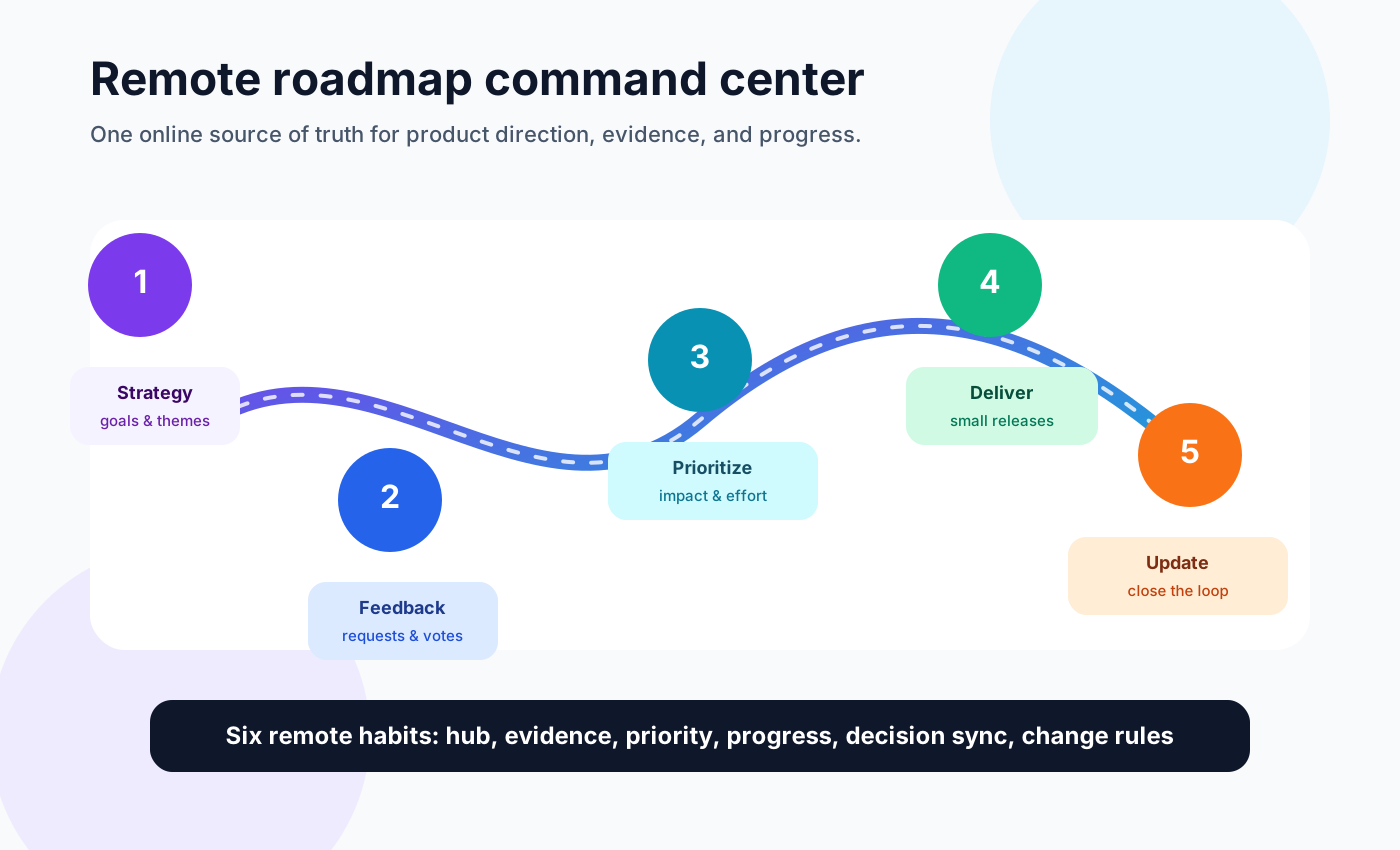
A roadmap is the shared product plan that keeps a remote team moving in the same direction. When designers, developers, founders, marketers, support leads, contractors, and stakeholders are spread across locations and time zones, it becomes the place where strategy, customer feedback, delivery trade-offs, and communication meet.
This guide covers 6 roadmap tips for remote product management success for small SaaS teams, creators, e-commerce operators, agencies, and lean product teams that need clarity without enterprise-level process.
Why remote roadmap decisions need one visible evidence trail
A product roadmap explains where the product is going, why the direction matters, and what the team is likely to tackle next. It does not need to promise exact delivery dates for every feature; in remote product management, it works best as a decision and communication system.
Remote work increases the need for that system because fewer decisions happen through hallway conversations, whiteboards, or quick desk-side clarifications. <a href="https://www.gallup.com/workplace/654911/employee-engagement-sinks-year-low.aspx" rel="nofollow">Gallup's 2025 workplace engagement analysis</a> shows why clarity and manager communication still matter, exactly the problem a maintained roadmap can reduce. <a href="https://buffer.com/state-of-remote-work/2025" rel="nofollow">Buffer's 2025 State of Remote Work</a> also shows that remote workers value flexibility while still dealing with communication, collaboration, and disconnection challenges.
For product teams, those challenges create familiar risks: stakeholders remember different versions of the plan, engineers do not know why one feature outranks another, support cannot explain what is being considered, customer requests pile up, and product managers spend too much time repeating context.
A roadmap reduces those risks by creating one current source of truth. It shows the product vision, near-term priorities, discovery areas, constraints, recent changes, and the rationale for saying yes, no, or not yet.
The best remote roadmaps are not giant Gantt charts. They are simple enough to read quickly, stable enough to guide decisions, and flexible enough to adapt when evidence changes.
If your roadmap depends heavily on incoming requests, connect it to a lightweight feedback process. The workflow in feature voting for small teams explains how votes, comments, and request patterns can support prioritization without turning customers into the only decision makers.
Six remote roadmap habits that keep distributed teams aligned
A successful remote product management roadmap has three qualities: it is easy to access, easy to interpret, and easy to update. The format can be a dedicated roadmap tool, a feedback board with statuses, a product management platform, a well-maintained document, or a simple kanban-style view. The format matters less than the behavior around it.
Start by deciding who the roadmap serves. Internal teams need context, dependencies, owners, and trade-offs. Customers need visibility into themes, progress, and shipped improvements. Executives need goal and commercial alignment. Many small teams use two views: an internal planning roadmap and a simpler public roadmap.
Then define the planning horizon. Remote teams usually do better with now, next, later than with exact dates on every initiative. If dates are required, reserve them for committed launches or externally dependent work.
Finally, create a review rhythm. A roadmap that is never reviewed becomes stale. A roadmap that changes every day becomes meaningless. Weekly triage and monthly roadmap review are enough for many small teams.
Build a roadmap that answers six questions at a glance: what outcomes matter, which problems are under consideration, what is committed, what evidence supports each item, who owns the next decision, and what changed since the last review.
The following 6 tips turn those principles into a practical remote roadmap workflow.
1. Create one roadmap hub everyone can inspect asynchronously
An effective remote roadmap should be available online to the people who need it. That does not always mean every detail is public. It means the current version is not trapped in a file that only one person can edit or understand.
For internal work, keep the roadmap in a shared tool where teammates can see status, read notes, and comment asynchronously. For customer-facing visibility, publish a lighter view with themes, ideas, requests, and statuses such as under review, planned, in progress, shipped, and not planned.
A visible roadmap reduces repeat questions. Teammates can check whether a feature is still in discovery, and customers can see whether a request is under review or shipped. Keep the public version honest: fewer items with accurate statuses beat a long wish list that looks busy but unfocused.
For small teams, the simplest setup is often best: a feedback widget, an admin dashboard, status labels, and a clean public board. FeaturAsk gives lean teams a lightweight way to collect roadmap input, manage requests, and show progress. It costs $29.95/year after a 30-day free trial, with no credit card required.
2. Separate raw ideas from committed roadmap work
Remote roadmap success depends on prioritization clarity. Distributed teams cannot rely on informal signals to understand what matters most, so the roadmap should make priorities and reasoning visible.
Start by separating ideas from commitments. Ideas are requests, opportunities, experiments, or problems worth exploring. Commitments are work the team has accepted into delivery. Mixing the two creates confusion because every suggestion starts to look like a promise.
Then choose a simple prioritization model. You do not need a heavy scoring system. A small team can evaluate each roadmap item against six questions:
- Does this support the current product goal?
- Which user segment or customer type needs it?
- How painful or frequent is the problem?
- What evidence supports the request?
- What is the smallest useful version?
- What is the rough effort and risk?
This is where customer feedback becomes useful. A request with many votes may deserve attention, but a request with fewer votes from high-retention customers may be more strategic. A workflow problem that blocks activation may outrank a flashy feature with weak evidence.
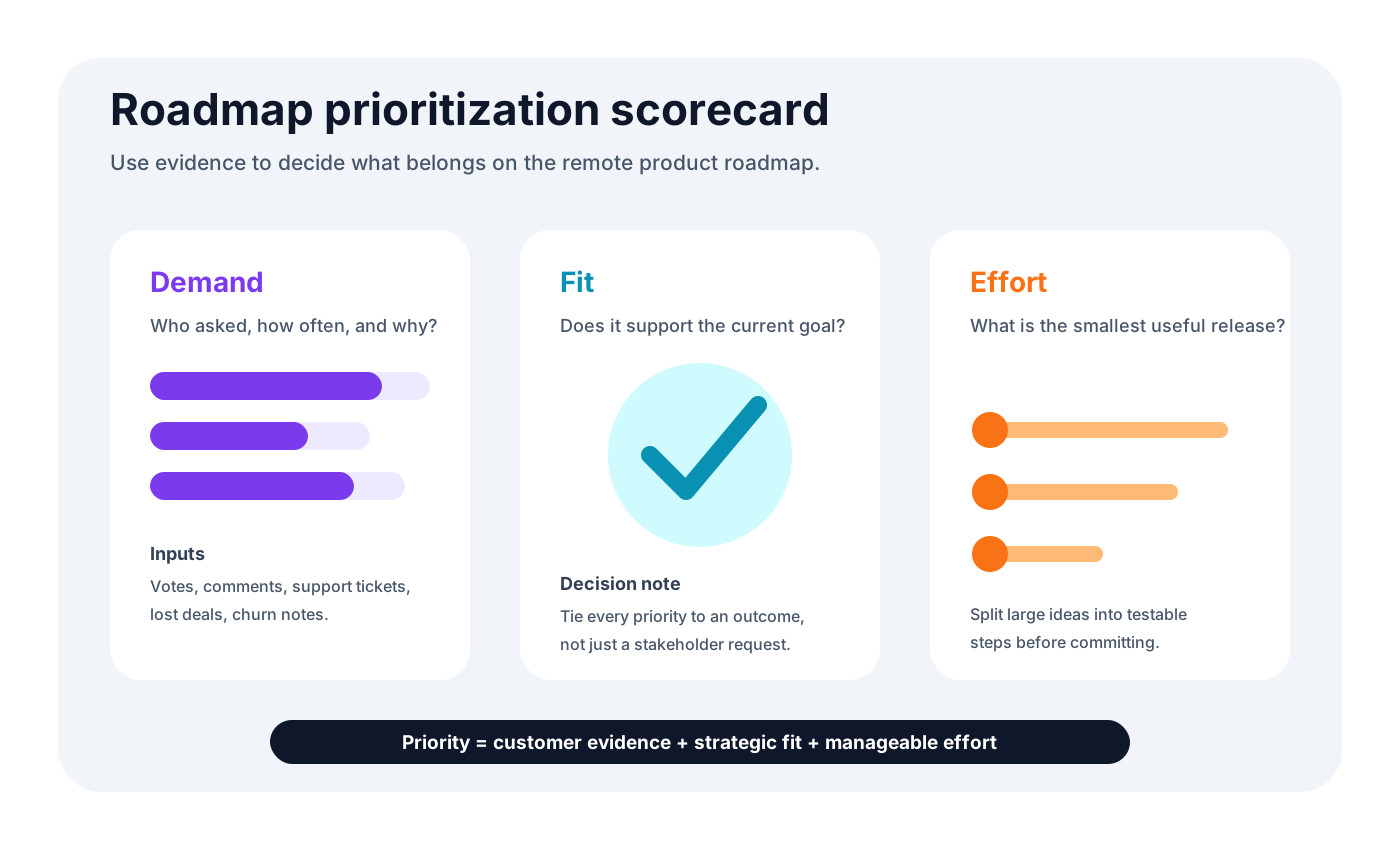
Color coding can help, but do not let colors replace explanation. Use priority labels such as high, medium, and low only if the team agrees on what they mean. A clearer approach is to group work by decision stage: collecting evidence, validating, planned, building, shipped, and not planned.
If you need cleaner inputs before prioritizing, the structure in feature request templates can help you ask for the problem, user context, expected outcome, and urgency instead of collecting vague feature ideas.
3. Show momentum with smaller roadmap updates
Remote product managers often feel pressure to make the roadmap look complete. But a perfect-looking roadmap can be dangerous if it hides uncertainty or discourages learning.
A better goal is visible progress. Show what changed, what moved forward, what was learned, and what decisions were made. Progress keeps a distributed team motivated because people can see momentum even when the final release is not ready.
Progress can mean a vague idea became a validated need, a large feature was broken into a smaller release, a risky dependency was clarified, a prototype was tested, a request was declined with a reason, or a shipped feature was linked back to customer feedback.
This mindset helps small teams avoid the trap of waiting until everything is polished before communicating. Remote teammates need frequent lightweight updates because they may not see daily product activity. Customers also appreciate knowing that feedback is being reviewed, even when the answer is not immediate.
Use a short roadmap changelog at the top of your internal roadmap. Include three bullets: added, changed, and shipped. For public views, a one-sentence status update is often enough.
4. Reserve live meetings for trade-off decisions
Async communication is essential for remote product management, but roadmap alignment still benefits from live conversation. The key is to use meetings for decisions, trade-offs, and shared understanding, not for reading the roadmap aloud.
A useful roadmap meeting starts before the call. Send the roadmap link, highlight the sections that need attention, and ask people to add comments in advance so different time zones can contribute.
During the meeting, keep the agenda focused: review changes, confirm priority fit, discuss blocked items, decide what moves forward or pauses, and assign follow-up owners.
Monthly roadmap meetings are enough for many small teams. Quarterly meetings can work for broader strategy, but they are too slow for active product decisions. Weekly meetings should be reserved for delivery coordination or feedback triage, not full roadmap debates.
Stakeholder meetings need extra structure. Sales, support, marketing, leadership, and customer success often optimize for different outcomes, so ask each group to bring evidence: repeated requests, churn reasons, sales objections, onboarding drop-off points, ticket volume, or revenue impact.
End every roadmap meeting with written decisions. Remote teams suffer when decisions are made live but not captured. Add a short note to the roadmap item itself so people who missed the call can understand the context later.
If a roadmap item is close to release, connect it to a launch process early. A practical product launch communication plan makes it easier to tell customers, prospects, and internal teams what changed and why it matters.
5. Define change rules before priorities shift
A roadmap should guide the team, not trap it. Product plans change as customer needs, competitors, technology, markets, budgets, and internal capacity change.
The solution is to define what can change and how changes are decided. If every stakeholder can rewrite priorities at any time, the roadmap loses trust. If nothing can change until the next annual planning cycle, the product becomes slow and disconnected from reality.
Use change rules: new feedback can enter review anytime, committed work changes only with owner approval, priority changes require a short written reason, public status changes need customer-facing notes, and shipped items should close with a release link.
This structure keeps the roadmap adaptable while protecting focus. It also makes remote work calmer because teammates understand how new requests are handled.
Being open to change does not mean chasing every request. It means listening, comparing evidence, and adjusting when the case is strong enough. For creators, ecommerce stores, and small SaaS companies, change often comes directly from users, so capture signals consistently instead of reacting to whichever message arrived most recently.
6. Connect every roadmap decision to customer evidence
The missing piece in many remote roadmaps is a clear feedback loop. Teams discuss priorities internally, but customer input remains scattered across email, chat, tickets, calls, reviews, and social comments. That makes the roadmap feel subjective because no one can see the full demand pattern.
A lightweight feedback loop gives customers and teammates one place to submit ideas, vote, comment, and check status. It does not need to be complicated. Capture the problem, requester type, duplicate demand, comments that explain urgency, and the current status.
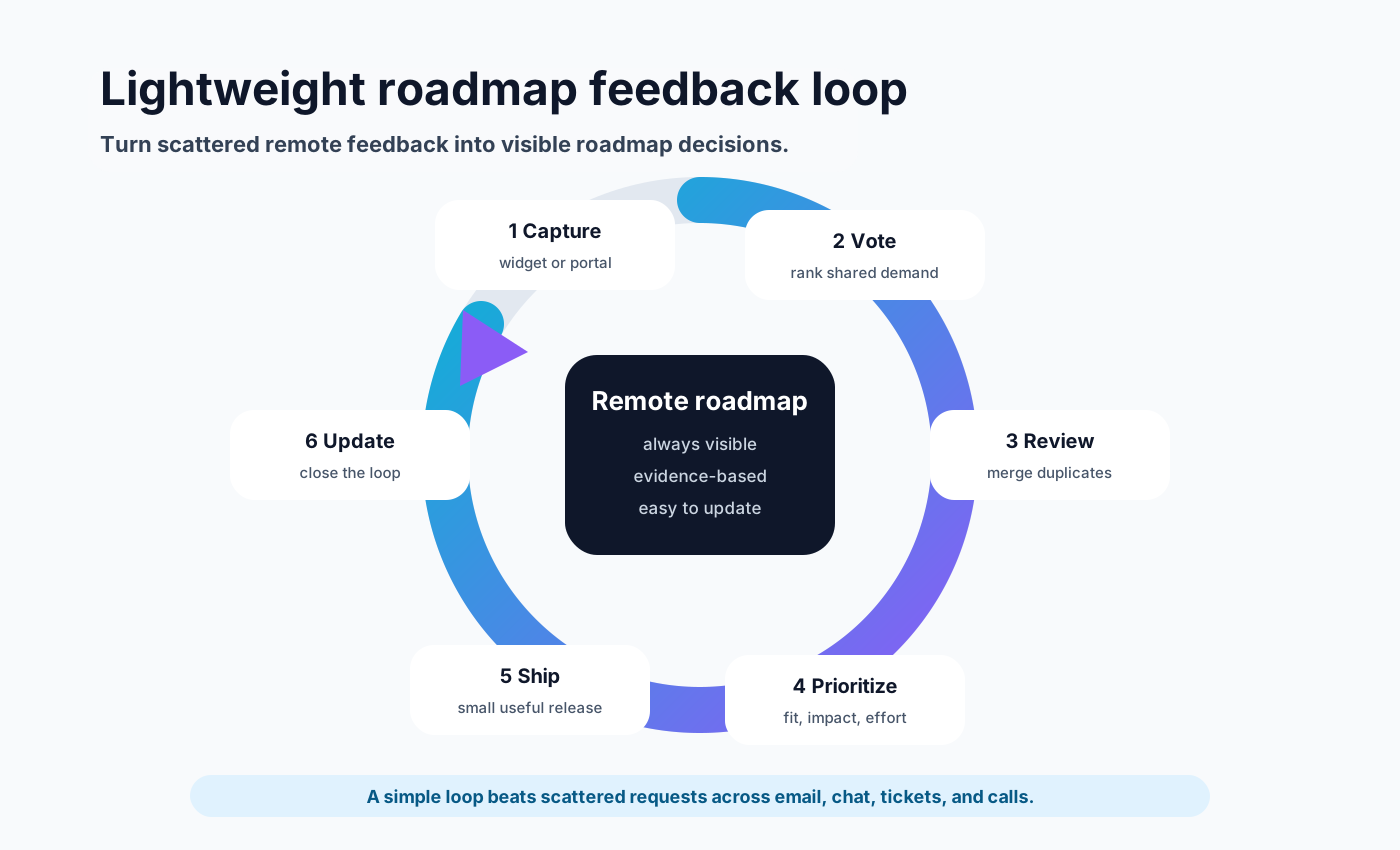
For remote small teams, this improves prioritization because requests are not hidden in private conversations, and it improves trust because customers can see feedback moving through a process.
This is the FeaturAsk angle: collect roadmap input without making product management heavy. A founder, creator, small SaaS team, or e-commerce operator can add a feedback widget, gather requests, manage voting, review ideas in a dashboard, and update statuses. FeaturAsk is built for teams that want simple feedback and roadmap input at $29.95/year, with a one-month free trial and no credit card required.
FAQs
What Makes a Good Roadmap?
A good roadmap communicates product direction clearly. It shows the outcomes the team cares about, the problems being considered, the work likely to happen next, and the progress already made. For remote product management, a good roadmap is also easy to access online, updated on a predictable rhythm, and clear enough for people in different roles and time zones to understand without a long explanation.
The best roadmaps avoid false precision. They separate discovery from delivery, show current priorities, explain decisions, and leave room for learning.
What Is a Product Roadmap?
A product roadmap is a strategic plan that connects product vision to upcoming work. It usually includes goals, themes, initiatives, delivery stages, status labels, and decision notes. A sprint board manages immediate tasks; a roadmap explains direction and priority over a longer horizon.
For remote teams, the roadmap becomes a shared source of truth. It helps people understand why work matters, what is changing, and how customer feedback influences decisions.
How often should a remote product roadmap be updated?
Review the roadmap weekly for new feedback, duplicate requests, stale statuses, and small notes. Run a deeper roadmap review monthly to confirm priorities, trade-offs, and ownership. Use quarterly planning for larger themes and business goals. The exact cadence can vary, but the roadmap should never feel abandoned.
Should a roadmap be public or private?
Many teams benefit from both. The internal roadmap can include detail about effort, risk, revenue, dependencies, and technical constraints. The public roadmap should be simpler and safer: themes, request statuses, planned improvements, and shipped updates. Avoid publishing sensitive strategy or commitments you cannot support.
How can customer feedback improve roadmap decisions?
Customer feedback gives the roadmap evidence. Votes show demand, comments explain pain, and repeated requests reveal patterns. It should not replace strategy, but it should inform it alongside goals, analytics, interviews, support data, and engineering effort.
Final thoughts
Remote product management works best when the roadmap is visible, current, and grounded in evidence. The 6 roadmap tips are simple: keep an online roadmap, prioritize clearly, show progress, run focused live meetings, stay open to change, and build a lightweight customer feedback loop.
You do not need a heavy product operations system to do this well. Small teams need a clear place to capture input, a routine for reviewing it, and an honest way to communicate what is happening next. Start with the smallest process your team can maintain every week, then improve it as feedback volume grows.
Ready to turn scattered requests into a clearer roadmap? FeaturAsk helps small teams collect feedback, prioritize ideas, and close the loop with customers. Try it free for 30 days with no credit card required.