Product Owner vs Product Manager: Key Differences Explained
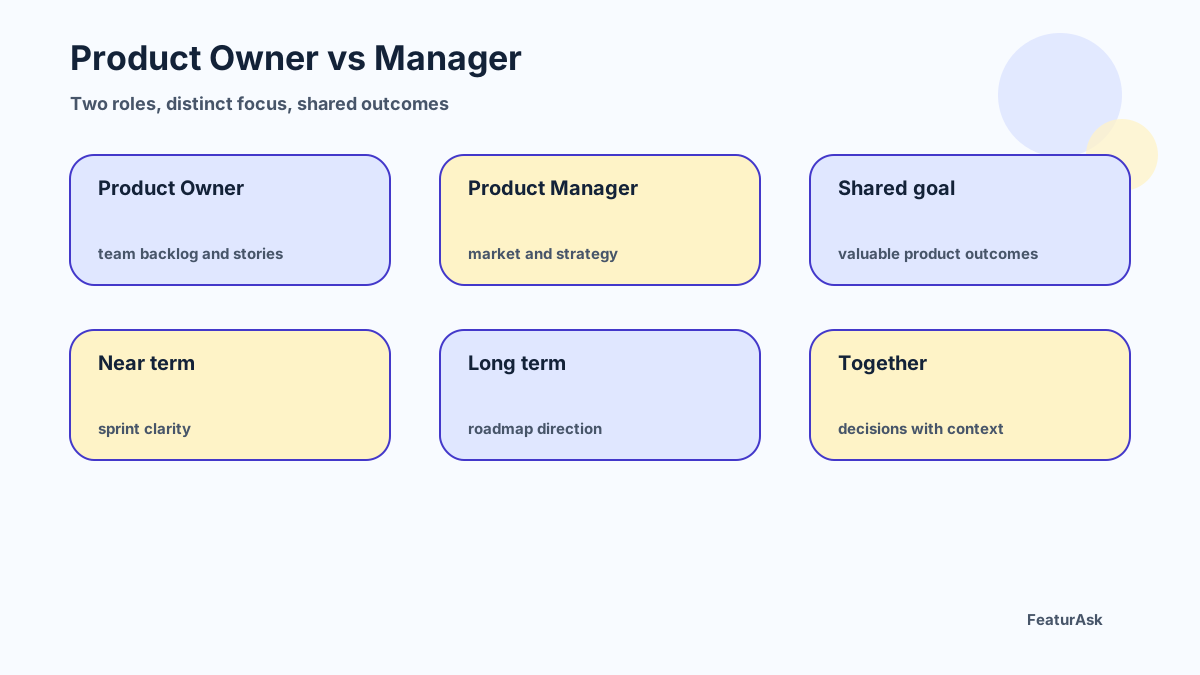
Product owner and product manager are often treated as interchangeable titles. In some companies, they are. In many others, they are distinct roles that work together. The cleanest distinction is this: the product manager usually owns market context, strategy, outcomes, and cross-functional alignment, while the product owner usually owns backlog clarity, sprint readiness, and day-to-day delivery collaboration.
That distinction is not universal. Startups may have one person doing both jobs. Enterprises may split responsibilities across product managers, product owners, program managers, business analysts, and delivery leads. Agile frameworks also influence the language. The role that matters most is not the title; it is the set of decisions someone must own.
If both roles are drowning in customer requests and roadmap confusion, a shared feedback system helps. FeaturAsk offers one month free with no credit card and stays simple at $29.95/year, so product managers and product owners can work from the same customer evidence.
The short definition
A product manager focuses on what problem to solve, for whom, why it matters, and how success will be measured. They spend time with customers, market data, competitors, leadership, sales, support, marketing, and product analytics. Their work turns strategy into a roadmap of valuable outcomes.
A product owner focuses on turning priorities into clear, deliverable backlog items. They work closely with engineering, design, QA, and agile teams to refine stories, clarify acceptance criteria, answer questions, and help the team deliver increments of value.
The overlap is real. Both roles care about customers, priorities, scope, and outcomes. The difference is usually time horizon and operating altitude.
Focus: market versus backlog
The product manager’s focus is external and strategic. They ask: Which customers are we serving? What problems are most valuable? Where is the market moving? What should we build, improve, or stop? How do we position the product? What outcomes matter this quarter?
The product owner’s focus is internal and execution-oriented. They ask: Is the backlog ready? Do stories reflect the intended value? Are acceptance criteria clear? What trade-offs does the team need today? Which dependencies or blockers must be resolved before the sprint can succeed?
Neither focus is superior. Products fail when either is missing. A strong strategy without delivery clarity becomes wishful thinking. A clean backlog without strategy becomes a feature factory.
Scope of responsibility
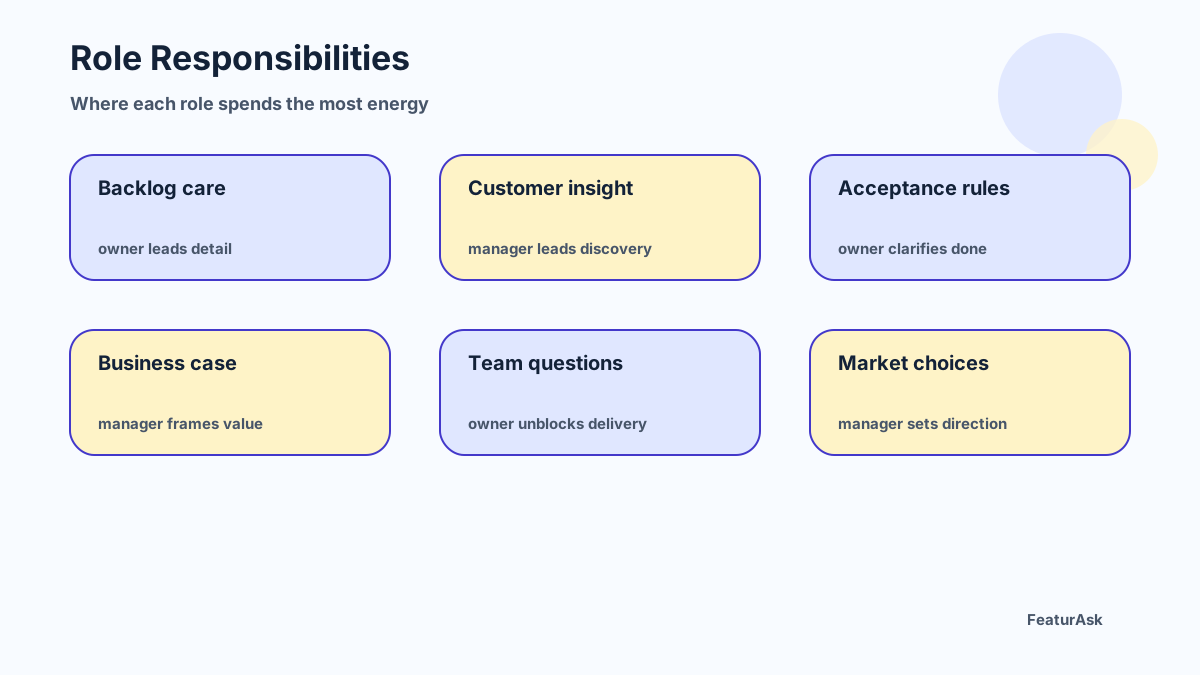
Product managers often own product vision, customer discovery, opportunity assessment, roadmap prioritization, business cases, pricing input, launch alignment, and success metrics. They may influence go-to-market plans and executive communication.
Product owners often own backlog ordering, story refinement, sprint planning support, acceptance criteria, backlog health, and clarification during development. In Scrum contexts, the product owner is accountable for maximizing product value through the product backlog, as described in the Scrum Guide.
In companies with both roles, the product manager may decide that onboarding activation is the top product outcome. The product owner then helps translate that outcome into backlog items: improved signup flow, better empty states, invitation prompts, analytics events, and acceptance criteria.
Skills each role needs
Product managers need customer research, strategic thinking, prioritization, analytics, communication, business judgment, positioning awareness, and stakeholder influence. They must be comfortable with ambiguity and trade-offs.
Product owners need backlog management, agile fluency, user story writing, acceptance criteria, technical collaboration, facilitation, and fast decision-making. They must be available to the delivery team and able to clarify details without losing the broader goal.
Both roles need empathy, evidence-based thinking, and the ability to say no. Both benefit from understanding design, engineering, data, support, sales, and customer success.
Tools product managers and product owners use
Product managers often use feedback platforms, roadmap tools, analytics, research repositories, survey tools, competitive intelligence, and product strategy documents. Product owners often use issue trackers, backlog boards, sprint tools, acceptance criteria templates, test notes, and release checklists.
The best shared tool is a customer evidence hub. If feedback, votes, and roadmap status live in one place, both roles can make better decisions. The product manager sees demand and themes; the product owner sees the context behind backlog items.
This is where FeaturAsk fits naturally. Product managers can collect requests and publish roadmap updates. Product owners can inspect customer comments before refining work. If you want to try that workflow, start with one month free and no credit card. The plan is $29.95/year if it becomes useful.
How they collaborate
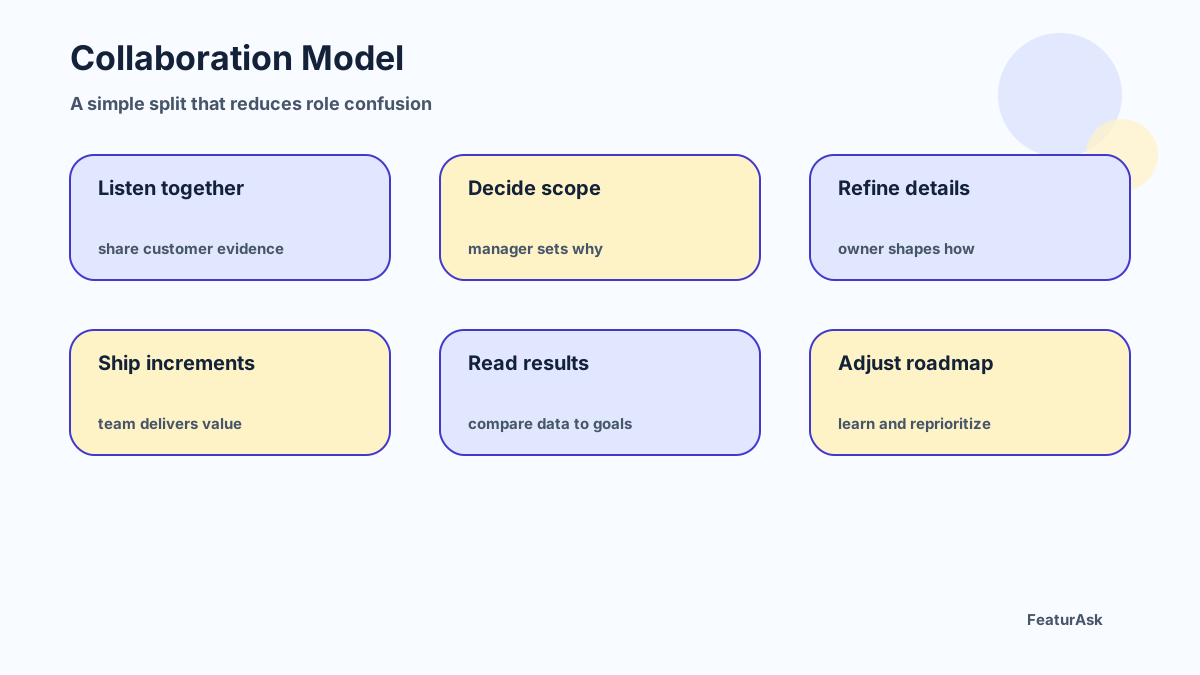
Healthy collaboration starts with a clear contract. The product manager brings strategy, customer evidence, and outcome priorities. The product owner brings delivery realities, backlog clarity, and team feedback. Together, they decide the smallest valuable slices.
A weekly sync works well. Review customer feedback themes, roadmap changes, discovery insights, delivery constraints, and upcoming decisions. Keep a decision log so the team does not relitigate the same trade-offs. Invite engineering or design when technical or experience choices affect scope.
When one person does both roles
In startups and small teams, one person often acts as both product manager and product owner. That can work if expectations are realistic. The risk is constant context switching: market discovery in the morning, backlog questions all afternoon, stakeholder updates at night.
If you hold both roles, protect time for discovery and strategy. Do not let backlog urgency consume every week. Use lightweight artifacts: a roadmap, a product brief, a prioritized feedback board, and clear acceptance criteria. Automate or simplify status communication wherever possible.
When the roles split badly
The split fails when the product manager throws strategy over the wall or the product owner becomes a ticket clerk. It also fails when both roles make conflicting promises to stakeholders. Customers and engineers should not have to guess whose decision wins.
Avoid this with explicit ownership. For example, the product manager owns target customer, problem priority, success metric, and launch narrative. The product owner owns backlog readiness, acceptance criteria, sprint-level trade-offs, and story sequencing. Shared decisions include scope cuts, release readiness, and post-launch learning.
Product owner versus product manager in Scrum
Scrum formally defines the product owner, not the product manager. The product owner is accountable for maximizing value and managing the product backlog. Many organizations add product managers outside or alongside Scrum teams to handle market-facing and strategic responsibilities.
That means a Scrum product owner may perform many product management activities in some companies. In others, the product owner is closer to delivery while the product manager handles discovery and strategy. Always inspect the responsibilities, not only the title.
Which role do you need?
If your team lacks market direction, customer discovery, positioning clarity, and outcome prioritization, you need product management capacity. If your team has a strategy but struggles with backlog readiness, acceptance criteria, sprint planning, and delivery clarification, you need product owner capacity.
If you are hiring, write the job description around decisions and outcomes. Do not copy a generic title. State whether the role owns discovery, strategy, backlog, sprint ceremonies, launch, analytics, or stakeholder management.
Career path differences
Product owners often grow into senior product owner, product manager, delivery-focused product leader, or agile product roles. Product managers may grow into senior PM, group PM, director of product, product marketing-adjacent roles, or founder roles. Movement between the paths is common.
A product owner who wants to become a product manager should build skills in customer discovery, market analysis, strategy, metrics, and stakeholder influence. A product manager who wants stronger execution credibility should learn backlog refinement, agile delivery, and technical collaboration.
RACI-style ownership example
A simple ownership map can prevent confusion. Product vision is usually accountable to the product manager, with input from leadership, customers, sales, support, design, and engineering. Backlog ordering may be accountable to the product owner, guided by product strategy and delivery constraints. Customer discovery is often led by the product manager, while the product owner participates when upcoming delivery decisions need context.
Acceptance criteria are usually accountable to the product owner, with engineering and QA heavily involved. Launch positioning is usually accountable to product marketing or the product manager, while the product owner contributes delivery details. Success metrics should be shared: the product manager defines the outcome, and the product owner ensures the team instruments and understands the work needed to measure it.
This map does not need to be formal bureaucracy. A short table in a team handbook is enough. The goal is to avoid duplicated promises and abandoned decisions.
Interview questions for each role
When hiring a product manager, ask about customer discovery, prioritization trade-offs, market context, roadmap communication, and post-launch learning. Strong candidates can explain how they changed their mind based on evidence. They can also describe a time they said no and preserved trust.
When hiring a product owner, ask about backlog refinement, acceptance criteria, sprint planning, technical collaboration, and handling ambiguity during delivery. Strong candidates can turn a messy opportunity into clear slices of work without losing the customer problem. They can also explain how they protect the team from churn while still responding to new information.
For either role, avoid candidates who speak only in frameworks. Frameworks are useful, but product work is situational. Look for examples, decisions, trade-offs, and lessons learned.
Red flags in role design
A product manager role is poorly designed if it has accountability for outcomes but no access to customers, data, roadmap decisions, or leadership trade-offs. A product owner role is poorly designed if it is accountable for delivery clarity but has no authority to order the backlog or clarify scope.
Another red flag is using the product owner as a buffer that prevents engineers from understanding customer context. Engineers make better technical decisions when they know why the work matters. Likewise, product managers make better strategic decisions when they understand delivery constraints. The roles should connect perspectives, not isolate them.
If conflict persists, inspect the operating model. Are there too many roadmap inputs? Are stakeholders bypassing the agreed process? Are sprint commitments being made before discovery is complete? Are customer requests visible to both roles? Fixing those systems often matters more than rewriting titles.
How the roles work during a launch
During launch planning, the product manager usually confirms the audience, value proposition, success metric, customer communication, and go-to-market alignment. The product owner confirms delivery readiness, backlog completion, acceptance criteria, release notes, known limitations, and support handoff details. Both roles should review the launch checklist together.
After launch, the product manager studies adoption, customer feedback, revenue or retention signals, and market response. The product owner reviews defects, usability issues, follow-up backlog items, and delivery lessons. Together, they decide whether to iterate, expand, document, or move on. This shared review prevents the team from treating launch as the finish line.
How to reduce conflict between the roles
Conflict usually comes from unclear authority, hidden information, or different time horizons. The product manager may push for a strategic change while the product owner protects sprint focus. The product owner may cut scope for delivery reasons while the product manager worries about customer value. Both concerns can be valid.
Reduce conflict by making trade-offs explicit. Use customer evidence, delivery constraints, and success metrics in the same conversation. If a decision affects the roadmap promise, the product manager should be involved. If a decision affects sprint feasibility or acceptance, the product owner should be involved. Escalate only when the shared decision rules are insufficient.
Useful references
Helpful external references include the Scrum Guide product owner definition, Atlassian on Scrum roles, ProductPlan's product owner glossary, and ProductPlan's product manager glossary. For deeper follow-up, pair this guide with FeaturAsk resources on feedback board software, customer feedback tools, and feature request software.
Product owner versus product manager is not a turf war. It is a design question for how product decisions flow through your organization. Clarify ownership, share customer evidence, and keep both roles pointed at outcomes. If a shared feedback and roadmap hub would help, try FeaturAsk free for one month with no credit card and keep it for $29.95/year when it proves its value.