How Customer Feedback Drives Content Strategies for Business Growth
Customer feedback gives content teams something better than guesses: the exact questions, objections, use cases, and words buyers already use. This guide shows how to turn those signals into content that supports acquisition, onboarding, retention, and product growth without drifting into generic keyword filler.
Quick answer: feedback turns content into a growth system
Customer feedback drives content strategy by revealing the questions, objections, desired outcomes, and language your audience already uses. Instead of guessing which topics will attract and convert customers, you can build content around real problems users mention in support tickets, reviews, sales calls, surveys, community posts, and product feedback.
For business growth, the advantage is practical. Feedback helps you choose better topics, write clearer landing pages, create more useful product education, reduce churn with proactive help content, and identify stories that make prospects trust you faster.
FeaturAsk resources on growth teams and customer feedback, gathering customer feedback, and feedback on a website can help you turn raw comments into a repeatable listening system.
If you want a lighter way to turn scattered ideas into a useful feedback loop, try FeaturAsk for 1 month free — no credit card required. After the trial, it is only $29.95/year, which makes it practical for small SaaS teams, indie products, content sites, and creators who need a simple feedback widget without enterprise pricing.
Build a signal-to-asset map first
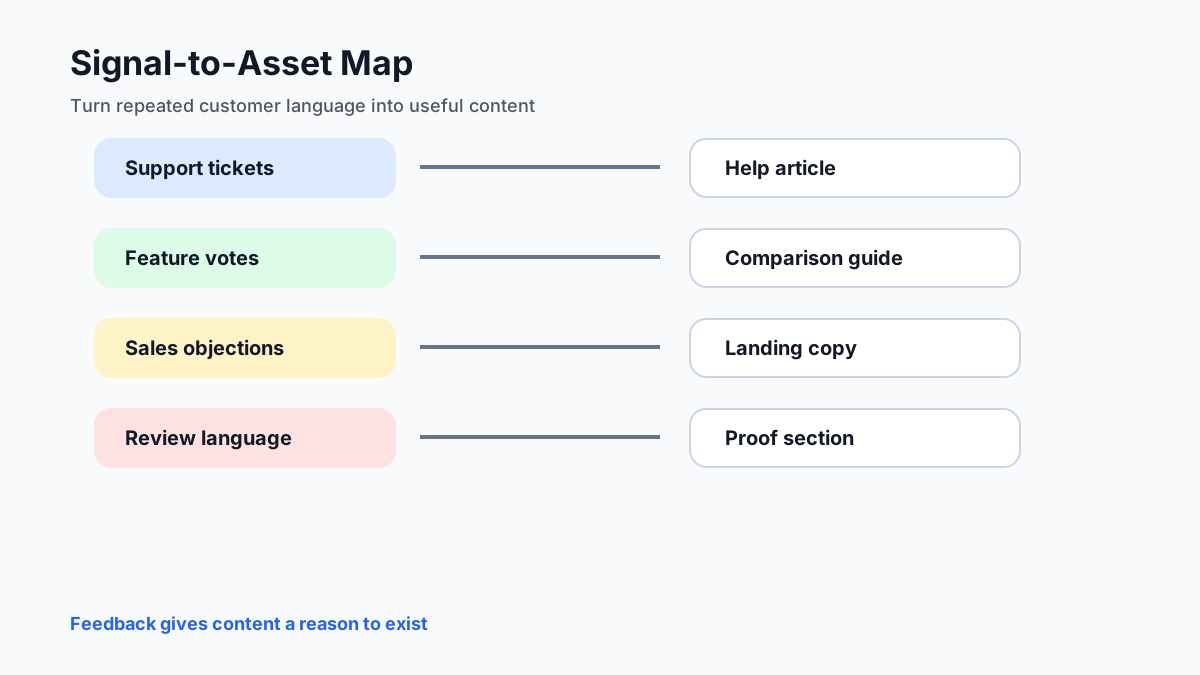
Instead of starting with broad content themes, build a signal-to-asset map. Put each repeated customer signal in one column and the best response in the next: help article, comparison page, onboarding email, product tutorial, case study, sales enablement note, or roadmap explanation. This makes the structure different from a generic “feedback helps growth” essay because every content asset begins with a named customer moment.
The role of customer feedback in business growth
Growth depends on understanding why people choose, use, recommend, or leave your product. Analytics show what happened. Customer feedback explains why it happened. Content strategy needs both because the best content answers real motivations, not only search volume.
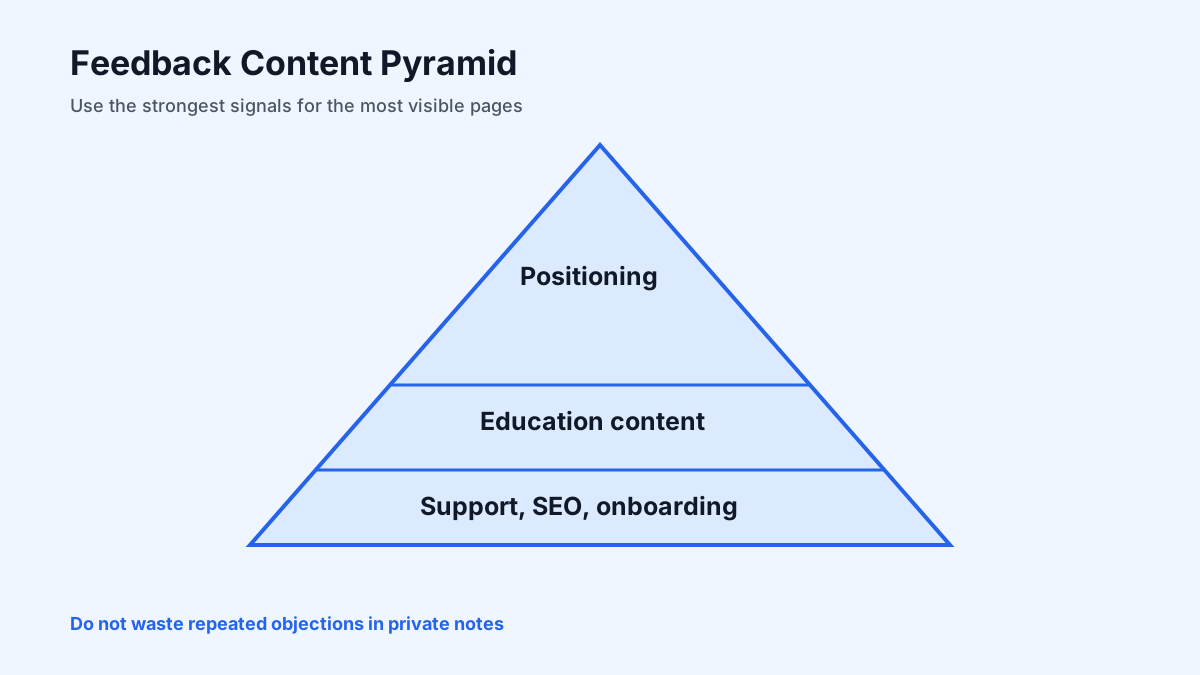
Feedback also reveals mismatches. If users repeatedly ask the same onboarding question, the product may need clearer UX, but the content team can also create tutorials, checklists, and help articles that remove friction immediately. If prospects mention the same objection in sales calls, your comparison pages and case studies should address it directly.
Feedback improves positioning. The words customers use often beat the words teams invent internally. A creator might not say “ideation management”; they might say “a simple way for my members to suggest improvements.” That phrasing belongs in content.
Feedback as guidance for content strategy
Use feedback to map the buyer and user journey. Early-stage prospects ask broad questions, such as which tool to choose or how to solve a workflow problem. New users ask setup questions. Active users ask for advanced use cases. At-risk users reveal missing expectations. Each stage deserves different content.
Turn repeated requests into topic clusters. If customers ask about roadmaps, voting, changelogs, and prioritization, create a cluster around closing the feedback loop. If they ask about integrations, create practical integration guides and decision pages.
Feedback also helps you decide format. A confusing workflow may need a short video. A recurring objection may need a comparison article. A strategic concept may need a long-form guide. A tiny repeated question may need a concise FAQ entry.
FeaturAsk is built for teams that want feedback collection to stay simple: add a widget, let users submit ideas, collect votes and comments, and review requests from one dashboard. You can start with 1 month free on FeaturAsk, no credit card needed, then keep it for $29.95/year if it fits your workflow.
Implementing effective feedback collection mechanisms
Collect feedback where people already communicate: your website, app, support inbox, sales calls, onboarding emails, cancellation forms, reviews, social channels, and communities. Do not force every signal into one form, but do centralize useful themes so content planning is not based on memory.
Use a feedback widget for ongoing ideas, a short survey for targeted questions, interviews for depth, and analytics for behavior. Each method has a different strength. The widget catches continuous friction, surveys quantify themes, interviews explain motivations, and analytics shows scale.
Tag content-relevant comments with categories such as objection, use case, comparison, tutorial need, missing feature, confusion, proof request, and customer story. These tags make content planning faster and help product and marketing share the same evidence.
Analyzing feedback for content optimization
Look for exact language. If customers describe your product as “easy to add to my site,” use that phrase instead of a more abstract claim. If they complain that a competitor is “too much setup,” your content can emphasize time to value and simplicity.
Compare feedback with search intent. Keyword tools may show a topic has volume, but feedback tells you what angle will be useful. A generic article about customer feedback is less valuable than a guide that answers the specific concern your audience repeats: “How do I collect feedback without bothering users?”
Use content performance to refine the loop. If a feedback-inspired article ranks, converts, or reduces support tickets, capture that result. If it fails, review whether the topic, format, or distribution matched the original customer need.
Building a feedback-driven content culture
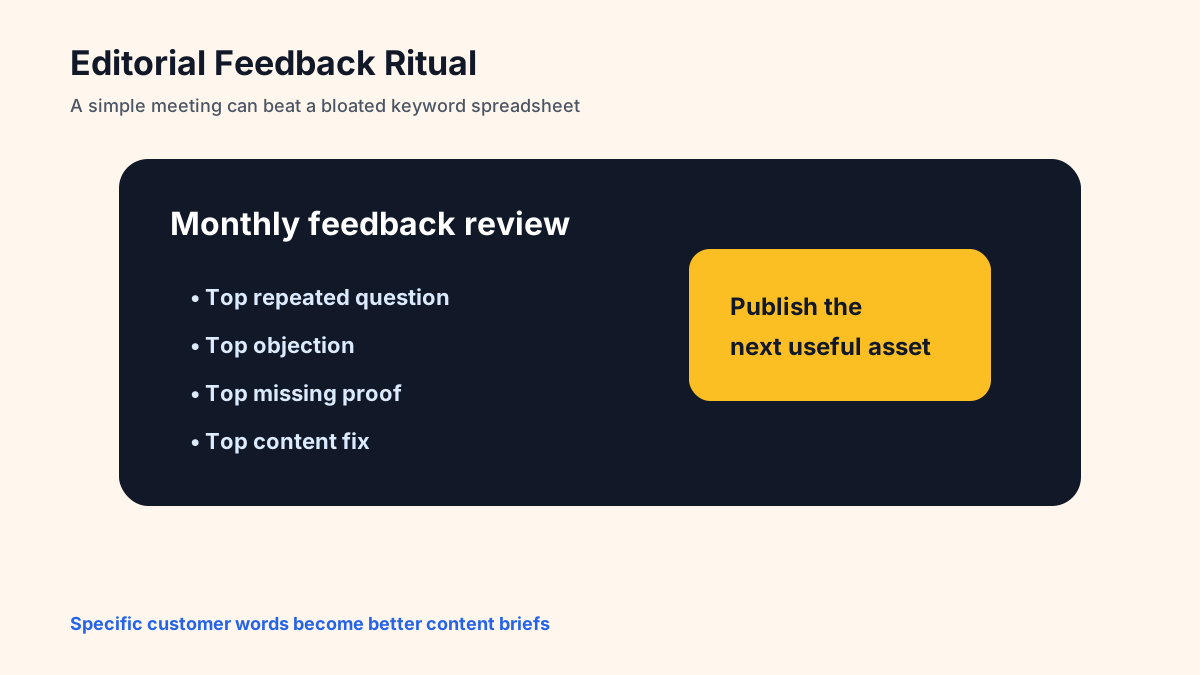
Make feedback review a shared ritual. Product, support, sales, success, and marketing should regularly compare what they are hearing. A thirty-minute monthly review can produce better topics than a long isolated keyword spreadsheet.
Reward specificity. “Users want better onboarding” is too vague. “New users do not understand how to invite teammates during setup” is a content opportunity, a product opportunity, and a support opportunity.
Keep the loop ethical. Do not exploit private customer comments without permission. Anonymize sensitive details, ask before using testimonials, and avoid publishing content that reveals a customer’s internal operations.
Examples of feedback-driven content
Support tickets about setup can become a getting-started checklist, onboarding email sequence, and tutorial video. Sales objections about price can become a transparent pricing explainer and ROI page. Feature requests about integrations can become comparison posts, integration guides, and roadmap updates.
Review comments can become trust content. If happy users repeatedly praise speed, simplicity, or support, those themes deserve proof through examples. If negative reviews mention missing documentation, content can address the gap while product improves the underlying experience.
External research supports this customer-centric approach, but use dated claims carefully. For this repair, <a href="https://www.thinkwithgoogle.com/consumer-insights/consumer-trends/customer-experience-statistics/" rel="nofollow">Think with Google on customer expectations</a>, <a href="https://www.hubspot.com/customer-feedback" rel="nofollow">HubSpot's customer feedback resources</a>, and <a href="https://www.nngroup.com/articles/customer-journey-mapping/" rel="nofollow">Nielsen Norman Group on journey mapping</a> were rechecked on May 22, 2026. The durable point is not a single percentage; it is that customer language should shape journey content, proof content, and help content.
From feedback to business outcomes
Tie content ideas to measurable outcomes: activation, demo requests, trial conversion, feature adoption, retention, expansion, support deflection, and brand trust. Feedback is the source, but business impact is the test.
When a feedback theme becomes content, tell the team what changed. “We created this guide because 18 users asked about roadmap transparency” is more motivating than another generic content brief. It also shows customers that their input shapes more than the product backlog.
Over time, the strongest content strategy becomes a listening strategy. The more clearly you hear customers, the easier it is to publish work that helps them move forward.
A repeatable workflow for content teams
Start each planning cycle by reviewing the top feedback themes from the previous month. Pull examples from support, reviews, sales notes, product requests, and website feedback. Group them by customer journey stage: awareness, evaluation, activation, adoption, retention, and advocacy.
For each theme, decide whether the best response is product work, content work, or both. A confusing setup step may need better interface copy and a tutorial. A repeated competitor comparison may need a landing page and sales enablement notes. A missing feature request may need a roadmap explanation and an alternative workflow guide.
Write briefs with evidence. Include sample customer language, the business goal, the audience segment, the distribution plan, and the metric that will define success. This keeps content grounded in customer reality instead of generic topic production.
Metrics for feedback-led content
Measure more than pageviews. Track trial starts, demo requests, activation of the feature explained in the article, support ticket reduction, newsletter replies, assisted conversions, and sales team usage. Feedback-led content should solve business problems, not only attract traffic.
Review whether the content changed behavior. If users continue asking the same question, the article may be hard to find, unclear, or solving the wrong problem. If support tickets drop, the content is working even if search volume is modest.
Share wins with the teams that supplied feedback. When support sees that a repeated ticket became a high-performing guide, they are more likely to tag future insights. When product sees that content reduced confusion, collaboration improves.
30-day plan for feedback-led content
In week one, collect raw comments from support, sales, reviews, product feedback, and website forms. Do not judge the ideas yet; the goal is to hear the audience in their own language and notice repeated phrases.
In week two, tag comments by intent: confusion, objection, comparison, tutorial request, proof request, feature gap, and success story. In week three, turn the top themes into briefs with a target audience, business goal, sample quotes, and distribution plan.
In week four, publish one high-confidence piece and one fast support asset. Measure whether the content changes behavior: fewer repeated tickets, more trials, better onboarding completion, or more qualified conversations.
How to prioritize feedback-inspired content ideas
Not every customer comment should become content. Prioritize ideas that appear repeatedly, affect revenue or retention, block activation, support a product launch, or answer a question your sales and support teams handle every week. A single unusual request may still be useful, but repeated friction usually deserves attention first.
Score content ideas by customer pain, audience size, business value, effort, and confidence. Customer pain tells you how urgent the issue feels. Audience size shows how many people likely share the question. Business value connects the topic to trials, upgrades, retention, or support deflection. Effort keeps the plan realistic. Confidence tells you whether the idea is backed by enough evidence.
Pair search research with feedback instead of choosing one. Search data helps people find the content; feedback helps the content say something useful. If a keyword has volume but your customers describe the problem differently, include both the searchable term and the customer’s natural language. That combination improves discoverability and trust.
After publishing, return to the original feedback source. Share the article with support, sales, success, or the customers who raised the question. Ask whether it answers the issue clearly. This closes the internal loop and turns content into a living part of the customer experience rather than a one-time marketing asset.
End the content cycle by returning to the people closest to the signal. Ask support whether the new guide reduced repeated tickets. Ask sales whether the comparison page handled the objection more clearly. Ask product whether the article set accurate expectations. Ask customers whether the answer solved the problem that triggered the request.
That review makes feedback-led content different from ordinary topic production. The goal is not simply to publish more; it is to make the next customer conversation easier, clearer, and more trustworthy than the last one.
A useful test is to ask whether a proposed article can name the customer signal that inspired it. If the answer is only “keyword volume,” the angle is probably weak. If the answer includes a repeated objection, support question, onboarding friction, or feature request, the content has a better chance of being specific enough to rank, convert, and help existing users.
When you are ready to collect clearer customer signals, launch a FeaturAsk board and test it for a full month free with no credit card. It gives small teams an affordable path to idea capture, voting, moderation, and status updates for $29.95/year after the trial.