ProductPlan vs ProductBoard Comparison: Which is Best for Your Team?
Compare ProductPlan and ProductBoard by roadmap depth, feedback workflows, pricing fit, setup effort, and alternatives for small teams that need request voting first.
This guide uses current public references such as Atlassian product roadmap guidance, ProductPlan roadmap guide and vendor pricing pages where relevant. Validate vendor packaging before you buy because pricing and limits can change.
Quick verdict
ProductPlan and ProductBoard solve overlapping but different problems. ProductPlan is strongest when the team needs roadmap communication, executive alignment, portfolio views, and presentation-ready planning. ProductBoard is broader for product discovery, feedback centralization, prioritization, and connecting insights to roadmap decisions.
Neither is automatically best for a small team that only needs a public way to gather requests and votes. If your main problem is “we do not know what users want next,” a lightweight request board may be a better first step than a full product management platform.
ProductPlan overview
ProductPlan focuses on building and sharing product roadmaps. It is designed for teams that need visual planning, timeline views, portfolio communication, and stakeholder alignment. It can be valuable when roadmap clarity is the bottleneck and the team already has a mature input process.
The risk is buying roadmap polish before fixing feedback intake. A beautiful roadmap still fails if the items inside it come from scattered Slack threads and one-off sales requests.
ProductBoard overview
ProductBoard is built around product discovery and prioritization as well as roadmapping. Teams can collect feedback, organize insights, connect them to feature ideas, and evaluate priorities. It fits organizations where product ops, customer-facing teams, and product managers need a shared evidence system.
That breadth can be powerful, but it also means setup, process design, and cost deserve scrutiny. Small teams should be honest about whether they will use the advanced workflow or only need a simpler request channel.
Feature comparison
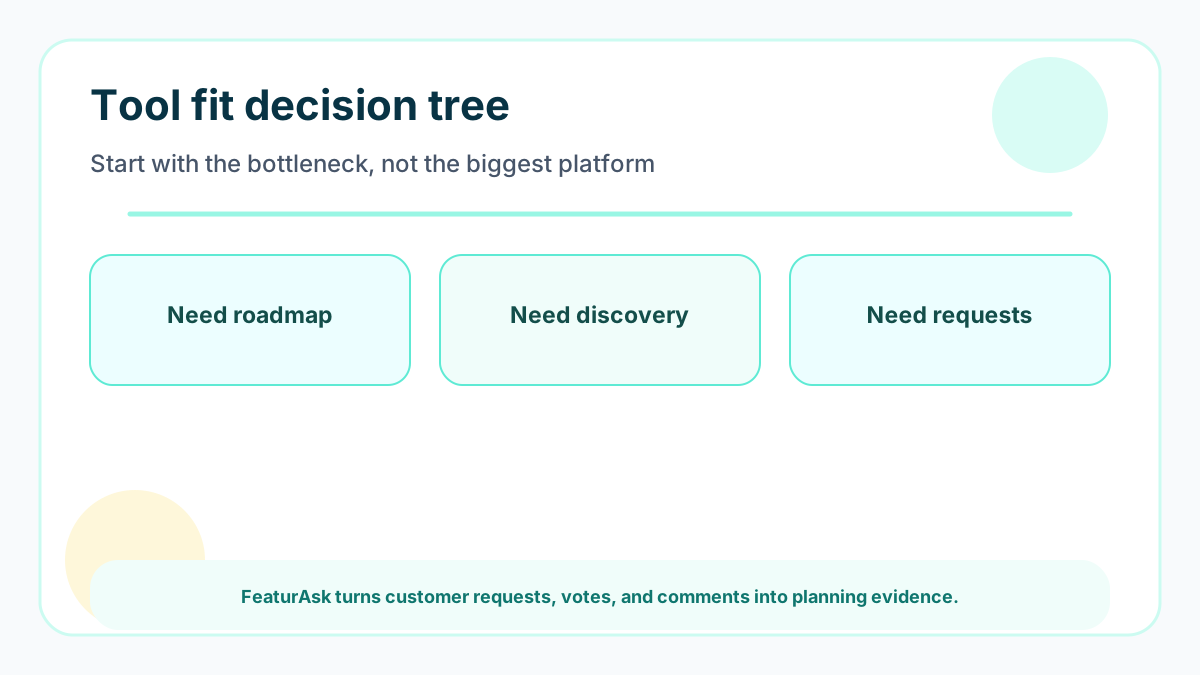
For roadmap presentation, ProductPlan has a focused advantage. For feedback-to-feature workflows, ProductBoard usually offers a broader system. For customer voting on your own website, neither may be as simple as a dedicated lightweight widget.
Ask what must improve first: stakeholder alignment, customer insight management, public request collection, or release communication. The answer should drive the tool choice.
Pricing and budget fit
Check current pricing before making a decision. ProductPlan publishes plan information on its pricing page, and ProductBoard maintains current packaging on its pricing page. Pricing and packaging can change, so validate seat counts, billing terms, integrations, and limits with the vendor before committing.
If you are a solo builder, creator, local business, or small SaaS team, the annual cost difference can be significant. FeaturAsk is intentionally simpler: feature request widget, voting, comments, moderation, analytics, and branding for $29.95/year after a one-month free trial with no credit card. Try FeaturAsk if feedback intake is your first problem.
Ease of use
Ease of use depends on workflow maturity. ProductPlan can feel easier when the team’s main job is creating roadmap views. ProductBoard can feel easier when the team already has a product ops habit and wants evidence connected to features. Both can feel heavy if nobody owns the process.
For a small team, the easiest tool is the one that gets used by customers and checked by the decision-maker every week. A copy-paste widget can beat a complex platform if it captures more real feedback.
Best for different teams
Choose ProductPlan if your team needs polished roadmaps, portfolio communication, and stakeholder presentations. Choose ProductBoard if you need a deeper product discovery system that brings many feedback channels into feature prioritization. Choose a lightweight request board if you need customer voting before platform complexity.
For roadmap structure, read product roadmap template. For the operating system behind any tool, read product management process.
Where FeaturAsk fits
FeaturAsk is not trying to replace every enterprise product suite. It is a focused feature request platform for teams that want a simple way to ask users what to build next. It works well for websites, small SaaS products, creators, ecommerce shops, restaurants, service providers, and education platforms.
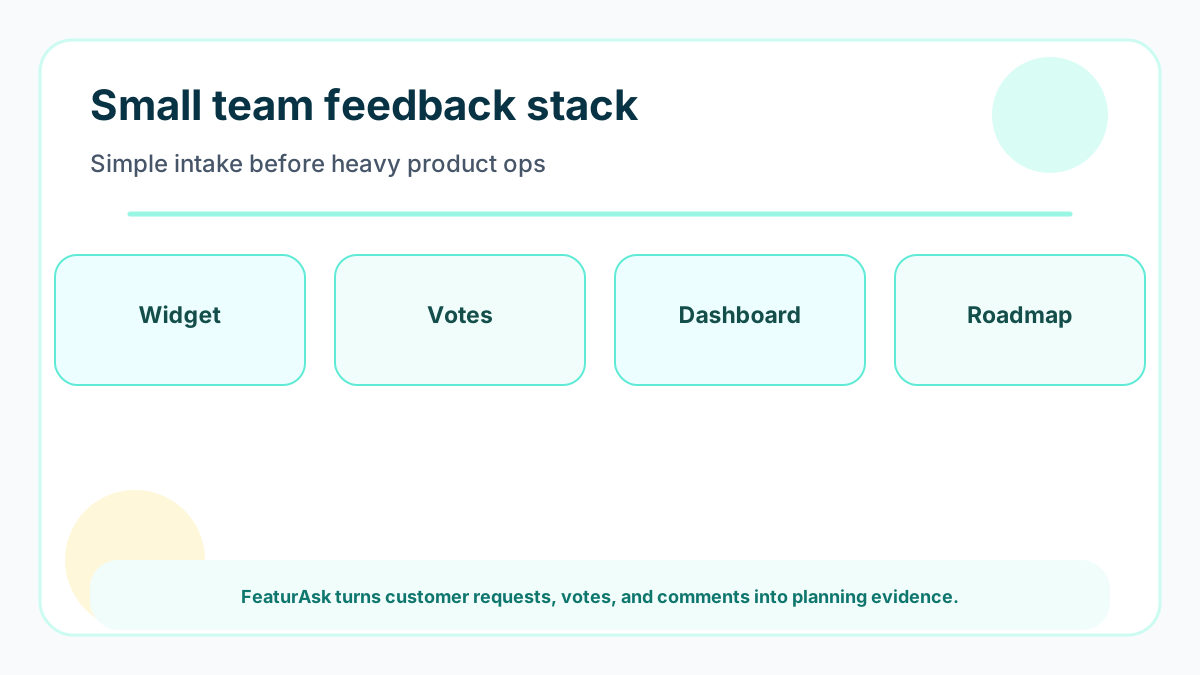
The setup is intentionally light: add the widget, customize the look, collect requests, let users vote, moderate what appears, and review demand in the dashboard. If that is the missing piece, start with FeaturAsk for 30 days free, no credit card, and $29.95/year.
Decision checklist
Before choosing, answer six questions. Do we need internal roadmap views or external request voting? Do we have enough feedback volume for a full discovery platform? Who will maintain the tool weekly? Do customers need to see status? What is the annual budget? Which integrations are truly required?
Also check whether your problem is strategy, planning, or communication. Our product strategy example guide can help if the team lacks direction before it chooses tooling.
Final recommendation
ProductPlan is best when roadmap communication is the pain. ProductBoard is best when insight management and prioritization depth are the pain. FeaturAsk is best when a lean team wants a simple, affordable way to collect and rank user requests before investing in a heavier product stack.
If you are unsure, start with the smallest tool that solves the immediate bottleneck. You can launch FeaturAsk in minutes, use the first month free with no credit card, and keep it for $29.95/year if it helps your team make better decisions. ProductPlan’s roadmap guide and Atlassian’s roadmap guidance are useful references while you design the surrounding process.
Comparison setup notes
For a fair comparison, list the decisions your team makes each week. If those decisions are mostly about presentation and stakeholder alignment, ProductPlan deserves close attention. If they are about connecting many feedback sources to feature priorities, ProductBoard deserves close attention. If they are about collecting customer requests in the first place, start lighter.
This framing prevents the buying process from becoming a feature-count contest.
Tool evaluation metrics
Measure the trial by decision quality and workflow cost. How long did setup take? Did teammates understand the status model? Did the tool reduce duplicate questions? Did customer evidence become easier to use? Did roadmap conversations improve?
A tool that wins the demo but loses the weekly workflow is not the best choice.
Evaluation criteria to use
Compare tools using the workflow you will run every week. Score roadmap views, feedback capture, prioritization, integrations, reporting, permissions, setup effort, and total annual cost. Also score the cost of not using the tool: missed requests, unclear priorities, or stakeholder confusion.
Do not let feature matrices decide alone. A tool with more capabilities can still be the wrong choice if the team lacks time to maintain it. The best product platform is the one that improves decisions consistently.
Migration and setup effort
Product tools require taxonomy decisions: customers, segments, features, insights, statuses, owners, and permissions. ProductBoard generally asks for more discovery structure. ProductPlan is often more focused on roadmap representation. Both still require clean inputs if you want useful outputs.
Before committing, run a pilot with a real roadmap area and real feedback. Importing sample data is not enough. You need to see how the tool handles messy requests, stakeholder questions, and weekly prioritization.
When a lightweight alternative is smarter
Choose a lightweight request platform when your first bottleneck is customer input. If users have no clear place to suggest ideas or vote, a full roadmap suite may only formalize guesses. Start by collecting demand where users already are, then graduate to heavier systems when the volume and organization justify it.
This is a common path for creators, small SaaS products, agencies, and local businesses. They need feedback clarity before they need portfolio planning.
Final buying questions
Ask who will own the tool, how often it will be updated, which decisions it must support, and what success will look like after 90 days. If nobody can answer those questions, delay the purchase and fix the process first.
Also ask what customers will experience. If the chosen tool improves internal planning but does not create a better request and update loop for users, you may still need a separate customer-facing layer.
Example buying scenario
Consider a ten-person SaaS company with one product manager, one support lead, and a founder still involved in roadmap decisions. If the team already has strong customer evidence but stakeholders argue about timing, ProductPlan may solve the visible pain. If the evidence is scattered across calls, tickets, and notes, ProductBoard may be more useful. If customers have no clear place to suggest and vote on ideas, FeaturAsk may be the better first purchase. The right answer depends less on brand recognition and more on the next decision the team needs to improve.
Make the comparison practical
Run the comparison with one real initiative, one real feedback set, and one upcoming roadmap conversation. Enter enough data to expose friction. Invite the people who will actually maintain the system, not only the buyer.
The result should show how the platform behaves under normal messiness: duplicates, uncertain priorities, and stakeholder pressure.
Explain buying tradeoffs
ProductPlan may be the right tradeoff if roadmap clarity is costing the team time. ProductBoard may be the right tradeoff if insight management is the bottleneck. FeaturAsk may be the right tradeoff if the team needs affordable customer voting before it needs a full product ops platform.
State the tradeoff openly. Buying the biggest system is not the same as solving the nearest problem.
Signs the chosen tool fits
The chosen tool fits when people use it without constant reminders, roadmap conversations get shorter, and customer evidence is easier to find. It should also make the next update clearer because the decision trail is visible.
If adoption depends on one power user doing all the cleanup, the system may be too heavy for the team.
Next comparison step
After narrowing the choice, validate pricing, permissions, integrations, and export options directly with the vendor. Then decide what will happen if the trial fails. A fallback plan keeps the team from forcing adoption just because time was spent evaluating.
Start with the smallest option that improves the bottleneck, and expand when the workflow proves it needs more depth.
How to run a fair trial
Run the trial with one real product area, not a fake sample project. Import actual requests, recreate a current roadmap decision, invite the people who will maintain the system, and time how long the weekly workflow takes. A fair trial should reveal friction as well as impressive features. If the tool only looks good during a demo but slows the real team down, keep searching or start smaller.
Hidden costs to compare
Seat price is only one part of cost. Also compare setup time, training, cleanup, integrations, admin work, and the effort required to keep data current. A less expensive tool can become costly if nobody maintains it. A more expensive tool can be worth it if it replaces scattered work and improves high-stakes prioritization. The honest comparison is total workflow cost, not only subscription price.
Support and adoption check
Ask how quickly a new teammate can understand the system. If the answer requires a long internal manual, adoption risk is high. Good tooling should make priorities clearer within the first few weeks, not only after a perfect implementation.
Data ownership question
Before choosing a platform, decide who owns feedback cleanup. ProductBoard-style systems need consistent tagging and insight hygiene. ProductPlan-style systems need roadmap status maintenance. Lightweight request boards need moderation and reply habits. If ownership is unclear, any option can decay.
Clarifying ownership before purchase makes the trial more honest and reduces surprise admin work later.
It also improves team buy-in quickly.