4 Detailed Product Strategy Examples to Inspire Product Teams
Use these 4 product strategy examples to connect vision, customer evidence, roadmap choices, and measurable outcomes without creating a bloated strategy deck.
This guide uses current public references such as Atlassian product roadmap guidance, ProductPlan roadmap guide and vendor pricing pages where relevant. Validate vendor packaging before you buy because pricing and limits can change.
What a product strategy must decide
Product strategy explains where the product will compete, which customer problem matters most, how the team will win, and what it will refuse to build. It sits between company strategy and the roadmap. Without it, prioritization turns into opinion trading.
A good strategy is specific enough to make some attractive ideas feel wrong. If every feature request fits, the strategy is too vague.
Core components of a useful strategy
Use a compact format: target segment, acute problem, differentiator, business goal, customer evidence, product bets, constraints, and success metrics. Add a refresh date so the document stays alive. Strategy should guide weekly choices, not sit in a folder.
Customer evidence is the ingredient teams skip most often. Feedback does not write the strategy for you, but it reveals pain intensity, language, workarounds, and willingness to change.
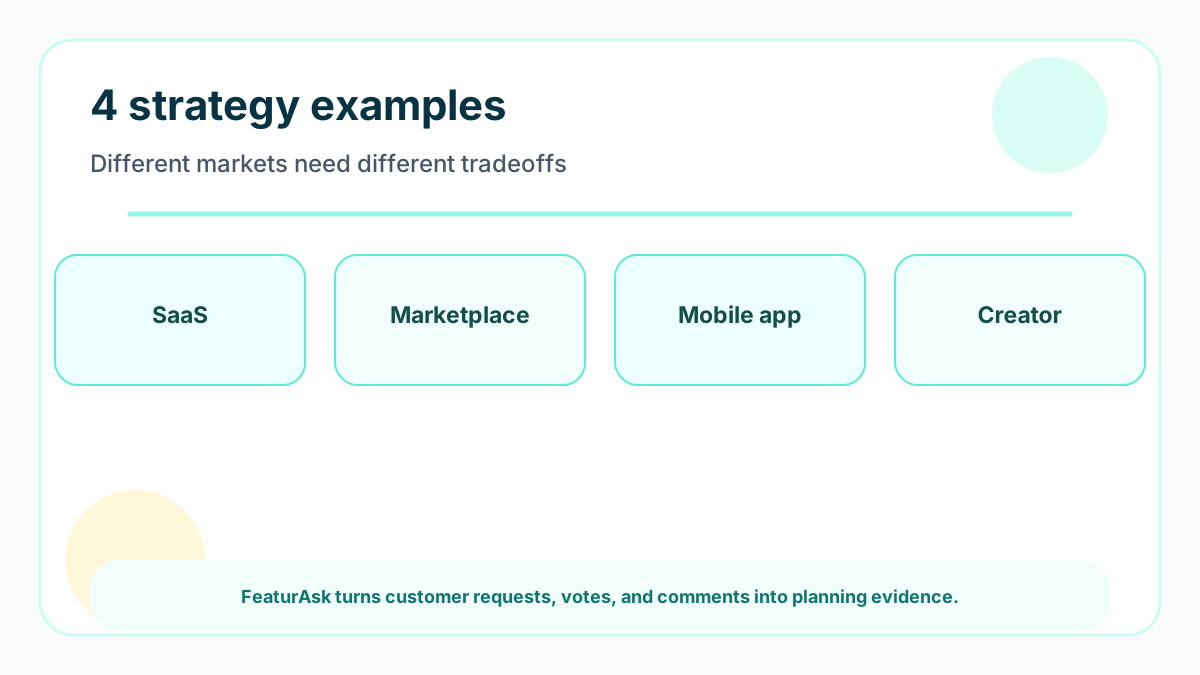
Example 1: B2B SaaS onboarding assistant
A small SaaS company serves operations teams that abandon setup because implementation feels risky. The strategy is to become the easiest onboarding assistant for non-technical admins. The target segment is mid-market teams with one operations lead, not global enterprises with implementation consultants.
The product bets are guided setup, reusable import templates, progress visibility, and faster support handoff. The team rejects deep enterprise customization because it would slow the core promise. Success metrics include activation, setup time, first-week support tickets, and expansion from teams that finish setup.
Example 2: Marketplace trust layer
A niche marketplace struggles because buyers cannot evaluate providers consistently. The strategy is to improve trust before adding more supply. Instead of building every requested category filter, the team focuses on verified profiles, clearer evidence, and post-project feedback.
The roadmap includes structured reviews, dispute signals, and provider response prompts. The team measures conversion from search to contact, repeat purchase rate, and support disputes. Customer comments are especially useful here because they reveal the words buyers use when they hesitate.
Example 3: Mobile habit app for busy parents
A mobile habit app targets parents who want tiny routines rather than intense productivity systems. The strategy is to win through low-friction daily use, emotional tone, and forgiving streaks. The team avoids complex dashboards that serve power users but intimidate the main audience.
Product bets include two-minute setup, optional reminders, contextual suggestions, and streak recovery. Metrics include day-seven retention, habit completion, notification opt-in, and user-reported stress. The strategy rejects “more features” when simplicity is the differentiator.
Example 4: Creator education platform
A creator sells courses and templates but does not know what to build next. The strategy is to turn audience questions into a product ladder: free explainers, low-cost templates, workshops, and premium courses. The product system must capture demand before production begins.
This is where FeaturAsk fits naturally. A creator can add a voting widget, collect topic requests, and see which ideas have real pull. Try FeaturAsk for one month free with no credit card; it is $29.95/year after the trial, which keeps validation affordable before creating a course.
How to build your own strategy from these examples
Start by writing the customer you will serve and the customer you will not chase. Then define the painful job, the promise, the proof you already have, and the next evidence you need. Convert the strategy into a roadmap only after the tradeoffs are clear.
If your strategy includes customer-led development, connect it to co-creation with customers and a repeatable product management process. Strategy dies when feedback lives in scattered inboxes.
How to keep strategy current
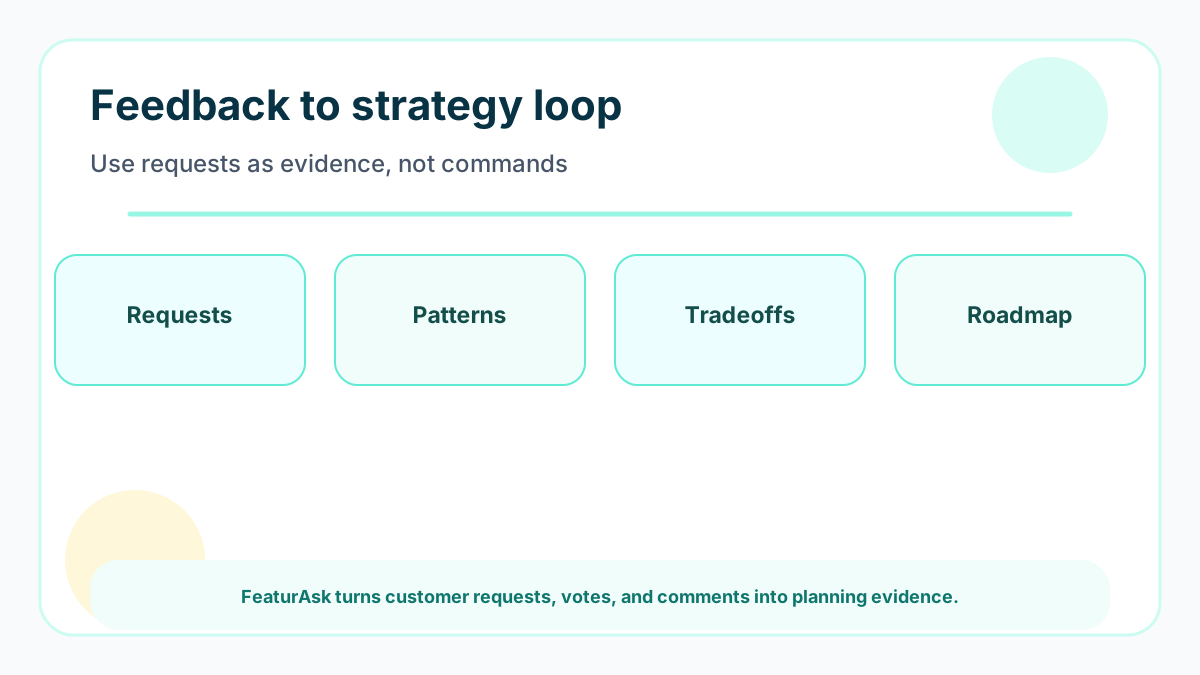
Review strategy monthly for fast-moving products and quarterly for steadier ones. Look at customer requests, win-loss notes, usage data, support tickets, and competitor movement. Productboard’s pricing page and ProductPlan’s pricing page also show how category tools package strategy and roadmap workflows, which can inform build-versus-buy decisions.
Current strategy work should also account for AI-assisted research, faster competitor copying, and lower switching costs. The durable advantage is not a static feature list; it is a faster learning loop with the customers you want most.
Strategy mistakes to avoid
Do not confuse a strategy with a list of initiatives. Do not let the loudest customer define the market. Do not pick metrics that lag too far behind the decision. Do not create a deck so polished that nobody feels allowed to update it.
Use a simple request system to keep evidence visible. FeaturAsk gives small teams voting, comments, moderation, custom branding, and analytics without a heavy platform rollout. You can start with FeaturAsk free for 30 days, no credit card required, then continue for $29.95/year.
Final framework
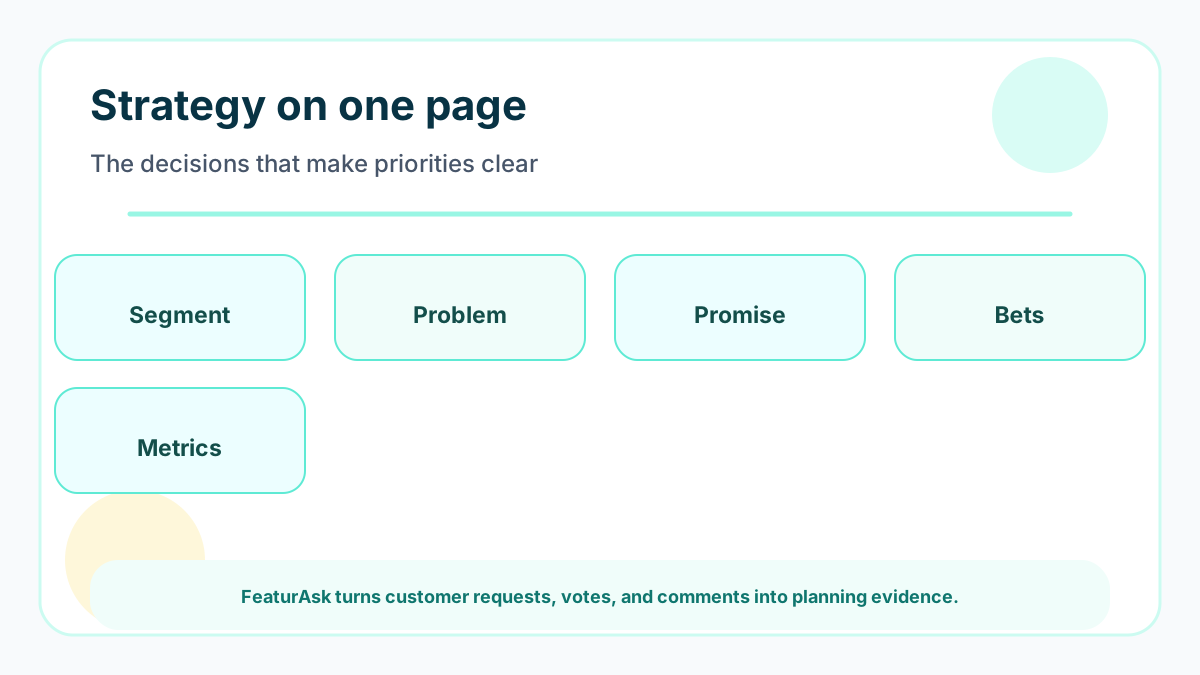
A practical strategy can fit on one page: segment, problem, promise, proof, bets, constraints, metrics, and review rhythm. The examples above differ by business model, but each makes tradeoffs visible.
For deeper planning, pair this strategy with product planning and roadmap metrics. If you need a low-cost customer evidence layer, launch FeaturAsk for one month free with no credit card and $29.95/year pricing. Atlassian’s roadmap guide is a useful companion when turning strategy into communication.
Strategy note-taking for examples
When adapting product strategy examples, keep notes on the tradeoffs rather than the storytelling. What did the team choose not to pursue? Which segment received priority? Which metric would prove progress? These answers matter more than the industry label.
A short evidence note beside each strategic bet helps later reviews. It shows whether the bet came from customer pain, market movement, revenue pressure, or internal conviction.
Strategy metrics by example type
Each strategy example needs metrics that match its promise. The onboarding SaaS example should track setup time and activation. The marketplace example should track trust signals and conversion. The mobile habit app should track retention without stress. The creator platform should track topic demand before content production.
When metrics differ by strategy, the team avoids generic scorecards. That makes reviews more honest.
How to turn examples into your own strategy
Do not copy the surface details of any example. Copy the thinking pattern. Each strategy names a segment, a painful job, a reason to believe, a set of bets, and a set of rejected distractions. That structure is portable even when the product category is different.
Write your first version quickly, then test it against real decisions. If it does not help you say no to a tempting feature, it is not sharp enough. If nobody can explain it without reading a deck, it is too abstract.
Evidence that strengthens strategy
The strongest strategy inputs combine qualitative and quantitative signals. Interviews explain why a problem matters. Votes and comments show breadth. Usage data shows behavior. Win-loss notes show commercial pressure. Support tickets reveal repeated friction. None of these is enough alone, but together they make strategy less political.
Keep a small evidence log behind the strategy. When leadership asks why a bet matters, the team can point to patterns instead of opinions. That habit is especially useful when a flashy competitor release tempts the team away from its chosen segment.
Metrics for strategy reviews
Pick metrics that match the strategic promise. A simplicity strategy might track setup completion and support load. A trust strategy might track conversion and disputes. A marketplace liquidity strategy might track match rate and repeat purchase. Generic metrics are less useful than metrics connected to the tradeoff.
Review leading indicators early and lagging indicators later. If a strategy requires waiting six months for the only metric, the team will drift. Short-cycle evidence keeps the strategy alive between major business reviews.
Keeping strategy readable
A readable strategy uses plain words and concrete choices. Replace phrases like “best-in-class experience” with the specific experience you will improve. Replace “platform expansion” with the audience, use case, or workflow you will support next. Strategy language should reduce ambiguity, not decorate it.
The final test is whether a new team member can use the strategy to evaluate a feature request. If the answer is no, simplify the document until the tradeoffs are obvious.
Example strategy review meeting
A useful strategy review does not start with slides. It starts with the decisions made since the last review. Which feature requests were accepted? Which were declined? Which customer segment appeared more promising? Which metric moved? The team then checks whether those decisions still match the strategy. If not, it updates either the decisions or the strategy. This keeps strategy practical. The review can be short, but it should produce one of three outcomes: continue with stronger confidence, adjust the bet, or stop investing in an idea that no longer fits.
Keep strategy reviews alive
A strategy review should revisit assumptions, not recite progress. Ask which customer evidence became stronger, which assumption weakened, and which roadmap item no longer fits. This keeps the strategy from becoming a static narrative.
Use real requests in the review. If the strategy cannot help evaluate them, it needs sharper boundaries.
Explain strategic no decisions
Strategic no decisions are easier when the segment and promise are clear. A team focused on non-technical admins can decline deep developer customization without apologizing for the tradeoff. A creator platform can decline enterprise LMS features because they distract from audience demand validation.
Documenting those choices protects the roadmap from slow drift.
Signs strategy is guiding work
The strategy is working when roadmap debates become shorter and more specific. Teams can name the customer, the pain, the proof, and the reason a bet fits. They can also reject appealing ideas without reopening the entire company direction.
Another good signal is clearer launch messaging. Strategy gives updates a point of view.
Next strategy improvement
After drafting your strategy, test it against five real requests. Keep the requests that clearly fit, reject the ones that clearly do not, and discuss the ambiguous ones. The ambiguous group reveals where the strategy needs more precision.
Then rewrite the strategy in plainer language. If it sounds impressive but does not guide choices, it is not finished.
How customer language improves strategy
Customer language makes strategy sharper because it exposes the real buying trigger. Teams often describe features in internal terms, while users describe moments of frustration, lost time, or missed revenue. Capture those phrases and use them when defining the problem. This does not mean copying every request into the roadmap. It means using customer words to verify that the strategy is grounded in actual pain. When strategy reviews include those patterns, decisions become easier to explain and easier to test.
Team alignment test
Before a strategy is trusted, ask support, sales, engineering, marketing, and leadership to interpret it using three real feature requests. If each group makes wildly different choices, the strategy needs clearer constraints. If they reach similar conclusions and can explain the tradeoffs, the strategy is ready to guide roadmap work. This small test catches vague language before it causes months of unfocused delivery.
Strategy communication rhythm
Share the strategy in the moments when decisions happen: planning, roadmap review, launch review, and customer feedback triage. Repeating the same tradeoffs in those meetings makes strategy practical. If the document is only mentioned during annual planning, the roadmap will drift back toward scattered requests.
Add the latest customer evidence beside each strategic bet so reviewers can see what changed since the prior discussion.
That visibility improves strategic discipline quickly.