8 Steps to Successful Product Planning [+Top Tools]
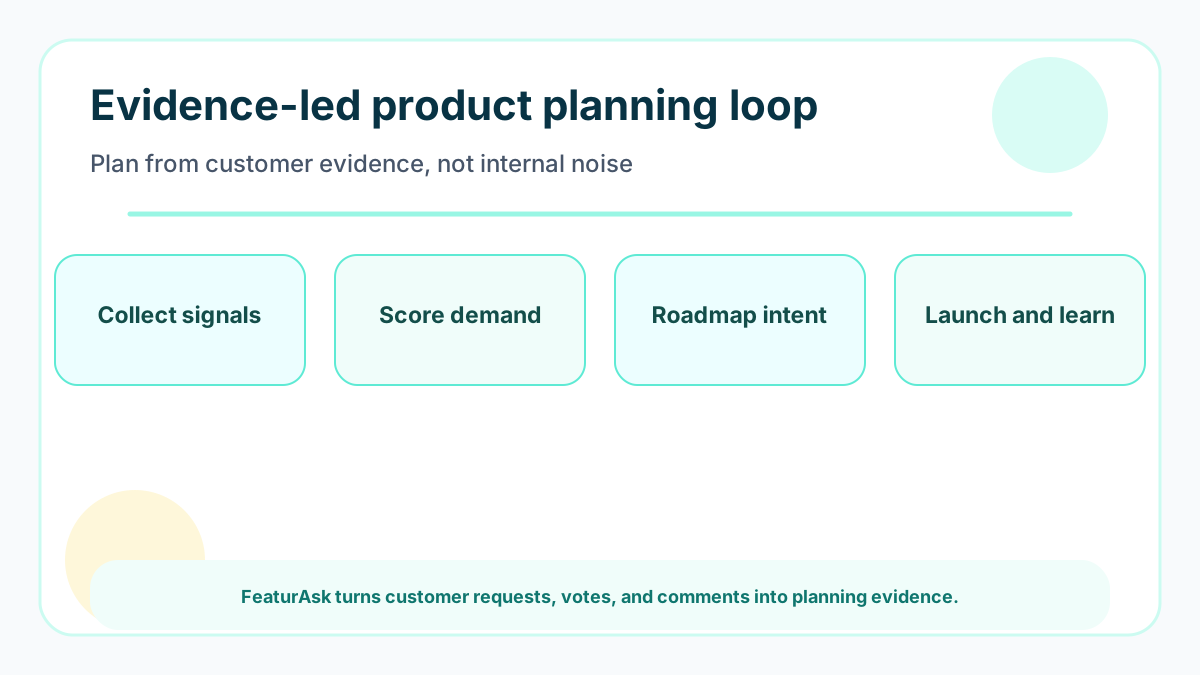
Plan products with customer evidence instead of guesswork. This guide covers 8 practical steps, lean planning tools, and a simpler way to collect feature requests.
This guide uses current public references such as Atlassian product roadmap guidance, ProductPlan roadmap guide and vendor pricing pages where relevant. Validate vendor packaging before you buy because pricing and limits can change.
What product planning means in 2026
Product planning is the disciplined work of deciding which customer problem to solve, which audience to serve, what evidence justifies the bet, and how the team will learn after release. It is not a giant annual document that nobody updates after the first roadmap meeting. The best planning now behaves like a living operating system: one place for incoming signals, a clear scoring model, a roadmap that communicates direction, and a feedback loop after each launch.
The planning challenge for small teams is not a lack of ideas. It is the opposite. Sales calls, support tickets, founder instincts, analytics, and competitor screenshots all compete for attention. A practical plan turns that noise into a ranked set of outcomes. That is why this article starts with evidence before timelines. A roadmap without evidence is just calendar art.
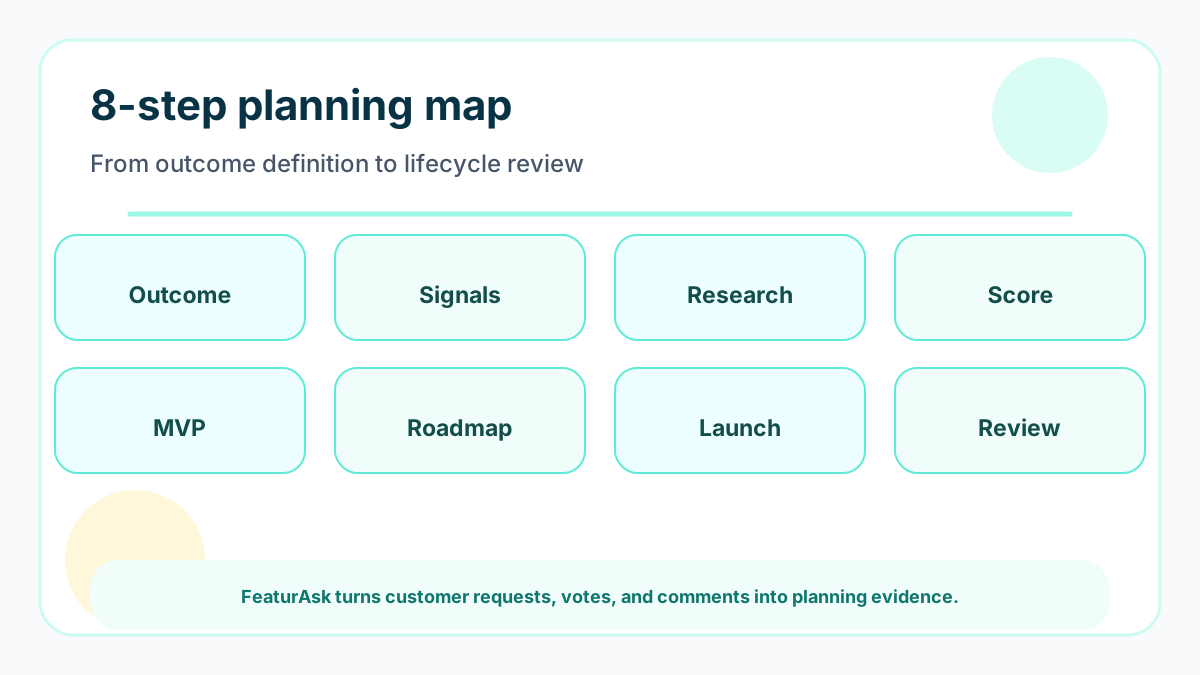
Step 1: Define the customer outcome before the feature
Start with the outcome a customer wants, not the interface you imagine. “Bulk edit invoices” is a feature. “Finance teams close month-end reports faster without manual cleanup” is an outcome. The outcome gives your team permission to find a smaller, cheaper, or more elegant solution than the first requested feature.
For each candidate initiative, write the customer segment, the pain, the current workaround, the expected business result, and the risk if nothing changes. If the pain cannot be described in plain language, the idea is not ready for planning. Capture raw requests separately from decisions so the roadmap does not become a dumping ground.
Step 2: Collect signals where customers already speak
Good planning starts with a steady source of demand. Support tags, sales notes, cancellation surveys, public comments, community posts, and feature request boards all matter. The mistake is treating all channels as equal. A request from one loud account can be useful, but it should not outweigh dozens of quiet votes from the audience you actually want to serve.
This is where a lightweight request widget helps. FeaturAsk gives small teams a copy-paste way to collect suggestions, votes, and comments on the site they already own. You can start with FeaturAsk for one month free with no credit card, then keep it for $29.95/year if it earns its place in your workflow.
Step 3: Research the market without copying it
Competitive research is useful when it clarifies customer expectations, pricing pressure, onboarding patterns, and table-stakes features. It becomes dangerous when the team copies a competitor’s roadmap without understanding its audience. Look for proof that a feature solves the same problem for your segment, not merely that another vendor shipped it.
Use public docs, review themes, pricing pages, release notes, and onboarding flows as clues. Then validate with your own customers. A small team can often win by doing less: a clearer workflow, faster setup, cheaper annual pricing, and fewer admin screens.
Step 4: Score opportunities with a simple model
Choose a scoring model that people will actually use. RICE, ICE, value-versus-effort, and weighted opportunity scoring all work when the inputs are honest. For many teams, the simplest model is enough: reach, pain intensity, strategic fit, confidence, and effort. Add a customer evidence column so voting and comments influence the decision without replacing judgment.
Avoid false precision. A score of 74 versus 76 is not a scientific truth. The point is to expose assumptions and compare tradeoffs. If two ideas look close, pick the one with stronger customer evidence or lower delivery risk.
Step 5: Build the smallest credible version
The MVP should test the riskiest assumption, not merely include the fewest screens. Sometimes the test is a clickable prototype. Sometimes it is a concierge workflow, a beta flag, or a narrow release to five accounts. The smaller version must still be credible enough for customers to react to the real value.
Document what must be true after the first release. For example: at least 30 percent of invited users try it, support tickets on the problem decline, or three paying customers upgrade because of it. That definition keeps “ship it” from becoming the only measure of success.
Step 6: Communicate the roadmap as intent, not a contract
Roadmaps are communication tools. They show what the team believes matters next and why. They should not promise exact dates for work that still has discovery risk. Use themes, time horizons, confidence levels, and status labels to avoid turning every idea into a deadline.
If you need more detail, read our guide to the product management process, then connect each roadmap item back to a validated customer signal. Customers forgive changing dates more easily when they can see that decisions are evidence-based.
Step 7: Launch with a measurement and update plan
A launch plan needs more than a release note. Decide who gets notified, what success metric will be checked, what support content must exist, and how customers can respond. Product updates should close the loop with the people who asked for the change, not only announce that engineering finished a task.
Tie each update back to the request or outcome that triggered it. The best launch message says: you asked for this, here is what changed, here is how to use it, and here is what we are watching next.
Step 8: Review, sunset, and keep the plan honest
The extra step most planning frameworks miss is lifecycle review. Every shipped feature creates maintenance cost. Every half-used feature competes for onboarding attention. Schedule reviews for adoption, support load, revenue influence, and strategic fit. Keep improving winners and sunset work that no longer earns its complexity.
Planning improves when the team can admit what did not work. Review shipped items alongside unbuilt requests so future prioritization gets sharper. For customer-led planning, pair this with co-creation with customers and the right product marketing KPIs.
Top tools for lean product planning
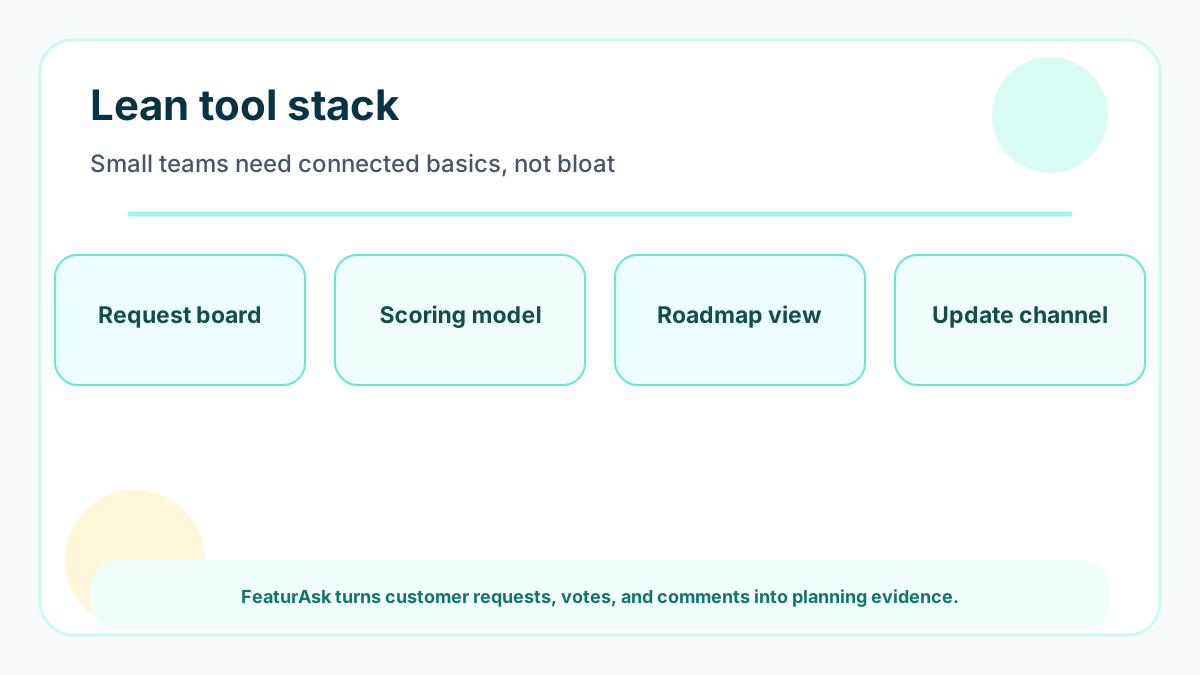
You do not need a massive suite to plan well. Use a request board for demand, a notes space for research, a spreadsheet or product tool for scoring, a roadmap view for communication, and analytics for follow-up. Enterprise platforms can be helpful, but they often cost more and require more process than a lean team needs.
For customer input, FeaturAsk keeps the collection layer simple: website widget, voting, comments, moderation, analytics, and branding. If your team wants a lower-cost way to prioritize what users ask for, try FeaturAsk with a 30-day free trial, no credit card, and $29.95/year pricing. For broader roadmap education, Atlassian explains roadmap communication well in its roadmap guide, and ProductPlan offers a useful roadmap overview.
Final planning checklist
A strong plan answers eight questions: Who is the customer? What outcome matters? What evidence supports it? What options did we reject? What is the smallest credible release? How will the roadmap be communicated? How will launch feedback be collected? What will we retire if it fails?
If you only fix one part of your planning system this month, fix feedback intake. A clear request channel prevents planning meetings from depending on whoever speaks loudest. You can launch a FeaturAsk board in minutes, use the first month free with no credit card, and keep the system running for $29.95/year if it helps your team build what users actually want.
Planning intake rules for lean SaaS
For product planning, the intake rule should separate raw ideas from roadmap candidates. Raw ideas can be messy: a sentence from a customer call, a vote on a request, or a support complaint. Roadmap candidates need more structure: segment, problem, evidence, impact, and next learning step. This distinction keeps the team open to feedback without letting every suggestion become planned work.
The owner should triage requests weekly and merge duplicates before scoring. A merged request with fifteen votes, three comments, and two churn mentions deserves different treatment from a single nice-to-have. That discipline gives planning meetings a shared fact base.
Product planning metrics after launch
A product plan should define success before delivery starts. For onboarding work, watch setup completion and support load. For reporting, watch repeat use and export frequency. For collaboration, watch invites, comments, and handoffs. The metric should match the promised outcome, not merely count whether the feature shipped.
After launch, compare expected impact with actual behavior and customer comments. If adoption is low but comments are enthusiastic from a strategic segment, keep learning. If usage is high because people are confused, improve the workflow before celebrating.
A practical weekly planning cadence
Run product planning as a weekly rhythm instead of a quarterly rescue mission. On Monday, review new requests, support themes, and analytics changes. By Wednesday, update opportunity scores and ask for missing evidence. On Friday, decide whether the top items need discovery, design, delivery, or a polite no. This cadence keeps the plan fresh without turning every new idea into an emergency.
The weekly habit also protects the roadmap from recency bias. A dramatic sales call should be recorded, but it should be compared with accumulated demand. A quiet request with many votes may matter more than a loud one-off escalation. The planning process should make that comparison visible.
How small teams should involve stakeholders
Small teams do not need a large steering committee, but they do need clear input roles. Support brings pain patterns. Sales brings deal friction. Engineering brings complexity and sequencing risk. Marketing brings positioning and launch timing. Founders bring strategy and constraints. Customers bring the lived problem. Product planning improves when each voice is heard for the right reason.
The mistake is letting every stakeholder vote on every decision with equal weight. Instead, define where each role contributes evidence and where the product owner or founder makes the tradeoff. That keeps planning collaborative without making it slow.
What to document for every roadmap bet
For every meaningful roadmap item, document the problem, target segment, evidence, expected impact, effort range, confidence level, owner, and next decision date. This takes minutes, not days. The point is to preserve why the decision was made so the team can revisit it when facts change.
A lightweight record also helps after launch. If the feature misses expectations, you can inspect whether the problem was weak, the segment was wrong, the solution was poor, or the launch was incomplete. That learning is what makes the next plan better.
When to use heavier product planning tools
Move to a heavier suite when you have multiple product lines, many contributors, regulated workflows, complex permissions, or a large volume of feedback that must be deduplicated across channels. Until then, a simple request board, scoring spreadsheet, roadmap view, and update habit may be enough.
Tooling should reduce decision cost. If a platform requires more maintenance than the planning problem itself, start smaller. Build the habit first, then buy complexity when the habit outgrows the simple system.
Planning example for a small SaaS team
Imagine a two-person SaaS team with fifty open ideas, eight active customers asking for improvements, and no dedicated product operations role. The team starts by grouping requests into pains: setup friction, reporting gaps, permission issues, and billing confusion. It then chooses one outcome for the month, such as reducing setup friction for new admins. That focus makes the plan easier to defend. Instead of shipping three unrelated small features, the team researches the biggest setup blocker, tests a smaller workflow, and announces the change to the users who requested it. The plan is still lightweight, but every step now has evidence, a decision, and a follow-up loop.
Make planning a calendar habit
Planning improves when it has a fixed cadence. Reserve one weekly slot for request triage, one monthly slot for roadmap adjustment, and one quarterly slot for lifecycle review. This rhythm prevents planning from becoming a scramble before a board meeting or launch deadline.
Keep the agenda short: new evidence, changed priorities, blocked decisions, and follow-up updates owed to customers. A small ritual repeated consistently beats a large process nobody maintains.
Explain planning no decisions
A no decision in product planning should still teach the team. Record whether the request was too narrow, too costly, off strategy, already solved another way, or waiting for more evidence. When stakeholders see a consistent reason, they stop treating no as personal rejection.
Customers also appreciate clarity. A simple “not planned because this helps too few users right now” is better than silence. It keeps the feedback channel credible.
Signs the planning system works
The planning system is working when fewer urgent surprises reach the roadmap, customer requests are easier to compare, and launch reviews refer back to the original evidence. Another sign is cleaner disagreement: people debate assumptions and outcomes instead of personalities.
You should also see better update quality. When the team knows why something was built, it can explain the release in customer language.
Next planning improvement
After thirty days, inspect the planning process itself. Remove fields nobody used, improve confusing scores, and archive requests that no longer match strategy. Keep the system small enough for the team to trust.
Then choose one improvement: better request tagging, clearer roadmap statuses, or stronger launch follow-up. Planning compounds through small operational fixes.