How Often to Send NPS Surveys? Your Guide to Survey Frequency
NPS frequency is a timing problem before it is a survey problem. Ask too early and users have no real basis for a recommendation; ask too often and the score becomes noise; ask after the right customer moment and the comment can reveal a retention risk, missing feature, or advocacy opportunity. In 2026, the teams that get the most from NPS are not the ones sending the most surveys. They are the ones connecting every response to a clear follow-up workflow.
For NPS follow-up, FeaturAsk gives small teams a public place to turn repeated survey comments into requests that customers can vote on. You can try FeaturAsk for one month free with no credit card required and keep the request loop running for $29.95/year after the trial.
This guide focuses on survey timing decisions: when NPS is useful, when it becomes noise, and how to route comments into a request workflow your team can actually maintain. For related setup decisions, see FeaturAsk's guides to feedback board software, the feature request process, and the feature prioritization matrix.
Current context matters. Qualtrics explains relationship and transactional NPS programs. Bain describes the Net Promoter System as a practical operating discipline, not just a score. Zendesk reports that customers expect fast, connected support experiences. Those sources point to the same conclusion: feedback and communication work best when they are specific, timely, and connected to decisions customers can understand.
The short answer: use two cadences, not one
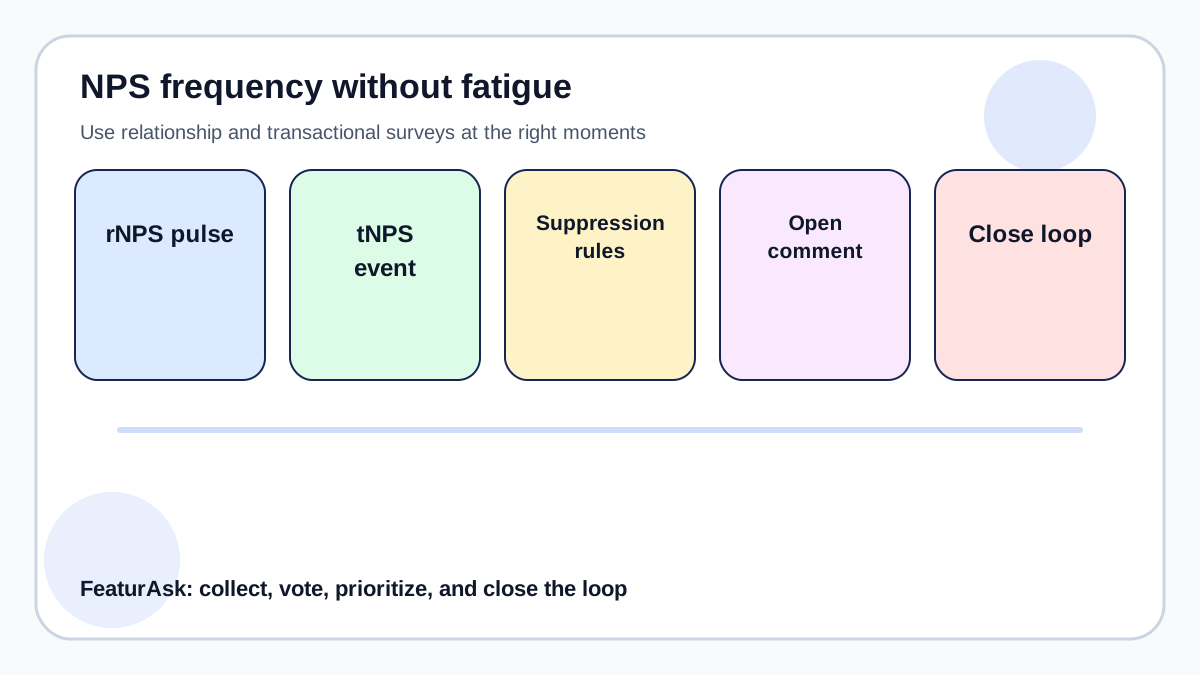
Most teams should separate relationship NPS from transactional NPS. Relationship NPS asks how customers feel about the overall experience and usually works best every quarter or every six months, depending on the product cycle. Transactional NPS belongs after meaningful events such as onboarding, support resolution, renewal, purchase delivery, or a major feature rollout. Sending the same question on the same rigid schedule to everyone creates fatigue and weak data.
For a small SaaS company, a practical default is quarterly relationship NPS for active accounts, a 30 to 45 day delay for new customers, and event-based transactional surveys only after moments that created enough context for a useful answer. If a customer has not used the product recently, ask a different question first. NPS is a relationship signal, not a substitute for usage analytics or feature-request tracking.
Build a frequency map around customer moments
A strong frequency plan starts by mapping the customer journey: first value, repeated use, support interaction, upgrade, downgrade risk, renewal, and cancellation. Each moment deserves a different question. New users can be asked whether setup was clear. Active users can be asked what would make the product more useful. Mature users can be asked whether they would recommend it and why. 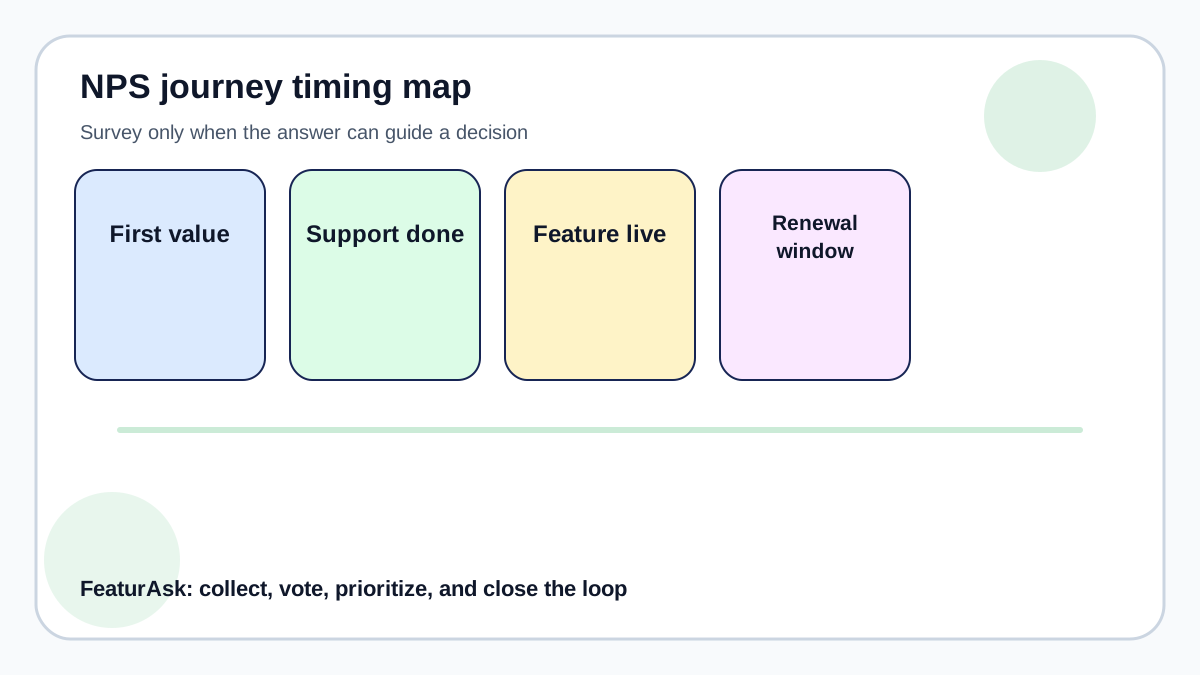
The mistake is treating NPS like a calendar task instead of a decision tool. If your team cannot name the decision a survey will inform, delay the survey. If the decision is clear, keep the question short and pair the score with one open-text prompt. Then route feature ideas into a system where customers can vote and your team can see patterns. This is where a public request board helps: it preserves the customer language, shows demand through voting, and gives the team a neutral place to explain status without promising every idea.
Recommended NPS frequency by business type
SaaS products with weekly usage can usually run relationship NPS every 90 days, provided each user is not surveyed more than once in that period. Products with monthly or seasonal usage should survey every six months. Ecommerce stores should use transactional satisfaction questions after delivery or support, then reserve NPS for repeat buyers. Service businesses should ask after a finished project and again after the customer has lived with the result.
Creators, course sellers, and communities should avoid over-surveying casual visitors. Instead, ask for topic requests and improvement ideas continuously through a feedback widget, then use a broader NPS check only when there is a meaningful audience relationship. A feature board often produces more actionable guidance than a score because it shows what people want next.
How to avoid survey fatigue
Survey fatigue shows up before unsubscribe rates rise. You see shorter comments, repeated neutral scores, and fewer specific examples. Prevent it by excluding users who have answered recently, limiting survey length, and changing the prompt when the context changes. Never ask NPS immediately after a frustrating support exchange unless the goal is to evaluate that support experience; label that as transactional feedback.
Close the loop visibly. When users take the time to explain a low score or request a missing capability, respond with what you learned and what will happen next. Link the idea to a public board when possible. This turns a private survey into a community signal and reduces the feeling that feedback disappears.
What to do after the score arrives
The score is only the start. Segment responses by plan, tenure, persona, and recent behavior. Read the comments before presenting the number. A low NPS from a high-fit customer with a clear missing feature deserves more attention than a generic complaint from a poor-fit account. A promoter with a repeated request can also reveal a growth opportunity.
Use NPS comments to seed feature requests, but do not let a single score override the roadmap. Combine the signal with vote volume, revenue risk, strategic fit, and effort. For deeper prioritization, compare this process with FeaturAsk’s guide to how customer feedback drives content strategies for business growth and its guide to customer satisfaction NPS in SaaS. 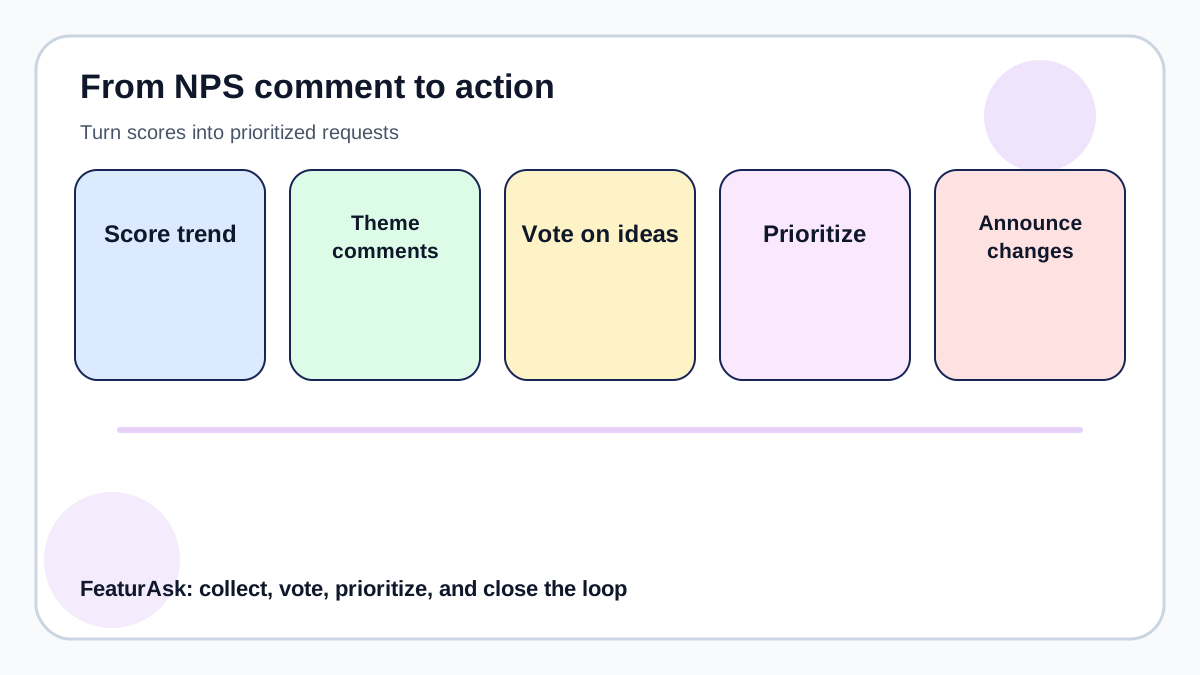
FAQ: practical NPS frequency decisions
A good NPS score depends on category, customer expectations, and sampling method, so benchmark against your own trend first. Send surveys to users who have enough experience to answer. Anonymous surveys can increase honesty, but they make follow-up harder; for small teams, identified feedback is usually more actionable when handled respectfully.
NPS can be automated, but automation should include suppression rules. Do not survey every login. Do not send relationship NPS during an outage. Do not treat NPS as the only customer experience metric. Pair it with requests, churn reasons, support tags, usage data, and the actual language customers use when they explain what would make the product better.
Turn NPS comments into visible follow-up
The best NPS cadence is only useful if comments lead somewhere. When a respondent mentions a missing workflow, add or link that theme to a public request so other customers can vote. When a detractor explains onboarding friction, tag it separately from feature demand. When a promoter asks for a refinement, treat it as expansion intelligence rather than a generic testimonial.
If your survey process currently ends in a spreadsheet, use FeaturAsk to give NPS-driven product ideas a visible home with one month free and no credit card required. The $29.95/year price makes it realistic to keep that loop open even if you only review requests once a week.
A simple close-loop rule is to publish one update per month: which themes rose, which requests were merged, which ones moved to planned, and which are not aligned right now. Start that feedback board on FeaturAsk when you want customers to see progress instead of receiving another private survey follow-up.
A simple NPS rhythm that stays useful
A good NPS program does not need a giant research calendar. Start with quarterly relationship NPS for customers who have meaningful product experience, add transactional questions only after important moments, and suppress anyone who recently answered. Review comments weekly, turn repeated product gaps into public requests, and publish a short update when the team acts on a pattern.
FeaturAsk can be the visible home for the ideas that NPS comments uncover. Use the homepage to start a trial when you are ready, then keep the workflow lean: collect requests, let customers vote, review the strongest themes, and announce what changed. The point is not more surveying; it is better listening with less fatigue.
Segment-specific examples
For a B2B SaaS product, survey admins separately from daily users because they judge different parts of the experience. Admins care about account setup, reporting, billing, and adoption. Daily users care about speed, clarity, and whether the workflow helps them finish a job. For ecommerce, separate first-time buyers from repeat buyers; repeat buyers understand the brand well enough to judge loyalty. For communities and courses, wait until members have used the material long enough to have a real opinion.
Treat each segment as a conversation, not a sample-size trophy. A few detailed comments from the right customers can be more valuable than a large batch of shallow scores from people who barely used the product.
NPS frequency mistakes to avoid
The first mistake is asking too soon. A new user who has not reached value can only judge onboarding friction, not loyalty. If you want onboarding feedback, ask an onboarding question. Save NPS for the point where the customer has enough experience to recommend or not recommend the product. The second mistake is asking too often. A quarterly cadence can still be excessive if the same low-activity user receives every survey. Suppression rules matter as much as the calendar.
The third mistake is treating the number as a scoreboard. NPS is useful because it creates a prompt for explanation. Read the comments, group the themes, and decide what deserves action. If detractors complain about missing features, connect those comments to the request board. If promoters ask for improvements, capture those ideas too; promoters often reveal what would make the product easier to expand.
The fourth mistake is ignoring silence. If response rates fall, the survey may be poorly timed, too repetitive, or not visibly acted upon. Explain what changed because of prior feedback. Customers are more likely to answer when the company demonstrates that the answer matters.
Combining NPS with feature requests
NPS tells you how customers feel about the relationship. Feature requests tell you what they want to change. Support tickets tell you where they are stuck. Usage data tells you what they actually do. The best teams combine all four. A low score plus a repeated request plus declining usage is a stronger signal than any one metric alone.
Build a simple review board for these signals. Each week, look for NPS comments that name a product gap. Add or link them to a request, note the customer segment, and review vote patterns. Each month, choose a few themes to investigate further. Each quarter, compare NPS trend changes with shipped improvements. This creates a feedback system that is both respectful to customers and useful to the team.
How to report NPS internally
When you share NPS internally, lead with the trend, the sample, and the top themes. Do not present a single score without context. Show how many people were eligible, how many answered, which segments changed, and what comments repeated. Then list the actions: requests created, bugs escalated, docs updated, and follow-up conversations scheduled.
This reporting style keeps the team focused on learning. It also prevents leadership from overreacting to a small score movement that came from timing or sample changes rather than a real customer experience shift.
End each NPS review by asking which cadence rule should change before the next send. If detractors lacked enough product experience, delay the survey. If comments repeatedly name the same missing workflow, route that theme to the request board and follow up with the affected segment.