11 Upvoty Alternatives to Try for User Feedback and Roadmaps
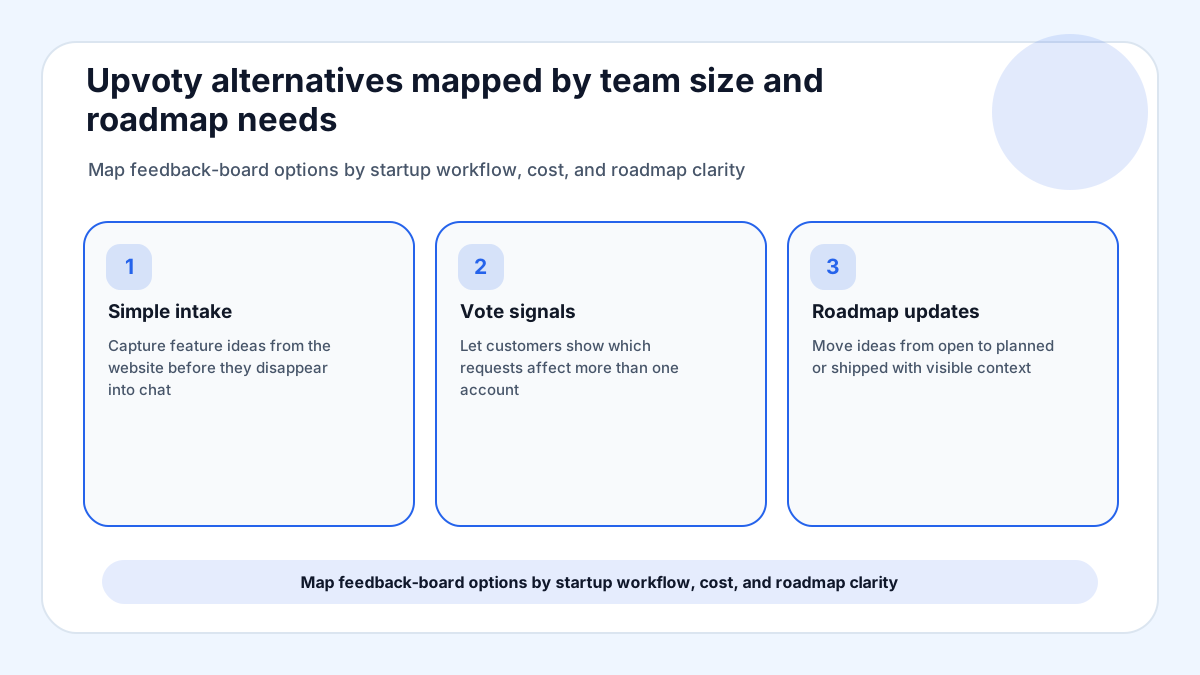
Choosing an Upvoty alternative is rarely about replacing one screen with another. Most teams are trying to fix a deeper workflow: requests arrive from email, support, sales, social messages, and product conversations, then someone has to decide which ideas deserve votes, roadmap space, or a polite decline. A practical comparison should start with operating fit: can a lean team collect requests, sort duplicates, explain decisions, and keep customers informed without building a product-ops department around the tool?
The best fit depends on whether you need a public feedback board, private idea intake, a customer-facing roadmap, announcement tools, prioritization scoring, or research analysis. Upvoty can work for many teams, but it is not the only route. Some alternatives are broader product-management suites, some are research repositories, and some are intentionally lightweight so a founder can launch a request board without weeks of setup.
If the practical goal is a simple place where customers can submit ideas and vote, FeaturAsk keeps the workflow lean: a copy-paste widget, moderation, request management, and analytics for $29.95/year, with the first month free and no credit card required.
For adjacent FeaturAsk reading, compare feedback board software, feedback widgets, and best feature request tools before deciding how public the request process should be. For outside grounding, see Atlassian's roadmap guidance and ProductPlan's prioritization overview.
What to look for before you compare tool names
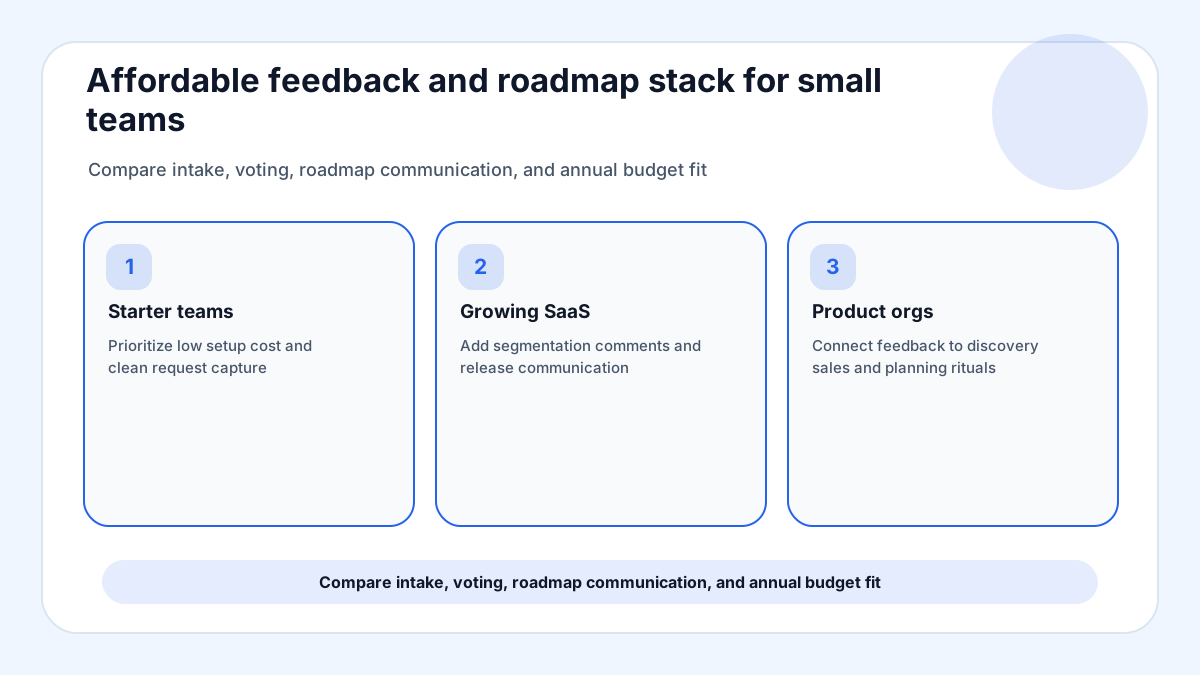
Start with intake. A good alternative should make it easy for customers to submit requests from the place where they already experience the problem. Website widgets, embedded boards, and lightweight forms usually beat a hidden portal that only power users can find.
Next, examine prioritization. Votes alone do not choose a roadmap, but they reveal repeated demand. Look for tagging, segment notes, status changes, and a way to separate urgent support problems from future feature ideas.
Finally, judge the customer loop. If a team cannot tell requesters what changed, the board becomes a suggestion graveyard. Status labels, changelog notes, and concise updates matter because they turn collection into trust.
11 Upvoty alternatives worth considering
FeaturAsk is best for lean teams that want affordable public request capture without product-suite overhead. FeedBear, Sleekplan, and FeatureOS are useful for teams that want familiar boards and changelog combinations. Productboard, Aha! Ideas, and Savio serve teams with larger product operations or sales-led feedback routing.
Canny and UserVoice are common options when a company wants established feedback portals, although smaller teams should examine pricing and configuration effort carefully. Pendo and Usersnap help when feedback must connect to in-product behavior or bug reporting. Survey tools such as SurveyMonkey can collect opinions, but they usually need a separate system for public voting and roadmap communication.
The right comparison is not which brand has the longest feature page. The useful question is which tool matches your current operating level: one founder sorting requests weekly, a support team feeding product themes, or a product organization with customer success, sales, and research inputs.
How small teams should shortlist alternatives
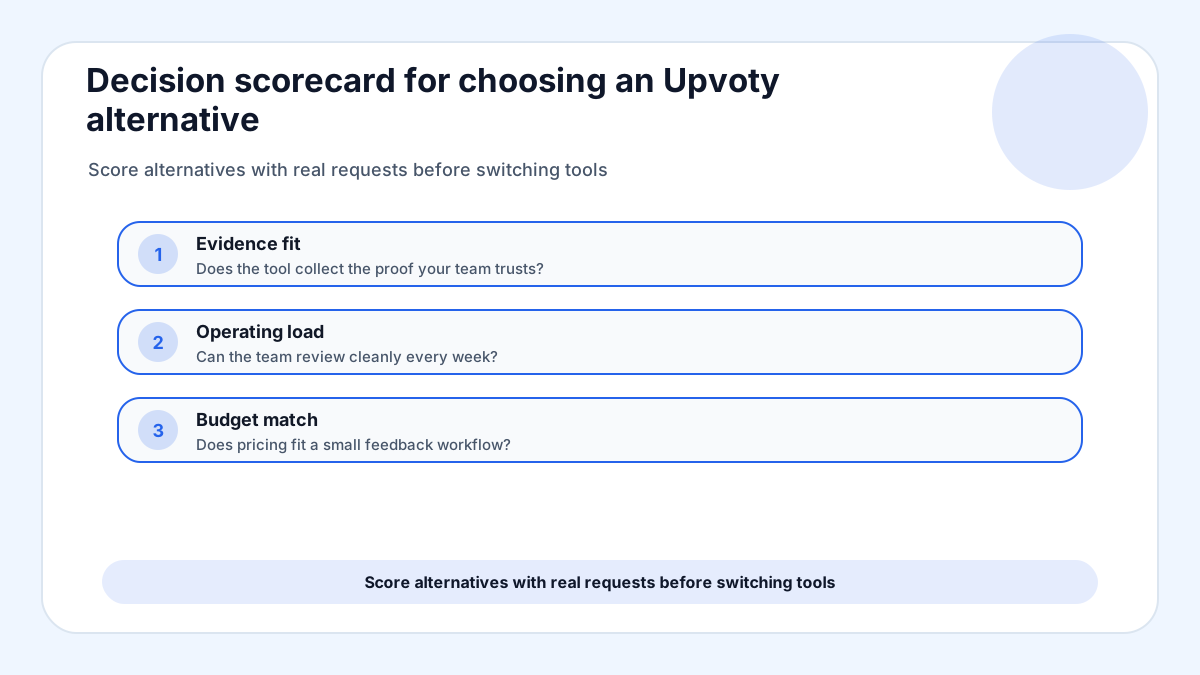
Use a two-column scorecard: evidence needs and operating cost. Evidence needs include voting, comments, segments, integrations, moderation, and export. Operating cost includes setup time, monthly expense, customer confusion, and how often someone must clean the board.
Run a two-week trial with real requests instead of sample data. Add ten recent ideas, merge duplicates, invite a few customers to vote, and practice changing statuses. The tool that looks beautiful in a demo may feel heavy when the same founder has to manage it between support calls.
Do not overbuy for a future organization you do not have yet. A business with a few hundred customers needs a reliable request loop more than it needs advanced portfolio planning.
A heavier roadmap suite can be useful later, but FeaturAsk is a calmer starting point when a small team wants proof of demand before it pays for enterprise product operations.
When not to switch from Upvoty yet
If your current board is already receiving useful requests and the only complaint is cosmetic, spend one sprint fixing taxonomy, statuses, and communication habits before migrating. Tool changes are expensive because they interrupt customers who already know where to leave ideas.
Switch when cost, complexity, missing widget behavior, reporting gaps, or roadmap communication limits are blocking adoption. Keep the migration simple: export active ideas, merge duplicates, preserve the top-voted items, and notify requesters that the feedback home has moved.
The healthiest replacement project has a clear success metric. Examples include reducing duplicate support requests, increasing votes on top ideas, speeding review time, or making roadmap decisions easier to explain.
A practical buying path
First, decide whether you need public voting or private research. Second, choose how visible statuses should be. Third, set a price ceiling before vendor demos stretch your scope. Fourth, test the tool with a messy real backlog, not a polished spreadsheet.
For small SaaS and creator businesses, affordability matters because the feedback board is only one part of the stack. A tool that costs more than your hosting, email, and analytics combined needs to justify that spend with measurable decision quality.
For larger teams, integration depth may outweigh simplicity. The point is to buy the workflow you can maintain rather than the workflow that sounds impressive in procurement language.
Upvoty replacement checkpoint
Before the final choice, place three real requests into the finalist and practice a status change. The best alternative will make duplicate merging, vote review, and customer notification feel obvious rather than ceremonial.
When the shortlist feels too complex, FeaturAsk gives founders a low-risk way to collect real requests, show customers what is under review, and avoid committing to a monthly software bill too early.
Tool-by-tool notes for the Upvoty shortlist
FeaturAsk belongs near the top of the shortlist when a team wants a straightforward request board rather than a full product-management workspace. The advantage is not that it tries to imitate every Upvoty feature. The advantage is that a founder can add a widget, let visitors submit requests, moderate the queue, and watch votes without building a complicated operating model first. That matters for creators, small SaaS teams, ecommerce stores, and service businesses where the same person often handles support, product decisions, and customer updates.
FeedBear is a reasonable option for teams that want a familiar feedback-board experience with public voting and changelog-style communication. Sleekplan can fit teams that want feedback, roadmap, and announcements bundled together. FeatureOS is broader and may appeal when a product team wants a more developed feedback portal. Productboard and Aha! Ideas become relevant when customer feedback must connect to product strategy, portfolio planning, and internal prioritization at a larger scale.
SurveyMonkey, Pendo, Savio, and Usersnap answer different parts of the same problem. A survey platform can ask structured questions, but it will not automatically create a living request board. A product-analytics suite can show behavior, but it still needs customer wording to explain why the behavior happens. A sales-feedback tool can connect requests to revenue, but it may be unnecessary for a small business that simply needs to find repeated product demand.
Budget and migration details that change the decision
A low monthly fee can still become expensive if the team has to spend hours cleaning duplicates, explaining statuses, or importing feedback from other channels. When comparing alternatives, calculate the total operating cost: subscription, setup time, staff review time, customer confusion, and the risk of leaving a board stale. A less glamorous tool can win if it is the one the team will actually maintain every Friday.
Migration should be conservative. Bring over active ideas, top votes, and recent comments, but archive requests that no longer match the product. A new board is a chance to reset categories, clarify statuses, and tell customers how feedback will be reviewed. If every historical idea moves unchanged, the replacement inherits the same clutter that made the old system hard to trust.
Recommended path for a small team
Start with the smallest live test that can prove usefulness. Add ten real requests, ask a handful of customers to vote, merge two duplicates, change one status, and send one update. If that flow feels natural, the alternative is probably close enough to launch. If the tool requires a long configuration project before the team can do those tasks, it may be solving a larger problem than the business has today.
Example rollout for an Upvoty alternative
A creator selling templates might start with a public board that asks customers which template formats, integrations, and examples would save them time. The review habit can be simple: every Monday, merge duplicates and move one request into under review when it has enough supporting comments. The board becomes a product compass without forcing the creator to run a formal product organization.
A small SaaS company might use the same alternative differently. Support can send repeated product ideas into the board, customers can vote on what affects their workflow, and the founder can choose one theme for the next release cycle. That process is stronger than judging the roadmap from the most recent demo call because it keeps demand visible over time.
An ecommerce business can use a feedback board for operational improvements such as filters, subscription options, bundle choices, shipping preferences, and account features. Many ecommerce requests do not need a complex roadmap; they need a clean way to see whether multiple buyers want the same convenience.
The most important rollout decision is scope. Do not open every category on day one. Start with feature requests and product improvements, not general support. Keep support problems in the support channel, then promote repeated product ideas to the board. That separation keeps the alternative useful and prevents customers from mistaking the board for a help desk.
After the first month, review the board for evidence quality. If requests lack context, change the prompt. If votes cluster around one product area, add a category. If customers never return after voting, improve status updates. The replacement succeeds when it changes decisions and customer communication, not when it merely recreates the old list in a new interface.
Red flags while comparing Upvoty alternatives
Be careful with tools that hide pricing until a sales call if the team only needs a basic request board. That does not make the product bad, but it signals a buying motion that may not fit a small business. Also watch for boards that make duplicate merging difficult, because duplicates are the normal state of customer feedback. Users describe the same problem in different words, and the tool should help the team preserve demand rather than split it.
Another red flag is a roadmap view that invites promises the team cannot keep. A public roadmap should show direction and status, not lock a founder into dates before evidence is complete. The safest alternative gives enough transparency to build trust while leaving room for discovery, sequencing, and capacity limits.
Pick the replacement your customers will actually use
For most small teams, the winning alternative is the one that reduces friction in the first week. If customers can submit ideas from the website, find similar requests, vote without confusion, and understand status labels, the team has enough to begin learning. Advanced roadmap layers can come later. The early objective is to replace scattered guesses with a visible pattern of demand. That is why a lightweight tool can outperform a larger platform for creators and small SaaS companies. It matches the review capacity they actually have today.
One final practical test is customer clarity: if a visitor cannot understand where to submit an idea and what happens after voting, the alternative is not ready yet.