Product Managers: Embrace Customer Co-Creation for Product Success
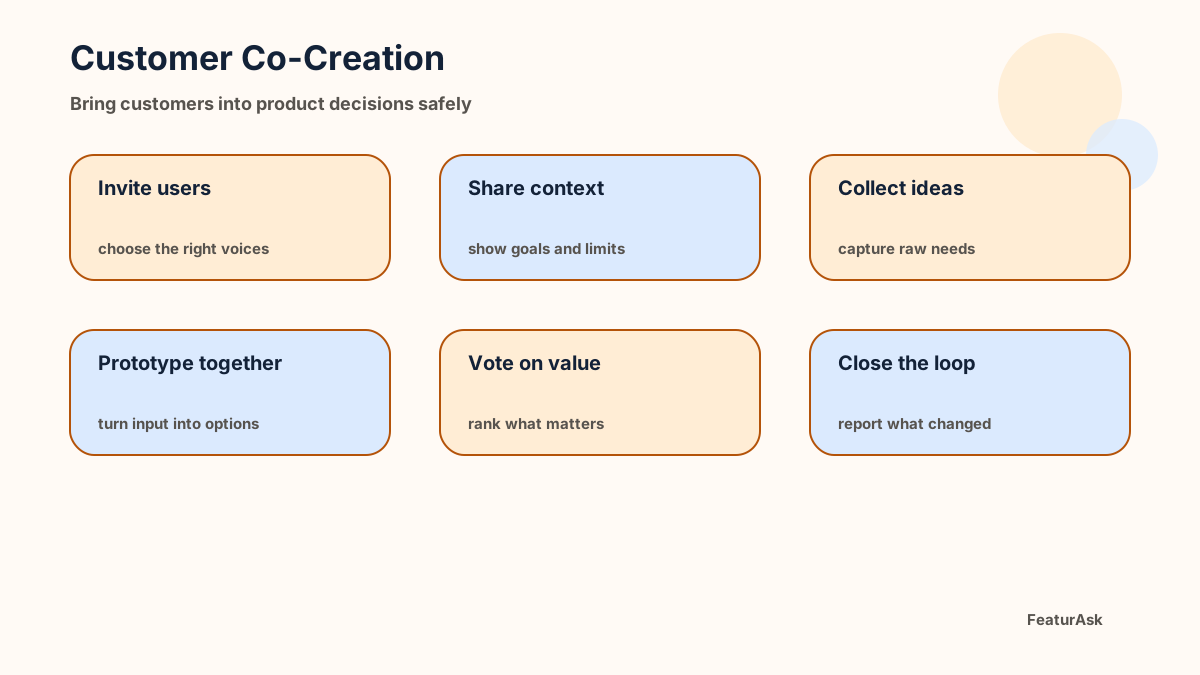
Customer co-creation means involving customers in product discovery, shaping, testing, and learning without handing them the steering wheel. It is not the same as building every request. It is a disciplined collaboration model that treats customers as experts in their problems and product teams as experts in trade-offs.
The reason co-creation matters is simple: teams build better products when they understand real workflows before they commit to expensive decisions. Customers can reveal hidden constraints, language, anxieties, workarounds, and adoption blockers that never appear in a dashboard. Product managers can convert that insight into a roadmap that is more useful and easier to explain.
Co-creation is especially powerful for small teams. A transparent feedback board, a few advisory calls, a beta cohort, and honest launch notes can create a sense of partnership that large companies struggle to match. If you want a lightweight place to start, FeaturAsk gives you one month free with no credit card, and the plan remains affordable at $29.95/year.
What customer co-creation is
Customer co-creation is a structured way to invite users into product decisions. They may submit problems, vote on priorities, join interviews, review prototypes, participate in betas, or comment on roadmap items. The product team still decides what to build, when to build it, and how to balance customer demand with strategy.
Good co-creation is transparent about the rules. Customers should know whether they are contributing ideas, validating a prototype, joining a private advisory group, or testing an early release. Ambiguity creates disappointment. If people believe a vote guarantees delivery, they will lose trust when a highly voted request is postponed for strategic reasons.
Why co-creation improves product success
Co-creation improves product success because it reduces distance. Product teams often work through proxies: sales summaries, support tags, analytics dashboards, and executive opinions. Those inputs matter, but they can flatten the customer story. A co-creation process adds direct context.
It also increases adoption. When customers help shape a feature, they understand the intent earlier and are more likely to try it. They may become launch champions because they can see their influence in the result. Research from the Nielsen Norman Group and IDEO’s design thinking materials reinforces the value of involving users early to test assumptions before finalizing solutions.
Co-creation can reduce waste too. Building the wrong thing is expensive. A few focused conversations, votes, or prototype tests can reveal that the requested feature is not actually the highest-value solution.
Model 1: open feedback boards
An open feedback board is the simplest co-creation model. Customers submit requests, vote on existing ideas, add comments, and track status. The board creates an always-on listening channel that works even when the product team is not running a formal research project.
The key is moderation. Merge duplicates, edit titles for clarity, tag requests by theme, and update statuses. An unmanaged board becomes a junk drawer. A well-managed board becomes a living map of customer demand.
Open boards work well for SaaS teams, communities, developer tools, and products with many feature requests. They are less ideal for sensitive enterprise requests unless you provide private boards or internal-only handling.
Model 2: customer advisory groups
A customer advisory group is a curated set of users who provide deeper feedback. They may represent important segments, strategic accounts, heavy users, new customers, or customers who recently churned. Advisory groups are useful when you need context beyond votes.
Do not let the group become a room of only your loudest or largest customers. Include varied company sizes, roles, maturity levels, and use cases. Otherwise, the roadmap may drift toward one segment while ignoring broader market needs.
Set expectations clearly. Advisory members provide input; they do not approve the roadmap. Share agendas in advance, summarize decisions afterward, and tell participants what changed because of their feedback.
Model 3: design workshops
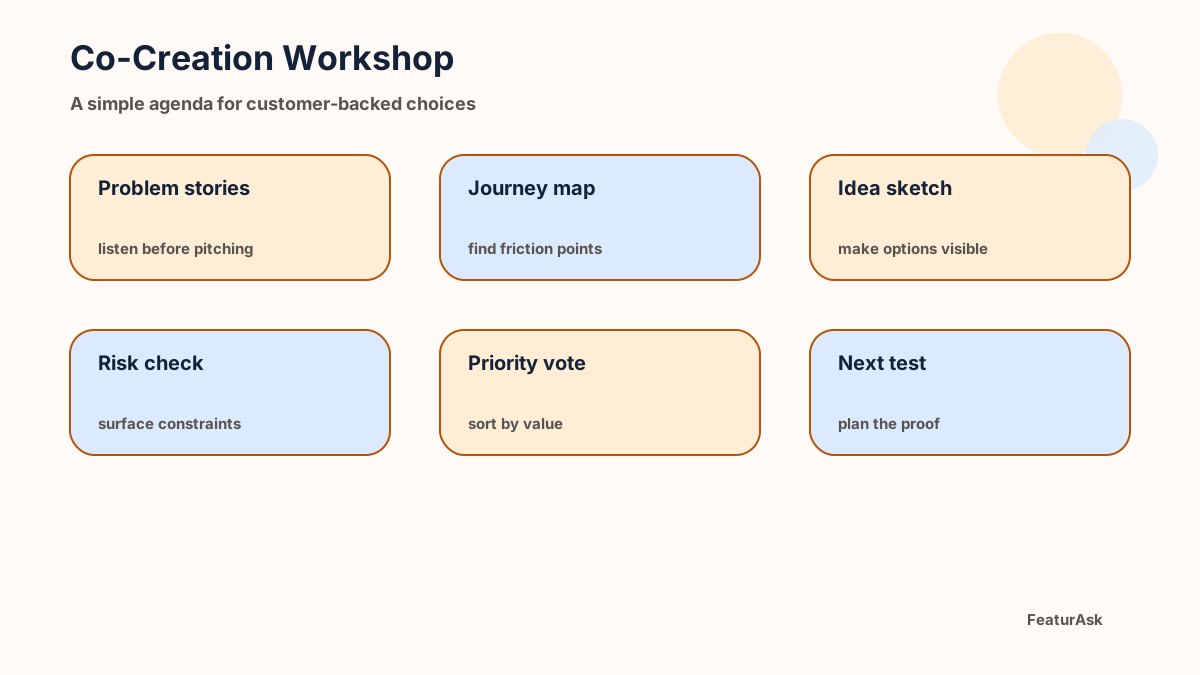
Design workshops bring customers into problem framing and concept exploration. They are helpful when workflows are complex, cross-functional, or emotionally charged. Instead of asking, “What feature do you want?” you map the journey, identify pain points, and explore alternative solutions.
A good workshop is not a brainstorming free-for-all. It has a facilitator, timeboxes, artifacts, and decision criteria. Invite customers who understand the workflow, not only executives who approve budgets. Capture exact language because it may later improve positioning and onboarding.
Model 4: innovation games and voting exercises
Innovation games use structured activities to reveal preferences and trade-offs. For example, customers might allocate a limited budget across possible improvements, rank problems by urgency, or compare prototype concepts. These exercises help product managers see relative value rather than isolated enthusiasm.
Voting is useful, but it should be interpreted carefully. A vote says, “This matters to me,” not “This should outrank all strategy, security, and technical considerations.” Combine votes with segment data, revenue impact, and qualitative comments.
Model 5: beta cohorts
Beta cohorts are one of the best bridges between co-creation and delivery. Invite a small group to use an early version, measure behavior, collect feedback, and improve before broad launch. Betas are most valuable when the team knows what it wants to learn.
Define entry criteria, feedback channels, support expectations, success metrics, and exit conditions. Tell participants what is experimental. After the beta, share what changed. This reinforces the partnership and encourages future participation.
Guardrails that prevent co-creation chaos
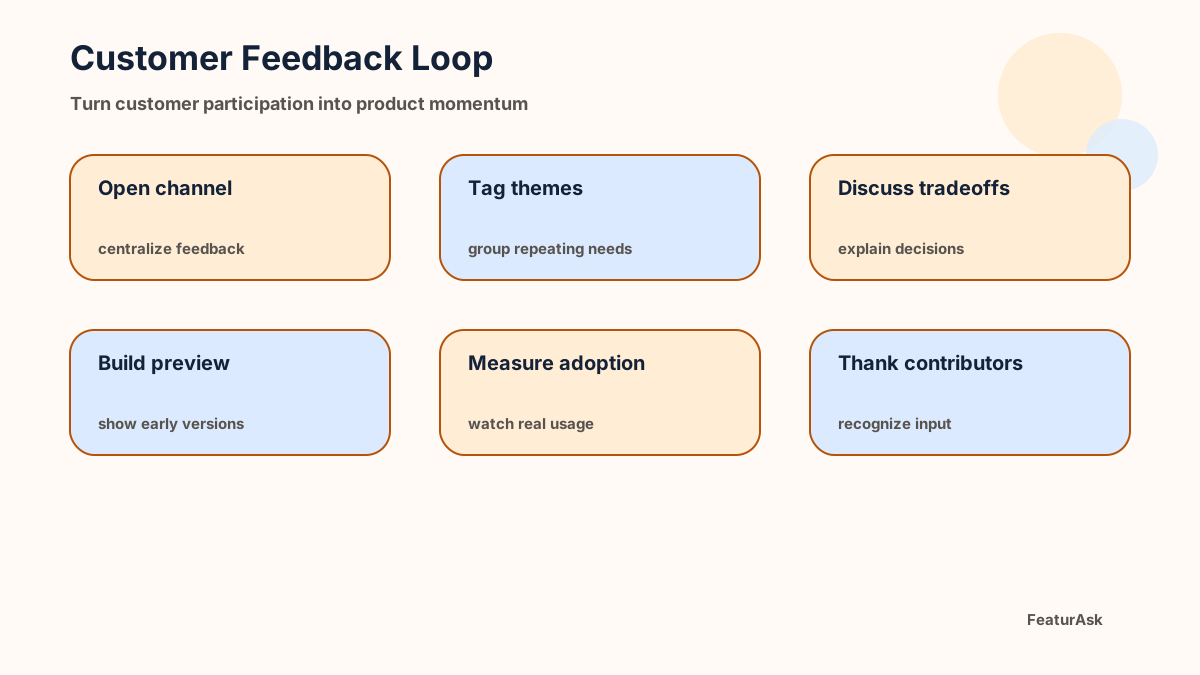
Co-creation fails when every customer input becomes a promise. Create guardrails before you invite participation. First, publish prioritization criteria. Second, separate problem validation from solution commitment. Third, timebox feedback windows. Fourth, make decisions visible. Fifth, close the loop when ideas are accepted, deferred, or declined.
The strongest guardrail is strategy. If the product has no clear direction, customer input will pull it in every direction. If strategy is clear, co-creation helps you discover the best path within that direction.
How to run co-creation in a small team
Start with a single feedback home. Use categories that match your product themes. Review new items weekly. Invite customers to comment on the top opportunities. Once a month, choose one theme for deeper discovery and interview five to eight users who represent different segments.
For planned features, create a private beta list from customers who requested the capability. Give them a clear script: what to try, what to report, and how to submit feedback. After release, notify everyone who voted or commented.
This rhythm is manageable without a research operations team. FeaturAsk can support the board, voting, roadmap statuses, and announcements. If you want to test that workflow, start with one month free and no credit card; the simple plan is $29.95/year.
Metrics for co-creation
Track participation quality, not only volume. Useful metrics include number of unique contributors, percentage of requests with comments, duplicate rate, votes by customer segment, beta activation, feature adoption by contributors, support ticket reduction, retention for involved accounts, and time from request to decision.
Also track trust signals. Are customers returning to comment again? Are support teams linking to roadmap items instead of writing custom explanations? Are sales teams using public statuses to set better expectations? Co-creation should make the whole organization calmer.
Common mistakes
The first mistake is over-indexing on loud customers. The second is asking customers to design the interface instead of explaining their workflow. The third is inviting feedback and then disappearing. The fourth is treating public votes as the only prioritization input. The fifth is failing to say no.
Saying no is part of healthy co-creation. Customers can handle a respectful decline when the reasoning is clear. Silence damages trust more than a thoughtful no.
How to recruit the right customers
The quality of co-creation depends on who participates. Start by mapping the segments that matter to your product strategy: new users, power users, administrators, buyers, churn risks, expansion accounts, and customers who recently adopted an important workflow. Then recruit a balanced group instead of relying only on whoever replies first.
Use different invitations for different activities. A broad feedback board can welcome everyone. A prototype review should invite users who experience the specific problem. An advisory group should include people who understand the business context and can speak candidly about trade-offs. A beta cohort should include users with enough motivation to tolerate rough edges and enough time to provide useful comments.
Make participation easy. Give customers a clear reason to contribute, a realistic time commitment, and a promise about what they will hear back. Many customers do not need a gift card or elaborate reward. They want the product to fit their work better, and they want to know their time was respected.
Turning co-creation input into roadmap decisions
After a workshop, vote, or beta, synthesize the input quickly. Group comments by problem, segment, severity, and expected value. Separate strong evidence from interesting anecdotes. Look for contradictions: one segment may need flexibility while another needs guardrails. Those tensions are where product judgment matters.
Create a short decision memo for each major theme. The memo should state what you heard, what the team believes, what will change, what will not change, and what evidence would change the decision later. This memo becomes the bridge between collaborative discovery and accountable prioritization.
Do not let co-creation slow every decision. Some feedback deserves immediate action, such as confusing copy or a broken workflow. Some deserves deeper discovery. Some should be declined because it conflicts with strategy or helps too few customers. The value of a transparent system is that each type of decision can be handled consistently.
Internal alignment matters as much as customer participation
Customer co-creation will frustrate teams if internal stakeholders are not aligned. Sales may interpret customer votes as commitments. Support may promise timelines that product has not approved. Engineering may feel that external participants are designing solutions without technical context.
Prevent this by publishing the rules internally. Define what each status means, who can move an item, how beta participants are selected, and how launch communication works. Train customer-facing teams to invite feedback without overpromising. Give engineering and design access to raw customer comments so they can understand the human context behind requests.
When everyone understands the system, co-creation becomes a source of alignment rather than another channel of pressure. Customers feel heard, and the team still protects focus.
What to share back with participants
The most overlooked part of co-creation is the follow-up. After customers contribute, share a short summary of what the team learned, which themes mattered most, what will happen next, and what will not happen now. This does not require a long report. A clear roadmap status update or changelog note is often enough.
Follow-up changes the relationship. Customers stop feeling like research subjects and start feeling like partners. They also learn how your team thinks, which makes future feedback more specific. If you decline a popular idea, explain the constraint or strategic trade-off. If you ship a related improvement, connect the dots. That habit turns collaboration into trust.
Co-creation examples by product stage
For an early product, co-creation may mean founder-led interviews, a public idea board, and rapid prototype reviews. For a growing product, it may include segmented advisory groups, beta programs, and structured roadmap voting. For a mature product, it may include enterprise councils, private feedback spaces, and research panels tied to specific strategic bets.
The method should match the risk. A small copy change does not need an advisory board. A new workflow that affects administrators, billing, data permissions, and onboarding deserves deeper collaboration. Good product managers scale the amount of customer involvement to the size and reversibility of the decision.
Useful references
Helpful external references include IDEO’s design thinking resources, the Nielsen Norman Group guide to user interviews, Harvard Business Review on co-creation, and Atlassian product management guidance. For deeper follow-up, pair this guide with FeaturAsk resources on feedback board software, customer feedback tools, and feature request software.
Customer co-creation is not a popularity contest. It is a better listening and learning system. Invite customers into the right moments, protect strategic decision-making, and show what happened next. If you want a simple way to do that, try FeaturAsk free for one month with no credit card and keep it for $29.95/year when it proves useful.