Growth Teams and Customer Feedback
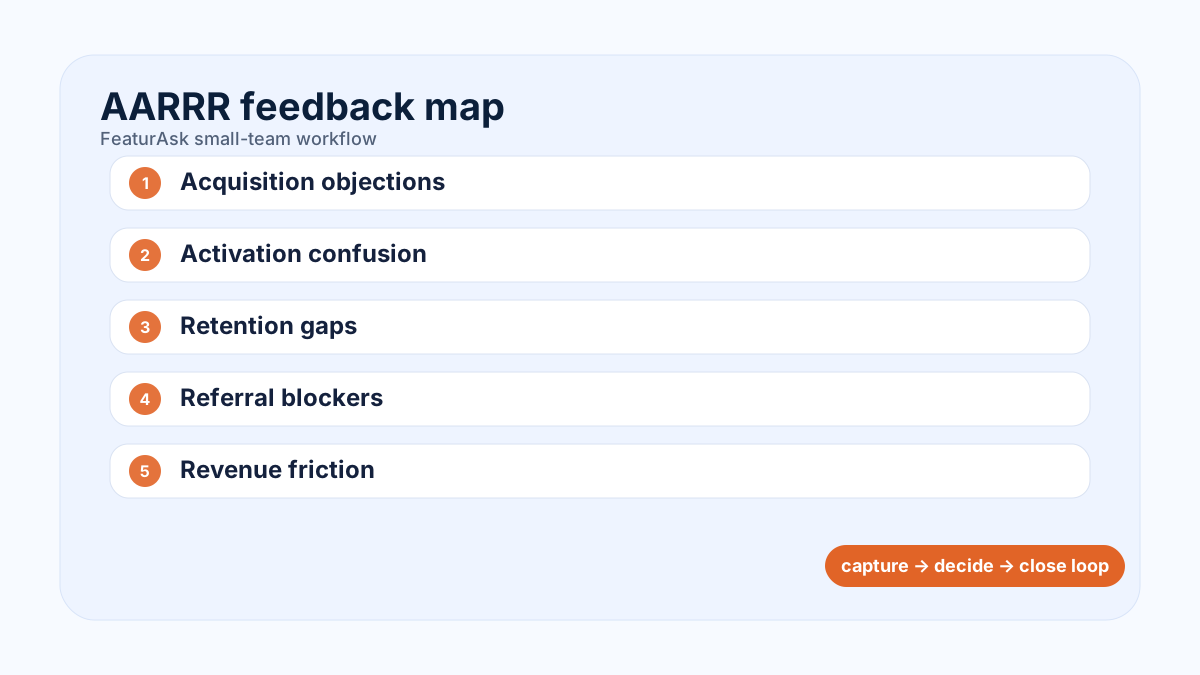
Growth teams use customer feedback to find the moments where acquisition, activation, retention, referral, and revenue break down. Without feedback, growth work can become a stream of experiments that optimize metrics while missing the reason users hesitate, abandon, or churn.
This guide frames feedback as growth evidence: a way to explain activation gaps, retention stalls, referral friction, and monetization objections before the team burns cycles on shallow experiments.
Start with the growth decision, then collect feedback
Product teams usually own the long-term value of the product: what problems it solves, how features work, and how the roadmap evolves. Growth teams focus on improving the path to that value. They study sign-up, onboarding, trial conversion, feature adoption, expansion, and reactivation.
The two teams overlap. A growth team may discover that activation fails because a core feature is confusing. A product team may ship a feature that needs lifecycle messaging to drive adoption. Customer feedback keeps both teams grounded in real user intent instead of internal assumptions.
A healthy relationship looks like this: growth identifies friction, product validates root causes, engineering improves the experience, and lifecycle teams communicate the change.
If you want this loop without a heavy rollout, FeaturAsk gives you a clean feedback widget, organized request dashboard, and public updates in one place. Start with one month free, no credit card required, then keep it for just $29.95/year when it fits your workflow.
Build better experiment hypotheses from customer language
Growth teams often begin with a metric drop: trial users do not invite teammates, new accounts do not complete setup, paid users ignore a new feature, or dormant users do not return. Feedback explains why. It can reveal unclear copy, missing integrations, perceived risk, wrong pricing expectations, or a feature that solves the wrong job.
Before launching an experiment, read recent feedback from the relevant segment. If activation is weak, study new-user comments and support tickets. If expansion is weak, study power-user requests and account manager notes. If referral is weak, ask satisfied customers what would make sharing easier.
Then design experiments around a specific belief. For example: 'Users do not finish onboarding because they do not understand the first milestone.' That belief can be tested with copy, checklist design, sample data, or guided setup.
Match feedback types to AARRR funnel stages
Growth teams need onboarding feedback, objection feedback, pricing feedback, cancellation reasons, feature adoption comments, and qualitative reactions to lifecycle messages. They also need passive signals such as search terms, failed actions, rage clicks, and repeated visits to help pages.
Feedback should be tied to funnel stage. Acquisition feedback explains why visitors do or do not sign up. Activation feedback explains first value. Retention feedback explains whether habits form. Revenue feedback explains willingness to pay. Referral feedback explains whether customers feel confident recommending the product.
For adjacent reading, use our guides to customer feedback tools, feedback management strategy, and feature request tracking.
Small teams do not need enterprise software to listen well. FeaturAsk helps you collect ideas, prioritize requests, and close the loop with users. Try the first month free, no credit card required; ongoing access is only $29.95/year.
Move from signal to test to learning record
Stage one is capture. Make it easy for users to share ideas in the product, during cancellation, after support conversations, and after major workflow moments. Stage two is classification. Tag by funnel stage, persona, account value, and theme. Stage three is synthesis. Turn raw comments into patterns and hypotheses.
Stage four is experimentation. Test changes that address a validated problem. Stage five is communication. Tell users when the problem has been improved, especially when they requested it. Stage six is measurement. Compare behavior and sentiment before and after the change.
This loop prevents growth work from becoming random tactics. It connects user language to business outcomes.
Avoid metric-only growth traps
Short-term experiments can improve conversion temporarily, but sustainable growth comes from delivering clearer value. Feedback reveals the difference between persuasion problems and product problems. If users do not understand a feature, messaging may help. If the feature does not solve the job, messaging will only create disappointment faster.
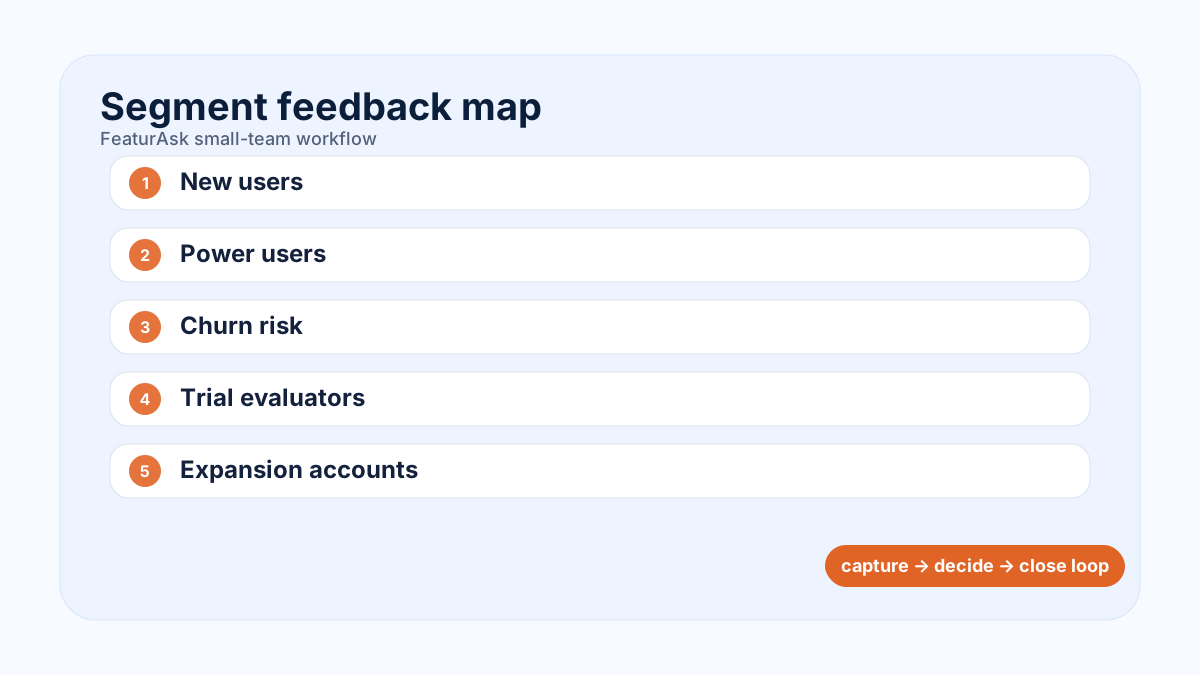
Feedback also protects teams from averages. A funnel may look fine overall while a valuable segment struggles. Segmenting feedback by plan, persona, company size, or use case helps teams find growth opportunities that aggregate analytics hide.
For measurement language, the <a href="https://www.productplan.com/glossary/aarrr-framework/" rel="nofollow">AARRR framework overview</a> is useful. For testing discipline, see this <a href="https://www.optimizely.com/optimization-glossary/ab-testing/" rel="nofollow">A/B testing glossary</a>.
Make feedback a growth learning loop
Customer feedback gives growth teams better hypotheses, sharper segmentation, and stronger follow-through. It helps teams optimize the journey without losing sight of the product value customers came for.
The practical starting point is simple: connect feedback to funnel stages, review it before experiments, and close the loop when a change ships.
Implementation checklist for growth feedback loops
Start by assigning feedback to funnel stages. Acquisition feedback belongs to landing pages, positioning, referrals, and sign-up intent. Activation feedback belongs to onboarding, first value, integrations, and setup. Retention feedback belongs to repeated use, habit formation, performance, and missing workflows. Revenue feedback belongs to packaging, pricing, procurement, and expansion. Referral feedback belongs to confidence, shareability, and perceived customer success.
Before each experiment, review recent comments from the affected stage. If the experiment targets trial conversion, read trial objections and onboarding confusion. If it targets expansion, read requests from active customers near plan limits. If it targets retention, read cancellation feedback and usage notes from accounts that became inactive. This creates hypotheses grounded in customer language rather than internal brainstorming alone.
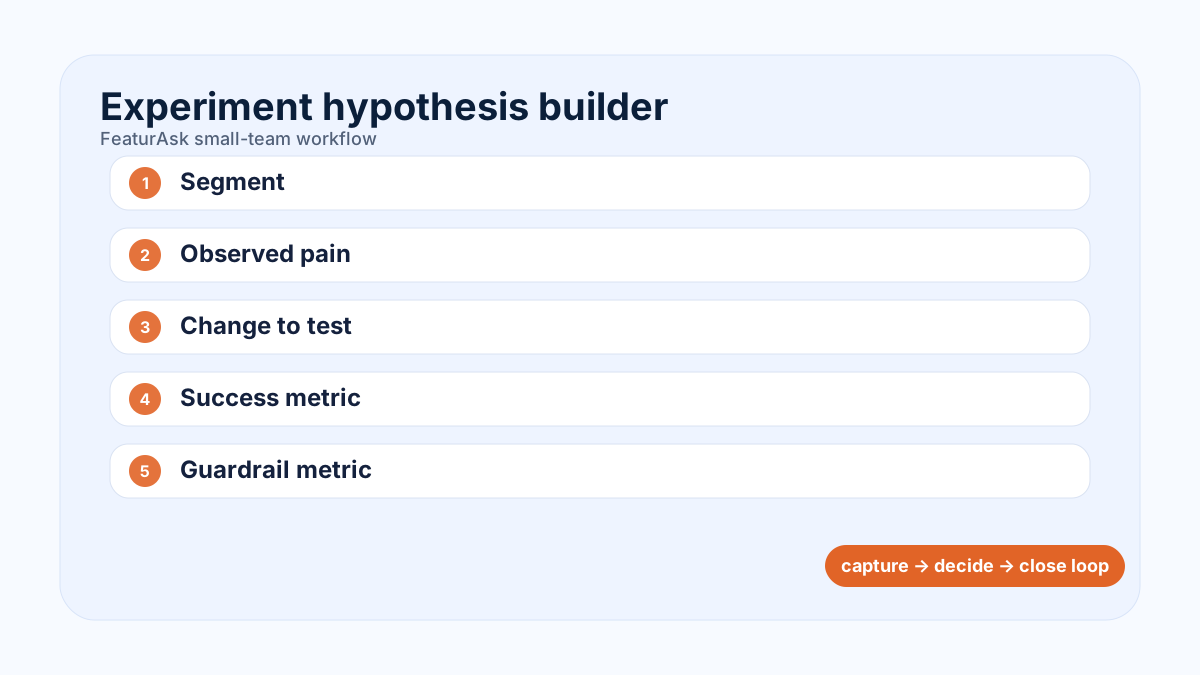
Write experiment hypotheses that include the customer problem. Weak hypotheses say that changing a button color will increase conversion. Strong hypotheses say that new users do not continue because they are unsure which action creates first value, so a guided milestone checklist should increase activation. The second version tells the team what to learn even if the metric does not move.
Segment results with care. A change may help small teams while hurting administrators at larger accounts. A lifecycle email may improve activation for self-serve users while annoying customers who already completed setup. Pair quantitative results with fresh comments so the team understands why the change worked or failed.
Share learnings outside the growth team. Product needs to know which friction points are structural. Support needs to know which messages reduce confusion. Sales needs to know which objections are changing. Customer success needs to know which adoption nudges are working. Feedback makes growth learning reusable.
Common growth feedback mistakes
One mistake is using feedback only after metrics decline. Feedback should shape the experiment backlog before problems become urgent. Another mistake is listening only to users who converted. Non-converters, inactive trial users, and churned customers often explain the biggest growth constraints. A third mistake is treating every request as a growth opportunity. Some requests add complexity that hurts activation for the broader market.
Avoid optimizing for clicks that do not lead to value. A modal can increase feature visits while reducing trust if the feature is not relevant. Avoid copying another company's growth tactic without matching the customer insight behind it. Finally, document failed experiments. The feedback that explains failure can prevent months of repeated guesses.
A growth-feedback 90-day experiment plan
Days 1 to 30 should connect feedback to the funnel. Create prompts for activation, retention, referral, and revenue moments: why did users abandon onboarding, what made them return, what blocked an upgrade, and what made them invite someone else? Each signal should include funnel stage, segment, behavior observed, customer quote, and the metric the team wants to influence.
Days 31 to 60 should convert signals into experiment hypotheses. Use the format: because customers in segment X struggle with Y, changing Z should improve metric A without harming metric B. Attach quotes and support tags to the hypothesis, then run small tests before redesigning whole journeys.
Days 61 to 90 should measure learning quality. After each test, record the result, what feedback predicted correctly, what feedback missed, and which segment behaved differently. This prevents the team from treating every quote as universal truth or every failed test as wasted work.
Run a growth retrospective around the AARRR funnel. Keep feedback prompts that explain metric movement, remove prompts that create trivia, and add one follow-up interview for the most confusing result. A good feedback system helps growth teams learn faster, not merely ship more experiments.
Funnel prompts growth teams can reuse
Acquisition feedback should uncover promise mismatch. Ask new visitors or trial signups what problem they expected the product to solve, which claim made them curious, and which missing proof created hesitation. Activation feedback should focus on the first successful outcome: what step was unclear, which setup task felt risky, and what the user tried before asking for help. Retention feedback should look for recurring friction: what workaround appears every week, which collaboration handoff breaks, and which missing result causes users to drift away.
Referral feedback is different. Users rarely refer because a button exists; they refer when the product makes them look helpful or saves another person from a known problem. Ask promoters who they would recommend the product to, what exact situation would trigger the recommendation, and what sentence they would use to describe the benefit. Revenue feedback should explore upgrade anxiety: what value is proven, what is still uncertain, who approves the purchase, and which plan boundary feels unfair or confusing.
Convert those answers into an experiment backlog with evidence attached. A weak growth hypothesis says, 'Improve onboarding to raise activation.' A stronger one says, 'Trial administrators who invite teammates in the first session are more likely to activate, but interviews show they hesitate because roles are unclear; a role-preview step should increase invitations without increasing setup abandonment.' The second hypothesis contains a segment, a behavior, a customer reason, a change, a target metric, and a guardrail.
Feedback also helps prevent local optimization. A landing-page test may increase signups while attracting customers who churn quickly. An upgrade prompt may raise short-term revenue while irritating accounts that need more proof. A growth team should review qualitative comments after every winning test and every surprising loss. The question is not only whether the metric moved; it is whether the team learned something durable about the customer journey.
The most useful growth feedback often comes from non-converters, not only champions. Ask trial users who stalled what they expected to complete, ask visitors who bounced which promise felt unclear, and ask expansion prospects what proof they need before paying more. Then compare those answers with the customers who did activate, retain, or upgrade. The contrast reveals which objections are normal friction and which are genuine product gaps.
Keep the loop ethical. Do not use feedback only to pressure users into another prompt or discount. Use it to improve the product journey, clarify expectations, and remove avoidable confusion. Sustainable growth comes from better fit and better timing, not from extracting one more click from users who are already uncertain.
A final safeguard is to review who benefits from each experiment. If the customer receives clearer onboarding, faster value, or a more relevant upgrade path, the growth work is aligned with product value. If only the dashboard improves, revisit the hypothesis before scaling it.
When you are ready to replace scattered notes with a simple customer feedback system, FeaturAsk is built for that job. You get one month free with no credit card required, and the paid plan is a predictable $29.95/year.