Gathering Customer Feedback Strategies for Software Teams
Gathering customer feedback is not a single survey or a quarterly research project. For software teams, it is an operating system for learning what users need, validating what to build, and explaining what changed. The challenge is collecting enough signal without interrupting customers or overwhelming the team.
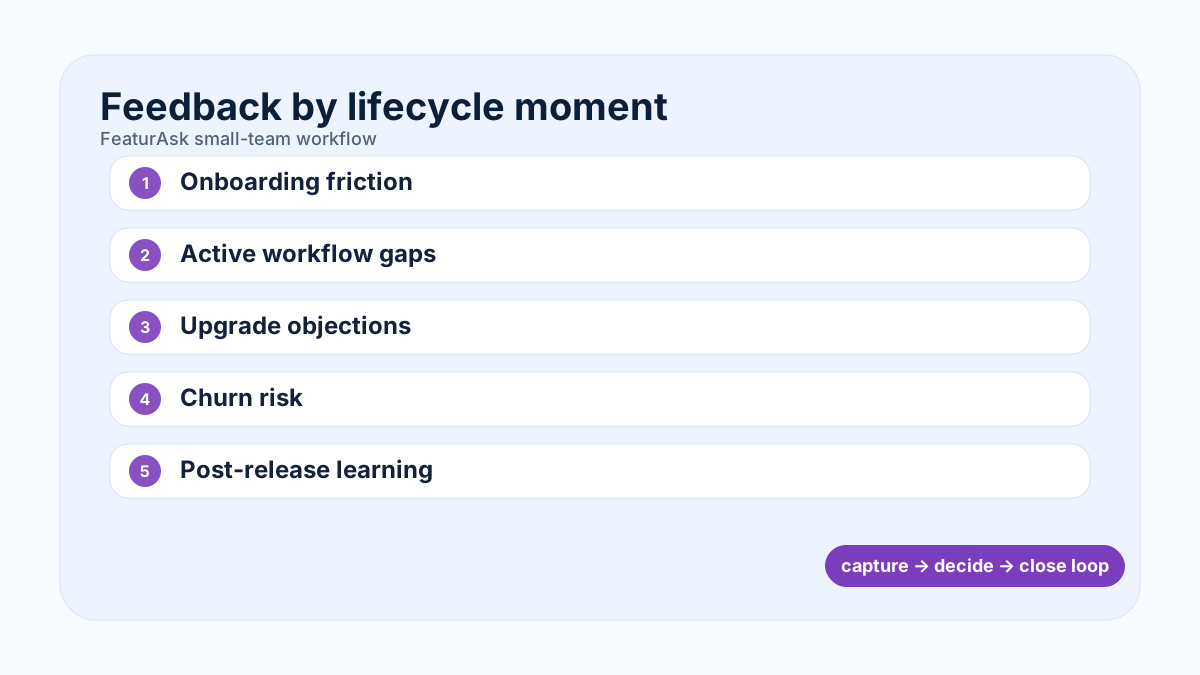
This guide organizes feedback by decision moment: what to ask during onboarding, active use, cancellation risk, roadmap discovery, and post-release follow-up so the team gets usable signal instead of scattered opinions.
Map feedback to the decision it should improve
Useful feedback has three parts: context, evidence, and timing. Context explains who the customer is and what they were trying to do. Evidence shows how common or valuable the problem may be. Timing tells the team whether the issue blocks adoption now or can wait until a later planning cycle.
A single angry comment may be important, but it is not automatically a roadmap priority. A highly voted request may be popular, but it still needs discovery. The goal is to combine direct customer words with product analytics, support themes, sales objections, churn reasons, and strategic direction.
Software teams should collect feedback continuously and review it intentionally. If you only ask after a big release, you miss onboarding confusion, daily workflow friction, and unmet needs from customers who quietly leave.
If you want this loop without a heavy rollout, FeaturAsk gives you a clean feedback widget, organized request dashboard, and public updates in one place. Start with one month free, no credit card required, then keep it for just $29.95/year when it fits your workflow.
Collect feedback by lifecycle stage, not by channel list
Quick surveys work well for focused questions after a user completes a task. NPS can track relationship sentiment, but it should not be the only research signal. Social media and communities reveal language customers use in public, though they can overrepresent vocal users. Support calls and chats expose urgent friction in detail.
Customer advisory boards help with strategic direction, especially in B2B markets. In-app feedback widgets catch ideas at the moment of need. Feedback rewards can increase volume, but use them carefully so incentives do not distort honesty. Casual conversations create empathy. Tracking tools show behavior that users may not mention. Updates and changelogs invite responses after changes ship.
The best mix is usually three to five channels, not ten. Choose channels that match your product stage and review capacity.
Turn raw comments into evidence records
Collection without organization creates a bigger mess. Tag feedback by product area, customer segment, plan, lifecycle stage, and problem type. Merge duplicates quickly. Add the original wording so the customer's language is not lost, then summarize the underlying need in a neutral way.
A feedback portal is useful because it lets users vote and comment on existing ideas instead of creating endless duplicates. Support teams can link tickets to portal requests, customer success can add account context, and product can review themes during planning.
For a practical system, connect this article with our guides to feedback management strategy, customer feedback tools, and product roadmap prioritization.
Small teams do not need enterprise software to listen well. FeaturAsk helps you collect ideas, prioritize requests, and close the loop with users. Try the first month free, no credit card required; ongoing access is only $29.95/year.
Ask in-product questions at high-context moments
Ask when the experience is fresh. After onboarding, ask whether setup matched expectations. After a failed action, ask what blocked the user. After repeated use of a feature, ask what would make it faster. After cancellation, ask what outcome was missing.
Avoid generic pop-ups on every login. They train users to dismiss your questions. Use event-based prompts, small text fields, and optional follow-up. A one-question prompt in the right place beats a ten-question form in the wrong place.
Respect user attention. If a customer already gave feedback this week, do not ask again tomorrow. If a customer submits a feature request, send updates when status changes. That closes the loop and makes future feedback more likely.
Use a weekly evidence review cadence
Prioritize by problem severity, customer value, strategic fit, effort, and confidence. Do not let raw vote counts make the decision alone. A request from five ideal customers can matter more than a request from fifty users outside the target market.
Use discovery interviews to clarify ambiguous requests. Customers often ask for a specific feature because they cannot see another solution. Ask what they are trying to accomplish, what workaround they use today, and what happens if the problem remains unsolved.
For measurement concepts, see the <a href="https://www.netpromotersystem.com/about/" rel="nofollow">NPS explanation from Bain</a>. For discovery and business model questions, the <a href="https://www.strategyzer.com/library" rel="nofollow">Strategyzer library</a> is a useful reference.
Keep the system lightweight enough to repeat
The strongest software teams do not gather feedback just to look customer-centric. They build a repeatable loop: ask at the right moment, centralize responses, identify patterns, validate important problems, prioritize transparently, and tell customers what shipped.
Start small. One feedback widget, one review meeting, one tagging system, and one monthly changelog can outperform a complicated research program nobody maintains.
Implementation checklist for software feedback collection
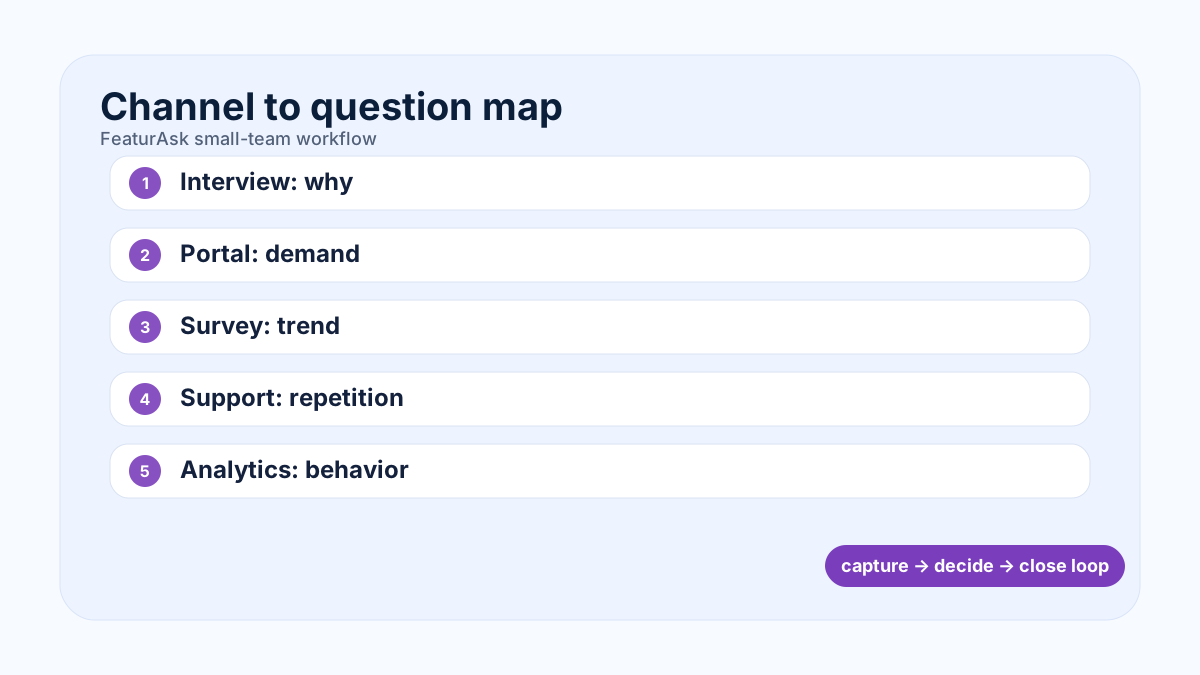
Map each feedback channel to a question it answers. In-app prompts answer what users felt at a specific moment. Support conversations answer what blocked a task badly enough to ask for help. Sales notes answer what prospects need before buying. Cancellation feedback answers which expected outcomes did not arrive. Product analytics answer what users did, not necessarily why they did it. When every channel has a purpose, the team avoids collecting the same shallow signal five times.
Create a single intake path even if feedback arrives from many places. A customer success manager can still talk to customers in calls, and support can still help in chat, but the product signal should end up in one system. Require a short summary, original wording, customer segment, source, date, and related account information. This minimum context makes later prioritization much easier.
Use prompts that ask about jobs and obstacles, not only feature ideas. Good questions include: What were you trying to do? What made it difficult? What workaround do you use today? What would happen if this stayed the same? Which role on your team feels the pain most? These questions reveal the problem behind the request and reduce solution bias.
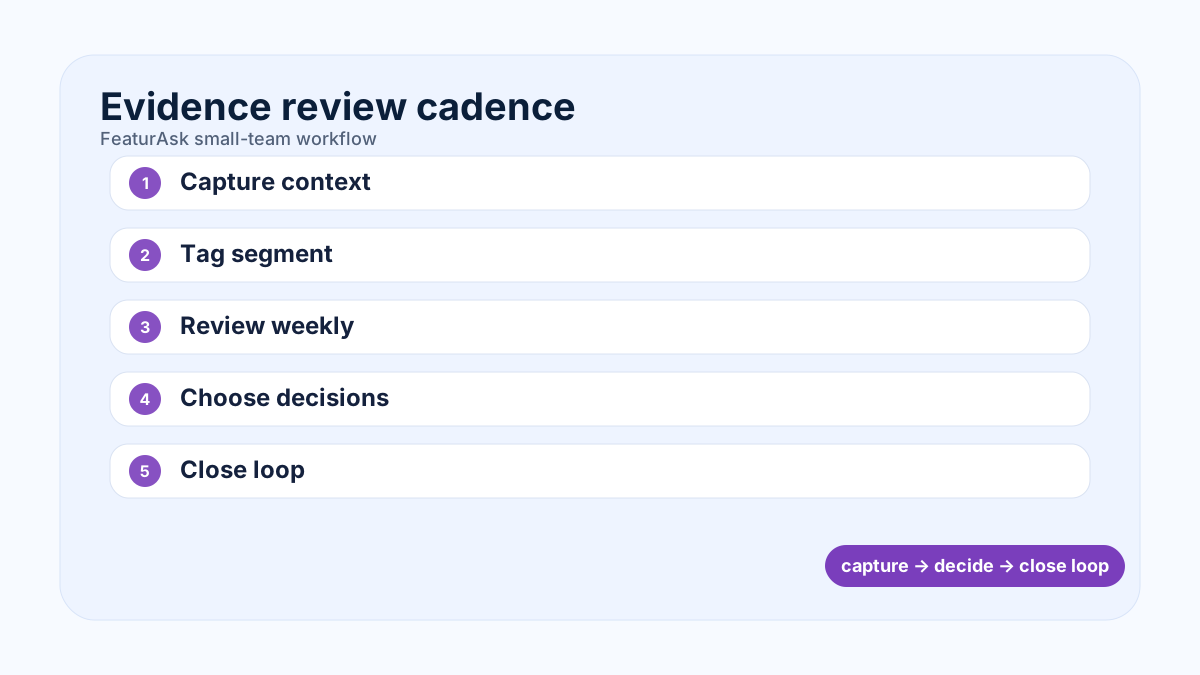
Set a weekly review habit. Triage new feedback, merge duplicates, tag themes, and choose which items need deeper discovery. A thirty-minute review is enough for many teams if the intake format is consistent. Larger teams can add a monthly synthesis meeting that summarizes patterns for roadmap planning.
Close the loop selectively but consistently. Not every comment needs a custom reply, yet customers who submit thoughtful feedback should know whether their input was reviewed. When a related change ships, notify requesters and invite them to try it. This turns feedback from a one-way extraction into an ongoing relationship.
Common feedback collection mistakes
The first mistake is asking broad questions at random times. A generic survey on login produces generic answers. The second mistake is collecting feedback only from power users. They provide valuable depth, but new and inactive users reveal different friction. The third mistake is overvaluing incentives. Rewards may increase volume while lowering candor if participants rush through answers.
Another mistake is separating research from shipping. Feedback should inform roadmap decisions, onboarding fixes, documentation, pricing, and release communication. Finally, do not wait for a perfect taxonomy. Start with a few tags and improve them as patterns emerge. A used system with imperfect labels beats a perfect system nobody updates.
A lifecycle-based 90-day feedback collection plan
Days 1 to 30 should map questions to lifecycle moments. Ask new users about activation friction, active users about workflow gaps, evaluators about buying objections, and churn-risk customers about unmet expectations. Each response should include the moment asked, customer segment, exact wording, product area, and whether the signal is a problem, request, objection, or compliment.
Days 31 to 60 should improve signal quality. Replace broad surveys with targeted prompts, add two interview slots per week for ambiguous themes, and route repeated support issues into a shared feedback board. Review the board weekly and separate evidence from interpretation: what customers said, what behavior shows, and what the team believes might solve it.
Days 61 to 90 should turn learning into decisions. Choose a few validated problems, write opportunity statements, and attach feedback evidence to roadmap items. Close the loop by telling customers what changed, what is still being investigated, and what the team decided not to pursue.
The retrospective should check coverage, not just volume. Identify lifecycle stages with too little signal, segments that dominate the data, prompts that produce vague answers, and decisions that still lack evidence. Improve one collection point at a time so the system stays usable.
Question design that creates usable signal
The fastest way to improve feedback quality is to stop asking customers to design the roadmap for you. Ask about moments, jobs, constraints, and recent behavior instead. A useful onboarding question is not 'What features do you want?' but 'What were you trying to accomplish when setup slowed down?' A useful cancellation question is not 'Why are you leaving?' but 'Which task did the product fail to support well enough to keep paying?' The wording moves the customer from opinions into evidence.
Create one question bank per lifecycle stage. During trial, ask what the user expected to happen next and which step felt risky. During active usage, ask which recurring workflow takes too many clicks or requires a workaround. Before renewal, ask what improvement would make the product easier to justify internally. After shipping, ask whether the change solved the original problem or merely changed where the friction appears. Store the answer with the segment and behavior that triggered it; a quote from an inactive trial user means something different from the same quote from a power user.
Small teams should also protect themselves from feedback theater. Ten enthusiastic comments do not automatically prove demand if all ten come from the same narrow segment. One quiet account may matter if it represents a high-retention customer profile. Review responses with analytics and support history so the team knows whether it is hearing a broad pattern, an edge case, or a strategic account need. The goal is not to make every customer happy; it is to make decisions with enough context to explain the tradeoff.
A practical weekly review can be short. Bring the top repeated support theme, the newest portal requests, one interview insight, and one behavior metric. Decide whether each item needs clarification, a design exploration, a roadmap discussion, or a polite decline. Assign one owner for the next question. This cadence prevents feedback from becoming a passive archive and keeps discovery connected to delivery.
One final filter keeps the program practical: every collection method should have a decision owner. If nobody will read the cancellation answers this week, shorten the form or pause it. If interview notes never reach planning, summarize them into three evidence records immediately after the call. Small teams create better products when feedback is gathered close to the decision it can improve.
When you are ready to replace scattered notes with a simple customer feedback system, FeaturAsk is built for that job. You get one month free with no credit card required, and the paid plan is a predictable $29.95/year.