16 Best Idea Tracking Tools Plus Business Innovation Tips
Idea tracking is the habit of capturing promising suggestions, keeping their context, validating them, and following them until the team decides what to do. Without a tracking system, ideas scatter across Slack, support tickets, sales notes, spreadsheets, whiteboards, and memory. The team may still be creative, but it cannot tell which ideas are repeated, which customers care, which initiatives are moving, or which suggestions already shipped.
The best idea tracking tool depends on the kind of idea you manage. Product teams need customer feedback, votes, segments, and status updates. Marketing teams need campaign notes, creative boards, and approval workflows. Operations teams need process improvement lists. Enterprise innovation programs need governance, scoring, and portfolio reporting. This guide compares 16 tools by category and then shows how to validate, prioritize, and track completion without creating a bureaucratic mess.
If your immediate problem is customer feature requests, FeaturAsk is the lightweight option: a feature request widget, voting, analytics, custom branding, and moderation for small teams. You can try FeaturAsk free for one month with no credit card, then continue for $29.95/year if it becomes your feedback home.
What is idea tracking?
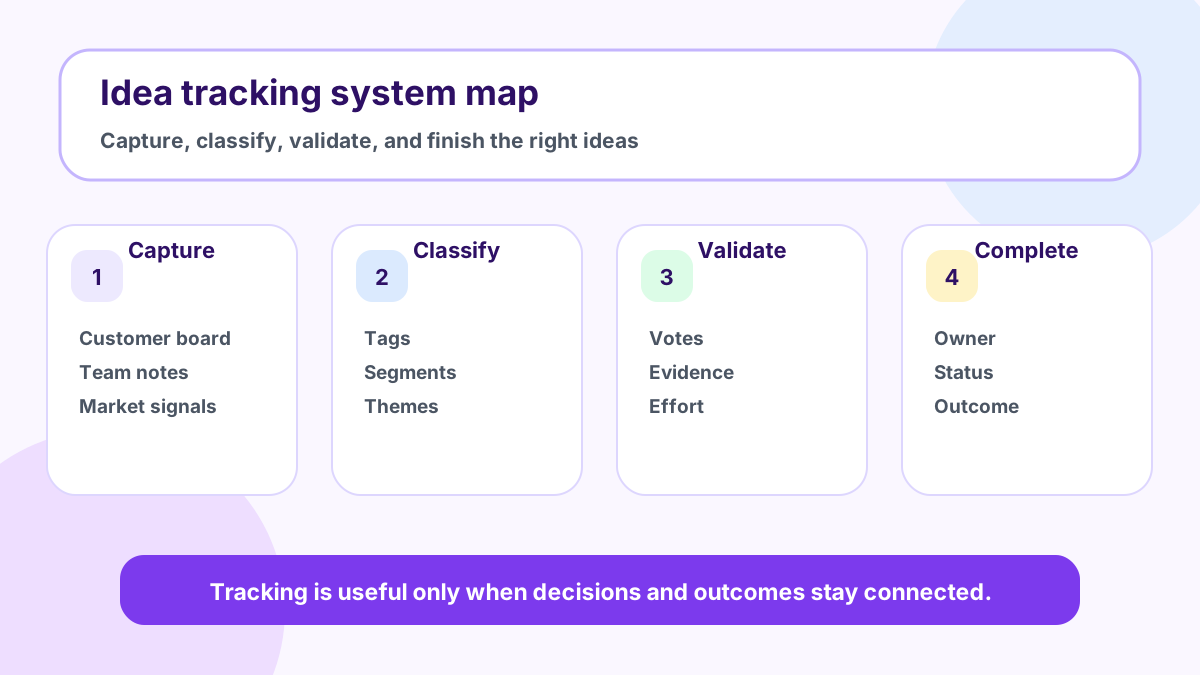
Idea tracking is a workflow for preserving an idea from first signal to final outcome. It usually includes intake, deduplication, tagging, discussion, validation, prioritization, ownership, status updates, and completion notes. A tracked idea can end in several ways: accepted, shipped, merged into another initiative, postponed, declined, or kept open for more evidence.
Good tracking does not mean every idea becomes a project. In fact, the discipline is valuable because it separates raw suggestions from committed work. A customer may ask for an integration, an employee may propose a process change, or a marketer may suggest a new campaign. The tracking system keeps the why, who, and evidence attached long enough for a thoughtful decision.
For related workflows, see FeaturAsk's guides on how to prioritize feature requests, how to say no to customers and feature requests, and how to use a website feedback tool.
Key benefits of idea tracking
The first benefit is memory. Teams forget why a request mattered, who asked for it, or what workaround users described. A tracking system preserves that context. The second benefit is pattern recognition. One request may look small, but fifty similar comments reveal a product gap or market opportunity.
The third benefit is prioritization. When ideas have tags, segments, votes, comments, confidence, and effort estimates, teams can compare trade-offs instead of relying on the loudest stakeholder. The fourth benefit is trust. Customers and employees are more willing to contribute when they see visible statuses and honest outcomes.
Finally, idea tracking improves learning. When a shipped idea includes the original problem, expected impact, and final result, the team can compare what it believed with what happened. ISO 56002 innovation management guidance, checked through ISO's public overview on May 22, 2026, is a useful reminder that innovation depends on a managed system, not random inspiration. Tracking is one of those practical systems.
Types of idea tracking tools
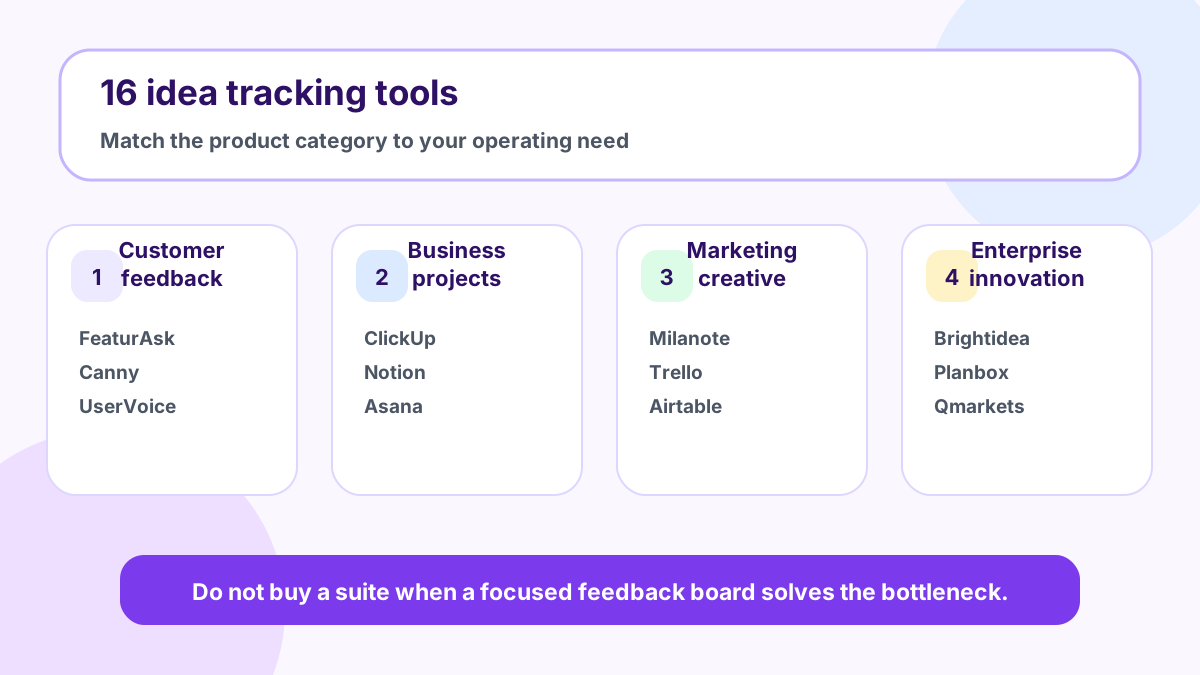
There are four common types. Customer feedback tools collect external product suggestions and let users vote or comment. Project management tools track selected ideas as work with owners, dates, dependencies, and status. Creative and marketing tools organize campaign concepts, research, assets, and approvals. Enterprise innovation tools manage challenges, internal submissions, scoring, governance, and portfolios.
Some teams combine categories. For example, a SaaS company might use FeaturAsk for public requests, Notion for discovery notes, and Jira for engineering delivery. That is healthier than forcing every stage into one tool. The important rule is to know which system owns each stage.
5 best idea tracking tools for customer feedback
Customer feedback tools are best when users, buyers, or prospects are the source of ideas. They should make submission easy, merge duplicate demand, show voting signals, and communicate progress.
1. FeaturAsk
FeaturAsk is built for teams that want customer ideas in one visible place without a heavy product suite. It includes a feature request widget, voting, comments, analytics, custom branding, and moderation. Use it when feedback currently arrives through many channels and you need a simple board that users can understand.
The biggest advantage is affordability and focus. A small team can start collecting requests, review the strongest themes, and update statuses without spending weeks configuring an enterprise tool. FeaturAsk is especially useful for founders, indie SaaS builders, agencies, and product-led teams that want a public feedback loop.
2. Canny
Canny tracks customer feedback, votes, roadmaps, and changelog communication. It is a strong option for SaaS companies with an established feedback process and the budget for a more mature platform. Compare it when segmentation, prioritization views, and customer communication are central to your product operations.
3. SurveyMonkey
SurveyMonkey is useful when you need structured research rather than open idea voting. It can validate demand, measure preferences, and collect quantitative responses from a defined audience. It is less suited to ongoing public request tracking unless paired with a board or database.
4. Typeform
Typeform helps teams collect richer context with conversational forms. Use it for internal idea submissions, customer interviews, beta requests, or research prompts. Its strength is quality of intake; its weakness is long-term status communication.
5. UserVoice
UserVoice is a mature feedback management platform used by product teams that need to capture, segment, prioritize, and communicate customer ideas at scale. It can be helpful for larger teams with many accounts and stakeholders.
5 best idea tracking tools for business and marketing projects
Business and marketing ideas often need collaboration, deadlines, assets, approvals, and campaign history. The tools below are useful after an idea becomes something a team may execute.
6. ClickUp
ClickUp combines tasks, docs, whiteboards, dashboards, and forms. It can track internal idea pipelines and then convert approved ideas into work. Use it when your team wants one workspace for briefs, owners, dates, and execution.
7. Notion
Notion is excellent for flexible idea databases, research libraries, content calendars, and product briefs. Notion's help guides, accessed May 22, 2026, show how databases, relations, and templates can support custom workflows. It works best when the team has discipline about fields and views.
8. Asana
Asana is strong for project execution. Asana documentation accessed May 22, 2026, highlights projects, goals, portfolios, and status updates. Use it when ideas need cross-functional ownership and deadlines. Keep raw idea intake elsewhere if you need public voting or customer conversation.
9. Trello
Trello is simple, visual, and easy for small teams. Trello's 101 guide, accessed May 22, 2026, explains boards, lists, and cards, which makes it natural for lightweight idea lanes such as new, reviewing, testing, and launched. It can become messy as volume grows, so define labels and archive rules early.
10. Milanote
Milanote is useful for creative planning, mood boards, research clusters, and campaign concepts. It helps visual thinkers gather inspiration and shape early ideas. It is not the best system for customer votes, but it can be excellent for marketing and design exploration.
6 best idea tracking tools for enterprise companies
Enterprise idea tracking adds governance. The organization may need campaigns, roles, review committees, scoring models, legal checks, data security, and reporting across departments.
11. Brightidea
Brightidea supports enterprise innovation programs, idea campaigns, evaluation workflows, and analytics. It is a fit when innovation has formal sponsors, budgets, and reporting expectations.
12. HelloIgnite
HelloIgnite helps organizations collect employee ideas and manage internal innovation. It can support engagement when leaders commit to reviewing submissions and explaining decisions.
13. Planbox
Planbox is designed for innovation management, challenges, and portfolio tracking. Use it when ideas need to move through structured stages from submission to review, business case, and implementation.
14. IdeaScale
IdeaScale is used for crowdsourcing, open innovation, and large participation programs. It can fit governments, universities, communities, and enterprises that need broad idea collection and evaluation.
15. Qmarkets
Qmarkets focuses on enterprise innovation management, employee engagement, and idea campaign workflows. It is useful when program administrators need configurable processes and dashboards.
16. Jira Product Discovery
Jira Product Discovery helps product teams collect ideas, score opportunities, and connect discovery to Jira delivery. Atlassian's Jira Product Discovery documentation and Jira Software guides, accessed May 22, 2026, show its role in linking product ideas to delivery work. It is strongest for teams already living in the Atlassian ecosystem.
How to validate and prioritize ideas
Start with the problem, not the proposed solution. Ask who experiences it, how often, what they do today, how painful the workaround is, and what success would look like. Nielsen Norman Group's user need statement guidance, accessed May 22, 2026, remains useful because it forces teams to describe user, need, and reason before designing a feature.
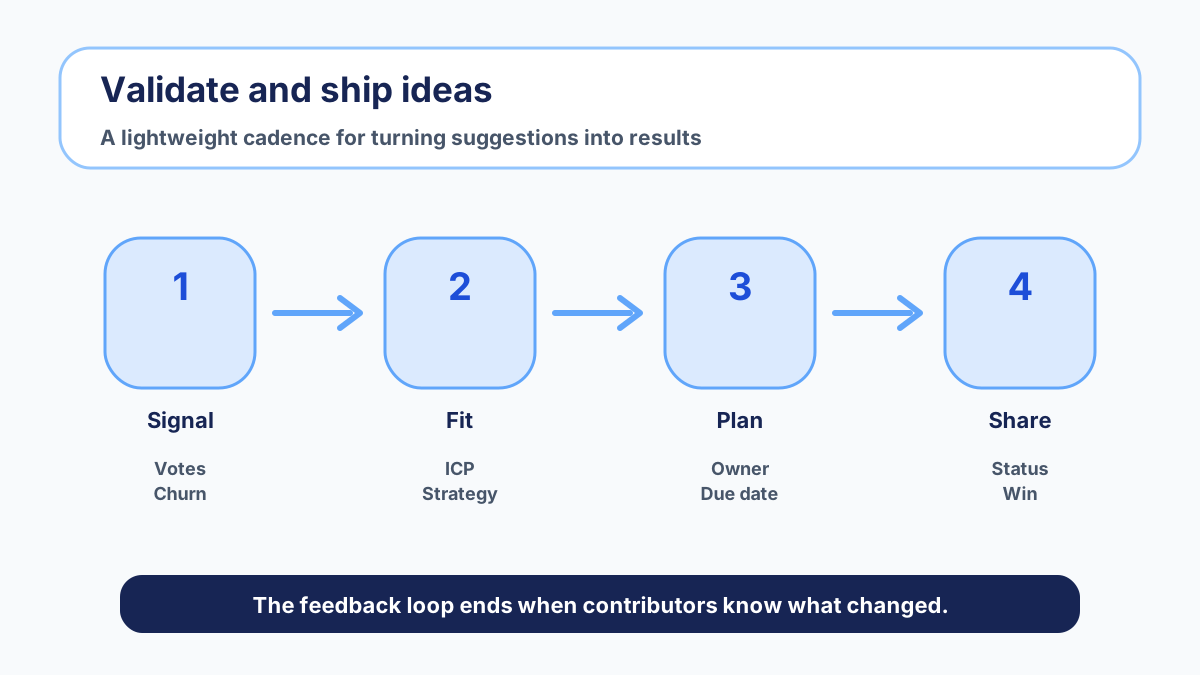
Next, combine demand signals. Upvotes are useful because they show visible interest, but they are not the whole answer. Add customer segment, revenue relevance, churn risk, strategic fit, effort, confidence, and timing. A request from your ideal customer profile may matter more than a high-vote request from users you do not serve.
ProductPlan's RICE scoring overview, accessed May 22, 2026, is a practical model for comparing reach, impact, confidence, and effort. Atlassian's prioritization framework guide, accessed May 22, 2026, is also useful because it compares multiple methods rather than pretending one formula works for every decision.
Prioritization should be a cadence, not an emergency. Clean new ideas weekly, review themes monthly, and make roadmap decisions during planning. That rhythm keeps the backlog fresh without letting every new comment interrupt delivery.
How to track idea completion and share wins
An idea is not truly tracked until the outcome is recorded. Use statuses that contributors understand: open, under review, planned, in progress, shipped, not now, and closed. Define each status. Planned should mean the team intends to do the work, not that someone liked the idea. Not now should be respectful and honest, not a silent rejection.
When an idea becomes work, assign an owner and connect it to the delivery system. Include a link to the relevant project, epic, task, or brief. Add a short outcome note when the work ships: what changed, who benefits, and where users can learn more. If the idea is declined, explain the reason in plain language.
This is where feedback tools create trust. A public status update lets every voter see progress without the product manager writing one-off replies. If you want that loop in a small-team budget, open a FeaturAsk board with a one month free trial. No credit card is required, and the paid plan is $29.95/year.
A lightweight idea tracking workflow
Use a four-step workflow. First, capture every idea in the right intake channel: customer board, form, meeting note, or internal database. Second, classify it with simple tags such as source, segment, theme, urgency, and affected workflow. Third, validate it with votes, comments, interviews, analytics, competitive context, and effort estimates. Fourth, complete the loop with a decision, owner, status, and outcome.
Keep the fields minimal. Title, description, source, segment, theme, status, owner, priority, evidence, and next step are enough for many teams. Add complexity only when a real decision requires it. A giant template creates the illusion of rigor while discouraging updates.
Common idea tracking mistakes
The most common mistake is collecting ideas in too many places without a central record. The second is letting stakeholders create work directly from raw suggestions. The third is never closing old ideas, which turns the backlog into a museum. The fourth is using private notes for customer-facing requests, which prevents contributors from seeing that their input mattered.
Another mistake is rewarding novelty over repeated pain. Many valuable ideas are not flashy; they remove friction, clarify workflow, or reduce support volume. Track repeated small frustrations because they often reveal the best retention opportunities.
Frequently asked questions
How is idea tracking different from project management?
Idea tracking manages uncertainty. Project management manages committed work. An idea may be explored, merged, declined, or postponed. A project has an owner, plan, and delivery expectations. The clean handoff happens when a validated idea becomes a project item.
Why should I use software to track ideas?
Software creates shared memory, visible status, search, tags, and accountability. Spreadsheets can work at low volume, but they rarely create a feedback loop for customers or employees. The right tool prevents ideas from disappearing after meetings.
Who should be responsible for idea tracking?
Product, operations, marketing, or innovation leaders can own the process depending on the idea type. The owner should moderate intake, merge duplicates, prepare review lists, update statuses, and make sure contributors hear the outcome. Responsibility can be shared, but the process needs a named maintainer.
Final takeaways
The best idea tracking tool is the one that matches your idea source and decision cadence. Customer feature requests need feedback boards and visible statuses. Marketing ideas need creative organization and project follow-through. Enterprise innovation needs governance. Delivery teams need task systems only after an idea is selected.
Start simple, keep context attached, prioritize with evidence, and close the loop. If customer ideas are the bottleneck, try FeaturAsk for one month free with no credit card and keep an affordable feedback board for $29.95/year.
Sources checked in May 2026
- ProductPlan, <a href="https://www.productplan.com/glossary/rice-scoring-model/" rel="nofollow">RICE scoring model</a>, accessed May 22, 2026.
- Atlassian, <a href="https://www.atlassian.com/agile/product-management/prioritization-framework" rel="nofollow">prioritization frameworks</a>, accessed May 22, 2026.
- Atlassian, <a href="https://support.atlassian.com/jira-product-discovery/" rel="nofollow">Jira Product Discovery help</a>, accessed May 22, 2026.
- Notion, <a href="https://www.notion.com/help/guides" rel="nofollow">help guides</a>, accessed May 22, 2026.
- Asana, <a href="https://help.asana.com/s/" rel="nofollow">help center</a>, accessed May 22, 2026.
- Nielsen Norman Group, <a href="https://www.nngroup.com/articles/user-need-statements/" rel="nofollow">user need statements</a>, accessed May 22, 2026.
- Trello, <a href="https://trello.com/guide/trello-101" rel="nofollow">Trello 101 guide</a>, accessed May 22, 2026.
- ISO, <a href="https://www.iso.org/standard/68221.html" rel="nofollow">ISO 56002 innovation management overview</a>, accessed May 22, 2026.