The Effective Management of a Product Backlog
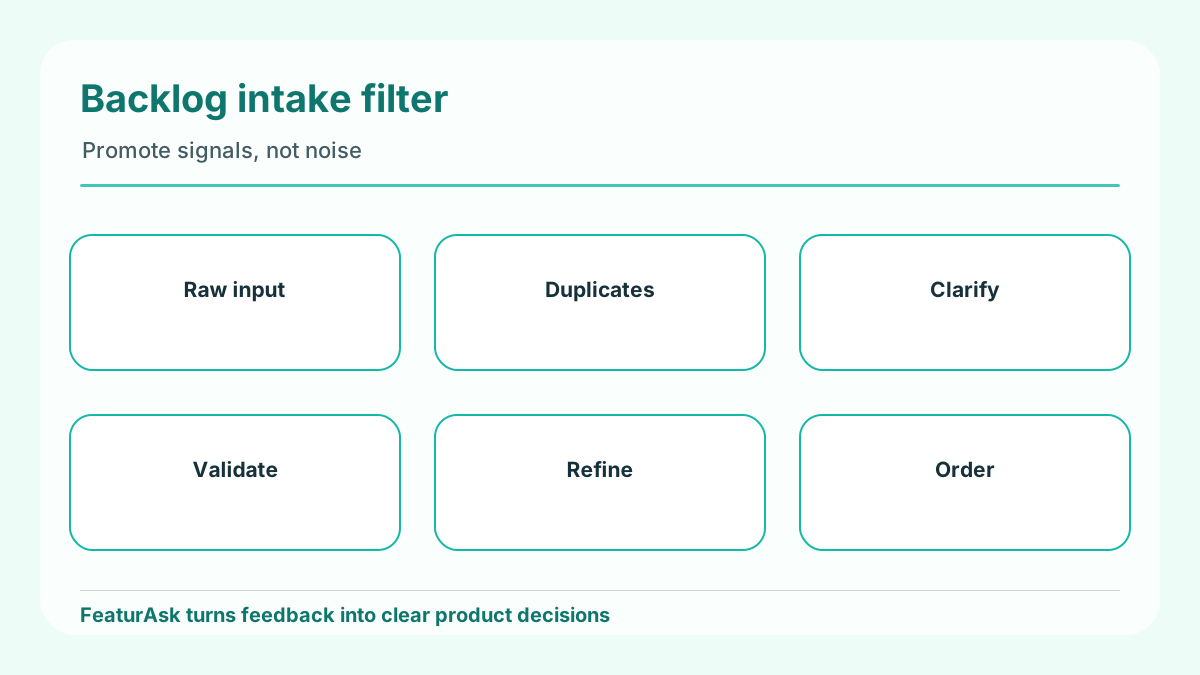
Updated 2026-02-19. A product backlog is useful only when it helps a team decide what to do next. Left alone, it becomes a junk drawer: old ideas, duplicate requests, half-written bugs, vague improvements, and stakeholder wishes competing for attention. Effective backlog management turns that pile into an ordered, living set of options tied to a product goal.
FeaturAsk fits before and beside the backlog. It captures the customer voice, keeps requests visible, and helps the product owner see demand before turning the best signals into backlog items. That separation matters: not every request belongs in development, but every request can teach the team something.
Backlog management has to balance official delivery work with the messy signals that arrive from customers. The Scrum Guide defines the product backlog as the ordered source of team work https://www.scrumguides.org/scrum-guide.html, while Atlassian’s backlog guide explains why refinement keeps that list actionable https://www.atlassian.com/agile/scrum/backlogs.
If your backlog starts with scattered comments, use FeaturAsk for a one month free trial with no credit card required to collect requests before they become delivery candidates. Pricing is $29.95/year.
Quick answer
A healthy product backlog is not a warehouse for every idea the company has ever heard. It is a managed set of options, commitments, risks, and rejected paths. The work is to keep raw demand visible without letting unrefined requests crowd out the few items that are ready for delivery.
For adjacent reading, use FeaturAsk’s articles on feature request tracking, customer feedback management tools, and public roadmap strategy.
What belongs in the backlog
-
Customer-facing features that support the product goal.
-
Bug fixes with enough detail to reproduce or assess impact.
-
UX improvements that remove friction from important workflows.
-
Technical work that protects reliability, security, maintainability, or future delivery speed.
-
Research tasks when the team needs evidence before committing to build.
Add a concise status note to each candidate so refinement begins with current context rather than archaeology.
What should stay outside
-
Raw duplicate feedback that has not been grouped.
-
Ideas with no user problem attached.
-
Stakeholder suggestions that have not been weighed against strategy.
-
Large themes that need discovery before they can become actionable items.
Keep one example, quote, or ticket beside important items so the problem stays concrete.
A clean intake flow
-
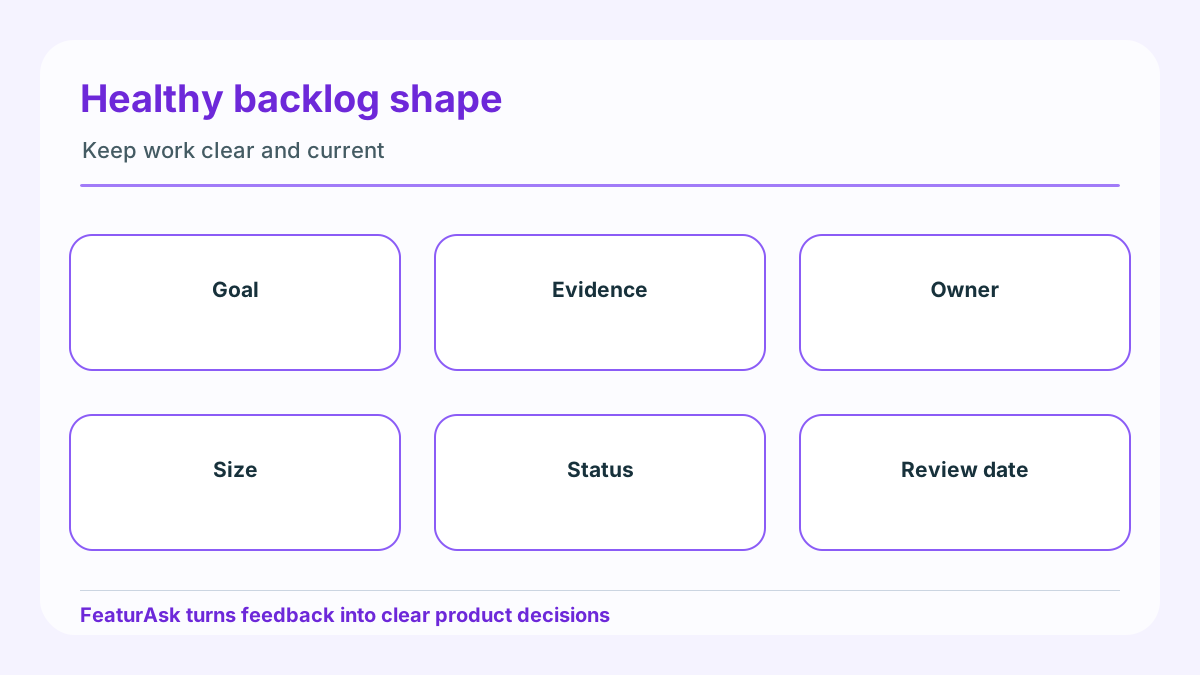
Capture requests where customers already are, using a widget or feedback portal.
-
Merge duplicates and ask clarifying questions before creating development tickets.
-
Tag requests by segment, plan, use case, urgency, and product area.
-
Promote only validated items into the backlog, with links back to the evidence.
Write the entry criteria beside every delivery candidate so rough requests do not sneak into sprint planning.
For backlog cleanup, FeaturAsk keeps requests, votes, moderation, and analytics in one lightweight place. The plan is $29.95/year, with a free first month and no credit card needed at signup.
Backlog refinement that actually helps
-
Refinement should clarify problem, value, constraints, acceptance signals, and likely effort.
-
It should not become a ritual where the team rewrites every item forever.
-
The best refined items are small enough to discuss, test, and sequence.
Name the owner and next check for each candidate so the backlog does not become storage.
The same evidence helps revenue teams discuss demand; FeaturAsk’s B2B SaaS sales guide and product management books list are useful follow-ups.
Ownership and collaboration
-
The product owner owns ordering, but backlog quality is shared work.
-
Engineering flags feasibility and technical debt.
-
Support brings repeated customer pain.
-
Sales adds market context while respecting product strategy.
-
Leadership sets goals and guardrails instead of manually ranking every ticket.
Notify interested users when their request moves forward, merges into another item, or leaves the active list.
A backlog-health scorecard
Once a month, sample the top twenty backlog items and ask whether each one has a clear user problem, an accountable owner, recent evidence, a rough size, and a visible decision date. If several top items fail that test, the backlog is not ready for sprint planning. It needs refinement, consolidation, or deletion before the team commits delivery time.
A backlog intake-to-delivery routine
-
Collect raw ideas in a feedback space before promoting anything into the delivery backlog.
-
Merge related feedback around a single problem statement before estimating or ranking anything.
-
Label each item by product area, evidence quality, and readiness before planning discussions.
-
Compare customer value, delivery effort, dependencies, and uncertainty before moving an item forward.
-
Update public request statuses when items enter discovery, move to build, ship, or get archived.
Use a short maintenance rhythm rather than a giant cleanup day. Triage new input, clarify the few items that may become work, archive stale entries, and publish status changes so customers do not mistake silence for neglect.
Backlog refinement that does not become ceremony
Good backlog refinement makes upcoming work easier to discuss, estimate, and sequence. It should not turn every rough idea into a full specification. Keep raw requests in the feedback system until they have enough evidence. Promote an item into the backlog only when the problem is clear, the target user is known, and the next decision is actionable. That keeps the backlog from becoming a permanent archive of every suggestion the company has ever heard.
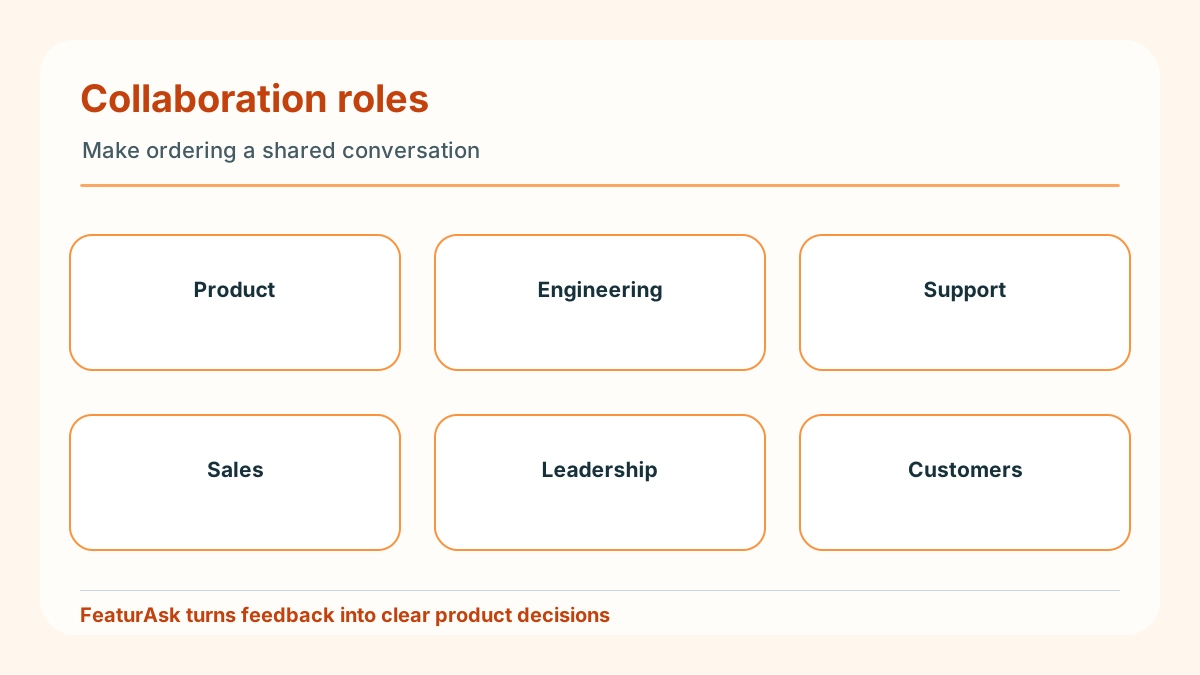
Each refined item should answer five questions: what user problem are we solving, what evidence supports it, what outcome would prove progress, what constraints matter, and what is the smallest useful version? If those answers are missing, the item belongs in discovery rather than delivery. If the answers are old, add a review date and refresh the evidence before the team commits.
Backlog deletion is a healthy practice. Archive duplicates, stale ideas, solved problems, and requests that no longer fit the product goal. The point is not to preserve every possibility. The point is to maintain an ordered set of valuable options.
Give every backlog item an exit path
A healthy backlog is not a container for every idea the company has ever heard. Each item needs a path toward build, discovery, archive, merge, or decline. Without an exit path, the backlog becomes a graveyard that slows planning because nobody trusts what is inside it. The first repair is simple: every item should have an owner, a problem statement, evidence, and a next review point.
Feature requests should enter as customer problems, not solution commands. “Add CSV export” is less useful than “accountants need a monthly report they can reconcile outside the app.” The first wording locks the team into a feature; the second leaves room for a better solution. Bug reports should include severity, affected users, reproduction notes, and customer impact. Technical tasks should name the product risk or delivery benefit, otherwise they look like invisible chores competing with visible customer needs.
Use statuses that create motion. “New,” “triaged,” “needs discovery,” “candidate,” “planned,” “shipped,” and “archived” are clearer than one endless list. The exact labels can vary, but the rule should not: an item cannot sit forever without a decision.
Separate feedback intake from delivery commitment
One common backlog mistake is treating every customer request as a promise. Feedback intake is where you understand demand. The delivery backlog is where selected work is prepared for implementation. Mixing them creates confusion because customers see a place to ask, while engineers see an ever-growing pile of obligations.
Keep the feedback layer broad and welcoming. Let users submit ideas, vote, add comments, and explain context. Keep the delivery layer narrower. Only move items into engineering planning when the problem is understood, the value is plausible, and the team can define a meaningful outcome. This separation protects both customers and builders: customers are heard without receiving false promises, and builders are not asked to estimate every rough idea.
FeaturAsk fits the intake side of that system. Requests can be gathered through a widget, moderated, merged, and reviewed with voting data before the team decides what belongs in the product backlog. That makes backlog refinement less about hunting through scattered channels and more about judging organized evidence.
Backlog review rituals that stay lightweight
A small team does not need a long ceremony to manage backlog health. Set a weekly triage window for new items, a biweekly prioritization review for stronger candidates, and a monthly cleanup for stale work. During triage, merge duplicates, rewrite vague items, add tags, and ask for clarification. During prioritization, compare candidate items against the current product goal. During cleanup, archive items that no longer match the strategy or lack evidence after repeated review.
Keep the meeting outcome visible. If a request is declined, say why. If it needs discovery, name the question. If it is planned, connect it to the problem it solves. If it ships, update the original request so users see the loop close. Backlog management is partly an operational habit and partly a communication habit.
Avoid turning refinement into speculative estimation theater. Rough sizing is useful; pretending to know exact effort too early is not. When uncertainty is high, the next backlog item may be a discovery task, prototype, or technical spike rather than the full feature.
Signals of a backlog in trouble
A backlog is unhealthy when old items outnumber current evidence, when duplicate requests split votes, when engineers cannot tell which items are ready, or when customers repeatedly ask for status because public communication is missing. Another warning sign is a backlog full of solution titles with no user problem. That usually means the team is collecting wishes instead of understanding jobs.
Fix the mess in layers. First, archive obviously obsolete items. Second, merge duplicates around shared problems. Third, rewrite the top candidates in customer language. Fourth, add status notes that explain what will happen next. Only then should the team debate priority. Cleaning before ranking prevents old clutter from masquerading as demand.
FeaturAsk can provide that cleaner intake layer for $29.95/year after a one month free trial with no credit card required, which is often enough for small SaaS, ecommerce, creator, and service teams that need user evidence without a heavy product suite.
Practical backlog questions
How many items should be ready for development?
Enough to support the next planning cycle, not enough to predict the entire year. A few well-shaped candidates beat a hundred vague tickets because ready work should contain context, acceptance signals, and a reason it matters now.
Who should be allowed to add requests?
Customers, support, sales, founders, and internal teams can all contribute to the intake layer. Ownership of the delivery backlog should be narrower so someone is accountable for cleaning, ranking, and saying no.
When should stale requests be archived?
Archive requests when the product direction changed, evidence never appeared, the problem was solved elsewhere, or the request is too vague after clarification attempts. Archiving is not disrespect; it keeps the active backlog truthful.
A backlog cleanup pass also improves customer communication. When duplicate requests are merged, voters can be pointed to a single clearer item. When vague ideas are rewritten, users see that the team understood the problem. When stale work is archived with a reason, the active list becomes more trustworthy. The cleanup is not merely internal hygiene; it changes how credible the product feels from the outside.
Conclusion
Effective product backlog management is the practice of turning raw demand into clear decisions. Capture broadly, refine carefully, separate feedback from commitments, and give each item a visible next step. A backlog managed this way helps small teams build with confidence because it reflects current customer problems rather than accumulated noise. The payoff is calm planning: fewer surprise debates, clearer customer expectations, and a delivery list that deserves attention.