Top 8 Digital Content Trends to Track in 2026
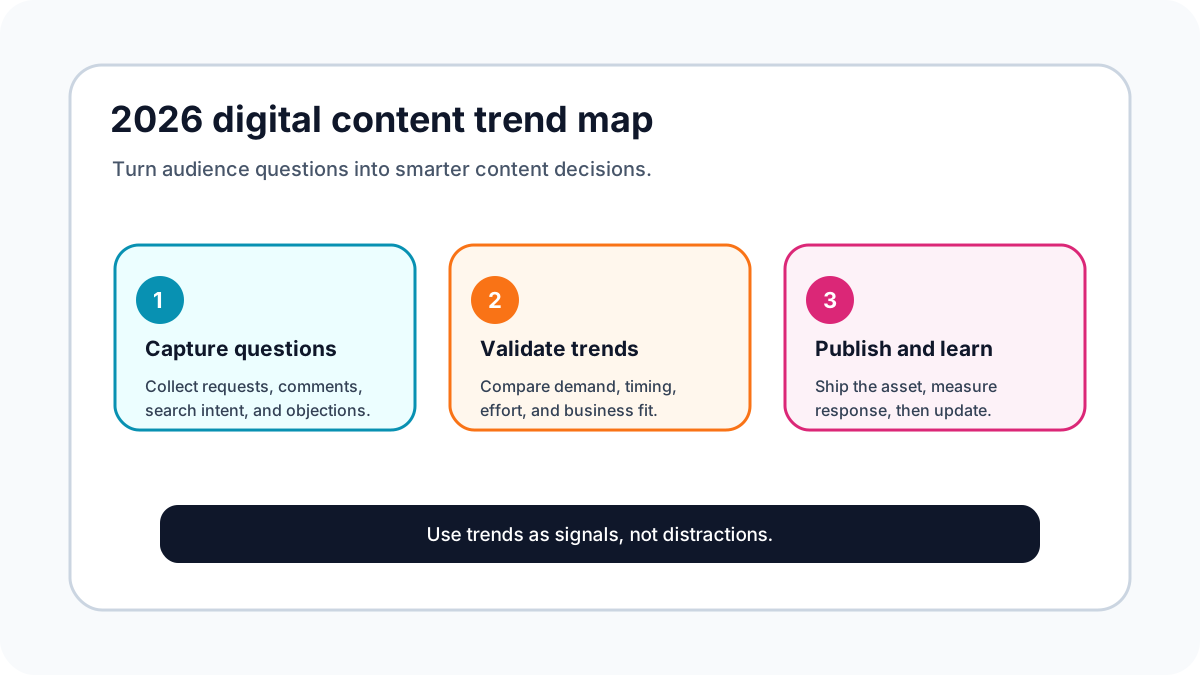
Digital content trends in 2026 are less about chasing every new format and more about building a better signal loop with your audience. AI can help teams draft, summarize, repurpose, and test ideas faster. Social platforms can move attention from one format to another in a week. Search results can reward useful, experience-backed content while ignoring pages that look like they were produced only to capture keywords. In that environment, the winning content teams are not simply publishing more. They are learning faster.
For small SaaS teams, creators, ecommerce stores, communities, and service businesses, the practical question is simple: which content deserves time this quarter? A trend is only useful if it helps you answer a real audience question, reduce friction, explain a product decision, or collect demand for what to build next. Otherwise, it becomes another calendar item that creates work without insight.
This guide covers eight digital content trends worth tracking in 2026. It focuses on trends that a lean team can actually use: AI-assisted workflows, trust signals, personalization, short-form discovery, interactive content, community-led ideas, employee expertise, and feedback-driven planning. The goal is not to predict every platform shift. The goal is to help you decide what to test, what to ignore, and how to turn audience response into better content and product decisions.
Quick answer: what content trends matter most in 2026?
The most useful 2026 content trends are the ones that make content more trustworthy, more specific, and easier to act on. AI-assisted production matters, but not as a substitute for experience. Short-form video matters, but only when it leads people toward a deeper asset, product moment, or community conversation. Personalization matters, but only when it helps people find the right answer faster. Interactive assets matter when they capture intent, not when they exist as decoration.
A practical content plan for 2026 should include one AI workflow, one trust-building editorial standard, one repeatable short-form format, one interactive or feedback-driven asset, and one habit for turning audience questions into future topics. That is enough for a lean team to improve quality without building a heavy content operation.
If you collect topic requests, product ideas, or feature suggestions from your audience, FeaturAsk gives you a simple feedback widget, voting, moderation, analytics, and request management for $29.95/year after a 30-day free trial with no credit card required. It is a lightweight way to see what people actually want before you spend weeks creating the next asset.
Trend 1: AI-assisted content with human judgment
AI is now part of everyday content production. Teams use it to outline articles, summarize interviews, draft social posts, turn webinars into clips, cluster customer questions, create first-pass briefs, and analyze comments. That is useful. The mistake is letting AI decide the point of view.
In 2026, generic AI output is easy to produce and easy to ignore. The content that stands out usually has a clear source of judgment: a founder’s experience, customer language, original screenshots, tested workflows, data from support conversations, product usage patterns, or a practical opinion about what the audience should do next. AI can speed up preparation, but it cannot invent credibility that the team has not earned.
A strong AI workflow starts with real inputs. Gather customer questions, sales objections, support tickets, product feedback, interview notes, and examples from your own work. Then use AI to organize and draft around those inputs. Keep the original evidence nearby so the final article does not become a polished summary of nothing.
This is especially important for product and SaaS content. If users repeatedly ask for a workflow, a comparison, a template, or a tutorial, that question should shape the content calendar. FeaturAsk’s guide to customer feedback strategy is useful here because it shows how to collect signals before turning them into decisions.
Trend 2: E-E-A-T becomes an operating standard, not a checklist
Search quality discussions often mention experience, expertise, authoritativeness, and trustworthiness. In practice, this means content should show why the page exists, who it helps, and what evidence supports the advice. Google’s guidance on <a href="https://developers.google.com/search/docs/fundamentals/creating-helpful-content" rel="nofollow">creating helpful, reliable, people-first content</a> is a good baseline: write for readers first, demonstrate useful experience, and avoid pages made only to attract search traffic.
For a small team, E-E-A-T does not require pretending to be a media company. It requires discipline. Add examples from real use cases. Explain tradeoffs. Avoid fake statistics. Use screenshots, checklists, templates, and plain-language definitions. If the article recommends a workflow, show how a reader would run it this week.
This trend also changes how content should be reviewed. Before publishing, ask: does this page say something a knowledgeable person would stand behind? Does it include advice that could actually change the reader’s decision? Does it avoid unsupported claims about market size, platform algorithms, or guaranteed results? If not, rewrite it before it reaches the site.
Trust is not only about search. It also affects conversions. A visitor who trusts your content is more likely to try your product, join your list, request a demo, or submit feedback. Content and product trust compound when the business listens visibly.
Trend 3: Personalization shifts from creepy targeting to useful context
Personalization used to mean inserting a name, segment, or industry into a campaign. In 2026, useful personalization is more practical: helping visitors reach the right answer faster. A new user may need onboarding content. An advanced user may need a comparison, integration guide, or changelog. A customer evaluating a product may need proof that the team understands their use case.
The best personalization does not require a giant data warehouse. It can start with clearer content paths. Segment a resource hub by audience. Add “choose your goal” navigation. Offer different next steps for founders, marketers, product managers, creators, ecommerce owners, or support teams. Use product feedback to identify which questions deserve their own page.
For example, if visitors repeatedly ask how to prioritize requests, that is a signal for a guide, template, or comparison article. If creators ask which topic to cover next, that is a signal for a public topic-request board. If ecommerce visitors keep asking for product availability or bundle ideas, that can become both content and product research.
Personalization should reduce friction, not create surveillance anxiety. Be transparent. Use context to help people, not to trap them in a funnel. When in doubt, ask directly. A small feedback prompt often beats a complex guessing system.
Trend 4: Short-form content becomes a discovery layer for deeper assets
Short-form video, carousels, shorts, clips, and quick explainers are not going away. They work because they match how people discover ideas during small attention windows. But short-form content should not be treated as a separate strategy. It should be a discovery layer that points people toward deeper assets: guides, tools, templates, product pages, webinars, communities, or feedback boards.
A good 2026 short-form system starts with repeatable formats. Try “one customer question, one answer,” “one feature request, one tradeoff,” “one myth, one correction,” “one workflow in three steps,” or “one before-and-after example.” These formats are easier to sustain than constantly inventing new creative concepts.
The content team should also track which short-form ideas create meaningful signals. Views are not enough. Look for saves, replies, click-throughs, signups, requests, demo questions, or repeated comments. If a short clip produces a cluster of follow-up questions, turn that into a long-form article, FAQ, or product improvement.
For SaaS and product teams, short-form content can reveal language. People often comment with simpler wording than the company uses internally. Preserve that wording. It can improve landing pages, onboarding, support docs, and feature descriptions.
Trend 5: Interactive content earns attention by helping people decide
Calculators, quizzes, checklists, comparison tools, templates, assessment forms, configurators, and interactive demos can outperform static content when they help the visitor make a decision. The key phrase is “help the visitor.” Interactive content fails when it is only a lead-capture form with extra steps.
Useful interactive content has a clear promise. A pricing calculator helps someone estimate cost. A readiness checklist helps someone decide whether to adopt a process. A feature voting board helps a community decide which ideas matter. A template generator helps someone produce a usable artifact. Each interaction should give value before it asks for commitment.
This is where content and feedback overlap. If many visitors use a checklist but stall on one step, that step may need an article, tutorial, or product improvement. If a calculator receives repeated questions, those questions can become FAQ content. If a request board gets votes around a theme, that theme can shape both roadmap and content calendar.
FeaturAsk fits this trend for teams that want audience participation without building custom software. You can add a feedback board to your site with FeaturAsk and let visitors submit ideas, vote, and discuss what they want next. The 30-day free trial and $29.95/year plan make it realistic for small teams to test participation before investing in heavier systems.
Trend 6: Community-led content becomes more valuable than brand monologues
Audiences are tired of content that only speaks from the brand’s point of view. Community-led content brings in customer questions, user examples, creator perspectives, partner advice, and real objections. It feels more useful because it starts from what people are already trying to solve.
This does not mean every business needs a large public community. A small team can build community-led content from support conversations, webinar questions, product feedback, sales notes, comments, customer interviews, and recurring emails. The habit matters more than the platform.
A practical workflow is simple: capture the question, group similar questions, identify the underlying job, publish an answer, and invite more input. Over time, this creates a content library that sounds closer to the audience because it came from the audience.
For product teams, community-led content also improves prioritization. A feature request with comments from five different customer types may reveal a broader education gap. A tutorial request may reveal that the product is hard to understand. A comparison question may reveal a positioning problem. Treat community input as both content fuel and product evidence.
Trend 7: Employee and expert-generated content gets more specific
Employee-generated content is not just “ask the team to post on LinkedIn.” The stronger version is expert-generated content: practical insight from the people closest to the work. A designer can explain the tradeoffs behind a UI change. A support lead can share the questions new customers ask. A founder can describe why a feature was delayed. A product manager can explain how feedback became a roadmap decision.
This content works because it carries specificity. It is harder to fake a real workflow, a real lesson, or a real customer objection. It also helps the brand sound less like a committee.
To use this trend well, reduce the burden on employees. Do not ask busy experts to become full-time creators. Interview them for 20 minutes. Pull one story from a project retrospective. Turn a support pattern into a short guide. Convert a product decision into a release note or “why we built this” post. Let a content editor shape the material while preserving the expert’s language.
For smaller businesses, this can be a major advantage. Large companies often publish polished but cautious content. Small teams can publish sharper lessons, faster responses, and more personal explanations. That only works if the content is honest and useful, not performative.
Trend 8: Feedback-driven content planning improves static calendars
A static content calendar can be helpful for consistency, but it becomes dangerous when it ignores new audience signals. In 2026, better teams use a living content backlog. They still plan campaigns, launches, and seasonal topics, but they also reserve room for customer questions, product feedback, search changes, sales objections, and community discussion.
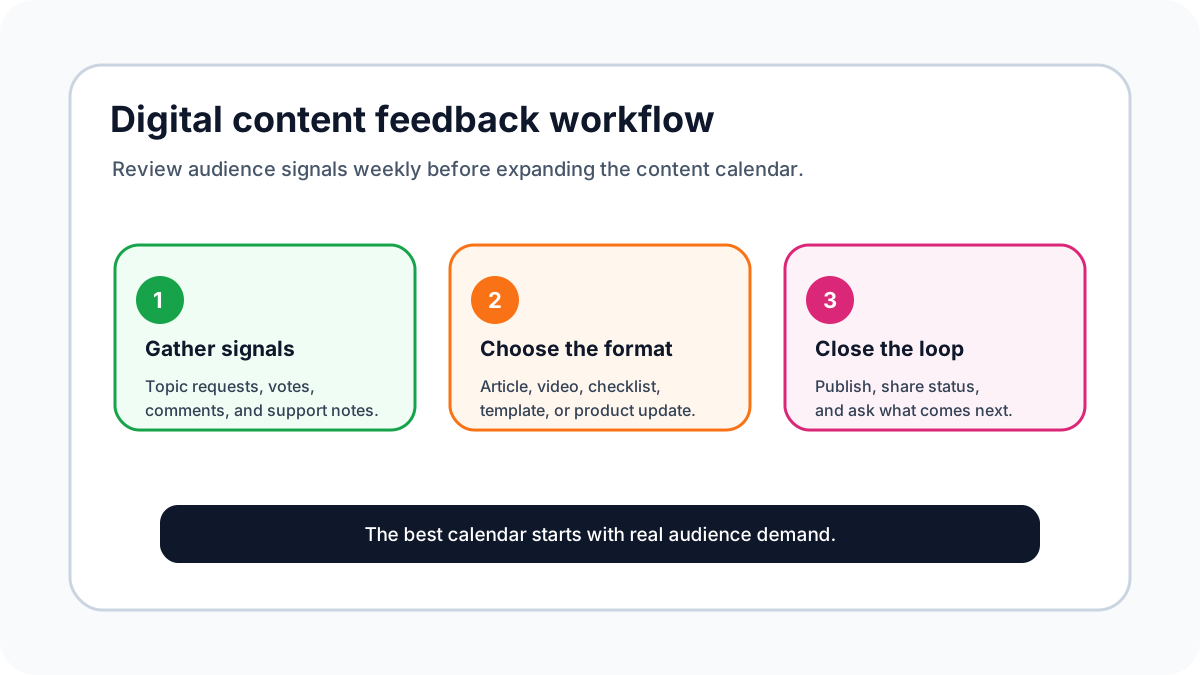
The operating rhythm can be lightweight. Once a week, review new audience questions. Merge duplicates. Tag each idea by audience, funnel stage, product area, and business value. Decide whether the next step is a short answer, a full article, a help doc, a video, a template, or a product change. Then close the loop by telling people what you published or decided.
This is where content strategy starts to look like product management. You are not only producing pages. You are managing a queue of audience needs. Some needs become tutorials. Some become feature requests. Some become onboarding improvements. Some are not worth acting on yet. The discipline is to make that decision visible enough that the team learns.
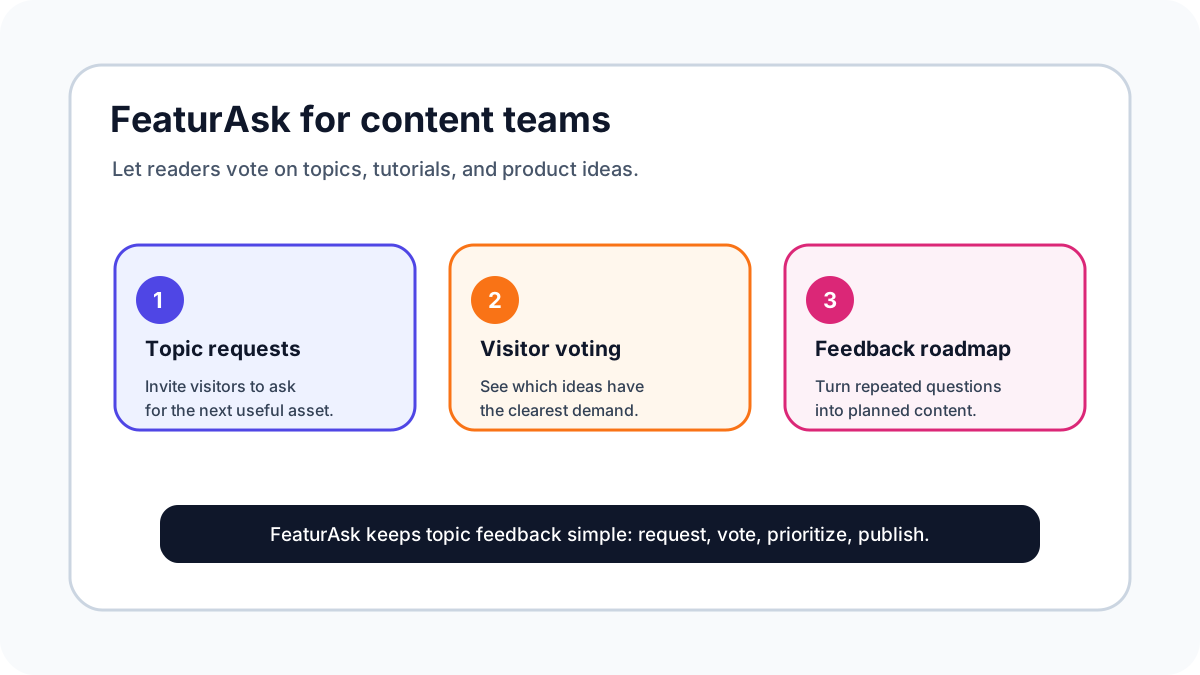
FeaturAsk can help teams build that habit because it gives audiences one place to submit requests and vote. A creator can ask followers what tutorial they want next. A SaaS team can collect integration requests. An ecommerce shop can ask which buying guide would be most useful. A course creator can collect lesson ideas. With voting and request management, the content calendar becomes less guessy.
A practical 2026 content trend checklist
Use this checklist before adopting a trend:
- What audience question does this trend help us answer?
- What business or product decision could change because of the signal?
- Can we test it in two weeks without rebuilding the whole workflow?
- What evidence will show that it worked: replies, saves, signups, requests, conversions, retention, or fewer support questions?
- How will we capture follow-up questions?
- Who owns the next action if the test works?
- What will we stop doing if this trend proves more useful?
- How will we tell the audience what changed because of their input?
The last question matters. Content teams often collect feedback but fail to close the loop. When people see their questions become guides, templates, videos, or product improvements, they are more likely to keep contributing.
Common mistakes to avoid
The first mistake is treating AI volume as content strategy. Publishing more pages does not help if the pages do not answer specific questions or show real experience.
The second mistake is copying platform trends without a destination. A short-form clip, interactive quiz, or community prompt should lead somewhere useful.
The third mistake is over-personalizing before the basics are clear. If the core message is confusing, segmentation will only create more versions of confusion.
The fourth mistake is collecting audience input in scattered places and never reviewing it. Comments, emails, DMs, support tickets, and calls can all contain useful ideas, but only if someone organizes them.
The fifth mistake is hiding decisions. If people submit ideas and never hear back, they learn that feedback disappears. Even a short status update builds more trust than silence.
For a deeper product-focused version of this habit, see FeaturAsk’s guides to feature voting, feature request tools, and collecting in-app feedback.
Bottom line
The top digital content trends for 2026 all point in the same direction: content has to become more useful, more participatory, and more connected to real audience behavior. AI can accelerate production, but trust still comes from experience. Short-form content can earn attention, but deeper assets turn attention into value. Interactive content can collect intent, but only if the team reviews and acts on the signal.
Start small. Pick one trend to test this month. Capture the questions it creates. Turn repeated questions into better content, clearer messaging, or product improvements. If you want a simple way to collect ideas from your visitors, try FeaturAsk free for 30 days. You can add a widget to your site, collect requests, let people vote, and manage feedback in one place. No credit card is required, and the annual plan is $29.95/year.