Using Positive User Feedback to Validate Product Direction
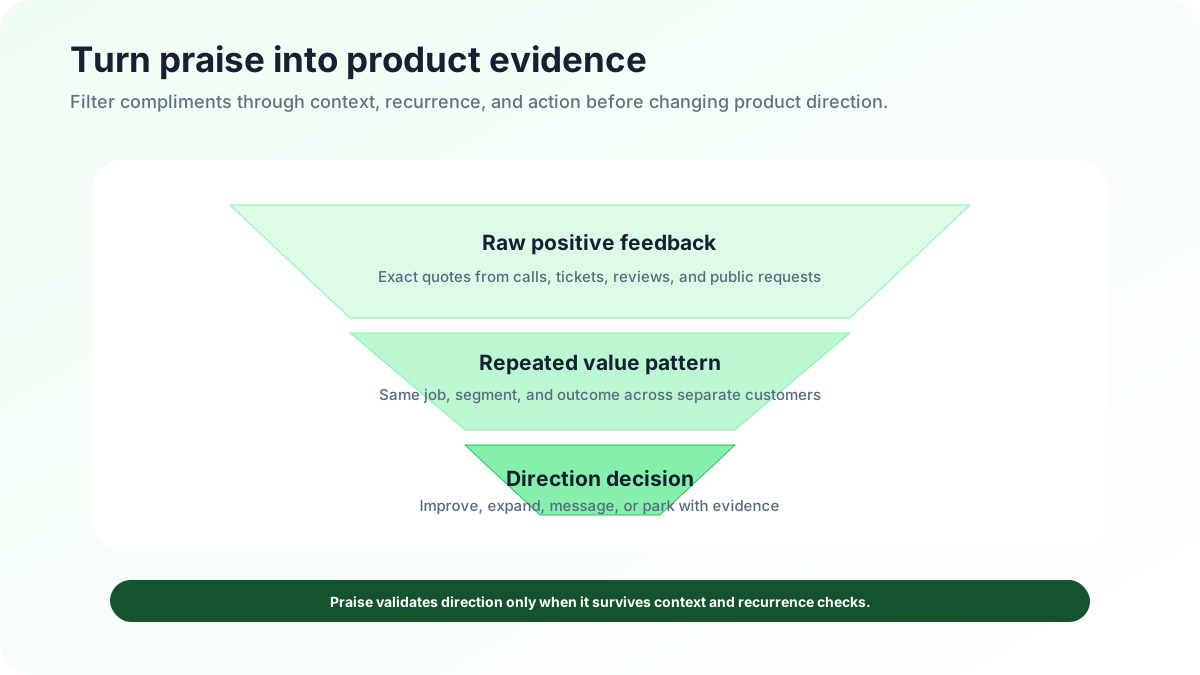
For evidence quality, Nielsen Norman Group notes that different UX research methods answer different questions, so praise should be paired with observed behavior and follow-up research (NN/g UX research methods). Atlassian also frames roadmaps as outcome communication rather than a static feature list (Atlassian roadmaps).
Positive user feedback feels like validation, but it is not always validation. A customer saying "I love this" can lift morale, create a testimonial, and point toward a promising product direction. It can also mislead a team if the praise is vague, isolated, or disconnected from behavior. The skill is not collecting more compliments; it is turning positive feedback into evidence you can compare with usage, retention, willingness to pay, and strategic fit.
This guide builds a practical workflow for interpreting praise. It draws on the Nielsen Norman Group reminder that different UX research methods answer different questions and that teams benefit from combining methods, plus Atlassian's product roadmap guidance that roadmaps should reflect customer feedback, company goals, market direction, and engineering constraints. For related FeaturAsk reading, see user feedback analysis, types of customer feedback, and how to collect user feedback.
Start by separating applause from evidence
Applause is emotionally positive. Evidence is decision-useful. "This looks great" is applause. "This saved our onboarding manager two hours because clients could vote on requests instead of sending separate emails" is evidence. The second statement names a user, a situation, a prior pain, and an outcome. It can support a product direction because the team can look for repetition and behavior around it.
A product team should thank customers for both kinds of comments, but it should not treat both comments equally. Applause belongs in the morale and marketing bucket until it gains context. Evidence belongs in the product-learning bucket because it can inform roadmap choices, positioning, onboarding, or pricing.
The simplest test is this: could a skeptical teammate understand what changed for the customer? If the answer is yes, the feedback may validate a direction. If the answer is no, you need follow-up.
If positive feedback is scattered across emails, chats, and calls, FeaturAsk gives customers one visible place to turn reactions into requests, votes, and status conversations.
Capture context while the customer still remembers it
Positive feedback decays quickly. A customer may remember that they liked a feature but forget the specific situation that made it valuable. Capture context close to the moment. Ask what they were trying to do, what they used before, what changed, who else noticed, and what would happen if the capability disappeared tomorrow.
Store the exact words. Customer language is often more useful than internal labels. If customers repeatedly say a feature "keeps requests from getting lost," that phrase may be better positioning than a polished internal term such as "centralized idea intake." The words customers choose reveal the job they think the product performs.
Tag praise by segment, use case, plan, role, product area, and outcome. Ten positive comments are much more meaningful if seven come from the target segment and describe the same workflow. Ten unrelated compliments may still be nice, but they are weaker validation.
Ask follow-up questions that create product evidence
A good follow-up question converts a warm feeling into a testable claim. Ask: "What were you doing before this?" This reveals the previous workaround and the cost of the problem. Ask: "How often does this happen?" This distinguishes a one-time delight from a recurring job. Ask: "Who else on your team benefits?" This reveals collaboration and expansion potential.
Ask: "What would make it twice as valuable?" This can reveal the next constraint without pushing the customer toward your roadmap idea. Ask: "Would you be disappointed if this went away?" This is useful because real value often shows up as dependency. Ask: "Have you told anyone else about it?" Referral behavior is stronger than polite praise.
Avoid leading questions such as "Do you love the new dashboard?" They are easy to answer politely and hard to interpret. Neutral questions produce cleaner evidence. The goal is not to make the customer praise you again; the goal is to understand the mechanism of value.
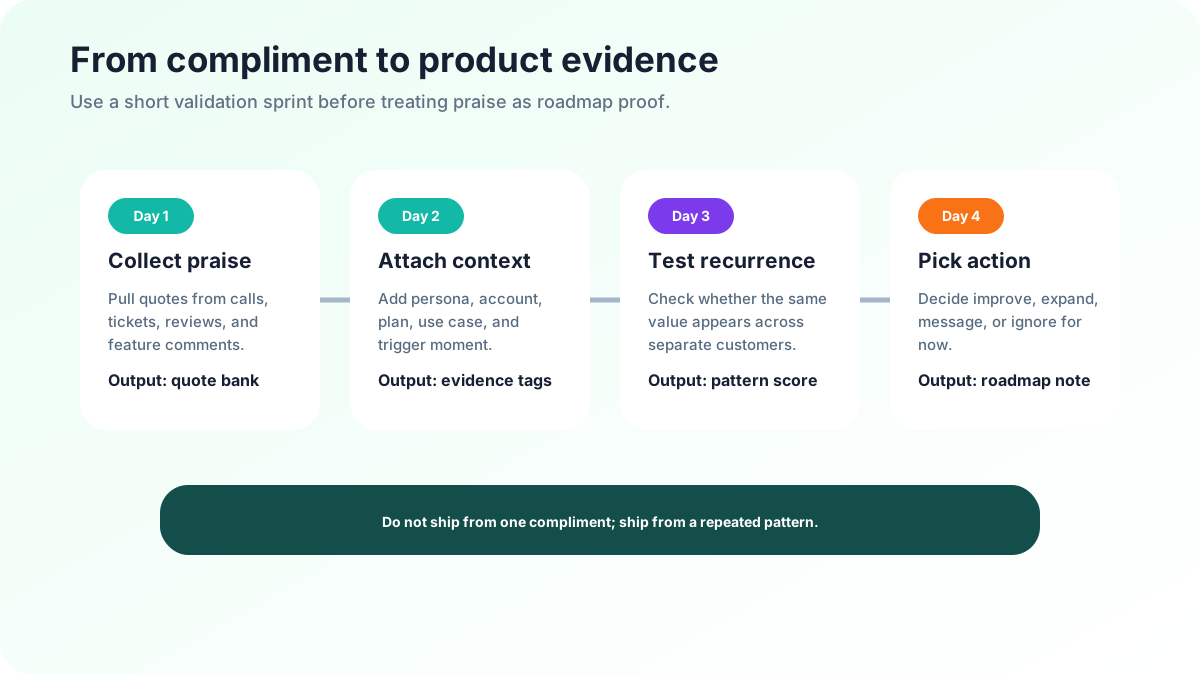
Compare positive feedback with behavior
Positive feedback becomes much stronger when behavior agrees with it. If customers praise a feature and then return weekly, invite teammates, import data, upgrade, or reduce support tickets, the feedback is pointing to real value. If customers praise a feature once and never use it again, the praise may reflect novelty rather than direction.
Use a simple evidence ladder. At the bottom are compliments and survey intent. In the middle are detailed stories, repeated requests, and willingness to discuss workarounds. At the top are behaviors: repeated use, retention, payment, team adoption, referrals, and workflow change. Product direction should rarely move based on the bottom rung alone.
This does not mean qualitative feedback is weak. Qualitative comments explain why behavior happens. A usage graph can show that a workflow is sticky; customer words can explain which outcome creates the stickiness. The best validation combines both.
Compare praise with complaints and non-users
Positive feedback can hide segment conflict. A feature may delight power users while confusing new users. A workflow may help admins while adding work for contributors. A public roadmap may excite customers who want transparency while worrying enterprise buyers who need private planning. Product direction should consider who is praising, who is silent, and who is struggling.
Review positive feedback beside complaints. If customers praise speed but complain about accuracy, the direction may be right but the implementation needs quality work. If one segment praises flexibility while another begs for defaults, the roadmap may need segmentation rather than a single answer. If happy customers praise a feature that non-users cannot discover, onboarding may be the real opportunity.
Also listen to customers who churned, declined a trial, or never adopted the feature. Their absence can prevent a survivorship-bias trap. A direction validated only by current fans may miss a larger market problem.
FeaturAsk helps by putting positive signals, requests, votes, and statuses in the same visible loop, making it easier to compare enthusiasm with demand.
Use positive feedback to sharpen product direction
Positive feedback validates direction when it strengthens a specific product hypothesis. For example: "Agency owners will use a public request board because it reduces repeated client conversations and makes prioritization transparent." A compliment from one agency is not enough. Repeated comments from agency owners, voting behavior, fewer duplicate emails, and continued usage would make the direction more credible.
Write the decision the feedback supports. Are you doubling down on a workflow? Improving onboarding? Changing positioning? Packaging a feature? Raising the priority of an integration? Positive feedback is too easy to overgeneralize unless it is tied to a decision.
Then write the evidence threshold. For a small copy change, three detailed comments may be enough. For a strategic roadmap bet, you may need repeated behavior from target customers, supporting usage data, and clear business impact. The evidence standard should match the risk.
Convert praise into roadmap inputs
Roadmaps should not be applause logs. They should express the product direction the team believes will create value, based on customer feedback, market understanding, business goals, and technical constraints. Positive feedback is one input in that mix. It can help identify what to preserve, where to invest, and how to communicate value.
Create a monthly evidence review. Bring three positive signals, three negative signals, and three behavioral metrics for the same product area. Discuss where they agree and where they conflict. This balanced view prevents the team from chasing only the loudest happy messages.
When positive feedback influences a roadmap item, record the reasoning. "We are expanding team permissions because eight target accounts praised the current workflow, five invited teammates, and three said permissions are the blocker to broader adoption." That sentence is far more useful than "users like permissions."
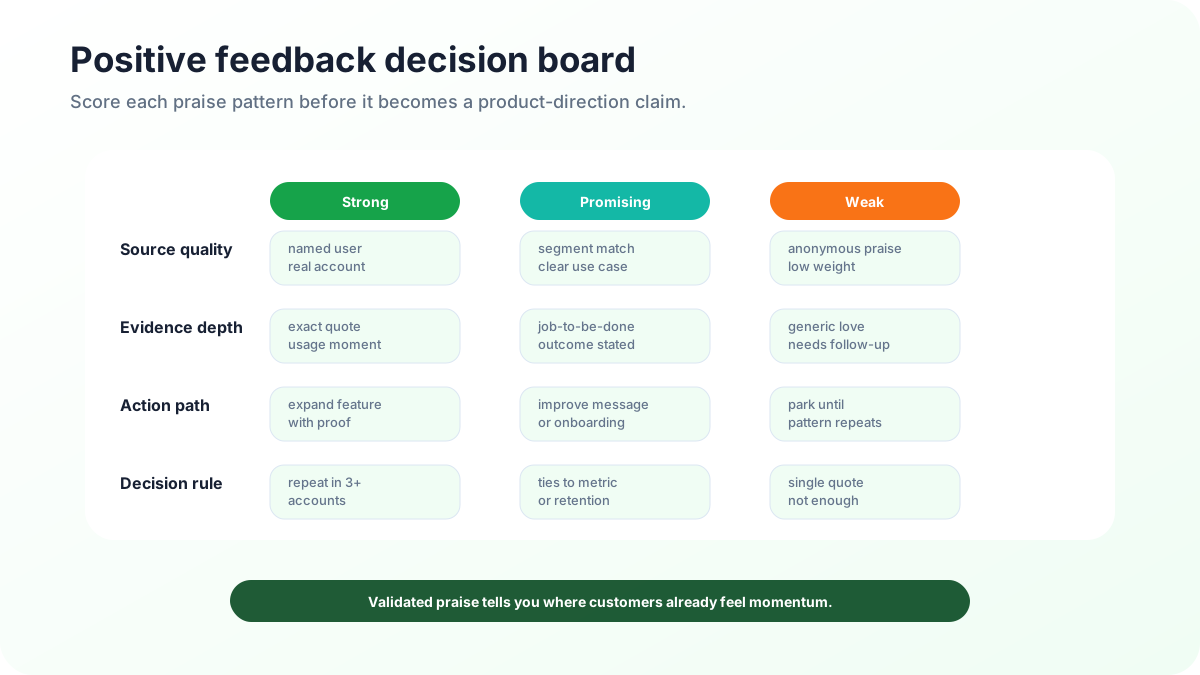
Turn praise into positioning and onboarding improvements
Not every positive signal should create a feature. Some should improve messaging. Customers often describe value in concrete, outcome-oriented language. If several users say the product "helps us stop losing ideas in Slack," the homepage, onboarding checklist, and support docs may need to echo that language.
Positive feedback can also reveal the "aha" moment. If customers praise a feature only after they invite a teammate, onboarding should guide new users toward that invitation. If customers praise a dashboard after importing historical requests, setup should make importing easier. Direction is not only what you build; it is also how you help users reach value faster.
Build an anti-bias system
Positive feedback is vulnerable to recency bias, relationship bias, and loud-customer bias. Recency bias makes the last compliment feel more important than older evidence. Relationship bias makes praise from a favorite customer feel more representative than it is. Loud-customer bias makes enthusiastic comments from a small group overpower quieter signals.
Counter these biases with rules. Require segment tags. Require a follow-up question. Require a second evidence type before roadmap changes. Review praise on a schedule instead of reacting instantly. Keep declined or contradictory feedback in the same evidence base so the team sees the full picture.
A useful rule is: praise can nominate a direction, but behavior must help validate it. This keeps the team open to customer enthusiasm without letting friendly comments replace product judgment.
When FeaturAsk is the practical collection layer
Teams often lose positive feedback because it arrives in private channels and never becomes shared product evidence. FeaturAsk gives users a public place to submit ideas, vote, and follow status updates. That makes it easier to see when positive comments cluster around the same request and whether other users agree.
It is also inexpensive enough to use as an experiment. FeaturAsk costs $29.95/year, and the one month free trial needs no credit card, which keeps the validation step low-risk. For teams validating product direction on a budget, that is a low-friction way to collect real customer signals before investing in a more complex research or roadmap stack.
Build a positive-feedback repository
A positive-feedback repository does not need to be complicated. Start with columns for customer, segment, quote, product area, situation, outcome, follow-up question, supporting behavior, and decision influenced. The quote keeps the customer's words intact. The situation explains when the value appeared. The outcome explains why it matters. The supporting behavior prevents the team from treating every compliment as equal.
Review the repository on a schedule. Weekly review works for high-volume products; monthly review is enough for many small teams. The habit matters more than the ceremony. During review, group comments by job-to-be-done rather than by feature name. Customers rarely care about your component boundaries. They care that a task became easier, faster, safer, or more visible.
Use positive feedback to protect what already works. Product teams often focus on complaints and new requests, then accidentally damage the workflows customers love. A repository of praise can reveal the parts of the product that should be preserved during redesigns. It can also show which onboarding moments deserve more attention because they lead to durable value.
Decision rules for roadmap use
Before praise changes the roadmap, require a decision rule. For example: "Positive feedback can increase priority when it comes from the target segment, describes a repeated workflow, includes a measurable outcome, and is supported by usage or revenue evidence." This rule is not bureaucracy; it is protection against steering the product toward the most charming anecdote.
Create different thresholds for different decisions. A documentation update may need only a few comments. A homepage positioning change may need repeated language from the target buyer. A major build should require behavior, willingness to act, and strategic fit. The higher the cost of being wrong, the higher the evidence bar should be.
FeaturAsk can act as one evidence layer in this system. If a compliment points to an unmet need, publish or capture the related request and see whether other users vote, comment, or follow progress. FeaturAsk turns isolated praise into a shared signal that can be compared with broader demand.
The safest way to use praise is to turn it into a testable next step. When customers say a workflow saves time, ask which part saved time, what they stopped doing, and whether they would recommend the change to a similar team. Then publish the related request status so other users can add votes or counterexamples. Positive feedback becomes strategic only when it changes what the team learns next.
FAQ
Can positive user feedback validate product direction?
Yes, but only when it is specific, repeated by the target segment, and supported by behavior or business outcomes. Generic praise is encouraging but weak as validation.
What should I ask after a customer gives praise?
Ask what changed, what they used before, how often the workflow happens, who else benefits, what would make it more valuable, and what would happen if the feature disappeared.
How do I avoid overreacting to compliments?
Require context, segment tags, and at least one additional signal such as usage, retention, votes, support reduction, or willingness to pay before changing roadmap direction.
Where does FeaturAsk help?
FeaturAsk helps teams collect requests, votes, and status conversations in one place so positive feedback becomes visible product evidence instead of scattered private praise.