Top 11 Customer Feedback Form Questions (for SaaS & Ecommerce)
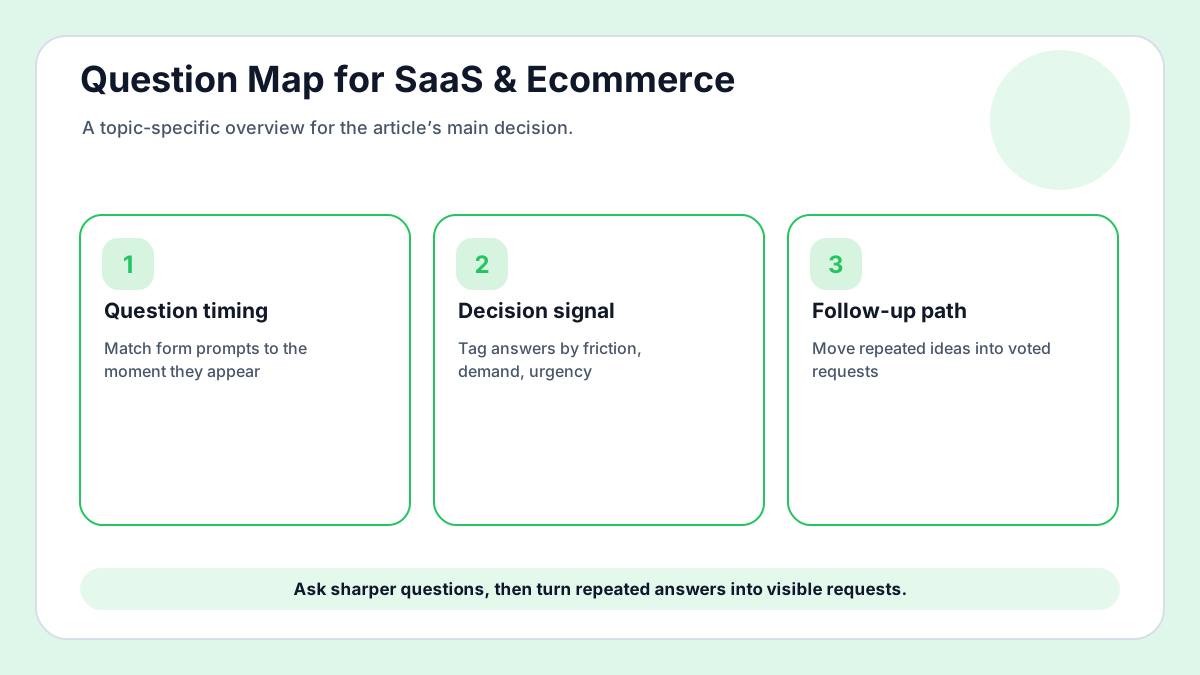
A good feedback form is not a satisfaction ritual. It is a small research instrument that should help a lean team decide what to fix, what to explain, and what to build next. Frill’s source topic focuses on question ideas for SaaS and ecommerce; this FeaturAsk version keeps that intent but goes deeper on timing, follow-up, and how a small team can turn answers into product decisions without hiring a research department.
If you already have traffic but no reliable way to collect requests, a lightweight board such as FeaturAsk can sit beside your forms and let visitors vote on ideas. The product is built for small sites, costs $29.95/year, includes a 30-day free trial, and does not ask for a credit card before you can test the workflow.
For adjacent reading, compare this with FeaturAsk guides on feedback boards, collection widgets, and turning raw comments into decisions. For survey-writing basics, Nielsen Norman Group’s survey guidance is a useful reminder to keep questions specific, short, and easy to answer. Baymard’s ecommerce research library also shows why checkout and product-page friction deserves direct customer language rather than internal guesses: Baymard Institute.
How to choose the right feedback question
A feedback form should match the moment where it appears. A post-purchase form can ask about trust and delivery expectations, but an in-app SaaS widget should ask about task completion, missing workflows, and what the user expected to happen next. The mistake is using one universal form everywhere and then wondering why the answers feel mushy.
Keep answer effort low. Use one open-ended question when you need discovery, a short scale when you need trend data, and a follow-up field when the rating needs context. If you ask five open-ended questions at once, the most thoughtful users will abandon the form and the least invested users will give one-word answers.
The 11 questions worth asking
1. What were you trying to accomplish today?
This question anchors feedback in the visitor’s job rather than in your assumptions. A SaaS team can map answers to activation problems, while an ecommerce store can identify whether shoppers came to compare sizes, check delivery dates, or validate trust signals. Tag these answers by page, lifecycle moment, and likely owner so the follow-up does not vanish inside a general inbox. If the same task appears in several answers, schedule a focused review rather than waiting for a quarterly research project.
2. What almost stopped you from finishing?
The strongest form question asks for friction while the memory is fresh. Ask it after a trial signup, checkout, demo request, or abandoned flow so the answer points to a fixable moment instead of a vague mood. Connect this response to the exact step where the shopper or user hesitated, then assign it to the team that can remove the friction. When two buyer segments mention the issue independently, compare whether they need the same fix or only share similar vocabulary.
3. Which part of the experience felt unclear?
Unclear copy, hidden pricing, confusing filters, and unexpected account steps all suppress conversion. This wording gives customers permission to name a small confusion before it becomes a support ticket. Label the answer as copy, navigation, product demand, support risk, or pricing confusion before discussing solutions. If a pattern repeats inside one funnel step, test the smallest copy or interface change before opening a broad redesign.
4. What feature, product, or option did you expect to find?
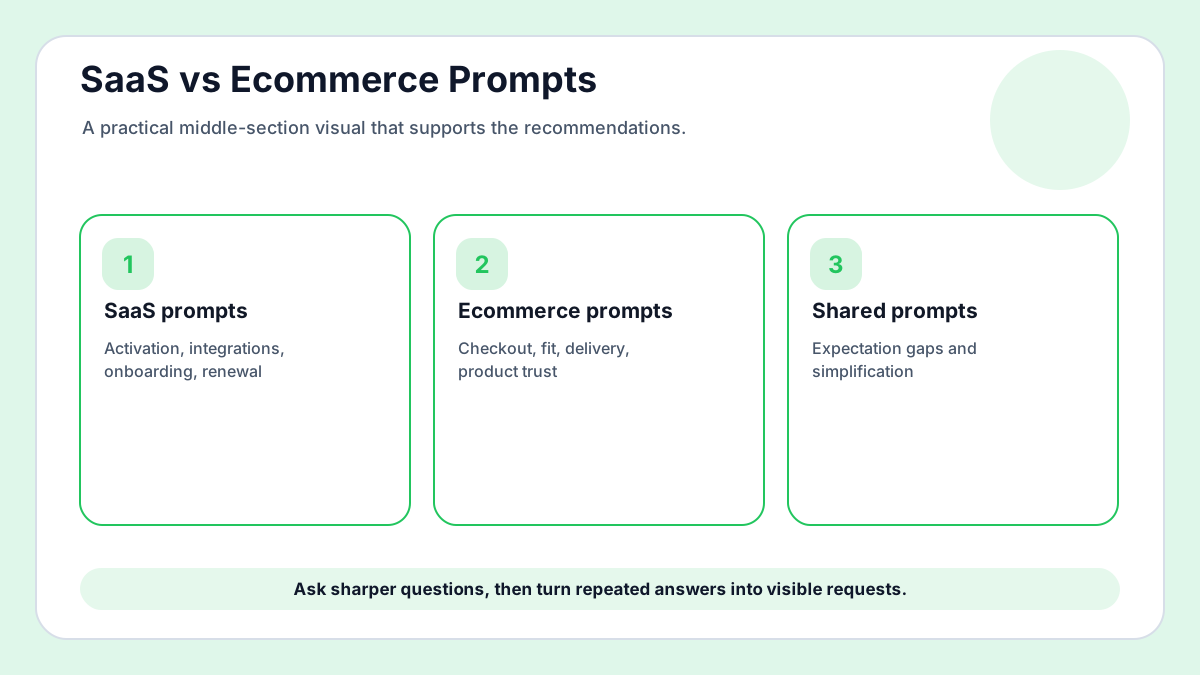
Expectation gaps are early demand signals. SaaS teams hear missing integrations and workflow gaps; ecommerce teams hear bundles, variants, comparison tools, and delivery preferences. Attach the comment to the relevant plan, product category, or checkout step so later analysis reflects real context. Repeated expectation gaps deserve a public request only when customers would benefit from seeing status and voting.
5. How would you describe our value to a teammate?
The answer exposes whether your positioning landed. If customers repeat your intended promise, keep amplifying it; if they use a different phrase, test that phrase in onboarding, product pages, and help copy. Use the customer wording as a messaging clue, because the phrasing may be stronger than the language inside your current page. If the wording keeps changing but the pain is stable, merge the comments under one theme and preserve the strongest quote.
6. What would make you choose us again?
Retention feedback should not wait for churn. This question surfaces reliability, support, speed, price fairness, and product depth before a renewal or repeat purchase decision arrives. Store the response beside the user segment and journey stage, which prevents one-off comments from steering the whole roadmap. When the theme is tied to renewals, add it to the retention review instead of burying it under acquisition ideas.
7. What alternative were you considering?
Knowing the comparison set changes your roadmap and messaging. A small SaaS might learn that spreadsheets are the real competitor, while a store might learn that marketplace convenience beats brand preference. Pair the answer with conversion or retention data when possible so the team can separate irritation from business impact. If the alternative appears often, update comparison copy and note whether the product roadmap needs to respond.
8. What is one thing we could remove or simplify?
Some teams only ask what to add and accidentally create a heavier product. Removal feedback protects small teams from building features that make the core workflow slower. Route simplification requests to a cleanup list before adding anything new, because less interface can be the highest-return feature. Repeated removal requests should trigger a complexity audit, not a debate about which new feature to build next.
9. How urgent is this request for you?
Urgency separates nice ideas from revenue-impacting blockers. Pair it with voting or a feature request board so repeated urgent requests become visible without manual spreadsheet work. Combine urgency with vote totals so a request from a blocked user is not treated the same as casual curiosity. When urgency and frequency both rise, move the item into the next prioritization conversation with evidence attached.
10. What should we ask you next time?
Meta-feedback improves the form itself. Customers often suggest better segmentation questions, missing answer options, or follow-up topics your team would not have guessed. Treat the meta-answer as research about the collection process itself, then adjust future prompts with care. If customers keep asking for better questions, revise the form before collecting another month of noisy answers.
11. May we follow up if we need context?
Optional follow-up permission turns anonymous comments into learning conversations. Keep it respectful and make the email field optional so the form still feels lightweight. Keep follow-up permission separate from the opinion, which makes the form feel respectful while preserving research options. When many people allow follow-up, choose the highest-context comments and ask for examples before committing effort.
SaaS and ecommerce teams should interpret the same answer differently
A SaaS founder reading “I could not find the thing I needed” may need to improve activation, navigation, permissions, or integration setup. An ecommerce operator reading the same sentence may need product filters, fit guidance, clearer shipping estimates, or better comparison tables. The words are similar, but the operational response is different.
That is why every form should capture context you can act on: page, plan, product category, device, lifecycle stage, and whether the user was buying, evaluating, or already paying. The form question starts the conversation; the metadata tells you where the fix belongs.
Try FeaturAsk if your form answers keep turning into feature ideas that need voting, status updates, and moderation. It is intentionally simpler than enterprise feedback suites and remains priced at $29.95/year, with one month free and no credit card required for the trial.
A simple operating rhythm after responses arrive
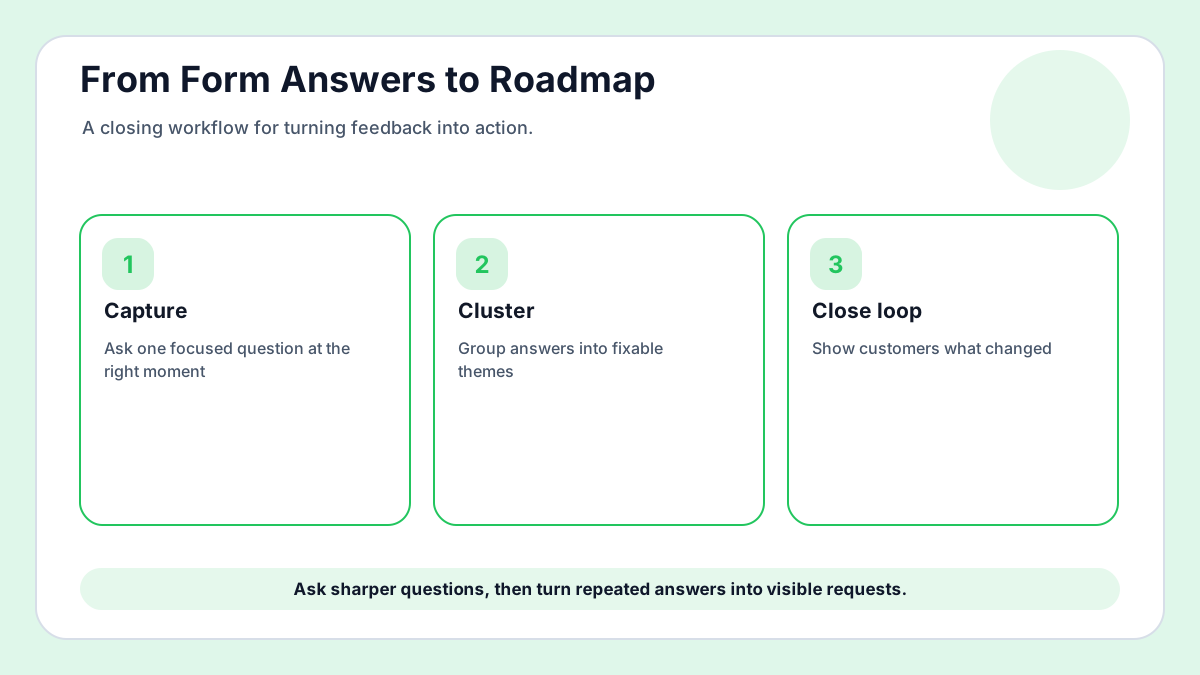
Review new answers twice a week, not once a quarter. Label each response as friction, missing capability, pricing confusion, trust concern, or praise. Reply to the high-context comments first, combine repeated requests, and close the loop when a small improvement ships.
For SaaS, connect form answers to activation, retention, and expansion metrics. For ecommerce, connect them to product-page conversion, cart abandonment, support contacts, and repeat purchase behavior. A question is only valuable when it changes a decision.
Form mistakes to avoid
Do not ask “Any feedback?” and expect useful strategy. Do not ask leading questions such as “How amazing was checkout?” because customers recognize the bias. Do not mix product research, support triage, and testimonial collection in one long form. Do not require an email address unless follow-up is essential.
Closing the loop
The best feedback form gives customers a quiet way to point at what matters. The best feedback system then shows the team which comments deserve action. When a pattern graduates from a form response to a public request, let users vote, watch, and see progress instead of wondering whether anyone read their note.
Small teams do not need a complicated research stack to start. They need a few sharper questions, a place to organize recurring requests, and a habit of responding when the evidence is clear. FeaturAsk gives that workflow to small SaaS, creators, stores, and service businesses without a long setup project.
A field-tested form sequence for lean teams
Start with one question at the highest-intent moment rather than publishing a long research form everywhere. A SaaS app might ask the task-completion question after a user finishes setup, while a store might ask the friction question after checkout or after a customer leaves a product page. The placement changes the answer quality because the customer is still thinking about the exact moment you want to improve.
Use progressive collection when you need more than one answer. Ask the first question in the widget, then invite the customer to add detail only if they choose a low rating, request a missing option, or describe a blocker. This keeps the default experience short while still giving motivated customers room to explain the problem.
Separate discovery questions from measurement questions. Discovery questions reveal language, objections, missing features, and expectations. Measurement questions show whether a known issue is getting better or worse. Mixing both in one form usually creates noisy data because the team cannot tell whether it is looking for new ideas or tracking an existing metric.
Create a weekly review note with three columns: strongest quote, repeated theme, and action owner. The quote preserves the customer’s language, the theme prevents overreacting to one comment, and the owner makes the next step visible. If a theme has no owner after two review cycles, archive it or move it to a watch list so the board does not become a museum.
Ecommerce teams should add revenue context without making the customer feel interrogated. Product category, cart value range, and device type are usually enough to see whether a comment represents a narrow edge case or a checkout pattern worth fixing. SaaS teams can use plan type, lifecycle stage, and account role in the same way.
Finally, write the response plan before you collect the answers. Decide which comments get a direct reply, which themes become public requests, which issues go to support, and which ideas are saved for later research. Customers are more willing to answer the next form when the first answer clearly went somewhere.
When to retire a question
Retire a form question when the answers no longer change behavior. If three review cycles produce the same known theme, replace the prompt with a narrower version that tests the next decision. Feedback collection improves when the form evolves with the product instead of preserving old curiosity.