Shopify Feedback Widget: Learn What Buyers Want Before They Leave
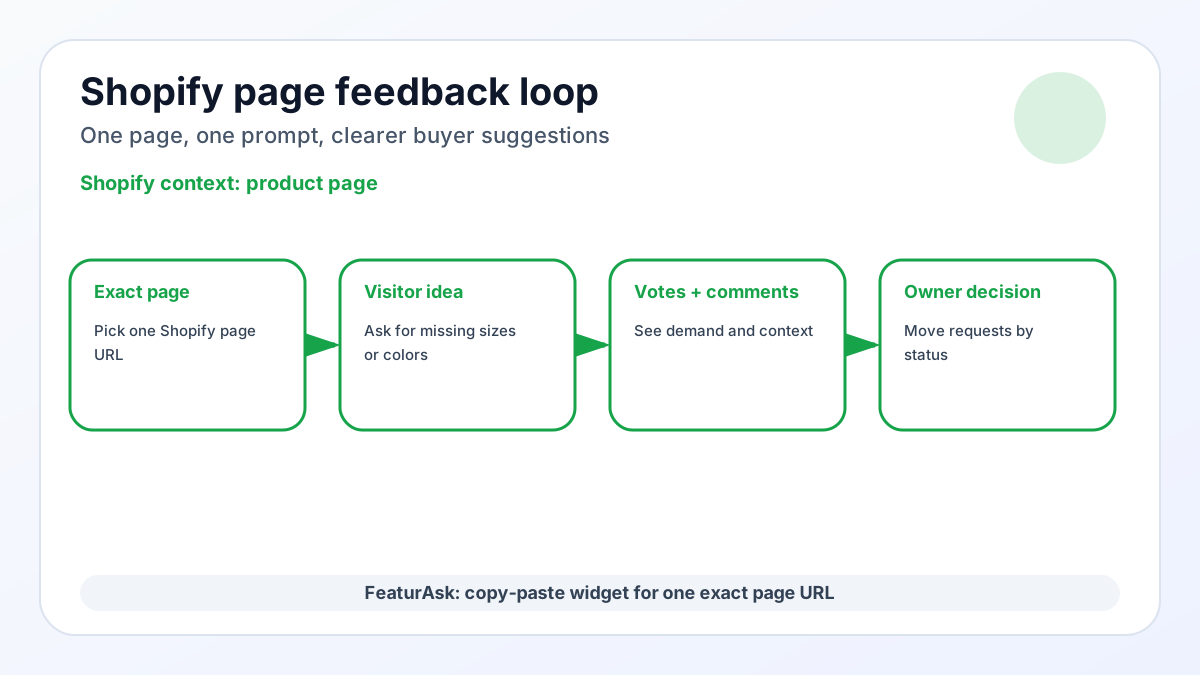
A Shopify feedback widget is most useful when it helps a store owner learn what visitors wanted at the moment they were already evaluating the page. On Shopify, that moment might be a product page, collection page, sizing guide, or post-purchase idea page. The visitor has enough context to make a specific suggestion, and the owner has enough context to decide whether the suggestion is worth acting on.
At FeaturAsk, we built our widget for that kind of focused page-level loop. We let you assign one subscription to one exact webpage URL, customize the widget copy and style, paste the generated code into the page body, test the experience, and then manage requests in a simple dashboard. If you want to try the loop before committing, FeaturAsk starts with a 30-day free trial and no credit card required.
The important nuance is that FeaturAsk is an embeddable widget for a page on Shopify. It is not a native Shopify app that automatically reads your store, theme, visitors, account plan, or page type. You choose the exact page, configure the prompt, and paste the code where your site setup allows it. That plain boundary is useful: the feedback stays tied to the page where missing sizes or colors, bundle ideas, product variants are easiest to understand.
This guide is written for the owner who wants a practical first version, not a sprawling feedback program. You can start with the page that already attracts qualified visitors, ask for the one category of suggestions you can act on soon, and let voting reveal which ideas deserve a second look. After a few weeks, the pattern should be concrete: which requests repeat, which ones earn votes, which comments add useful context, and which items should move from Pending into a real decision. That is enough signal for a small business to choose one improvement, explain the decision publicly, and keep the page moving without buying a complex roadmap suite. It also gives the owner a calm record to revisit when the next redesign, campaign, or product update is planned.
Why Shopify stores need page-level feedback
Shopify makes it possible to publish quickly, but speed can hide weak signals. A visitor may leave because a product variant is missing, a service is unclear, a course topic is not covered, or a pricing question is unanswered. If the only feedback path is a generic contact form, those small signals often arrive without enough context or never arrive at all.
A page-level widget changes the prompt from “contact us” to “tell us what would make this page or product better.” That difference matters. People are not forced to write a support ticket, and you are not forced to interpret vague analytics alone. You get named ideas, votes, comments when enabled, and status movement that can show visitors the request is being handled.
For platform businesses, the best feedback is usually not abstract. A Shopify visitor can point to missing sizes or colors, bundle ideas, or product variants because they are looking at the relevant page. That is why a focused Shopify feedback widget can be more useful than a sitewide survey dropped into every corner of the site.
The best page to start with
Start with one page, not the whole site. FeaturAsk subscriptions are assigned to one exact webpage URL, so the first strategic decision is where a suggestion loop will produce the clearest next action. A high-intent page is usually better than a homepage because visitors know what they are reacting to.
For Shopify, good first pages include a product page, collection page, sizing guide, or post-purchase idea page. If you sell products, choose a page where demand signals affect inventory, variants, bundles, or merchandising. If you sell services or content, choose a page where suggestions could shape the next package, lesson, article, workshop, or resource.
The exact-URL rule is not a nuisance to work around. It keeps feedback clean. A request from a collection page should not be mixed with a request from a checkout explanation page unless you intentionally want one shared context. Pick the page, write the prompt for that page, and treat the first month as a learning window.
How FeaturAsk fits a Shopify storefront
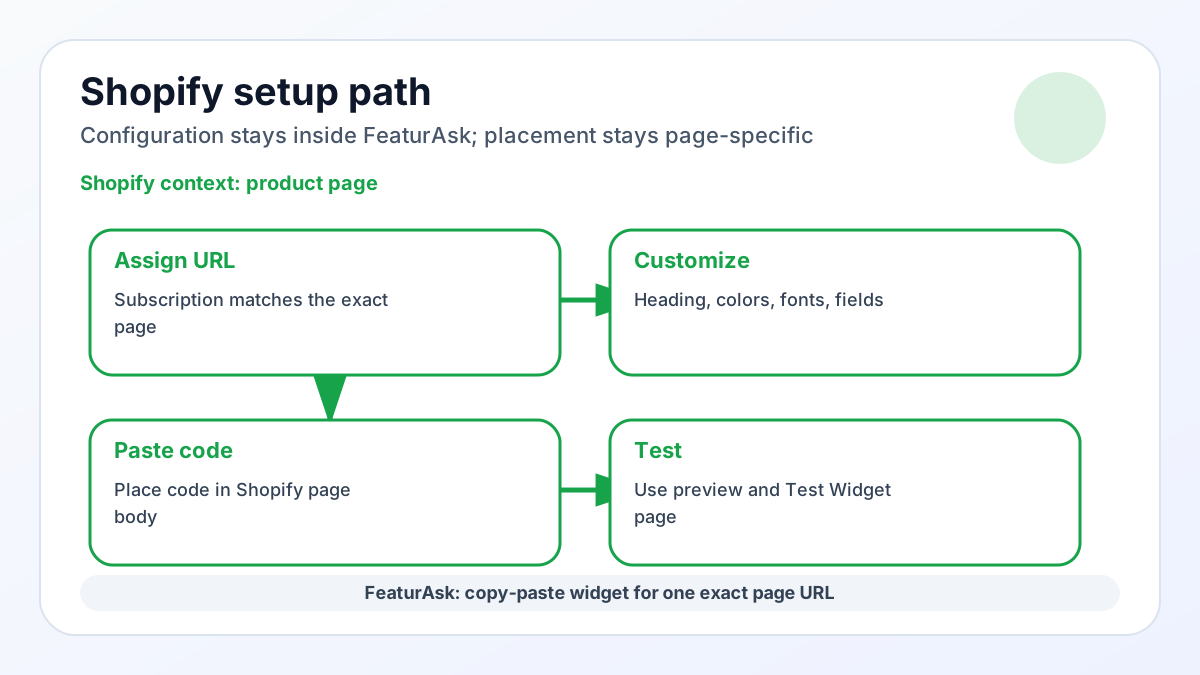
FeaturAsk fits the Shopify workflow as a copy-paste widget. You configure the widget in the FeaturAsk dashboard, assign the exact page URL, and place the generated widget code in the Shopify theme section, custom liquid area, or page body area where your store lets you paste embed code. Official platform documentation can help you identify the right code area; for example, see Shopify theme sections documentation and Shopify Liquid documentation.
Inside FeaturAsk, we let you customize the heading, description, colors, fonts, comments, reCAPTCHA v2, status display, date display, and up to two optional fields. Those controls are enough to make the widget feel intentional without turning the setup into a custom development project.
Testing should happen before you invite real visitors. Use quick preview while adjusting the look and copy, then use the Test Widget page to submit sample requests. When the code is pasted into the page body, confirm that the assigned URL and the live page URL match exactly. If they do not, fix the URL or placement before treating the widget as launched.
What to ask buyers before they leave
The prompt should tell visitors what kind of suggestion belongs there. A broad prompt like “Share feedback” can work, but platform pages usually benefit from sharper wording. On Shopify, you might ask for missing sizes or colors, invite votes on bundle ideas, or ask what would make product variants easier to evaluate.
A strong prompt has three parts: the kind of idea you want, a boundary around what not to submit, and a short expectation for review. For example, a store or site owner might write: “Suggest one improvement for this page. Please keep support or private account questions out of this public idea board. We review requests and update status as we decide what to do next.”
Do not ask for order numbers or private account details in a public request prompt. Optional fields can help when they change the decision. A product area, customer type, or use case can be useful. A long list of required questions turns a lightweight widget into a survey, and that can reduce the number of people willing to share the quick idea you actually need.
A practical launch plan for a store owner
A focused launch can happen in one working session. First, choose the exact Shopify page. Second, create the FeaturAsk subscription for that exact URL. Third, write a short heading and description that match the page. Fourth, choose brand colors and readable fonts. Fifth, decide whether comments, status display, date display, and reCAPTCHA v2 should be enabled on day one.
Then submit test ideas. Create one request you would probably accept, one you would decline, and one that needs more context. Open them in the dashboard, inspect comments and request details, check optional-field data if you enabled fields, search for a term, filter by status, and move each request through the states. The available statuses are Pending, Under Consideration, In Progress, Completed, and Declined.
Once the loop feels clear, paste the code into the page body area allowed by Shopify and run a final live test. If the page is important to revenue, keep the first prompt narrow. You are not trying to collect every opinion on the site; you are trying to learn which specific page improvements deserve attention.
During the first week, review the board on a schedule instead of reacting to every new item immediately. Look for repeated wording, votes that cluster around the same pain, and comments that explain why a request matters. That rhythm keeps the feedback loop calm while still showing visitors that the page is being watched.
How to review and prioritize store ideas
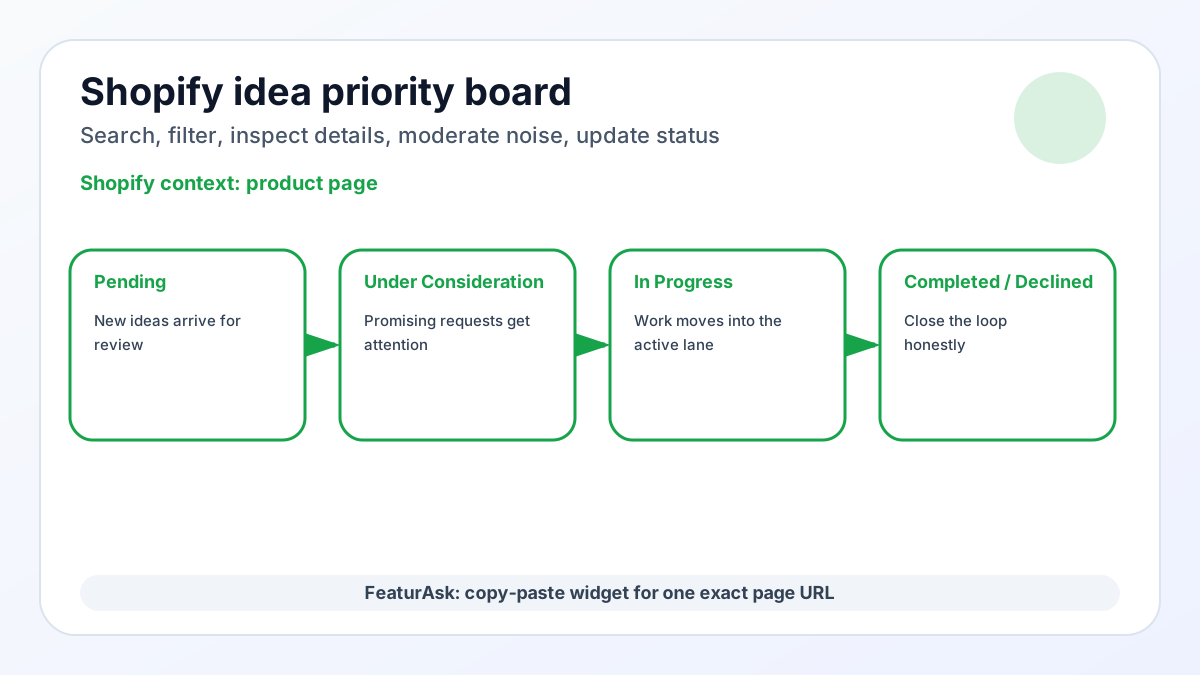
Collection is only half of the job. The dashboard is where a Shopify feedback widget becomes a decision system instead of a comment box. New submissions can begin as Pending. Stronger signals can move to Under Consideration. Active work can move to In Progress. Completed changes can be marked Completed, and ideas that do not fit can be Declined.
Search and status filtering matter once the list grows. If multiple visitors mention missing sizes or colors or shipping or pickup improvements, you do not want that pattern buried in a chronological feed. Votes give you one demand signal, comments add context, and optional-field data can show whether a request came from a customer type that matters to the decision.
Moderation also keeps the board usable. Unwanted requests can be removed, and unclear items can be reviewed before they distort the backlog. That is especially important on public pages, where visitors may submit support questions, jokes, or private details even when the prompt asks them not to.
Where this beats another survey or review app
A feedback widget is not the same as a review widget, contact form, live chat, or analytics report. Reviews tell future visitors whether people liked the product or service. Contact forms create private conversations. Chat helps with immediate questions. Analytics shows behavior, but it rarely explains which specific improvement people wanted.
FeaturAsk is useful when the question is “what should we improve or build next?” That is why related guides such as our feedback widget for ecommerce, product feedback widget, and customer suggestion box for website focus on turning visitor input into decisions rather than collecting generic comments.
For a Shopify owner, the benefit is practical. You can keep your main site stack intact, add a focused idea channel to one page, and avoid paying enterprise monthly prices before you know whether the page can produce useful requests. FeaturAsk is $29.95/year for one assigned webpage URL after the trial, which keeps the experiment small enough for indie stores, creators, and small teams.
Mistakes to avoid on Shopify pages
The first mistake is treating the widget like a magic sitewide listener. It will not automatically detect which Shopify page should own every request. Assign the exact URL and write the prompt for that page. If you later want a different page, treat that as a deliberate change, not an assumption.
The second mistake is asking for too much. A public idea board should not become a long market-research form. Use up to two optional fields only when the answers help you prioritize. The third mistake is hiding the follow-through. If you choose to display statuses or dates, keep them meaningful. A board full of old Pending items can make the feedback loop feel ignored.
The fourth mistake is copying the same widget copy across platforms and pages. A Shopify storefront, portfolio, service page, and launch page have different visitor intent. The copy should name the kind of suggestion that belongs there and gently redirect anything private or urgent to the right support channel.
Shopify-specific signals worth separating
Shopify feedback can become noisy if every suggestion is treated like the same kind of store request. I would separate merchandising ideas from page-clarity ideas as soon as they arrive. A request for a missing size, color, bundle, pickup option, or accessory belongs close to product planning. A request about confusing copy, unclear shipping language, or missing sizing help belongs closer to page optimization. The widget does not need to know those categories automatically; the dashboard review is where the owner can read request details, comments, votes, and optional-field answers before assigning meaning.
The FeaturAsk dashboard also gives the owner a place to see website subscriptions and purchase history, which is useful when the feedback program starts with one assigned page and later needs a clean account record. That is an account-management fact, not a promise that FeaturAsk reads Shopify orders or customer accounts. Keep the prompt public and idea-focused, then use statuses to show whether the store is still weighing demand, actively working on a change, or declining a request because it does not fit the catalog.
A simple next step
If your Shopify store is losing ideas in support messages, reviews, and abandoned visits, start with one high-intent page. Add the widget there, ask for the kind of product or page improvement you can actually review this month, and let votes reveal whether the same demand appears more than once.
At FeaturAsk, we built this for owners who want useful buyer input without committing to an enterprise feedback suite. The trial lets you test the loop first, the annual price keeps the experiment small, and the exact-URL setup keeps each request tied to the page that inspired it.
Try FeaturAsk when a single Shopify page deserves a clearer suggestion path. For more planning help, compare this guide with our feature voting widget article, then choose the storefront page where the next product decision would benefit from buyer demand.