Comprehensive Guide on Customer Retention Marketing Strategies
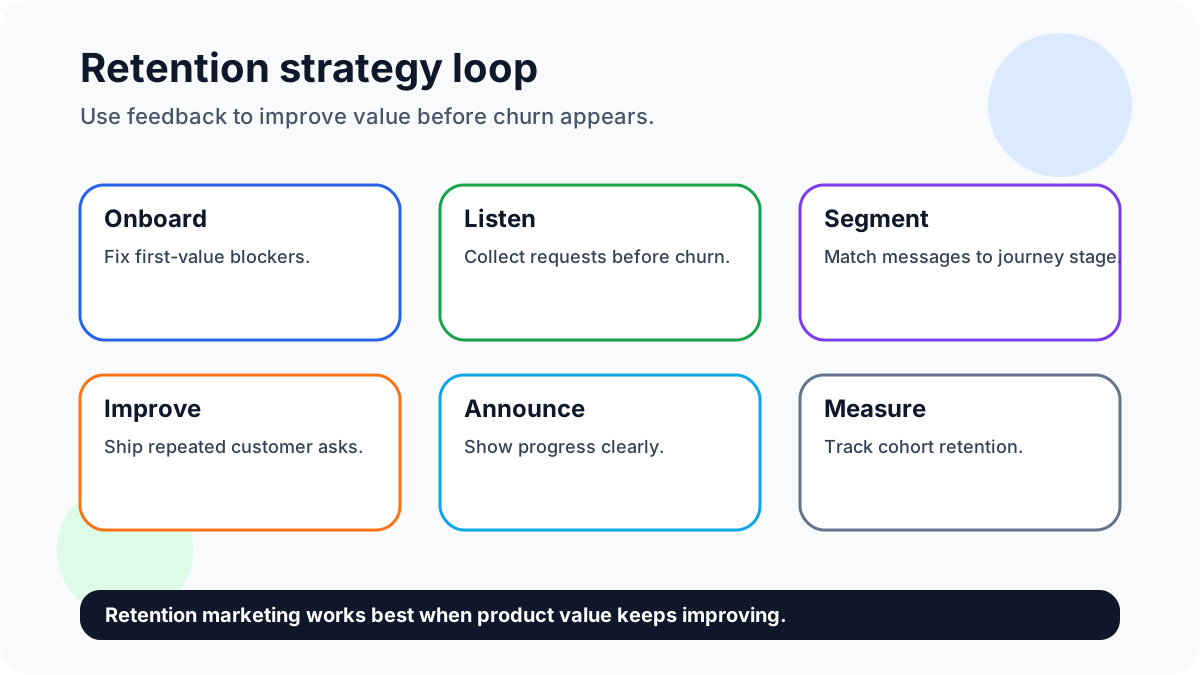
Retention marketing is the work of keeping the right customers active, satisfied, and willing to come back. For small teams, the most overlooked retention channel is often the product itself: customers stay when the product keeps solving important problems and the team shows that it listens.
Quick answer: retention marketing works best when lifecycle messages, onboarding fixes, loyalty efforts, and product improvements are guided by customer feedback and cohort behavior. Connect the work with feature request templates, feature voting, and building better products with user feedback where useful.
Sign up for FeaturAsk to make customer requests part of retention marketing — one month free with no credit card, then $29.95/year.
Why this matters now
Retention matters because growth becomes fragile when every month depends only on new acquisition. Existing customers reveal where value is strong, where it is fading, and which product improvements can keep the relationship healthy.
Customer retention marketing strategies
1. Improve onboarding around the first value moment
Find the action that makes a customer understand the product’s value, then remove friction before it. Retention often improves when users reach that first win faster.
2. Collect feedback before churn becomes silent
Many customers leave quietly. Add low-friction feedback points before renewal, after failed tasks, and during inactivity so the team can learn while recovery is still possible.
3. Segment messages by customer journey stage
New users need activation help, active users need deeper value, and slipping users need recovery. One generic newsletter cannot serve all three stages well.
4. Turn repeated requests into roadmap decisions
If the same improvement appears in requests, support, and sales notes, treat it as retention evidence. Customers may be telling you what would keep them engaged.
5. Use lifecycle email without spamming
Lifecycle messages should help users complete valuable actions, not just remind them you exist. Trigger emails from behavior and keep each message tied to one next step.
6. Reward loyal customers with useful access
Early access, templates, education, or community recognition can be more valuable than discounts. Reward programs should reinforce product success, not train customers to wait for coupons.
7. Build a help center from real questions
Support themes reveal where customers get stuck. Turn repeated questions into help articles, onboarding tips, and product improvements.
8. Announce improvements customers asked for
When a requested improvement ships, tell the people who asked. This connects retention with product progress and shows that staying engaged has a payoff.
9. Recover unhappy users with direct follow-up
A personal follow-up can save accounts when it acknowledges the specific pain and offers a concrete fix. Avoid generic “sorry to see you go” messages.
10. Measure retention by cohort, not averages
Overall churn can hide whether newer customers are improving or declining. Cohorts show whether onboarding, product changes, and lifecycle campaigns are actually working.
11. Create a customer advisory habit
You do not need a formal board to listen regularly. A monthly call, feedback review, or request digest can keep decision makers close to customer reality.
12. Keep pricing and value expectations clear
Retention suffers when customers misunderstand what they bought. Clear packaging, honest limits, and visible improvements help customers judge value fairly.
FeaturAsk angle for smaller teams
FeaturAsk supports retention by showing customers that their requests are visible, organized, and considered. That visibility can strengthen trust before dissatisfaction becomes churn.
Try FeaturAsk free for one month and find the requests that affect retention with no credit card; the annual plan is $29.95/year.
Evidence and current references
Harvard Business Review’s article on the value of keeping the right customers remains useful. Zendesk Customer Experience Trends shows how quickly customer expectations rise across digital experiences.
Retention work should connect marketing with product truth. Campaigns can remind customers of value, but feedback reveals whether the value is still strong enough to keep them.
A simple weekly workflow
Each month, review activation, repeat use, churn, expansion, support themes, and feature votes together. Choose one retention bottleneck, define the customer stage it affects, and connect the campaign or product fix to that evidence.
Turning retention strategy into a monthly operating rhythm
Retention improves when the team reviews evidence on a schedule. Start with a cohort report: which customers activated, returned, expanded, or churned? Then compare those numbers with support themes and feature requests. If new users churn before setup, improve onboarding. If active users request the same missing workflow, evaluate the roadmap. If loyal customers ask for education, build templates or guides.
Retention marketing should not hide product gaps. A lifecycle campaign can remind customers of value, but it cannot permanently compensate for a product that ignores repeated pain. The most durable retention work combines helpful communication with visible product progress.
Use feedback to make renewal conversations easier. When customers see their requests acknowledged, voted on, and sometimes shipped, the relationship feels less transactional. They are not just paying for the current feature set; they are trusting the product to keep improving around real needs.
Editorial checklist
Review each tactic against a customer stage. A retention idea that does not map to activation, engagement, renewal, recovery, expansion, or loyalty is probably too vague to execute.
Retention playbook by customer stage
For new customers, focus on activation. Remove setup steps that do not lead to the first valuable outcome. Send one helpful message at a time, based on behavior, and ask what blocked progress if the customer stalls. Feature requests during onboarding often reveal missing expectations from sales or marketing.
For active customers, focus on expansion of value. Teach deeper workflows, announce relevant improvements, and invite votes on the next useful enhancement. Do not assume active customers are fully satisfied; they may simply be tolerating friction because switching is inconvenient.
For at-risk customers, focus on recovery. Watch for inactivity, repeated support frustration, downgrade behavior, and negative feedback. A useful recovery message references the specific problem and offers a concrete next step. Generic discounts can delay churn, but they rarely repair the underlying reason customers are unhappy.
For loyal customers, focus on partnership. Invite them into advisory calls, early access, request voting, or case-study conversations. Loyal customers often provide the clearest roadmap signal because they understand both the product’s strengths and its limits.
Feedback as a retention asset
A feedback board is not just a product-management tool. It can reduce churn by showing customers that improvement is visible and organized. When users see requests move from submitted to under review to shipped, they gain confidence that the product will keep adapting.
Retention metrics need interpretation. A churn number tells you what happened; feedback helps explain why. Cohorts show where the problem sits. Support notes show the emotional context. Feature votes show what customers want next. Together, those signals create a retention strategy that is more precise than another generic email campaign.
The healthiest retention programs are honest. They do not promise every request, and they do not hide hard tradeoffs. They explain priorities, deliver improvements, and keep asking what would create the most value next.
Retention metrics that pair well with feedback
Activation rate shows whether new customers reach the first meaningful outcome. Repeat usage shows whether the product becomes a habit. Renewal rate shows whether value remains strong enough to justify continued payment. Expansion shows whether customers trust the product enough to use more of it. Request quality shows whether customers are invested enough to suggest improvements.
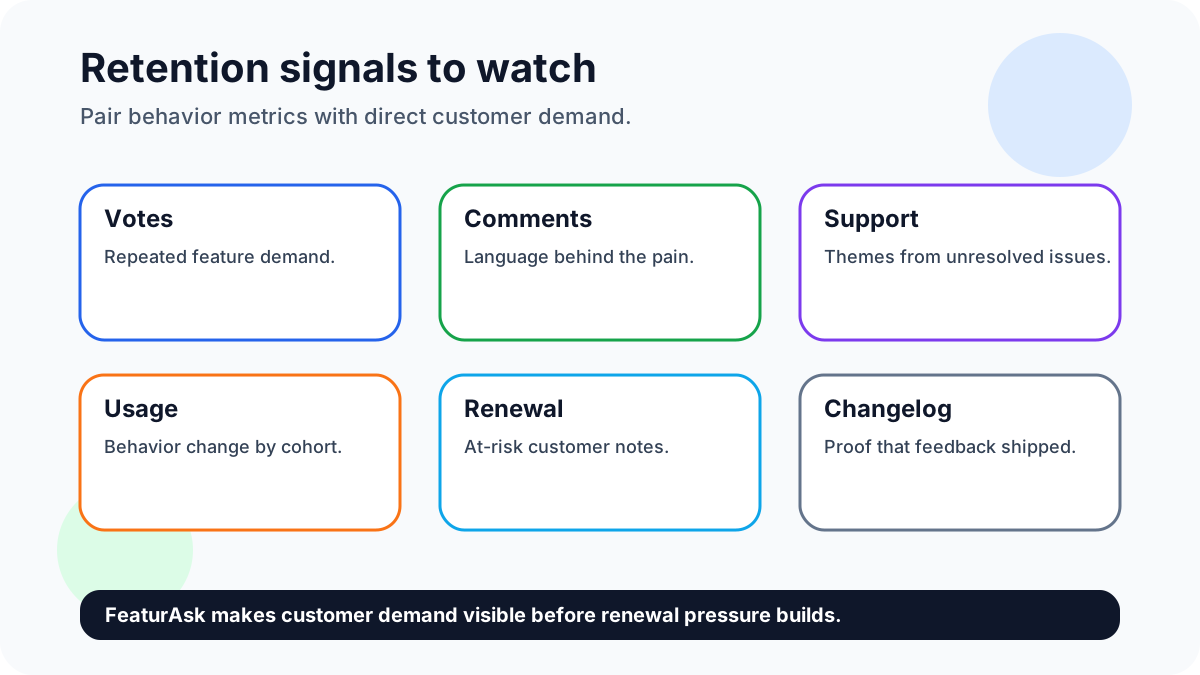
No single metric explains retention by itself. A customer may be active but unhappy, quiet but successful, or vocal because they care deeply. Feedback gives the story behind the number. Votes show patterns across customers. Comments reveal urgency and context. Support notes reveal friction that customers may not put on a public board.
Retention campaigns that do not feel generic
Send onboarding help based on incomplete actions, not arbitrary days. Send education when a customer uses a feature for the first time. Send improvement announcements only to users who benefit from that area. Send win-back messages that mention the likely blocker. The more specific the trigger, the less the campaign feels like noise.
A feedback-led retention system makes these messages easier because the team knows what customers asked for, what shipped, and what still needs attention.
Retention playbook by customer stage
New customers need activation help. Ask what blocked their first successful action, then turn repeated answers into onboarding fixes. Active customers need proof that the product keeps improving. Use feedback requests, votes, and changelog updates to show that their usage shapes the roadmap. At-risk customers need direct follow-up before renewal anxiety becomes churn.
For loyal customers, retention marketing should feel like useful access rather than generic rewards. Invite them to vote on upcoming improvements, preview features, or explain which workflow still wastes time. That creates a relationship around product progress, not only discounts.
Feedback signals that predict retention risk
Watch for repeated requests tied to blocked value. One missing export field may not matter; twenty comments from paying customers trying to complete the same monthly report probably does. Also watch for silence after repeated friction. If users stop asking, it may mean they found a workaround, or it may mean they stopped believing the team will respond.
A small FeaturAsk board helps because it turns scattered complaints into visible patterns. Pair vote counts with cohort behavior, support tickets, and renewal notes so retention strategy is based on demand rather than assumptions.
Monthly retention operating rhythm
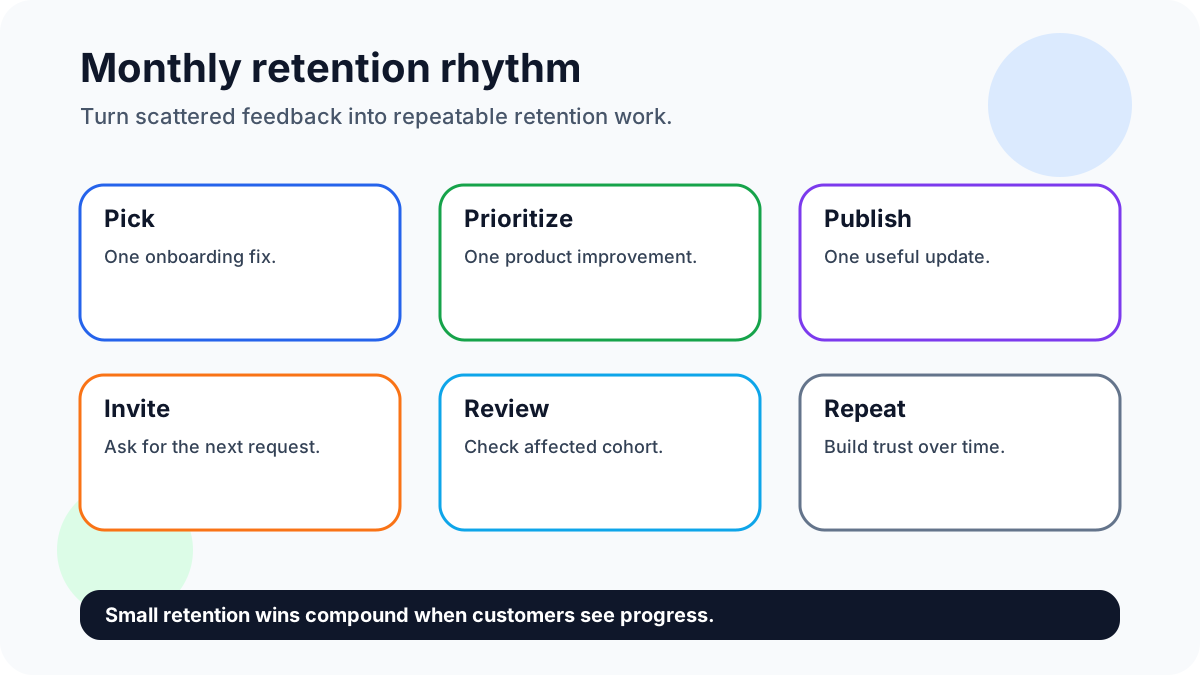
Once a month, choose one onboarding fix, one product improvement, and one communication update based on customer evidence. Publish what changed, invite the next request, and review whether the affected cohort improved. This is more durable than sending another generic lifecycle campaign.
Retention experiments worth running
Start with experiments that improve product value, not only message timing. For example, choose one high-vote request from at-risk customers, ship the smallest useful version, and announce it to the cohort that asked for it. Then compare activation, repeat use, support volume, and renewal conversations for that cohort over the next month.
A second experiment is the save-risk interview. When a customer submits a frustrated request or negative comment, follow up with a short question: "What outcome were you trying to reach?" The answer often reveals whether the retention problem is onboarding, missing functionality, unclear messaging, or pricing expectation. Turn the pattern into one product fix and one communication fix.
A third experiment is the changelog loop. Publish one customer-requested improvement every month, link it to the feedback theme, and invite votes on the next improvement. This makes retention marketing feel like product progress rather than another campaign.
Review experiments by customer segment, not only by total account count. A fix that matters to new self-serve users may not move enterprise renewals, and a loyalty campaign for power users may not help trial activation. Segmenting the evidence keeps retention strategy honest and prevents one loud group from defining the entire roadmap. It also helps the team choose whether the next retention move should be a product fix, an onboarding change, a support follow-up, or a clearer announcement.
FAQ
What is the fastest way to start?
Start by finding the biggest retention leak: onboarding drop-off, declining usage, churn reasons, or repeated unresolved requests.
How do you keep quality high?
Quality stays high when campaigns are tied to behavior and feedback, not generic calendar blasts.
Why use FeaturAsk?
FeaturAsk helps retention teams see which improvements customers are asking for before dissatisfaction turns into churn. Sign up for FeaturAsk and test the widget for one month free with no credit card; the annual plan is $29.95/year.
Sources
- Harvard Business Review’s article on the value of keeping the right customers remains useful. Zendesk Customer Experience Trends shows how quickly customer expectations rise across digital experiences.