Building Better Products with User Feedback
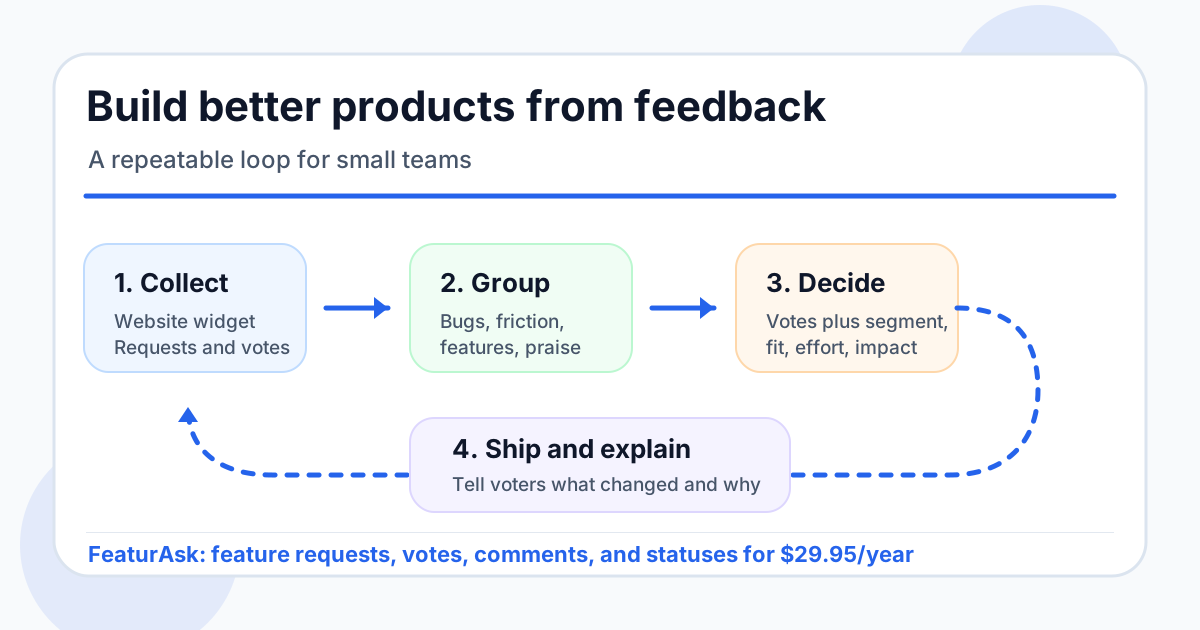
Better products are not built by copying every request or ignoring users until the roadmap is finished. They come from a disciplined loop: collect real feedback, separate signal from noise, choose the next improvement, ship it, and show users what changed.
User feedback is especially powerful for small teams because it replaces guesswork with evidence. A solo developer, creator, ecommerce owner, or bootstrapped SaaS team may not have a research department. But they do have visitors, buyers, subscribers, readers, and customers who run into the same questions repeatedly. If you collect that input in one place, patterns become easier to see.
Modern product teams also have more channels than ever. Feedback arrives through support tickets, chat, reviews, social posts, analytics, cancellation notes, NPS comments, sales calls, and in-app behavior. Atlassian’s product discovery material emphasizes using customer evidence to shape decisions rather than relying only on internal opinion (<a href="https://www.atlassian.com/agile/product-management" rel="nofollow">Atlassian product discovery guide</a>). Nielsen Norman Group has long argued that usability work should focus on observing real user behavior, not just preferences (<a href="https://www.nngroup.com/articles/which-ux-research-methods/" rel="nofollow">NN/g UX research methods</a>). The practical challenge is turning all those signals into a workflow a small team can maintain.
Start with the decision, not the feedback channel
Before adding another survey or widget, ask what decision the feedback should improve. Are you trying to choose the next feature? Improve onboarding? Reduce churn? Find confusing pages? Decide whether a paid plan needs a missing capability? Each goal requires a different type of input.
If you want roadmap ideas, an always-available request widget works well. If you want to diagnose checkout friction, session recordings or short exit questions may help. If you want to understand why customers cancel, cancellation notes and follow-up interviews are better. Good feedback systems do not collect everything equally. They collect the right signal for the next decision.
For small websites, the highest-leverage first step is often centralization. Stop letting feature ideas disappear in email threads and chat transcripts. Put requests where users can see existing ideas, vote, and add context. FeaturAsk’s guide to feature request tools explains how that changes a vague inbox into a visible demand map.
Need a lightweight place to collect product ideas from your visitors? Sign up for FeaturAsk and start a 30-day free trial with no credit card required. It gives small teams a website widget, votes, comments, moderation, and a dashboard for $29.95/year.
Separate four kinds of feedback
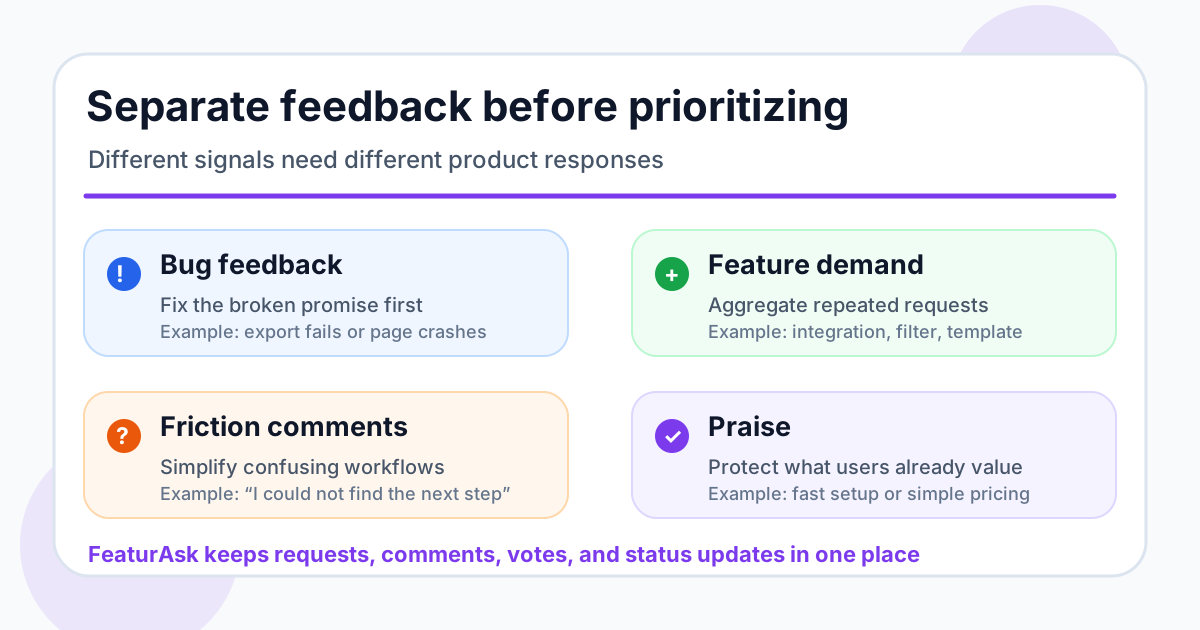
The first category is bug feedback. A bug means the product made a promise and failed to keep it. Bugs should not compete with speculative feature ideas in the same priority list. Fix the broken promise or communicate the workaround.
The second category is feature demand. Users ask for an integration, export, dashboard view, filter, template, permission, or workflow. Feature requests need aggregation because a single request may not justify work, while repeated demand from the right segment can define the roadmap.
The third category is friction. Users can technically complete the task, but the process is slow, confusing, or easy to abandon. Friction may not sound like a feature request. Comments like “I could not find it” or “I did not understand the next step” often point to UX improvements that outperform new features.
The fourth category is praise. Teams often ignore positive feedback because it feels less urgent. That is a mistake. Praise tells you what not to break. If customers love a simple setup flow, keep it simple. If they value low pricing, do not bury the product under a costly enterprise package too early.
Build a feedback intake that users actually use
A feedback intake should be visible, easy, and specific. If users must hunt through a footer, create an account, fill a long form, or understand your internal terminology, they will not submit the idea while the context is fresh.
A strong intake asks for a short title, a description, and optional contact details. It shows similar existing ideas before the user creates a duplicate. It lets other users vote. It gives the team moderation controls. It works on mobile. It also sets expectations: submitting an idea does not guarantee it will ship, but it does make the request visible for review.
This is where small teams can win. A public request board is not only a collection tool. It teaches users that you listen and gives prospects evidence that the product is improving. If you need the voting layer, read the guide to feature voting before you decide how much weight votes should carry.
Prioritize feedback without becoming a popularity contest
Votes are useful, but they are not the whole decision. A request with many votes from free users may be less urgent than a smaller request from paying customers in your best-fit segment. A request that supports your positioning may matter more than a flashy feature that would pull the product away from its promise.
Use a simple scoring lens: customer segment, frequency, revenue impact, strategic fit, implementation effort, support burden, and confidence. You do not need a complicated weighted spreadsheet. You need enough structure to explain why one request moves ahead of another.
A valuable insight many practical feedback guides understate is that prioritization should protect product simplicity. Small teams win by saying no to good ideas that would make the product harder for the core audience. FeaturAsk’s own positioning is a good example: a simple feature request widget and dashboard for smaller businesses, not a giant product management suite.
Close the loop after decisions
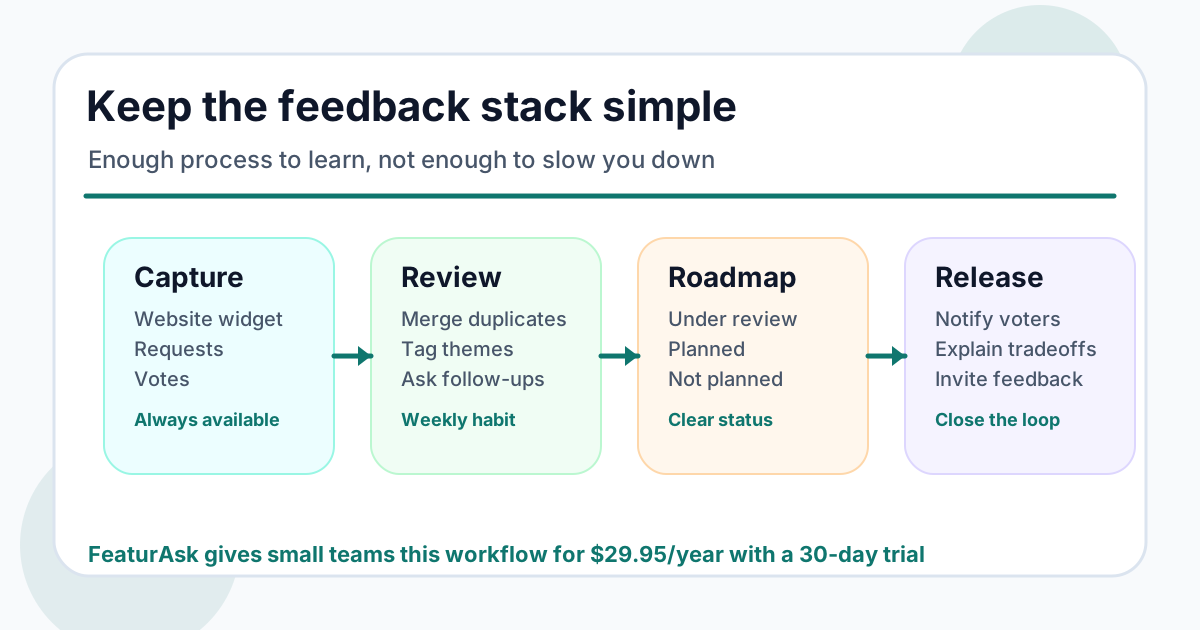
Feedback creates trust only when users see movement. Closing the loop can be simple: mark a request as under review, planned, shipped, or not planned. Add a short explanation. When a feature ships, tell the people who voted or commented.
This matters for adoption. If users asked for a change and then never hear about it, they may not discover the improvement. Release communication should connect the shipped work back to customer input: “You asked for easier exports; CSV export is now live.” FeaturAsk’s product launch communication plan covers how to turn that update into awareness, adoption, and renewed feedback.
Closing the loop also improves future feedback. Users submit better ideas when they understand what your product is trying to become. They stop treating the request board like a wishlist and start describing problems, use cases, and tradeoffs.
Add research when a request is unclear
Some requests are obvious. Others are symptoms. If ten users ask for a spreadsheet export, they might need reporting, backup, bulk editing, compliance records, or a way to share data with a client. Build the wrong interpretation and you may satisfy the wording while missing the need.
When the request is ambiguous, ask follow-up questions. What are you trying to accomplish? What do you do today? What happens if you cannot solve it? How often does this come up? What would a good solution let you do next? A few replies can save weeks of unnecessary building.
Research does not have to become a formal study. A founder can reply to three voters, watch one customer attempt the workflow, or compare the request with support history. The key is to capture the reason behind the request before choosing the solution. If users ask for more notification settings, the underlying need may be fewer noisy alerts, faster escalation, or better ownership. Each answer leads to a different product change. Keep the follow-up short, record the context beside the request, and use it to turn vague demand into a buildable problem statement.
Keep the stack simple until the process earns complexity
A small business does not need a massive product operations stack on day one. It needs a reliable place to collect ideas, a review habit, and a way to communicate decisions. If the process grows, you can add deeper analytics, interviews, research repositories, and roadmap planning later.
The danger of starting too big is that the team maintains the tool instead of learning from customers. The danger of starting too small is that requests remain scattered. A lightweight request board is often the right middle ground.
For that middle ground, try FeaturAsk free for one month with no credit card required. It is built for websites and small teams that want practical feedback collection at $29.95/year, not another expensive monthly platform.
A simple weekly user feedback ritual
Every week, review new requests, merge duplicates, tag themes, and identify one decision that feedback can improve. Every month, look for repeated themes by customer type. Every quarter, compare your roadmap against the top feedback patterns and your strategy.
Do not promise everything. Do not let votes overrule judgment. Do not hide from uncomfortable comments. The goal is not to make every user happy. The goal is to learn faster than teams that build in the dark.
If your current feedback is scattered across email, chat, and memory, sign up for FeaturAsk and give users one simple place to ask, vote, and follow progress. The trial lasts 30 days with no credit card, and the annual plan is $29.95/year.
Bottom line
Building better products with user feedback means creating a loop your team can repeat. Collect input where users already are. Sort it into useful categories. Prioritize with strategy, not just volume. Ship the right improvements. Then close the loop so users know their input mattered.
A lightweight operating rhythm
For a small team, the best feedback system is a habit, not a giant process. Review new items weekly. Merge duplicates immediately. Ask one follow-up question when context is missing. Move only the clearest items into planned work. At the end of each month, compare the top themes with churn notes, support topics, and analytics. This rhythm gives you enough evidence to act without turning feedback into bureaucracy.
How to avoid feedback theater
Feedback theater happens when a team asks for input but no decision changes. Users notice. They see old requests with no response, surveys with no follow-up, and roadmaps that never acknowledge tradeoffs. The cure is a small public rhythm: review new feedback, update statuses, and explain why a request is planned or not planned.
You do not need to publish every internal debate. A short status note is enough. “We are not planning this because it would make setup harder for most users” is better than silence. “Planned after we finish mobile improvements” is more useful than a vague promise. Clear communication makes users more willing to contribute again.
Metrics that make feedback more useful
Track more than vote count. Track request source, customer segment, account value, frequency, support cost, churn risk, and strategic fit. For a small team, this can be lightweight: tags in a dashboard and a short monthly review. The goal is not perfect scoring. The goal is to avoid treating every comment as equal when some comments represent your best customers and others represent edge cases.
Also track what happens after you ship feedback-driven changes. Did support volume drop? Did activation improve? Did customers who voted come back and use the feature? Did the request create new complexity? These after-shipping signals help you improve the feedback loop itself.
Feedback examples that improve product decisions
User feedback is most valuable when it changes a specific decision. A repeated onboarding question might point to a confusing empty state. A feature request with several detailed comments might reveal an integration gap. A bug report with screenshots might show that the team needs better validation, not a larger roadmap item. Treat each signal as evidence for a next action, not as a command.
Strong teams also compare feedback against behavior. If users ask for an export feature and analytics show repeated manual copy-paste work, the request has stronger evidence. If one vocal customer asks for an advanced permission model but most accounts are still struggling with setup, the team may need onboarding improvements first.
FAQ: building better products with feedback
What is user feedback?
User feedback is any direct or indirect signal that shows how people experience your product: requests, complaints, praise, votes, interviews, support tickets, reviews, survey comments, and behavior data. The most useful feedback includes context: who had the problem, what they were trying to do, and what happened next.
Why is user feedback important?
It reduces the risk of building from assumptions. Feedback helps small teams find repeated problems, protect what users already value, and decide which improvements are worth limited time. It also improves trust when users can see that requests are reviewed and updated.
How much feedback do you need before building?
Enough to understand the pattern and the cost of inaction. One request from a perfect-fit paying customer can matter. So can twenty votes from casual visitors. The decision should combine frequency, segment, strategic fit, effort, and confidence rather than a raw vote count alone.