Understanding Feature Parity in Product Development - Examples & Trap
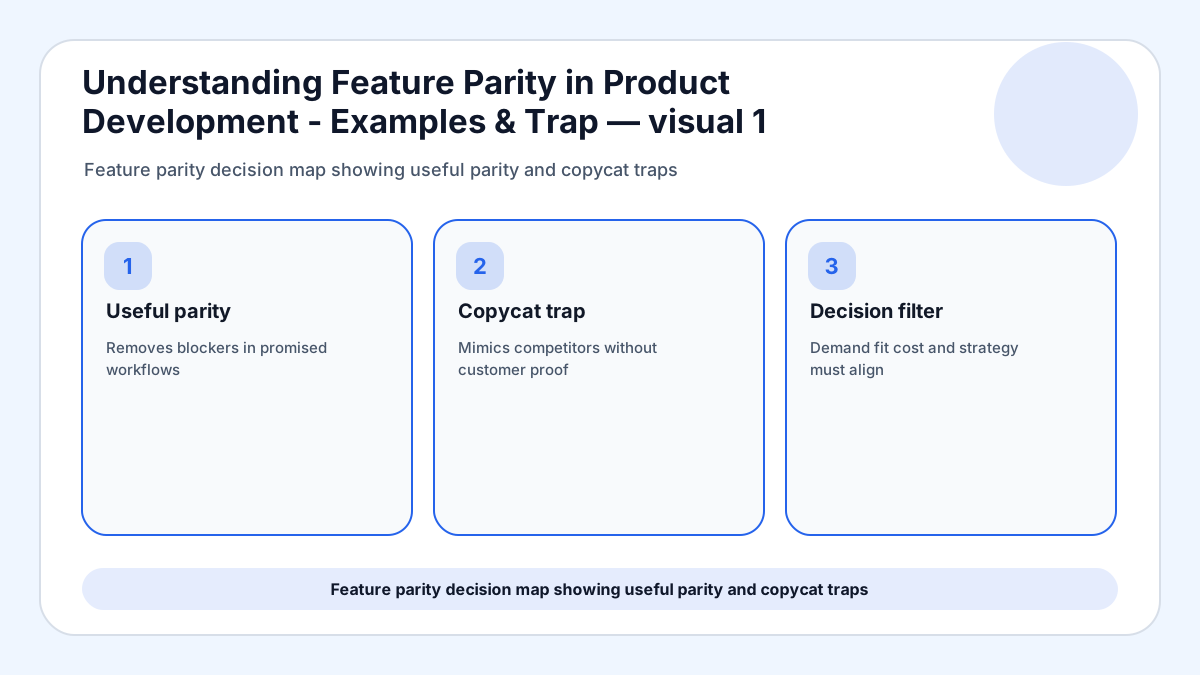
Feature parity means matching a capability across products, platforms, pricing tiers, regions, or competitors so customers receive a comparable experience. That definition sounds neutral, but parity work can either remove real blockers or pull a lean team into copying features that never mattered to its own customers. Frill’s source article explains the concept and trap; this FeaturAsk version adds a stronger decision filter for small SaaS and product-led businesses.
The parity question should never be “do they have it?” by itself. A better question is “which customer job becomes impossible or less trustworthy because we do not have it?” That shift turns parity from a competitor checklist into a customer-evidence discussion.
Before copying a competitor checklist, test whether your own customers even want the gap closed; FeaturAsk can collect and rank that demand for $29.95/year, with one month free and no credit card required.
To keep parity work from becoming a copycat program, review FeaturAsk notes on feature request templates, product feedback tools, and best feature request tools. For outside grounding, see Intercom on product strategy tradeoffs and Harvard Business Review on jobs to be done.
Where parity creates value and where it becomes waste
Useful parity removes unfair friction. A mobile app that lacks the basic account controls available on desktop creates a trust problem. A paid plan that cannot export data while a lower-cost competitor can do so creates a switching risk. A regional launch without local payment methods blocks adoption before product value can be tested.
Wasteful parity starts when a team treats a competitor screenshot as proof. The copied feature may serve a different segment, pricing model, workflow depth, or compliance requirement. Building it anyway consumes roadmap capacity and teaches the team to chase other products instead of understanding its own users.
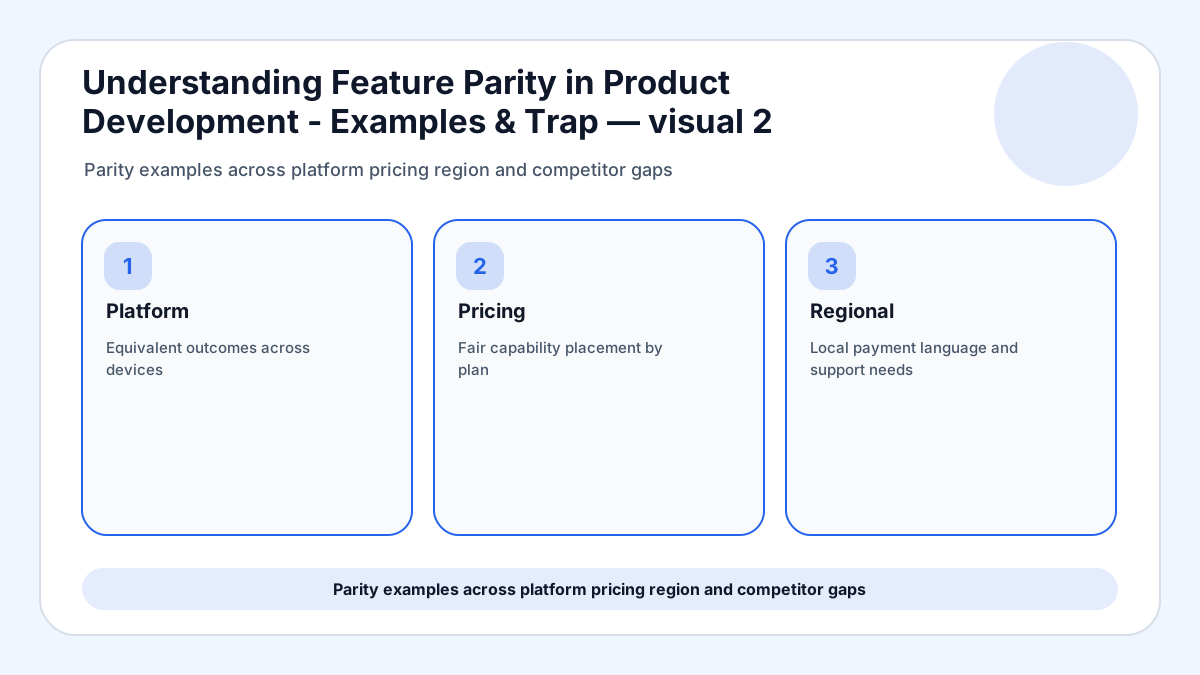
1. Platform parity
Platform parity matters when customers expect the same core job on web, mobile, and desktop. The work is justified when inconsistency breaks trust, blocks completion, or makes the product look unfinished.
Avoid promising identical interfaces everywhere. The target should be equivalent outcomes, not mirrored screens that ignore device constraints.
2. Pricing-tier parity
Pricing-tier parity asks which capabilities belong in free, entry, growth, and premium plans. A small team should protect the features that prove value while charging for scale, advanced control, or team administration.
The trap appears when a company with a generous free plan copies enterprise packaging and accidentally removes the aha moment from trial users.
3. Regional parity
Regional parity includes language, currency, payment methods, legal expectations, and support hours. It is strategic when a region has enough demand to justify localization, not when the roadmap simply wants to look global.
Treat regional requests as market evidence. A few comments may indicate curiosity; repeated paid-account blockers indicate a real expansion candidate.
4. Competitive parity
Competitive parity is the most dangerous category because it feels urgent even when customers are not asking. Competitor launches should trigger research, not automatic build tickets.
Ask whether the competing feature changes win rate, retention, activation, or expansion for your segment. If the answer is unknown, collect request evidence before allocating a sprint.
When parity pressure comes from scattered comments, FeaturAsk gives those requests one public lane so you can separate real demand from a loud screenshot.
How to avoid the feature parity trap
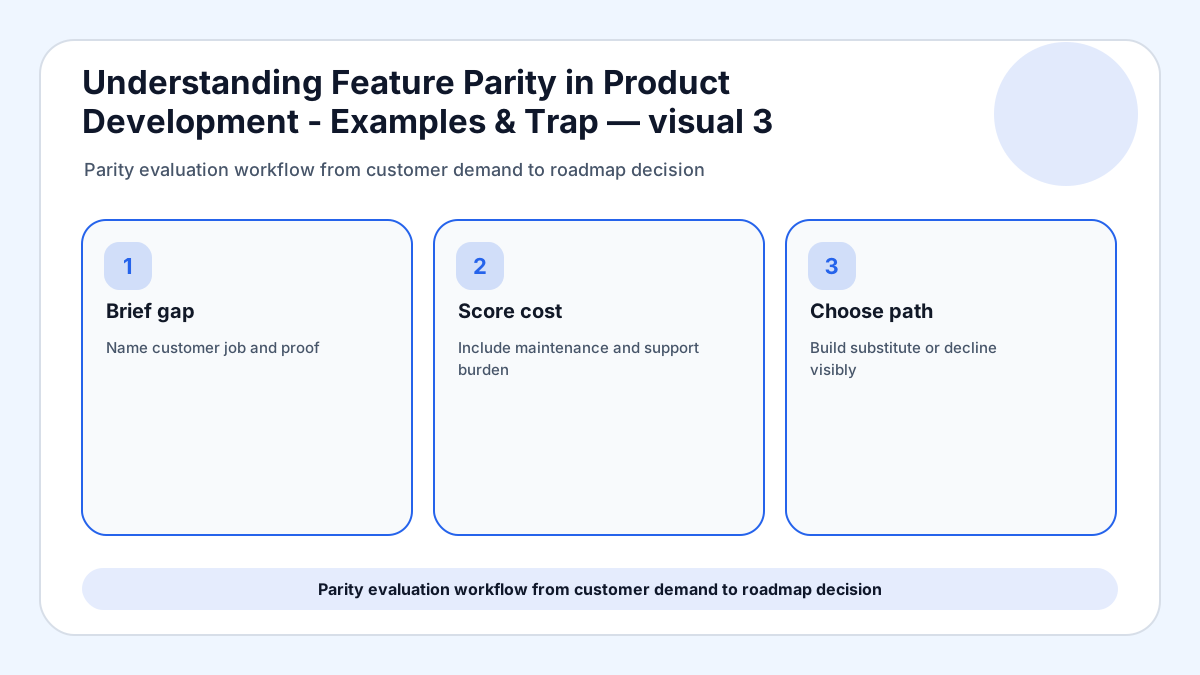
Create a parity brief for every major gap. Include who requested it, which competitor or platform created the expectation, what customer job is blocked, and what outcome would prove the work mattered.
Score the gap against retention risk, revenue impact, setup complexity, maintenance burden, and strategic fit. A small feature with high maintenance cost can be more dangerous than a large feature that clearly protects a valuable workflow.
Consider substitute solutions before full parity. Better onboarding, a lightweight integration, a settings shortcut, or clearer expectation-setting can solve the customer problem without copying the competitor shape.
Platform parity proof
For platform parity, the key question is whether users can complete the promised job on each surface. A mobile version may need approval, review, or status visibility without copying every desktop setting. The proof is completion of the customer outcome, not a mirrored menu.
Pricing-tier parity proof
For pricing tiers, compare what users need to experience value against what should be reserved for scale. A free or entry plan can include enough capability to prove usefulness while advanced administration, reporting, or collaboration remains paid.
Regional parity proof
For regional parity, collect requests by locale, currency, payment method, legal requirement, and support expectation. The team should build only when the region shows repeatable demand and the missing capability blocks adoption.
Competitive parity proof
For competitor gaps, require evidence from customers who match your target segment. A screenshot from another product starts research; repeated lost deals, churn notes, or voted requests create a real parity case.
Feature parity operating details
Turn competitor pressure into a customer question
A competitor launch is useful market information, but it is not a product requirement by itself. Before opening a build ticket, ask which of your customers are blocked, which plan or segment they belong to, and what they are trying to accomplish that your current product cannot support.
This conversion from competitor pressure to customer question changes the tone of the roadmap meeting. The team is no longer debating whether another company looks impressive; it is debating whether your promised customer outcome is incomplete.
Protect the product from accidental sameness
Parity can erase differentiation when every roadmap item is chosen because another tool already has it. Small products win by being clearer, easier, faster, or cheaper for a specific audience, not by becoming a thinner version of the market leader.
List the capabilities that should remain intentionally different. That list might include simpler setup, fewer admin roles, lighter reporting, annual pricing, or a narrower workflow that customers can understand without training.
Measure parity after release
A parity feature should be judged by the risk it was meant to reduce. If the goal was fewer lost deals, watch win-loss notes. If the goal was stronger activation, watch setup completion. If the goal was platform trust, watch usage across devices.
Shipping the matching capability is not proof that the decision was correct. The team needs a follow-up date where it checks whether the feature changed the customer behavior that justified the work.
Use refusal as a product skill
Some parity requests should be declined with a clear explanation. A small team that says yes to every enterprise-style request can lose the simple experience that attracted its best customers.
Declining a feature is easier when the team can point to strategy, demand evidence, and a visible place for customers to keep voting. The refusal becomes a product choice rather than a silence that looks like neglect.
Feature parity examples worth separating
Admin control parity
A competitor may offer role permissions that your product lacks. The correct response depends on whether your customers are adding teams, handling sensitive data, or simply repeating a checklist from a sales call. Build the smallest control set that protects the workflow instead of copying every enterprise permission level.
Integration parity
Integration requests often sound like parity pressure because customers name another tool that already connects to their stack. Sort these requests by the customer’s job: data sync, notification, reporting, authentication, or billing. The category determines whether a native integration, webhook, export, or documentation page is enough.
Mobile parity
Mobile parity does not require every desktop setting on a small screen. Customers usually need the ability to review status, approve simple actions, or respond quickly while away from a desk. A mobile design that supports those outcomes may beat a complete but crowded copy.
Analytics parity
Analytics dashboards are tempting to copy because screenshots look persuasive. Ask which decision the report would change, who would read it, and how often. If the report does not influence retention, revenue, adoption, or support load, it may be decorative parity rather than product value.
Migration parity
A competitor might advertise import tools, export formats, or onboarding services. Matching that capability can be strategic when switching cost blocks real buyers. It is wasteful when your current segment has small accounts that can start fresh without a migration project.
A practical parity decision filter
Segment before competitor
Name the customer segment before naming the rival product. A missing enterprise administration feature may not matter to solo creators, while a basic export gap may block agencies that report to clients every Friday.
Promise before checklist
Parity deserves attention when the gap weakens a promise your product already makes. If your promise is speed, a slow workaround matters; if your promise is simplicity, copying a complex module may damage the product instead of improving it.
Substitute before full build
Some parity gaps can be solved with a template, export, webhook, concierge step, help article, or narrower first version. The substitute should satisfy the job while avoiding a permanent surface the team cannot support.
Evidence before sprint
A competitor screenshot starts a question; it should not start a sprint. Better proof comes from repeated customer requests, churn notes, lost deals, support friction, or votes from accounts that match the target market.
Maintenance before launch
A parity feature can look small and still create years of upkeep. Include documentation, support education, analytics, permissions, billing rules, and migration paths before calling the work cheap.
Signal after release
Choose the expected behavior change before building. The release should reduce lost deals, improve activation, lower support volume, increase usage on a platform, or protect retention for the segment that needed the gap closed.
Parity backlog hygiene
Keep a separate list for parity ideas that are not yet approved. Each item should include the competitor or platform that created the expectation, the customer segment that mentioned it, the current workaround, and the product promise at risk. This prevents parity pressure from sneaking into the main backlog without evidence.
Parity communication
When you decline a parity request, explain the product choice instead of giving a vague “not now.” Customers may accept the decision if they understand that the team is protecting simplicity, price, speed, or focus for their segment.
Parity release sizing
If the evidence is real but the scope is large, ship the smallest version that validates the blocked job. A narrow export, one role, or one integration path can prove value before the team commits to a full competitor-style surface.
Parity planning checklist
Before a parity item enters the sprint, write the customer job, the evidence source, the smallest acceptable version, the owner who will maintain it, and the release signal that proves usefulness. This checklist keeps the discussion grounded in outcomes instead of competitor anxiety. It also gives the team permission to say later that the first version was enough, that the request needs more proof, or that the idea should be declined because it would make the product less focused for the customers it serves best.
A final parity safeguard is to compare the request with your positioning statement. If the work makes the product clearer for the intended customer, it may deserve priority. If it mainly makes the product look more like a competitor built for another segment, the team should collect more evidence before spending scarce roadmap capacity.
Final take on examples and traps
Feature parity is not automatically defensive or lazy. It becomes a smart move when the missing capability blocks a customer outcome your product already promises.
The parity trap appears when the team stops asking whose problem is being solved. Keep the discussion anchored in demand, fit, and cost, and parity becomes a choice rather than a reflex.
A small team can use FeaturAsk to explain what is under consideration, invite votes, and avoid building parity features that never change retention.