SaaS Feedback: Everything You Need to Know About Collecting & Using It
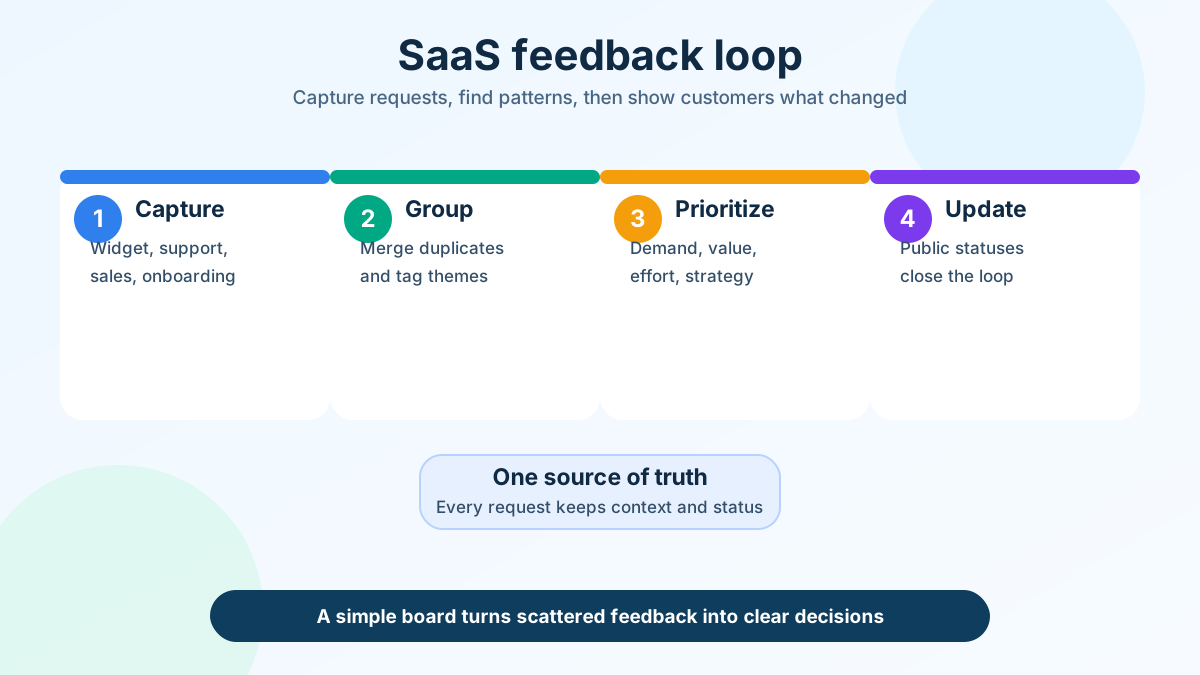
SaaS feedback is the raw material behind better onboarding, stronger retention, clearer messaging, and smarter roadmap choices. The hard part is not getting people to have opinions. The hard part is building a repeatable way to capture those opinions, separate patterns from noise, and show customers that their input is handled with care.
For a small SaaS team, creator business, ecommerce operator, or service company, the best feedback system is usually simple. Put one request point where customers already are, let people vote or add context, review the board on a schedule, and close the loop when something ships or gets declined. That rhythm is easier to maintain than a complex product-operations suite, and it gives you enough evidence to make confident decisions.
If you need that loop on your own site, start a free FeaturAsk trial and add a lightweight feedback widget and board without a credit card. FeaturAsk is $29.95/year after a 30-day free trial, so small teams can test whether visible feedback improves decisions before committing to heavier software.
This guide explains why SaaS feedback matters, what types to collect, which tools belong in the stack, and how to organize the work without creating a large enterprise program. It is written for teams that want a practical, affordable process they can maintain every week. For related planning, see our guides to feedback board software, feature request tools, and feature voting.
Quick answer
A useful SaaS feedback system has five parts: a visible intake point, a way to group similar requests, a prioritization rule, a regular review cadence, and customer-facing status updates. Use interviews and surveys when you need depth, but use a feedback board when you need an ongoing signal of demand. External research points in the same direction: Zendesk's CX trends emphasize rising customer expectations, while McKinsey's product operating model research highlights the value of durable teams that learn continuously from customers.
Why collecting SaaS feedback is non-negotiable
SaaS products change constantly. New users arrive with different expectations, competitors set new standards, and a small product gap can become a churn reason if nobody notices it early. Feedback gives the team a way to hear weak signals before they become expensive problems.
The most valuable feedback is not always a fully formed feature request. It might be a confused onboarding question, a pricing objection, a complaint about a missing integration, a workaround described in a support ticket, or a repeated comment during demos. Each signal tells you where the current product promise is unclear or incomplete.
Without a system, those signals scatter across email, chat, sales notes, calls, and founder memory. That creates two risks. First, the loudest recent comment can look more important than it is. Second, repeated requests can look isolated because nobody merged the duplicates. A shared feedback board reduces both risks by giving the team one place to collect, compare, and discuss requests.
For lean teams, the goal is not to obey every request. The goal is to understand demand well enough to decide what to build, what to explain better, what to postpone, and what to decline. A customer who sees that process is more likely to trust the roadmap even when the answer is not yes.
Types of SaaS feedback to collect
Start with product feedback. These are requests for features, workflow changes, integrations, reporting options, permissions, automation, or UI improvements. Product feedback is easiest to discuss when it includes the job the customer was trying to complete, not just the button they want added.
Next, collect onboarding feedback. New users notice friction that experienced customers have learned to ignore. If several people ask the same setup question, the answer might be a help article, an in-app prompt, a shorter form, or a default setting rather than a new feature.
Support feedback is another high-value category. Support conversations reveal bugs, unclear behavior, missing documentation, and edge cases. The team should tag support feedback by root cause: defect, confusion, missing capability, data issue, billing issue, or expectation mismatch. That turns support from a queue into a learning system.
Sales and cancellation feedback matter too. Prospects explain why the product is not yet credible for their use case. Canceled customers explain which promise failed to become habit. These comments can be uncomfortable, but they often reveal the biggest opportunities for positioning, packaging, onboarding, and retention.
Finally, collect passive signals. Usage patterns, search terms, empty states, feature adoption, and drop-off points show where behavior differs from what customers say. Passive data should not replace direct feedback, but it helps you test whether a request reflects broad demand or one unusual workflow.
The best tools for collecting SaaS feedback
The right tool depends on the decision you need to make. If you need detailed discovery, interviews are best. If you need a structured snapshot, surveys are useful. If you need ongoing demand signals, a feedback board is the simplest starting point because it can collect input 24/7 from onboarding pages, help centers, dashboards, product pages, and post-support follow-ups.
A board works because it keeps requests visible. Customers can submit ideas, vote for existing requests, add comments, and watch status changes. The team can merge duplicates, tag themes, and compare demand without rebuilding the same spreadsheet every month. This is especially helpful for small businesses that do not have a dedicated product operations role.
Surveys still have a place. Use them after onboarding, after support resolution, during cancellation, or when evaluating a specific change. Keep them short and avoid asking questions you will not act on. A five-question survey that changes one decision is more useful than a twenty-question survey that nobody reviews.
Interviews add context when the stakes are high. Use them for pricing changes, major workflow redesigns, or features that would be expensive to reverse. The best interview questions focus on the customer's current process, the cost of the problem, and what they tried before asking for a change.
Analytics tools help validate scale. If many users request a reporting feature, check whether the related data is already being exported manually. If users ask for a shortcut, look for repeated paths or abandoned steps. Combining requests with behavior prevents the team from treating every comment as equal.
For teams that want the board first, launch a FeaturAsk board and invite customers to submit, vote, and comment directly from your site. The built-in moderation and dashboard keep the workflow focused on capture, triage, and visible follow-up instead of unnecessary complexity.
The ultimate feedback tech stack for SaaS teams
A practical stack starts with a feedback widget or board, then adds tools only when the process needs them. The base layer is intake: a visible button, embedded widget, or public board where customers can share ideas without hunting for an email address.
The second layer is context. Connect each request to customer type, plan, lifecycle stage, or revenue impact when you can do that responsibly. You do not need a huge data warehouse to start. Even simple tags such as trial user, paying customer, churn risk, agency, ecommerce, or internal team can make triage sharper.
The third layer is communication. Customers should know whether a request is new, under review, planned, shipped, or not planned. These labels matter because silence damages trust. A short status note is often enough: "We are researching this because multiple teams asked for it during onboarding," or "Not planned this quarter because the workaround is reliable and a higher-impact setup issue is ahead of it."
The fourth layer is analysis. Summaries, themes, vote counts, and trend notes help, but they should support judgment rather than replace it. A request with fewer votes might still matter if it affects high-retention customers or blocks activation. A request with many votes might be less urgent if it is easy to solve with documentation.
The final layer is roadmap connection. Feedback should influence the roadmap, but not become the roadmap by itself. Strategy, technical effort, market positioning, and customer evidence all belong in the decision. The healthiest teams can explain why a popular request is waiting and why a quieter request is moving now.
Measure both volume and quality. Track how many requests arrive by channel, how many become duplicates, how many include a clear use case, and how many lead to a shipped fix, help article, onboarding change, or deliberate decline. Those measures show whether the feedback habit is improving decisions or merely collecting more comments.
How to organize SaaS feedback
Organizing feedback begins with consistent intake. Ask for the problem, the desired outcome, and the current workaround. If the customer can attach an example or describe the moment of friction, the request becomes easier to evaluate.
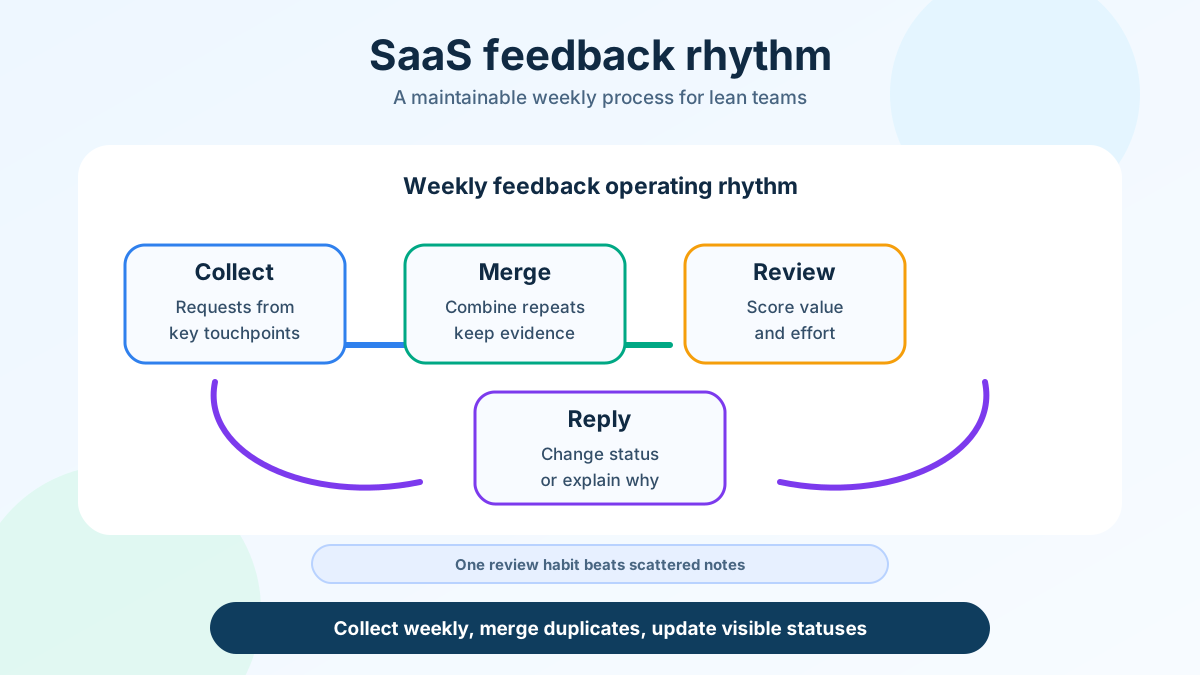
Next, merge duplicates aggressively. Duplicate requests are not clutter; they are evidence. Keep the clearest title, merge similar comments, and preserve vote totals or related notes. This gives customers a single place to support the idea and gives the team a cleaner demand signal.
Use a small set of categories. Too many tags create maintenance work and inconsistent reporting. A useful starting set is onboarding, core workflow, integration, reporting, performance, billing, documentation, bug, and account management. Add customer segment tags only when they change decisions.
Create a weekly triage ritual. Review new requests, merge duplicates, ask for missing context, update statuses, and choose one visible response. That response might be a shipped improvement, a planned item, a research question, or a polite decline. The ritual matters more than the tool because it proves the board is alive.
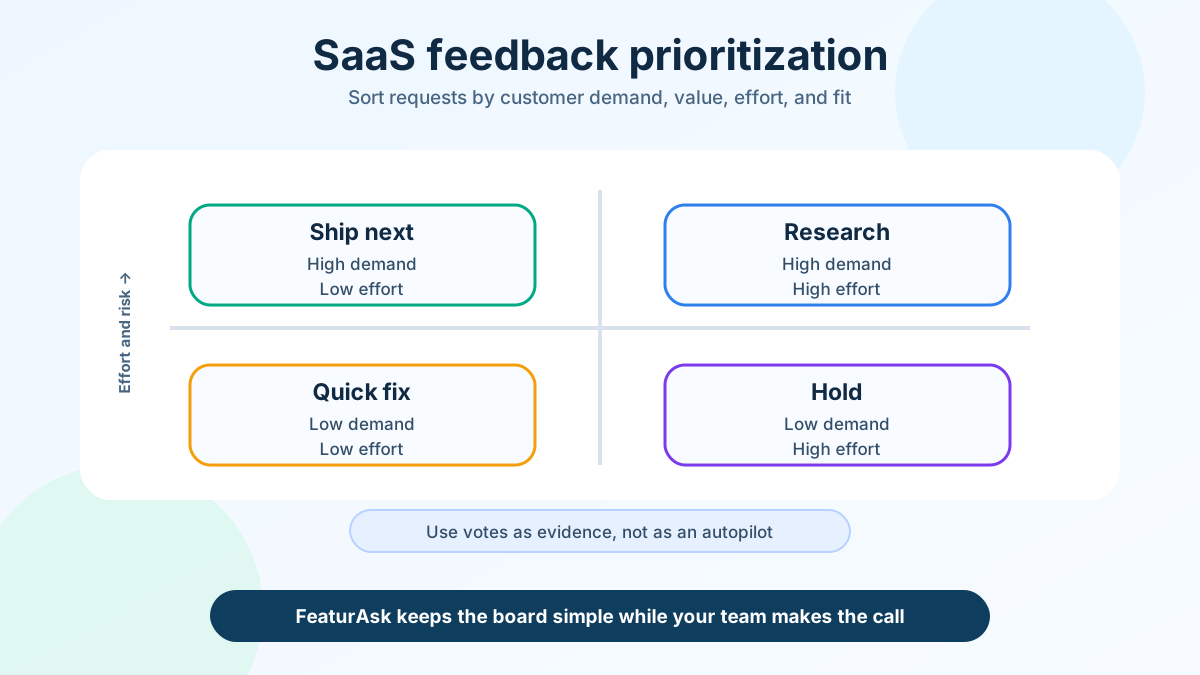
Prioritize with a simple score, but do not hide behind math. Consider demand, customer value, strategic fit, effort, risk, and timing. A small team can use a lightweight 1-to-3 scale for each factor. The score should start a discussion, not end it.
Close the loop publicly when possible. Customers do not expect every request to be accepted, but they do appreciate being told what happened. Status notes, changelog updates, and short replies turn feedback into a relationship instead of a one-way form.
A one-week implementation checklist
On day one, choose the place where requests should enter the system. For a SaaS product, that might be the app dashboard, help center, account page, or onboarding checklist. For a creator or ecommerce business, it might be the product page, customer portal, or post-purchase email.
On day two, define the fields you need. Keep them minimal: request title, description, customer email or account, category, and optional screenshot or example. If the form feels like paperwork, customers will abandon it.
On day three, seed the board with existing requests from support, sales, and founder notes. Merge obvious duplicates before inviting more input. A board with a few clear examples helps customers understand what good feedback looks like.
On day four, publish moderation rules. Explain that duplicates may be merged, abusive comments will be removed, and the team will use statuses to communicate progress. Clear rules protect the board from becoming a complaint wall.
On day five, invite customers to participate. Ask for outcomes, not feature prescriptions: "What were you trying to do?" and "What would this help you accomplish?" Those questions produce better roadmap evidence.
On day six, run the first triage. Update statuses, add comments, and select one request for action or research. On day seven, share what changed internally and externally. The first week should prove that the loop can be maintained and that support, sales, success, product, and leadership are all using the same customer evidence instead of keeping separate private lists.
Common mistakes to avoid
Do not collect feedback in too many places. Multiple channels are fine, but the team needs one source of truth. If requests live in five tools, nobody knows which pattern is real.
Do not treat votes as the only priority signal. Votes are useful because they reveal visible demand, but they can overrepresent active users and underrepresent quiet high-value accounts. Pair votes with customer context and strategic fit.
Do not let the board become a promise. A public request is not a commitment to build. Use status language carefully and avoid dates unless the work is actually scheduled.
Do not ignore small wording problems. Many SaaS feedback themes are not product gaps at all; they are unclear labels, missing examples, weak onboarding, or documentation gaps. Fixing those issues can reduce support volume faster than shipping a feature.
Do not disappear after asking for input. The fastest way to train customers to stop sharing is to collect ideas and never respond. Even a short "not now" note is better than silence.
How FeaturAsk keeps SaaS feedback simple
FeaturAsk is built for teams that need the core feedback loop without enterprise overhead. Add the widget, collect feature requests, let users vote, manage ideas in a dashboard, and keep the board aligned with your brand. That is enough for many small SaaS products, content businesses, agencies, ecommerce stores, and service providers.
The pricing matches that audience: $29.95/year after a 30-day free trial, with no credit card required. Instead of paying for a large suite before you have enough feedback volume, try FeaturAsk free and prove the habit first.
FAQ
How often should a SaaS team review feedback?
Weekly is enough for most small teams. Review faster during launches, onboarding experiments, pricing changes, or support spikes because those moments create unusually specific feedback.
Should every request become a roadmap item?
No. A request deserves context before it deserves a roadmap slot. Separate demand, evidence, effort, and commitment so customers know the difference between "heard" and "planned."
Are interviews still needed if we have a feedback board?
Yes. A board shows repeated demand, while interviews explain motivation and workflow detail. Use both when the decision is important or expensive to reverse.
What is the difference between a survey and a feedback board?
A survey captures a structured moment in time. A feedback board keeps collection, voting, discussion, and status updates open over time, which makes it better for ongoing product requests.